Races
La Sagra Skyrace 2026: routes, distances, and key details
The Granada event returns with four routes, tough elevation gain, and safety and self-sufficiency rules.

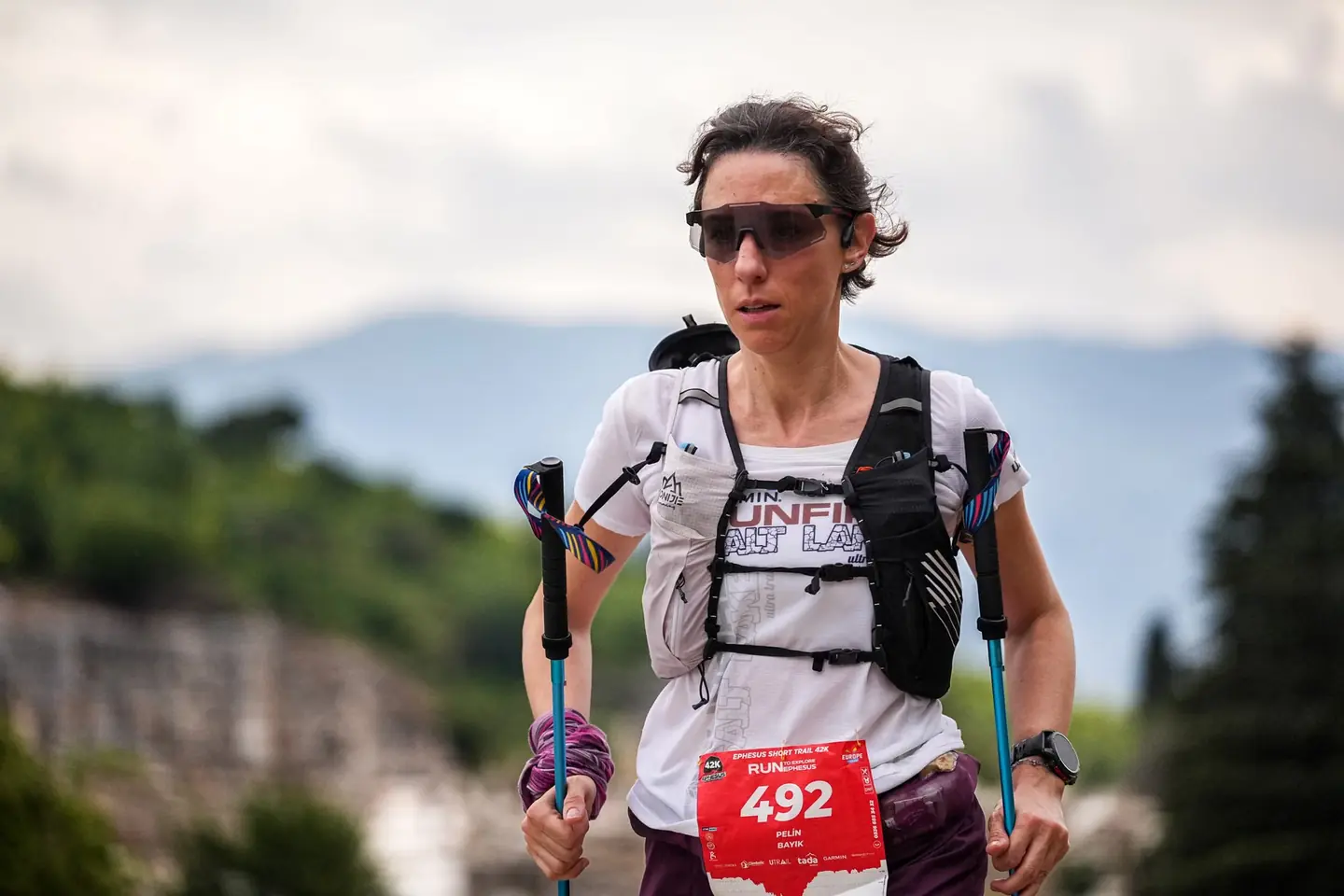
La Sagra Skyrace once again places Puebla de Don Fadrique on the high-mountain trail map with an edition defined by the toughness of the terrain, the altitude, and a format that blends competition, scenery, and logistical control. The race is held in the Sierra de La Sagra, a unique enclave in northern Granada where the elevation gain, technical paths, and cutoff times matter just as much as the legs.
The organizers are planning four race formats and a semi-self-sufficiency approach that forces runners to race intelligently: no cups at aid stations, minimum recommended gear, and mandatory checks at key points along the course. This is not just about adding kilometers; here every decision counts, from how water is managed to how the climb to the summit is tackled, one of the hallmarks of this long-running event.
A high-mountain event with its own identity
Few mountain races have such a recognizable profile as this one. The Sierra de La Sagra offers harsh, beautiful, and changing terrain, with tracks, fire roads, and trails that alternate runnable sections with others of almost alpine difficulty. That mix explains why the race has gained prestige within the national calendar: it rewards not only speed, but also course reading, effort management, and the ability to adapt to a mountain that can change its face quickly.
The 2026 edition is announced as the 18th edition and remains anchored in Puebla de Don Fadrique, a town that each year becomes the nerve center for runners, hikers, volunteers, and families. The setting is not just scenery; it is part of the sporting story. La Sagra, with its dominant presence and summit above 2,300 meters, imposes an altitude-driven narrative that shapes strategy from the first kilometer.
In this kind of event, the mountain does not forgive mistakes. Heat, wind, high-altitude radiation, or a poorly measured climb can alter an entire race. That is why the Sagra Skyrace maintains a very clear identity tied to safety, course marking, and self-sufficiency, three elements the organization emphasizes particularly strongly and which set it apart from more urban or faster races.
The official distances and what each one demands
The program includes four options that allow the mountain to be experienced at different levels of ambition. The flagship distance is the Skymarathon, with 42 kilometers and an approximate positive elevation gain of 2,331 meters, a figure that makes it clear this is not a conventional marathon, but a long-duration effort over tough and highly variable terrain. It is the most demanding option and the one that best captures the spirit of the event.
The Skyrace, at 28 kilometers with about 1,588 meters of positive elevation gain, represents the event’s most distinctive format. It is not an excessive distance in absolute terms, but it is a high-intensity race for anyone who fails to manage each section well. In the mountains, kilometers lie: elevation gain, footing, and real altitude matter far more than what the watch says.
The Skytrail, at 16 kilometers and around 850 meters of positive elevation gain, serves as an entry point into demanding terrain without the punishment of the longer races. Added to that is the hiking option, with 12.43 kilometers and about 422 meters of elevation gain, designed for those who want to experience the atmosphere of the mountains with a less competitive and more contemplative approach, though within the same organizational framework.
The combination of distances is not only sport-oriented. It also builds community. At the start line, experienced runners, mountain newcomers, and participants aiming to complete the route on foot all coexist. This mix gives the day the feel of a major territorial gathering, with the mountain as a shared stage rather than merely a racecourse.
Terrain, marking, and summit control
The route runs through high mountain terrain and is marked with tape and stakes, two basic but effective tools when the environment is open, changing, and sometimes hostile. This way of marking the route prevents improvisation and helps runners read a landscape where visibility may be good in one section and misleading in the next. In races like this, a well-placed marker is worth more than a long explanation.
One of the most decisive points is the mandatory checkpoint at the summit of La Sagra. That passage not only organizes the race; it also reminds participants that the event is designed around the massif and its relief, not the other way around. The summit becomes a symbolic and operational apex, a place where physical effort, navigation, and strict cutoff times converge.
The organizers also warn that they may alter the course or suspend the race for safety reasons. In a real mountain environment, that possibility is not decorative wording. Weather, trail conditions, or a specific risk force decisions to be made within minutes. This flexibility, far from diminishing the event, is part of the culture of serious mountain racing.
There are also maximum passing times for each distance, an element that helps define effort and organize checkpoints. Anyone competing in skyrunning knows that it is not enough to start hard; you must arrive within a reasonable window and leave room for the toughest sections. The mountain punishes haste and rewards clarity of mind.
Semi-self-sufficiency and mandatory or recommended gear
The race is held under an eco-responsible and semi-self-sufficient format, a formula that is already common in mountain trail running and, in this race, is applied clearly. Aid stations provide water and food at intermediate points, but cups are not supplied. Each participant must carry their own, a decision that reduces waste and forces more careful race planning.
This approach changes small habits that, together, matter a great deal. Carrying a collapsible cup or a small container stops being a detail and becomes part of basic gear, just like hydration strategy. The mountain does not tolerate improvisation over a trivial gesture; a seemingly minor action can save minutes, discomfort, and unnecessary fatigue.
The organizers recommend carrying a water reservoir of at least 0.5 liters, a waterproof windbreaker, a thermal blanket, a mobile phone with battery, and a cup of up to 33 cl. These are not regulatory whims, but safety and self-sufficiency tools. As altitude increases, weather becomes more variable and the margin for error narrows. In such an environment, traveling light does not mean traveling unprotected.
The relationship between gear and performance is closer than it seems. A poorly chosen windbreaker, an uncomfortable pack, or insufficient hydration can throw an entire race off course. That is why this type of event not only tests physical fitness; it also measures the ability to anticipate. The mountain usually rewards those who arrive prepared without overloading themselves.
A veteran race with tourist and sporting significance
La Sagra Skyrace is not just a race. In Puebla de Don Fadrique it acts as a driver of local activity, connecting sport, accommodation, dining, and landscape. The event attracts participants and companions, fills hotel and rural-house beds, and extends some visitors’ stays for several days. That economic footprint explains why the event has been defended for years as a useful asset for the area.
The race has also built a reputation for its continuity. In trail running, longevity matters. Not every race manages to survive, grow, and preserve its identity without losing seriousness. Here, municipal work, club collaboration, and a solid participant base have consolidated the event’s name in the calendar. That stability matters more than any promotional campaign.
In addition, the event takes place in an area of high environmental value, within the protected setting of the Sierra de La Sagra. That context requires a delicate balance between sporting use and respect for the environment. The race embraces that balance as part of its identity: the runner moves through a living place, not a closed asphalt circuit with no memory.
In events like this, the landscape is not a photographic backdrop. It is part of the effort. Anyone who climbs, turns, enters a narrow trail, looks up, and calculates how much is left quickly understands that mountain running involves a constant conversation with the surroundings. La Sagra Skyrace has managed to turn that conversation into a recognizable experience.
What sets the longest format apart
The Skymarathon is the most complete version of the challenge, not only because of the distance but also because of the accumulation of variables. The 2,331 meters of positive elevation gain, the altitude, and the possible exposure to weather changes make effort management crucial. In this distance, starting too fast is usually paid for dearly before reaching the hardest sections.
The long route demands race memory. It is wise to save energy in the early sections, accept that some climbs will be tackled without much margin, and understand that the mountain is conquered not by impulse, but by smart endurance. When the terrain alternates tracks, trails, and more technical sections, each transition can either save or lose time almost without noticing.
In the case of La Sagra, the summit adds extra value. It is not just a high point; it is where the race defines itself against itself. Reaching the top, passing the checkpoint, and beginning the descent again has something of a sporting ritual about it. The ascent shapes the narrative and forces competitors to race against the mountain more than against other bib numbers.
That element also explains why the race attracts runners with different profiles: those seeking pure performance, those aiming to finish a demanding race, and those who see the course as an authentic mountain experience. The Sagra Skyrace works, in part, as a natural filter. Whoever enters knows the mountain will be the judge, and a strict one at that.
Registration, caps, and conditions worth keeping in mind
Registration is completed online within the period set by the organizers, and the race maintains specific rules regarding bib transfers, insurance, and minimum participant age. These are common clauses in trail running, but here they are especially important because of the environment and the level of control required by a mountain race with several routes and mandatory passing points.
The overall cap is around 500 participants, distributed across the different formats. This limit helps contain pressure on the terrain and makes aid stations, checkpoints, and safety logistics easier to manage. In high mountains, scale matters. A too-large event would lose part of the balance that makes it viable in a protected area.
When bib transfers are allowed, they usually require formal processing to maintain control over insurance and runner data. Minimum age is also no small detail: it defines who can take on the effort and under what conditions. In events of this level of demand, the rules are not bureaucracy, but a safety net.
The most sensible practical advice for any registered runner is to carefully review the required gear, start times, and cutoff times. The difference between finishing within control and being out of classification may come down to what seemed like a small detail. In the mountains, even water calculations have consequences.
The mountains as both backdrop and centerpiece
The Sierra de La Sagra offers much more than elevation gain. Its profile, visible from different points, creates an almost theatrical presence. The best mountains for trail running are not always the highest ones, but those that combine beauty, toughness, and a reading of the terrain that changes with the light. This range brings together those three qualities naturally.
For the runner, that translates into an experience that alternates effort and contemplation. There are sections where the body switches to automatic mode and others where simply lifting your eyes is enough to understand why the event has earned such a reputation. The landscape, in that sense, does not soften the race; it intensifies it. Every climb seems longer when you know there is another ridge, another trail, another turn beyond it.
The location in northeastern Granada, very close to the border with other historic ranges, gives the race a frontier-like personality. It takes place in a transitional space between valleys, heights, and different ecosystems. That mix explains the visual richness of the course and also its physical complexity. There is no monotony possible in a mountain that changes texture so easily.
That is why the Sagra Skyrace remains a reference for mountain trail running in Spain. Not because of hype, but because of coherence: distance, elevation, safety, setting, and an organization that preserves a clear identity. In a calendar saturated with events, that coherence is worth as much as any major headline.
What a race like this leaves in the trail calendar
The Sagra Skyrace neatly sums up how trail running has evolved: less artifice, more real terrain; less vague promise, more concrete demand. The mountain leads, the organization adapts, and the runner responds. That triangle, seemingly simple, underpins much of the appeal of today’s mountain races.
It also offers a lesson on the importance of events that know how to read their territory. Puebla de Don Fadrique does not use the race as decoration, but as part of its sporting and tourist identity. The event fits into the local calendar, mobilizes resources, and projects an image of a destination tied to the mountains with continuity and character.
In a landscape where interchangeable formats abound, this event retains something valuable: a personality that is hard to copy. The combination of high mountain, technical control, and semi-self-sufficiency creates an experience that is recognizable at first glance. Those who have run it usually remember the scenery; those who discover it immediately understand why the Sierra de La Sagra weighs so heavily in trail memory.
The race does not need embellishment to explain its importance. Its geography, elevation gain, and approach to effort are enough. In times of fast-moving calendars, this kind of event reminds us that mountain running still has a basic and powerful foundation: run, yes, but with the mountain always ahead of you.



How to prevent thigh chafing: causes and real solutions

Women’s running windbreakers: seven jackets and how to choose

Do more workouts get rid of soreness? A guide for runners

Jaén Half Marathon 2026: Record 3,800 Runners Registered

Men’s short running tights: how to choose the right pair

World Triathlon confirms data breach involving medical data

Izan Edo targets podium at Miyazaki World Cup

María Pérez ranks ninth in World Athletics’ 2026 top ten

Dos Santos, Duplantis and Sawe: World Athlete of the Year finalists

San Silvestre Vallecana 2026: 42,000 places, prices and start times

 Races3 months ago
Valencia Half Marathon 2027: date and registration

 Races3 months ago
Valencia Marathon 2026: entry, ballot and course

 Reviews and Comparisons4 months ago
Asics Gel-Roadmiles 3 for men: review and current price

 Reviews and Comparisons4 months ago
Asics Gel Sonoma 8 Gore-Tex: complete analysis for trail and rain

 Sneakers3 months ago
Saucony Endorphin Pro 4: full review and verdict

 News5 months ago
Strava API 2026: what changes for clubs, challenges and runner apps?

 Reviews and Comparisons5 months ago
Nike Alphafly 3: opinions, sensations, and real key points

 Reviews and Comparisons4 months ago
Under Armour running shoes review 2025-2026: models and key features

 Sports Equipment4 months ago
Shoe sizes in cm: a clear guide to getting the right fit for your footwear

 Sneakers3 months ago
Skechers GO RUN Consistent 2.0 analysis: comfort and limits

 News5 months ago
Valencia Marathon 2026 route: key tips to train and run better

 Sneakers4 months ago
Adidas Adizero Boston 13 for men: review and verdict