Races
H. C. Andersen Marathon 2027: Odense date and entry fees
The Danish event has a confirmed date and 2027 entry fees, but some practical information still refers to 2026.

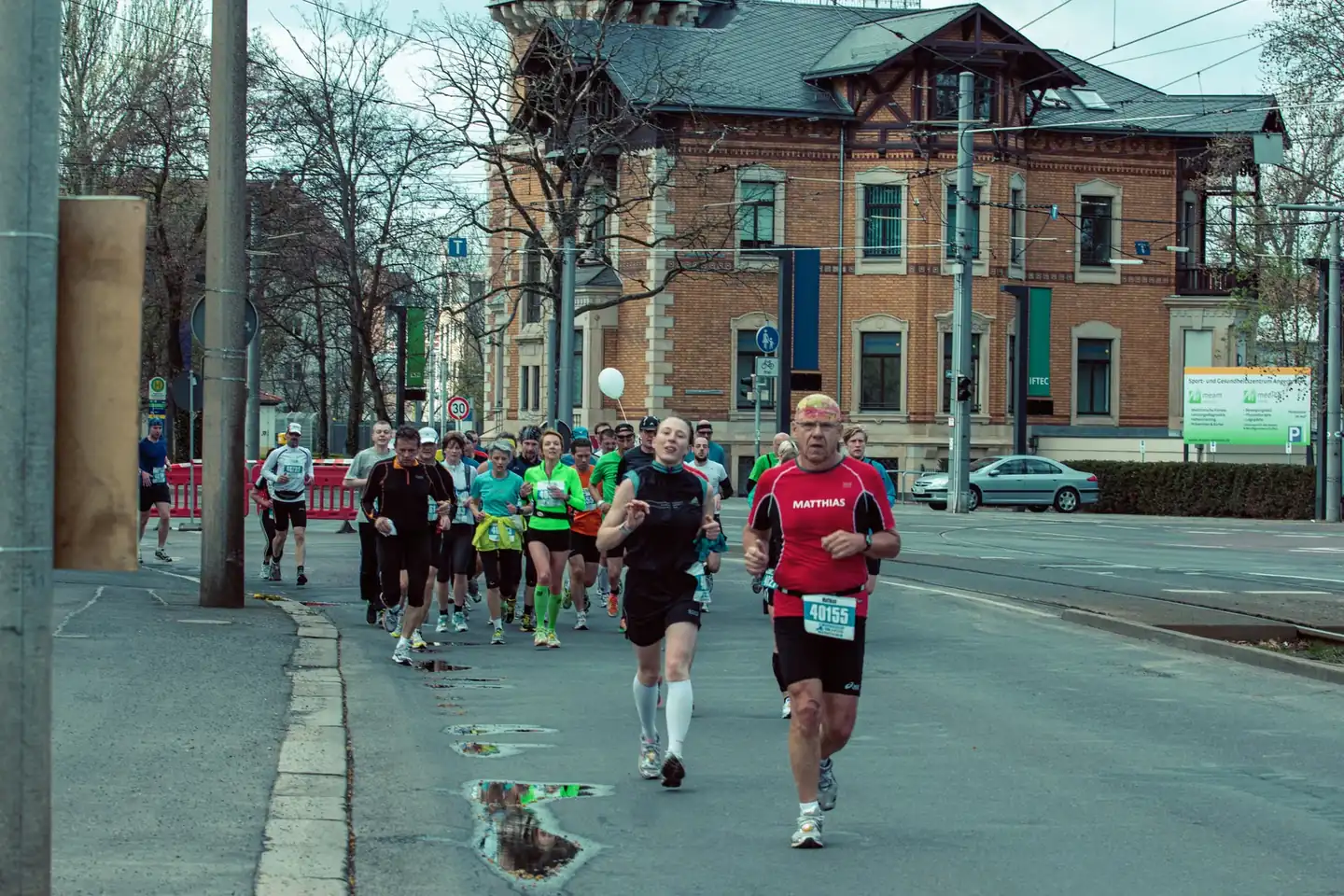
Imagen: Antonio Friedemann / Pexels
The H. C. Andersen Marathon will hold its 27th edition in Odense, Denmark, on September 26, 2027. The event announces a full 42.195-kilometer marathon, a half marathon and a children’s MiniMarathon covering 4.2 kilometers. The writer’s birthplace will once again put its streets at the heart of a running event combining competition, spectators and activities surrounding the race.
The announced marathon entry fee is 675 Danish kroner through January 4, 2027, rising to 775 kroner after that date. The full 2027 program has yet to be released: the published information mixes details of the upcoming edition with services and schedules from 2026. That distinction matters when arranging travel, calculating available time and purchasing extras.
The date places Odense within the European autumn marathon calendar, but choosing the race involves more than setting aside a Sunday. For runners traveling from Spain, the budget includes entry, transport and accommodation, along with enough time to collect a race number. Planning the race weekend means separating announcements for 2027 from details the organizer still needs to update.
The event’s name maintains a direct connection with Hans Christian Andersen and Odense’s identity. According to the organizer’s published history, the race has been held since 2000, with 2027 marking its 27th edition. The literary connection gives it character, although its sporting appeal rests on something more tangible: a traffic-free urban course during the scheduled road closure period.
The main event covers the standard 42.195-kilometer marathon distance, accompanied by a 21.0975-kilometer half marathon. The MiniMarathon adds a 4.2-kilometer distance for children. These options allow one trip to accommodate different goals, but their conditions should not be treated as identical: starting times, age eligibility, prices and access to services may vary and need to be checked against the relevant race information.
Some third-party websites also mention a 10-kilometer event, while the practical information includes references to running the final 10 kilometers. However, the main 2027 presentation does not provide enough detail to confirm that option as a separately bookable race. Nor is it safe to carry over minimum ages published for other editions. The clearly announced race options are the marathon, half marathon and MiniMarathon.
The initial early-bird period priced marathon entry at 575 Danish kroner through September 29, 2026. That period has already ended as of October 2026. The next announced price is 675 kroner through January 4, 2027, followed by 775 kroner. The first and final pricing tiers therefore differ by 200 Danish kroner, before any optional extras.
The amounts are in Danish kroner, not euros. An approximate conversion can help with budgeting, but the final charge depends on the exchange rate applied and the terms of the card or payment method used. The supplied information does not specify every possible processing charge or prices for the other distances, so presenting one figure as the complete cost of participation would be misleading.
The announced policy allows entrants to purchase cancellation insurance covering circumstances such as acute illness and injury. That does not mean an automatic refund is available for every unexpected problem: coverage depends on the policy’s terms. The organizer also states that race entries can no longer be carried forward to a later edition. Insurance, transferring an entry to someone else and deferring participation are different matters, not interchangeable solutions.
For changes to a name, distance or participant, the published information directs runners to Sportstiming and its registration management options. Correcting those details has an immediate sporting consequence: the result needs to be recorded against the person who actually runs and the distance they complete. The ability to make changes does not, by itself, establish that they are free or unrestricted; specific deadlines and conditions need to appear in the registration process.
Odense promotes its course as fast and states that it has been measured to DAF-IAAF standards and approved by AIMS. Those references matter to runners pursuing a time, but they do not replace the final 2027 course map or establish a particular elevation gain. The available information lacks a detailed profile and updated route that would support a reliable description of every section. A measured course does not remove the demands of the distance.
The organizer cites recognition from 2019 based on average finishing time to support the race’s reputation for speed. That measure needs context: an average also depends on the ability and composition of the participating field. It does not establish that everyone will run faster in Odense than at another marathon. A personal best still depends on preparation, pacing, fueling and conditions on the day, not simply the course’s reputation.
The published operational information describes a joint start at 10 a.m. for the marathon and half marathon on Stadionvej. It also places the final 300 meters inside Odense Atletikstadion, with different lanes for the race distances. These are useful pointers to the event’s setup, although the 2027 program is still pending. Because information from different editions is mixed together, the start time should not be considered definitively confirmed for the upcoming race.
The described course uses laps, a detail that changes how runners experience the event. Passing familiar areas again can make aid stations easier to recognize, but it also requires attention when participants traveling at different speeds share the road. The organizer connects some safety rules to that interaction. Staying on the marked race course is essential both to completing the distance and to recording intermediate checkpoints correctly.
The published setup provides a traffic-free window from 10 a.m. to 4 p.m., equivalent to six hours from the stated start. However, road closures are lifted progressively and intermediate cutoffs apply. One requires runners to pass 20.5 kilometers before 1 p.m. to continue onto the second lap. These published time-limit references need confirmation for 2027; an overall six-hour window does not mean every checkpoint can be passed at any time.
Another published example places the reopening of the road at kilometer 24 at around 1:30 p.m. Runners arriving later may find that marshals and aid stations have left and may need to make their own way back. That warning explains why cutoffs are more than administrative figures: they define the protection provided by the event. For runners expecting to finish near the limit, the timing of each checkpoint matters as much as the overall allowance.
The race information explicitly prohibits headphones, including open-ear models. The aim is to ensure runners can hear instructions from officials, cyclists and other participants passing them. The rule does not distinguish between playing music quietly and using a device that allows surrounding sound through: the restriction covers both situations. The published information also states that dogs are not allowed on the course.
The timing chip is attached to the race number, so the organizer asks runners not to fold it in a way that could cause damage. Checkpoints record intermediate times, and missing those readings can lead to disqualification under the published rules. Physically altering the race number is also described as grounds for exclusion. Beyond identifying a runner, it is part of the race verification system used to check participation.
Results distinguish between gun time and chip time. Gun time starts with the starting signal; chip time begins when each runner crosses the start line. According to the published information, competitive positions are decided by gun time. For someone starting farther back, the two figures may differ without any timing error. Understanding this difference between timing methods prevents misleading comparisons between the standings and the reading on a personal watch.
The organizer describes aid stations of different sizes distributed around the course, but the supplied documents give conflicting positions for some of them. It is therefore not safe to promise a uniform five-kilometer spacing or reproduce a definitive 2027 schedule. The important point is that a structure for on-course runner support exists, while final locations, available products and arrangements for refilling containers need to be clarified in the updated edition information.
Provision is also described for handing in personal refreshments so they can be transported to stations on the course. Earlier information gives drop-off windows on Saturday afternoon and early Sunday, but those times should not automatically be carried over to 2027. For marathon runners relying on a particular drink or preparation, this service affects fueling plans. Using it requires understanding the personal refreshment drop-off arrangements and how each container will subsequently be identified.
Medical support is available on the course, according to the organizer’s description. If a participant withdraws and needs transport to the finish area, the published instruction is to go to the nearest aid station so a transfer can be arranged. That option does not make it advisable to continue with worrying symptoms until the next station. Runner safety takes priority over a finishing time, and race staff need to be alerted when assistance is required.
The logistics hub is Odense Idrætspark, at Israels Plads 3, 5200 Odense V. It brings together the sports expo, race number collection and various services associated with the event. This is the address of the operational venue and should not be confused with confirmation of the exact starting line. When planning travel within the city, distinguishing the two prevents an arrival estimate that leaves no time to reach the starting area.
The published expo information lists opening hours of 2 p.m. to 6 p.m. on Friday, 10 a.m. to 4:30 p.m. on Saturday and 8 a.m. to 4 p.m. on Sunday. These are reference hours, not an already validated 2027 schedule. Sunday expo opening also does not mean race numbers can be collected until that time. Collection before the race start needs a specific deadline compatible with each event’s starting time.
The organizer recommends collecting race numbers before race day and allows collection on another person’s behalf using their full name and race number. Expo admission is described as free. These details may help groups traveling together, although they should be checked against the final documentation. The T-shirt is described as an optional paid extra, so it should not be assumed to be included in entry, nor should the 2026 design be presented as the 2027 version.
The published bag-drop arrangement uses the bag issued with the race number and asks runners to identify it with the corresponding number slip. The earlier setup describes staffed storage from 8 a.m. to 4:30 p.m. and a charge of 30 kroner for each additional item. Separate marathon and half-marathon rooms are also mentioned, explicitly in connection with 2026. Hours, charges and locations should be treated as provisional logistical reference points, not final conditions for next September.
The tram connects Odense’s central station with the Idrætspark area. The access information estimates a journey of about nine minutes and mentions fares of 15 kroner for people aged 26 and over and 10 kroner for younger passengers. However, that transport reference relates to 2026. It helps explain the connection, but public transport fares and service frequency need to be checked for the 2027 trip.
For visitors arriving by car, the information describes a Park & Ride with 800 free parking spaces and a journey of approximately 34 minutes to the sports venue. That arrangement allows drivers to leave their cars away from the immediate race area. It does not guarantee a space for any individual or remove possible event-day waits. Road closures make it particularly important to calculate the full door-to-start travel time, including parking, waiting, the tram ride and the final walk.
The accommodation offer in the available information uses references and a booking code from 2026. Its prices therefore should not be presented as a valid promotion for the 2027 edition. The same applies to certain merchandise, purchase deadlines and expo activities. A realistic travel budget needs bookings for the correct dates, attention to cancellation conditions and no assumption that another season’s discounts remain available.
The event announces activities across the weekend, although the 2027 program will be released later. That broader format may interest companions and families, but it does not yet confirm talks, yoga sessions or a specific schedule. The city and the race offer two different rhythms: an effort measured in kilometers and a visit without a stopwatch. Maintaining that distinction between program and context prevents previous activities from becoming assumed future commitments.
At the finish, the documentation describes medals for runners who complete their entered distance and subsequent access to the finish refreshment area. Anyone who does not finish the registered distance is recorded as a nonfinisher and does not receive a medal under the published conditions. Showers and changing facilities are also mentioned. Medal engraving is another optional service, subject to purchase and capacity; its 2027 hours still need a specific update.
The race forms part of Den Fynske Udfordring, a challenge bringing together three events and awarding an additional medal when the challenge is completed within the same calendar year. The 2027 information sets September 15 as the deadline for the gold race number and places the challenge medal presentation on Sunday, September 26, after finishing the marathon or half marathon. Taking part only in Odense does not mean completing all three races.
The marathon is also listed as a qualifying event for the AbbottWMM Marathon Tours & Travel Age Group World Rankings. The published information sets a period from October 1, 2026, through December 31, 2027, and links potential invitations to the 2028 age-group championship to the program’s criteria. That status applies to the full marathon, not the half marathon, and does not make every finish an automatic qualification.
Under those conditions, the ranking uses the fastest time achieved at a qualifying race, the age group depends on age on race day, and registration with AbbottWMM is required to receive an invitation. Guaranteed qualifying times vary by age group and are not detailed in the supplied information. That material also does not specify the host city for the 2028 championship. Sporting eligibility requires verification of the full set of conditions, not merely choosing a listed event.
For runners from Valencia and elsewhere in Spain, preparing for a Danish race in September means completing part of the training during summer. Heat in the preceding weeks and the demands of international travel are part of the context, although they cannot predict race-day weather in Odense. The supplied information contains no reliable forecast for that date. Adapting to actual conditions remains more useful than expecting ideal temperatures simply because the race takes place in northern Europe.
Odense offers an event with a confirmed date, three announced main distances and a specific marathon pricing structure. The rest of the setup still needs a definitive separation between 2027 and retained 2026 material. That is the most useful reading of the race: an urban marathon option with its own identity, whose appeal does not require overstating its speed or treating its services as finalized. Details awaiting an update are as much a part of the decision as the 42.195 kilometers.
You may also like: H.C. Andersen Marathon in Odense: route, distances and key points.
Where to stay in Odense
Hotels available 24–27 September 2027.
Affiliate links: if you book through this map we earn a commission, at no extra cost to you.



How to prevent thigh chafing: causes and real solutions

Women’s running windbreakers: seven jackets and how to choose

Do more workouts get rid of soreness? A guide for runners

Jaén Half Marathon 2026: Record 3,800 Runners Registered

Men’s short running tights: how to choose the right pair

World Triathlon confirms data breach involving medical data

Izan Edo targets podium at Miyazaki World Cup

María Pérez ranks ninth in World Athletics’ 2026 top ten

Dos Santos, Duplantis and Sawe: World Athlete of the Year finalists

San Silvestre Vallecana 2026: 42,000 places, prices and start times

 Races3 months ago
Valencia Half Marathon 2027: date and registration

 Races3 months ago
Valencia Marathon 2026: entry, ballot and course

 Reviews and Comparisons4 months ago
Asics Gel-Roadmiles 3 for men: review and current price

 Reviews and Comparisons4 months ago
Asics Gel Sonoma 8 Gore-Tex: complete analysis for trail and rain

 Sneakers3 months ago
Saucony Endorphin Pro 4: full review and verdict

 News5 months ago
Strava API 2026: what changes for clubs, challenges and runner apps?

 Reviews and Comparisons5 months ago
Nike Alphafly 3: opinions, sensations, and real key points

 Reviews and Comparisons4 months ago
Under Armour running shoes review 2025-2026: models and key features

 Sports Equipment4 months ago
Shoe sizes in cm: a clear guide to getting the right fit for your footwear

 Sneakers3 months ago
Skechers GO RUN Consistent 2.0 analysis: comfort and limits

 News5 months ago
Valencia Marathon 2026 route: key tips to train and run better

 Sneakers4 months ago
Adidas Adizero Boston 13 for men: review and verdict