Races
Jean Bouin 2026: route, schedules, prices and registration
Barcelona once again puts its most emblematic race to the test with 5K, 10K, international elite, and Montjuïc as the setting.

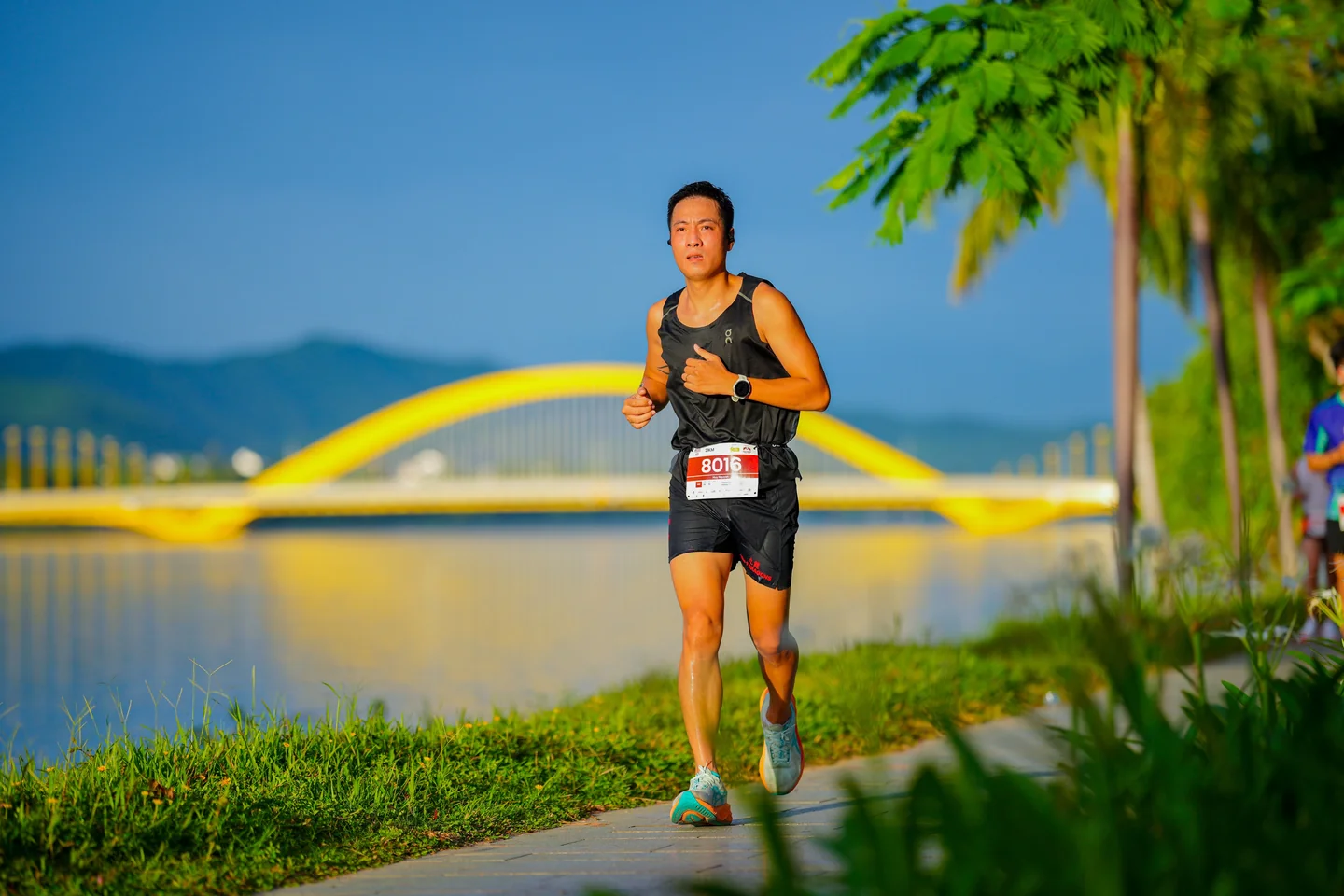
The 103rd Allianz Jean Bouin takes place on Sunday 29 November 2026 in Barcelona, with both mass-participation races starting together at 9:00 on Avinguda de la Reina Maria Cristina. It is the oldest road race in Spanish athletics — part of the Spanish race calendar since 1920 — and its latest edition gathered more than 18,000 runners across a programme of seventeen races. Here is everything you need to prepare it: the route street by street, the real elevation profile, prices and bib collection.
Date, schedule and entry fees for Jean Bouin 2026
The two open races, the 10K and the 5K, start together at 9:00 from Avinguda de la Reina Maria Cristina, at the foot of Montjuïc. The 10K starts and finishes at the same point; the 5K finishes under the Arc de Triomf. Both courses are officially measured by the Catalan Athletics Federation and the organisers present them as the Centenary circuit, the fastest the race has ever had.
Entry costs 17 euros for the 10K and 15 euros for the 5K, and both include the Mizuno technical shirt and the goody bag. Using your own yellow chip adds nothing; the virtual chip adds 2 euros, the rental chip 3 and buying the virtual chip 4. During registration you can add a one-euro donation to Cáritas. The minimum age is 14 for the 5K and 16 for the 10K, with written consent in both cases. The organiser, the newspaper Mundo Deportivo, issues no refunds under any circumstances. Entries are handled by Xip Groc, with separate forms for the 10K and the 5K, and all the details are on the official race website, hosted by Mundo Deportivo, where the race’s historic domains (jeanbouin.cat, .com and .es) now redirect.
The 10K route, street by street
The course draws a wide loop through the Eixample and Ciutadella districts and returns to the start. It sets off along Avinguda de la Reina Maria Cristina, reaches Plaça Espanya at metre 185 and drops down Avinguda del Paral·lel before turning into Floridablanca (km 0.6) and Carrer d’Entença (km 0.77), the only short rise in the whole first half.
From kilometre 1.05 the fastest stretch begins: 2.6 straight kilometres along Gran Via de les Corts Catalanes, wide and uninterrupted, up to Plaça de Tetuan (km 3.68). Then come Passeig de Sant Joan, Ausiàs Marc (km 3.95), Carrer del Bruc (km 4.35) and Ronda de Sant Pere (km 4.44), where the 5K peels off towards its own finish.
The 10K carries on along Passeig de Lluís Companys (km 4.86) and loops around Ciutadella park via Buenaventura Muñoz, Roger de Flor, Passeig de Pujades and Passeig de Picasso (km 5.65). It reaches the seafront on Avinguda Marquès de l’Argentera (km 6.04), Passeig d’Isabel II (km 6.42) and Passeig de Colom (km 6.59), the lowest point of the race.
The way back is what decides the race. After Passeig de Josep Carner (km 7.46) you turn onto Avinguda del Paral·lel (km 7.52) and face a continuous climb of more than two kilometres, with a detour through Calàbria (km 8.78) and Tamarit (km 9.07) before rejoining the Paral·lel (km 9.38). It all ends at Plaça Espanya (km 9.93) and in the final 200 metres of Avinguda de la Reina Maria Cristina.
Course & elevation Edition 2026
Per-kilometre table
| Km | Elevation | Grade |
|---|---|---|
| 1 | 20 m | -0.8 % |
| 2 | 20 m | 0.0 % |
| 3 | 22 m | 0.2 % |
| 4 | 15 m | -0.7 % |
| 5 | 9 m | -0.6 % |
| 6 | 6 m | -0.3 % |
| 7 | 5 m | -0.1 % |
| 8 | 9 m | 0.5 % |
| 9 | 16 m | 0.6 % |
| 10 | 29 m | 1.3 % |
Plan your pace on this course →
Route source: allianzjeanbouin.mundodeportivo.com
The profile: 34 metres of elevation and an uphill finish
This is worth stating plainly, because there is a lot of confusion about it: Jean Bouin is not a hilly race. According to the Spanish National Geographic Institute terrain model published by the organisers themselves, the 10K course accumulates 34 metres of ascent and another 34 of descent, with its highest point at the start and finish (28.6 metres) and its lowest on Passeig de Colom (4 metres). It is, in fact, one of the fastest 10Ks on the Spanish calendar.
The shape of the profile does matter, though. The first seven kilometres lose height almost continuously on the way to the sea, and the final 2.7 give it all back: kilometre 8 climbs 5 metres, kilometre 9 climbs 6 and kilometre 10 almost 13, averaging 1.3 %. It is not a wall, but it arrives once you have spent nearly everything.
The 5K: same start, finish at the Arc de Triomf
The 5K shares its first 4.86 kilometres with the 10K — Plaça Espanya, Paral·lel, Entença, Gran Via, Sant Joan and Ronda de Sant Pere — and then branches off to finish on Passeig de Lluís Companys, under the Arc de Triomf. Since it keeps the fast half of the course and skips the final climb entirely, it is the friendlier option for a first race or for a short-distance personal best.
How to pace it
With this profile, the classic mistake is to read your first-half splits as if they were the real pace of the day. Between kilometres 4 and 7 the course runs downhill towards the sea and the numbers come easily; from 7.5 onwards you have to give back 24 metres of height over two and a half kilometres along a wide, exposed avenue with few landmarks. Holding back five to ten seconds per kilometre in the fast section pays off far better than arriving at the Paral·lel already in the red.
Bibs, race expo and bag drop
The race expo is held at the Córner Paral·lel of Fira de Barcelona, between Plaça Espanya and Carrer Lleida, on the sea side. It opens on Friday 27 and Saturday 28 November, from 10:00 to 20:00, and every entrant is assigned a time slot (Friday 10 to 15 or 15 to 20; Saturday, the same two slots). Bring your ID or passport and your entry confirmation; to collect someone else’s bib you need a signed copy of their ID and their confirmation.
Two warnings that save a lot of trouble: from 18:30 on Saturday no changes, incidents or new entries are handled, and no bibs are handed out on Sunday morning. On race day there is a bag drop at the same Córner Paral·lel, from 07:00 to 11:30.
Free Renfe train and a TMB ticket back for the 5K
At the expo, along with the bib and the shirt, every participant receives a voucher for a free return Renfe ticket to Barcelona. It must be exchanged at a ticket office — the voucher alone is not a valid travel document — it works from any station on the Rodalies de Barcelona network and it is valid only on 29 November and until 9:00.
Runners in the 5K, which finishes far from the start, also get a free TMB ticket to get back to Montjuïc. It is handed out at the finish, at the bag-drop truck by the Arc de Triomf.
Getting to Jean Bouin from Valencia
The free Renfe ticket only covers the Rodalies de Barcelona network, so it does not apply from Valencia: you pay your own way. It is about three hours by direct train and a little more by car, for a race that starts at 9:00 on a Sunday.
The practical consequence is the same for anyone travelling in: since bibs are only handed out on Friday and Saturday, the weekend has to be planned either with a night in Barcelona or with a separate trip on Saturday to collect the bib. It is the detail that most often catches out runners who sign up planning to leave home early on Sunday morning.
Elite and school races complete the day
Once the open races are done, the international field is presented at 11:00 and the federated races start together at 11:10: under-20, under-23 and senior women over 6,600 metres (two laps of the circuit) and senior men over 9,900 metres (three laps). At 11:50 come the prize-giving and the Cursa Specials, over 1,100 metres.
From 12:10 until 13:50 there are ten school races, grouped by year of birth, over distances from 400 to 2,200 metres, including two participation races for the youngest children with their parents. The day — seventeen races in total — closes at 14:00.
Maijó and Álvarez, the latest winners
In the 102nd edition, on 30 November 2025, Adam Maijó won the men’s international race over 9,900 metres in 29:53, ahead of Adrià Ceballos (30:26) and Xavi Badia (30:39). In the women’s race, over 6,600 metres, Beatriz Álvarez took the win in 22:45, followed by Esther Guerrero (22:54) and Carla Mario (23:16).
The year before, in the 101st edition, Kenyan Ezekiel Letaya had run 29:11 — a course record at the time — with Ilias Fifa second, while Blanca Fernández won the women’s race in a very tight sprint finish.
From 1920 to today: why it is called Jean Bouin
The race was first run on 1 February 1920 at the initiative of three sports journalists, José Antonio Trabal, Luis Meléndez and Rossend Calvet, who named it after Jean Bouin, the French distance runner who took Olympic silver over 5,000 metres in Stockholm 1912, held the 10,000-metre world record and died at the front in 1914. It began as a 10-kilometre race from Esplugues de Llobregat to Ciutadella park.
It has changed home several times since — Arc de Triomf, Passeig de Sant Joan, La Rambla — before settling in Montjuïc in 1973. It was suspended between 1936 and 1939 by the Spanish Civil War, was run under an imposed name in the post-war years, Gran Premio de Año Nuevo, and was called off again in 1955 and 1967. Its roll of honour is led by Gregorio Rojo, with six wins, and Encarna Escudero, with seven, alongside top international names and much of the best Spanish distance running of recent decades.
That is the real value of the race: more than a century on, it is still an elite fixture and an eighteen-thousand-strong street party where you can actually run fast. If you are going for a time, the summary fits in one line: enjoy the first seven kilometres, but save something for the Paral·lel. The whole race is decided there.
Where to stay in Barcelona
Hotels available 28–30 November 2026.
Affiliate links: if you book through this map we earn a commission, at no extra cost to you.



How to prevent thigh chafing: causes and real solutions

Women’s running windbreakers: seven jackets and how to choose

Do more workouts get rid of soreness? A guide for runners

Jaén Half Marathon 2026: Record 3,800 Runners Registered

Men’s short running tights: how to choose the right pair

World Triathlon confirms data breach involving medical data

Izan Edo targets podium at Miyazaki World Cup

María Pérez ranks ninth in World Athletics’ 2026 top ten

Dos Santos, Duplantis and Sawe: World Athlete of the Year finalists

San Silvestre Vallecana 2026: 42,000 places, prices and start times

 Races3 months ago
Valencia Half Marathon 2027: date and registration

 Reviews and Comparisons4 months ago
Asics Gel-Roadmiles 3 for men: review and current price

 Races3 months ago
Valencia Marathon 2026: entry, ballot and course

 Reviews and Comparisons4 months ago
Asics Gel Sonoma 8 Gore-Tex: complete analysis for trail and rain

 Sneakers3 months ago
Saucony Endorphin Pro 4: full review and verdict

 News5 months ago
Strava API 2026: what changes for clubs, challenges and runner apps?

 Reviews and Comparisons5 months ago
Nike Alphafly 3: opinions, sensations, and real key points

 Reviews and Comparisons4 months ago
Under Armour running shoes review 2025-2026: models and key features

 Sports Equipment4 months ago
Shoe sizes in cm: a clear guide to getting the right fit for your footwear

 Sneakers3 months ago
Skechers GO RUN Consistent 2.0 analysis: comfort and limits

 News5 months ago
Valencia Marathon 2026 route: key tips to train and run better

 Sneakers4 months ago
Adidas Adizero Boston 13 for men: review and verdict