Races
Kauai Marathon: course, date, and key details of the race
A Hawaii test with ocean landscapes, tough climbs, and a very unique atmosphere on the island of Kauaʻi.

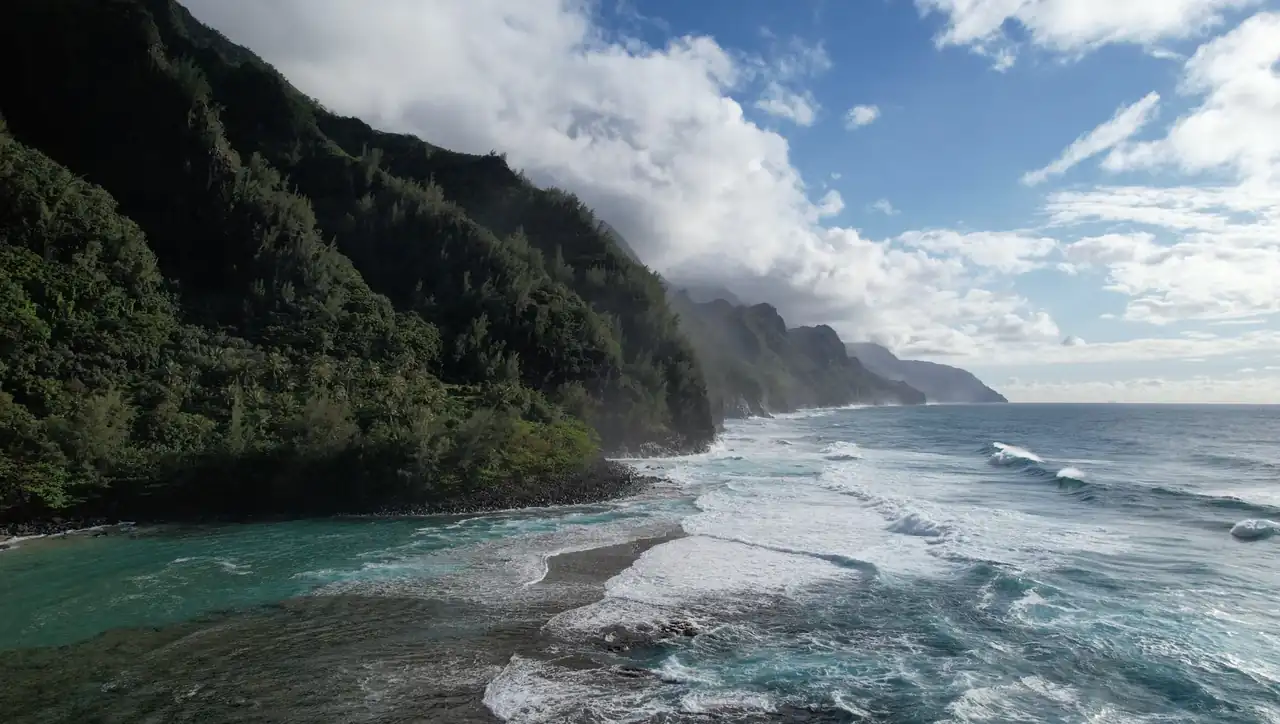
The Kauai Marathon has established itself as one of those races that sells more than kilometers: it sells scenery, atmosphere, and a very specific idea of running as a journey. On the island of Kauaʻi, south of Hawaii, the race mixes asphalt, early heat, long climbs, and a coastline that seems drawn to distract any runner… although the clock is never distracted.
The event brings together the marathon and the half marathon, starts in Poipu, and covers a part of the island that alternates beaches, tropical vegetation, residential areas, and stretches with enough elevation change to break any steady-pace plan. That mix explains why many consider it more of a destination experience than a simple competitive event: here time matters, yes, but the memory matters even more.
A small-island race with its own identity
Kauaʻi, known as the Garden Island, is the oldest island in the Hawaii archipelago and also one of the greenest, most humid, and most scenic. The race takes advantage of that geography: it is not looking for a perfect straightaway or a course designed for records, but rather a route that shows cliffs, forests, and open views of the Pacific while the pack of runners stretches out between the human tide and the salty breeze.
The race was held for the first time in 2013 and has since become an annual event with strong international appeal. The small-event atmosphere, compared with major urban marathons, gives it a different tone, more intimate, with volunteers, local music, and a crowd that turns the runners’ passage into a kind of sporting parade in the middle of the tropical landscape.
The available information for the 2026 edition places the race on September 6, with the start at 06:00 local time. That schedule is not decorative: in Hawaii, sunrise comes early, but heat and humidity also make themselves felt, and the race demands a smart start, without letting the beauty of the surroundings push you into an effort that will later take its toll on the tougher sections.
Course, elevation gain, and what the runner is really up against
The start is in Poipu, at the southern end of the island, and the first eleven kilometers are shared by both the marathon and the half marathon. From there, the routes split and each distance takes on its own character. The half marathon course heads into the Kukuiʻula Resort area and reserves some of the cleanest ocean views, while the full marathon stretches toward Lawai and then climbs toward Kalaheo, where the elevation suddenly changes your breathing and heart rate.
The profile is not flat. There are hills that appear at moments when the runner has already started to relax because of the scenery, and that is part of its real difficulty. The course combines rolling sections, gradual descents, and significant climbs, with the well-known Tunnel of Trees as one of the event’s most memorable images. The shade, the change in light, and the feeling of entering a green tunnel make that stretch more than just a postcard: it also brings a bit of thermal relief in the middle of a demanding day.
Reports from recent editions point to a well-marked race, with frequent aid stations and an organization that takes care of both the logistics and the aesthetics of the event. That does not make the course any easier, but it does reduce uncertainty. In an island marathon, where wind, humidity, and sun exposure can change from one kilometer to the next, the consistency of the support points matters almost as much as the elevation profile.
Why so many runners travel to Kauaʻi
The answer is not the clock. Those who travel to this race usually seek a difficult-to-repeat mix: tourist destination, sporting challenge, and cultural experience. The course lets you run alongside clear-water beaches, vegetation-covered hills, and a coastline that changes texture as the morning goes on. For many participants, it feels like running inside a slow-motion film, with the sound of drums, hula, and local support by the roadside.
That emotional component explains much of the event’s success. It is not unusual to see runners from outside the United States, drawn to a race that combines vacation and competition. But the appeal has another, less obvious layer: the race rewards those who know how to manage long efforts in warm conditions. You do not need a spectacular style; you need patience, hydration, and enough humility to accept that a good day in Kauaʻi is measured differently.
Community organization also plays a major role. The event supports youth running programs and maintains a visible relationship with nonprofit groups on the island. According to the available information, the youth program and kids’ races have reached 2,209 minors over 12 years, while the accumulated economic impact exceeds $52 million over 16 years. In addition, more than $280,000 has been distributed to local organizations. In a race of this type, those figures matter because they show that the marathon does not exist apart from the place, but is embedded in it.
The race atmosphere: heat, volunteering, and local spirit
Some races stand out for speed, others for hospitality. Kauaʻi clearly belongs to the second category. Runners often highlight the presence of volunteers at the aid stations, the support from the local population, and the feeling that the event works more like an island celebration than a cold, mechanical competition.
The music, drums, and cultural expressions are not presented as a marketing gimmick, but as part of the event’s human landscape. That changes how effort is perceived. In an urban marathon, runners often retreat into the asphalt and their internal metronome; here, by contrast, the surroundings interrupt that mental enclosure. It is a race that forces you to look around. And looking around in Kauaʻi can be just as useful as looking at your watch.
The weather also calls the shots. The early start helps, but the morning usually brings more heat as time goes on. In these conditions, success depends less on a bold attack than on the ability to sustain a reasonable intensity. Those who have run it usually describe it as beautiful and tough at the same time, a combination that is often more memorable than any completely flat route.
Distances, participation profile, and useful data for the 2026 edition
The main event offers a marathon and a half marathon, and the official website also includes kids’ races and complementary activities that broaden the sports weekend. That approach expands the profile of attendees and creates a broader atmosphere than a single start. There are families, companions, and runners who travel to the island for several days, which also explains the importance of the tourist experience in the event’s story.
For the 2026 edition, the date listed is Sunday, September 6, and the start is set for 06:00. The event location is Poipu, Koloa, Hawaii, with the finish facing the ocean. The choice of starting point is not random: it connects scenery, hotel infrastructure, and convenient access to the southern part of the island, where the race takes on its most recognizable image.
The nature of the route means the marathon is classified as asphalt, although it would be incomplete to look at it only as a surface. The runner is not competing on a closed city circuit, but on a road open to changes in light, sea breeze, and terrain variations that add tactical complexity. The half marathon, for its part, shares part of the same personality, but with less wear and tear and a friendlier finish for those who want the taste of Kauaʻi without taking on the full 42.195 kilometers.
What the results and reference times show
The historical winners give a clear idea of the race’s sporting level. In the men’s marathon, published records show competitive times that have gone as low as 2:17:17, set in 2022 by Remigijus Kančys. In women’s racing, the best available reference time is 2:47:52, achieved in 2024 by Mariya Radko. These are times that reveal a serious level, even if the race has never aimed to become a laboratory for fast-road marks.
The list of winners also shows a notable presence of Lithuanian runners, with victories shared among local and international athletes. That diversity reinforces the idea of an open event, where the appeal does not depend on a single dominant elite, but on a mix of profiles that travel, compete, and integrate into the island’s logistics over race weekend.
Recent results have also shown a constant image: the race is run with strategy. It is not usually a long 10K disguised as a marathon, but rather an effort that requires careful management of the second half, especially once the course has already taken its toll and humidity begins to affect breathing. In that sense, Kauaʻi punishes excess and rewards quiet discipline.
What the weekend feels like on the island
Beyond the start, the event extends into an expo, parallel activities, and a schedule that turns the race into a small sports festival. The island, with its slow pace and open-horizon landscape, encourages that transformation. People do not travel there just to run and leave; they travel to stay a little longer, to walk along the coast, to look at the ocean after the effort, and to let the body process the change of environment.
The tourism component is inseparable from the event’s design. The organizers have managed to integrate the race into Kauaʻi’s offerings without erasing its local connection. That is why the marathon also works as a showcase for the island: beaches, cliffs, tropical flora, and that blend of calm and strength that defines Hawaii better than any brochure. The race relies on that setting, but also magnifies it in return.
The experience is neither cheap nor easy to improvise, and that also explains its profile. Traveling to Kauaʻi involves flights, accommodation, and planning well in advance, so many participants arrive having made the decision months earlier. That logistical distance adds a layer of commitment that is usually noticeable at the start line. Those who show up there do not do so by chance.
A marathon valued for its scenery, but won with your head
The Kauai Marathon belongs to that family of races that stay in your memory long after crossing the finish line. The postcard helps, of course, but it is not enough. The hills, heat, humidity, and changing pace require intelligent racing and an acceptance that not everything can be translated into perfect splits. In some marathons, the scenery accompanies you; here, it also shapes the race.
That is why its real appeal lies in the sum of its parts: a powerful island identity, an organization that cares about the details, an engaged community, and a course that demands respect for the distance. It is not an event for chasing your best time of the season, although that sometimes happens. Above all, it is a race that combines nature, sport, and belonging to the place with uncommon force. And that balance is where much of its magnetism comes from.
The lasting impression is that Kauaʻi does not offer a simple marathon, but a different way of understanding competition. The runner does not merely accumulate kilometers; they cross an island. And for many, that difference is worth as much as the medal.



How to prevent thigh chafing: causes and real solutions

Women’s running windbreakers: seven jackets and how to choose

Do more workouts get rid of soreness? A guide for runners

Jaén Half Marathon 2026: Record 3,800 Runners Registered

Men’s short running tights: how to choose the right pair

World Triathlon confirms data breach involving medical data

Izan Edo targets podium at Miyazaki World Cup

María Pérez ranks ninth in World Athletics’ 2026 top ten

Dos Santos, Duplantis and Sawe: World Athlete of the Year finalists

San Silvestre Vallecana 2026: 42,000 places, prices and start times

 Races3 months ago
Valencia Half Marathon 2027: date and registration

 Races3 months ago
Valencia Marathon 2026: entry, ballot and course

 Reviews and Comparisons4 months ago
Asics Gel-Roadmiles 3 for men: review and current price

 Reviews and Comparisons4 months ago
Asics Gel Sonoma 8 Gore-Tex: complete analysis for trail and rain

 Sneakers3 months ago
Saucony Endorphin Pro 4: full review and verdict

 News5 months ago
Strava API 2026: what changes for clubs, challenges and runner apps?

 Reviews and Comparisons5 months ago
Nike Alphafly 3: opinions, sensations, and real key points

 Reviews and Comparisons4 months ago
Under Armour running shoes review 2025-2026: models and key features

 Sports Equipment4 months ago
Shoe sizes in cm: a clear guide to getting the right fit for your footwear

 Sneakers3 months ago
Skechers GO RUN Consistent 2.0 analysis: comfort and limits

 News5 months ago
Valencia Marathon 2026 route: key tips to train and run better

 Sneakers4 months ago
Adidas Adizero Boston 13 for men: review and verdict