Races
María de Villota Triathlon in Santander: Complete Guide 2026
The Santander race combines supersprint, relays, and a charitable finish in La Magdalena, with key details so you don’t miss a thing.

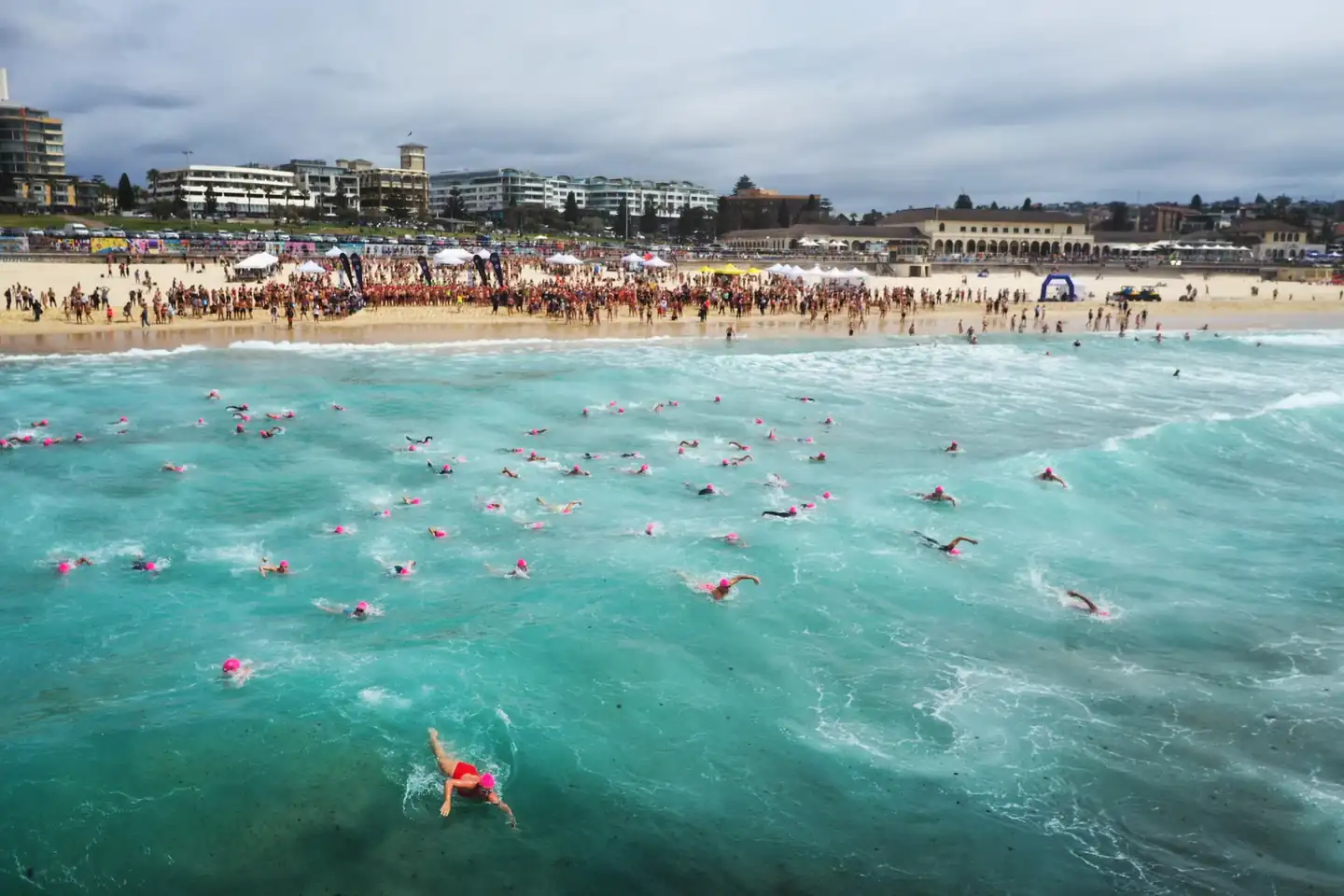
La Magdalena will reopen to sport on July 5, 2026 with one of those events that condense triathlon, memory, and a social cause into the same setting. The María de Villota Triathlon has established itself in Santander as a supersprint-distance race, short in kilometers but demanding in sensations, with a very recognizable route: swimming, cycling, and running on a coastal circuit that breathes sea breeze and sporting tradition.
The 2026 edition keeps its individual and relay format, and does so with a charitable dimension that remains an essential part of the event. The proceeds and philanthropic purpose are directed toward Cocina Económica and the Ana Carolina Díez Mahou Foundation, two names that explain why this race goes beyond the clock. It is not just about competing: it is also about taking part in a day that brings together grassroots sport, remembrance, and commitment.
A short, intense race with its own identity
The sporting profile of the María de Villota Triathlon is that of the supersprint, a distance designed to be fast, direct, and highly visual. In 2026, the swimming segment is set over 400 meters from Bikinis Beach to the Royal Pier, the cycling adds 4 kilometers around La Magdalena, and the run adds 1.6 kilometers through the same surroundings. It is a compact formula, almost like a showcase, but not for that reason easy: it forces each transition to be executed precisely and the effort to be sustained from the very first meter.
The very layout of the circuit shapes the race’s personality. The swim takes place in an area controlled by a Zodiac boat and rescue personnel, an important detail in a discipline where safety matters as much as speed. Then comes the short but technical bike leg, and finally the run, which follows the same course as the mile race associated with this event. That overlap between triathlon and road race gives the day a continuity that is very much Santander’s own.
The name of María de Villota provides the event’s other major pillar. The legacy of the Madrid-born racing driver, her connection to perseverance, and her work through the Ana Carolina Díez Mahou Foundation have turned the event into a meeting point between sport and solidarity. In a calendar increasingly crowded with races, this one keeps a recognizable imprint because it rests not only on participation, but on what it represents.
The La Magdalena course and what it demands from the triathlete
The swim start is located in the area around the Royal Pier, with an entry from the water that adds a distinctive touch to the event. The aquatic segment runs from Bikinis Beach to the pier, a short course in distance but very sensitive to positioning and orientation in the opening meters. In triathlons of this scale, a poor entry into the water or a rushed transition is more noticeable than in longer races; here every second weighs like lead.
The first transition, known as T1, is located in the meadow next to Bikinis Beach, while the second, T2, is set near the Magdalena Palace. The setup is no minor detail, because in a supersprint the changes of discipline can decide the standings as much as leg power. The organization provides bars for leaving the bike, baskets for used gear, and a cloakroom service, logistics designed to keep the circuit flowing smoothly without losing control.
The bicycle, by regulation, must be conventional and safe. Mountain bikes are allowed, but not electric bikes or time-trial bikes with aerobars. The helmet must remain fastened from the moment the bike is picked up in T1 until it is placed down in T2, and in both transitions movement must be on foot. These are familiar rules in federated triathlon, although in short races like this they take on an even more visible dimension, because the speed of execution often tempts athletes into mistakes.
Drafting is only allowed between triathletes of the same gender, a restriction that affects the strategy of the bike leg. In such a short race, riding in another athlete’s slipstream can completely change the competition, but the rules define that margin in order to maintain sporting order. Headphones, unauthorized devices, and any external assistance that distorts individual effort are also prohibited. The image the organizers seek is clear: a clean, controlled triathlon that is understandable even to someone watching it for the first time from the balustrade or the promenade.
Individual and relay formats: two ways to read the same circuit
One of the keys to the María de Villota Triathlon is its relay format. The race allows teams of three athletes, so each member completes one segment. This makes the event more accessible to different profiles, because it lowers the entry barrier that a full discipline can impose. A swimmer, a cyclist, and a runner can form a compact unit; triathlon then ceases to be a single sporting biography and becomes a sum of specialties.
The individual format, by contrast, concentrates all the tension in a single person. Some see it as an exercise in self-control rather than pure strength. In a supersprint, the feeling is similar to closing three races in a single breath: getting into the water well, not losing rhythm on the bike, and holding the final stride without emptying the tank too early. That demand is part of the race’s appeal for federated triathletes and also for athletes making their debut over a short distance.
The event remains open to both licensed and unlicensed athletes, with a one-day license for those who do not usually compete under a FETRI license. That openness broadens the participant profile and helps explain why this event has a wider popular base than other races on the calendar. The approachable distance, together with the setting and the charitable context, makes it a reasonable gateway for those who want to try triathlon without immediately jumping to longer distances.
The charitable dimension is not an ornament, but part of the event’s meaning
The philanthropic nature of the María de Villota Triathlon runs through the entire organization. Cocina Económica de Santander and the Ana Carolina Díez Mahou Foundation are among the beneficiaries of the support, placing the race within a very Spanish tradition of sport with direct social return. The material contribution in the form of a donation, in addition to the registration fee, reinforces that identity. It is not an extra gesture: it has been part of the event’s story since its first editions.
María de Villota’s memory gives coherence to that blend of performance and solidarity. Her name appears not as a mere tribute, but as a reference for values: effort, resilience, empathy, and team spirit. At a time when so many sporting events compete to differentiate themselves with big numbers or extreme courses, this triathlon opts for something quieter and harder to manufacture: meaning.
That emotional component does not remove sporting rigor. On the contrary, it makes it more visible. The competition still awards trophies to the top three overall finishers, male and female, and also to the top three relay teams. All participants receive a finisher medal and a race pack, standard items in today’s calendar, but here integrated into a cause that gives the whole day purpose. In Santander, the podium coexists with the fundraiser, and that coexistence does not diminish the event’s value; it expands it.
Schedules, organizational control, and rules worth keeping in mind
The race takes place on Sunday, July 5, 2026 at the Royal Site of La Magdalena, in Santander, with a morning start time. The edition described sets the start around 08:45, a typical time slot for events of this kind, chosen to avoid the most intense heat and take advantage of more stable conditions for the swim leg. Bib pickup and race setup usually account for much of the pre-race activity, with logistics split between the day before and the competition day itself.
The event is governed by the current regulations of the Spanish Triathlon Federation, a framework that regulates both safety and race conduct. The organizers also reserve the right to modify the course for reasons of force majeure or safety, a prudent provision in an open area facing the sea and exposed to environmental conditions. In triathlon, that flexibility is not a decorative clause: it is the difference between racing with judgment and racing blind.
Access control to the transition area, equipment return, and official supervision are especially sensitive matters. To enter or remove the bike and other equipment, documentation or a bib number is required, and movement within the transition zones follows strict rules. This kind of detail often goes unnoticed by the general public, but it is what keeps the event orderly and prevents a short race from turning into chaos of rush, bicycles, and runners crossing paths without control.
Why Santander is such a good fit for this triathlon
La Magdalena offers a sporting backdrop that is hard to replace. It is sea, it is history, it is a promenade, and it is a peninsula that has witnessed many different events, from athletic races to cycling and triathlon competitions. In that setting, the María de Villota Triathlon does not feel like an implant, but a logical continuation of the local sporting tradition. The palace architecture, the openness of the roads, and the proximity of the coastline create a scene that triathlon uses intelligently.
The visual dimension of the circuit also matters. For spectators, the race is easy to grasp at a glance: the swim appears as a white line in the water, the bike as a short loop around the venue, and the run as a sequence of visible effort, almost at promenade level. That clarity helps the competition appeal even to those who do not follow triathlon regularly. In journalistic terms, there are few things more effective than a sport that can be told without excessive explanation.
The event also runs alongside the María de Villota mile race, which completes the day and reinforces the idea of a sports festival with a dual format. That coexistence between triathlon and road racing is not just an add-on to the schedule. It builds a broader experience in which the morning can be read as a succession of different efforts tied together by the same name. Santander thus has a race that is not only contested, but also remembered.
A sporting legacy sustained by the blend of emotion, order, and purpose
The María de Villota Triathlon works because it does not try to resemble anything it is not. It does not need long distances or heroic profiles to draw attention. It is enough with a short course, a recognizable setting, solid organization, and a cause that gives meaning to every registration. That seemingly simple combination explains why the race has earned a place on the calendar and why it continues to attract both federated athletes and participants coming to triathlon for the first time.
At a time when many competitions are defined by spectacle, this one chooses clarity. The water is where it should be, the bike demands precision, the final run requires experience, and María de Villota’s memory holds the whole together. It is a race small in kilometers, but large in symbolic density. And perhaps that is its best argument: in Santander, running, cycling, and swimming can also mean accompanying a memory and supporting a concrete act of help.
That is why this La Magdalena event is understood as more than just another summer race. It is a day in which triathlon becomes close, almost intimate, without losing its competitive pulse. A compact format, an unmistakable location, and a clearly defined social purpose give the María de Villota Triathlon a sharp identity on the Spanish calendar.



How to prevent thigh chafing: causes and real solutions

Women’s running windbreakers: seven jackets and how to choose

Do more workouts get rid of soreness? A guide for runners

Jaén Half Marathon 2026: Record 3,800 Runners Registered

Men’s short running tights: how to choose the right pair

World Triathlon confirms data breach involving medical data

Izan Edo targets podium at Miyazaki World Cup

María Pérez ranks ninth in World Athletics’ 2026 top ten

Dos Santos, Duplantis and Sawe: World Athlete of the Year finalists

San Silvestre Vallecana 2026: 42,000 places, prices and start times

 Races4 months ago
Valencia Half Marathon 2027: date and registration

 Races4 months ago
Valencia Marathon 2026: entry, ballot and course

 Reviews and Comparisons4 months ago
Asics Gel-Roadmiles 3 for men: review and current price

 Reviews and Comparisons4 months ago
Asics Gel Sonoma 8 Gore-Tex: complete analysis for trail and rain

 Sneakers4 months ago
Saucony Endorphin Pro 4: full review and verdict

 News5 months ago
Strava API 2026: what changes for clubs, challenges and runner apps?

 Reviews and Comparisons5 months ago
Nike Alphafly 3: opinions, sensations, and real key points

 Reviews and Comparisons4 months ago
Under Armour running shoes review 2025-2026: models and key features

 Sports Equipment4 months ago
Shoe sizes in cm: a clear guide to getting the right fit for your footwear

 Sneakers3 months ago
Skechers GO RUN Consistent 2.0 analysis: comfort and limits

 News5 months ago
Valencia Marathon 2026 route: key tips to train and run better

 Sneakers4 months ago
Adidas Adizero Boston 13 for men: review and verdict