Races
Mitja Sant Cugat 2027: route, prices, and key information
The Sant Cugat race returns with 21K, 10K, and 5K, an urban start, and prices that change depending on the bib number.

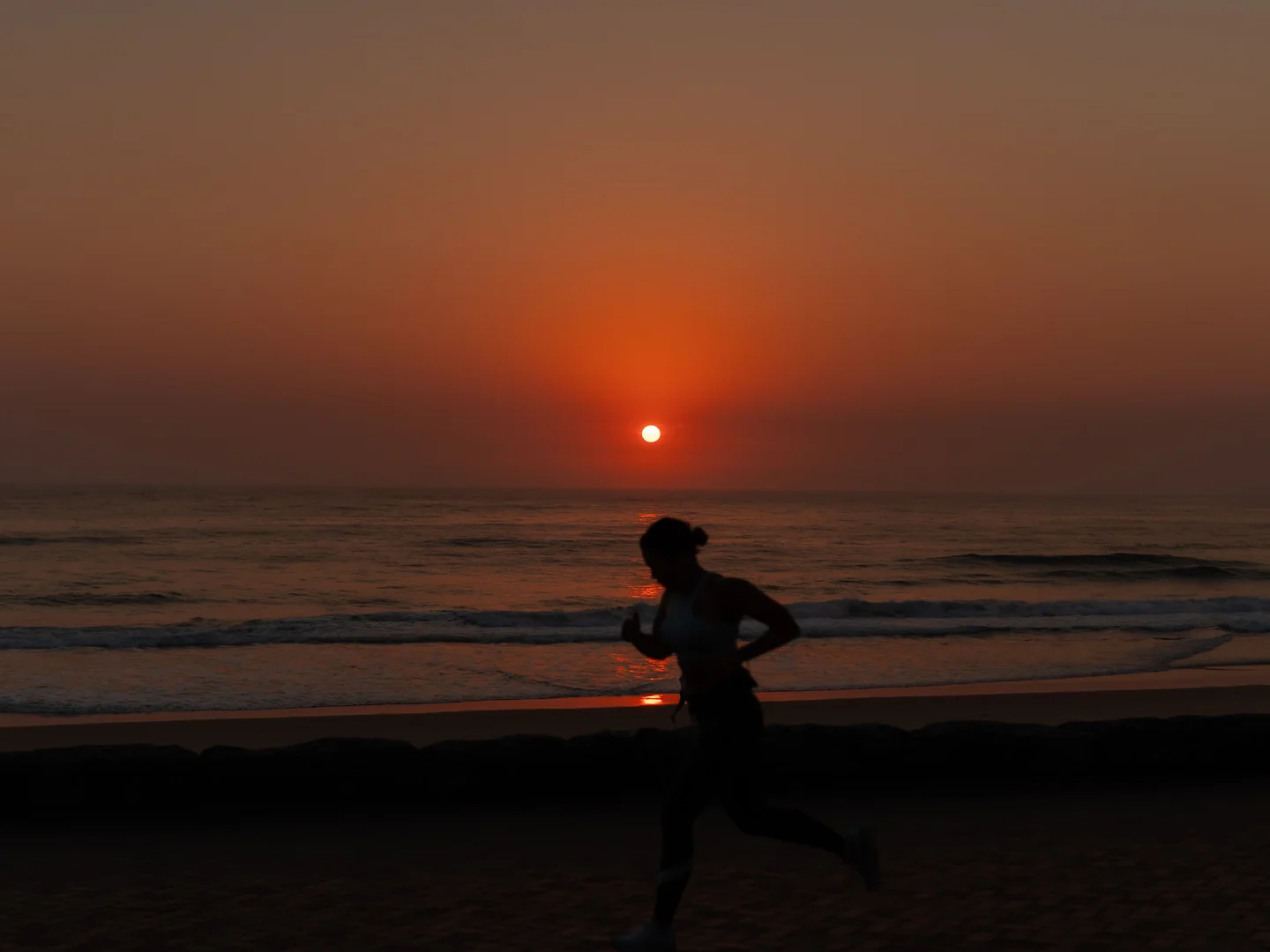
The Mitja de Sant Cugat has established itself as one of the most recognizable urban events on the Catalan calendar, with a course that blends pace, heritage, and an environment designed for running without setbacks. The 2027 edition is scheduled for 31 January and keeps the formula that has driven its growth: a half marathon of 21 kilometers accompanied by 10- and 5-kilometer options, all starting on Rambla del Celler, right in the heart of Sant Cugat del Vallès.
The race was born with a clear objective: to offer a fast course, useful for those preparing bigger goals and accessible enough for runners looking for a shorter distance. The event’s tone is well summed up by its sporting and urban approach, with passage through the historic center and an atmosphere that turns the race into more than just a sum of kilometers. For 2027, moreover, the organizers once again place it as a good early-season benchmark for those fine-tuning their sensations before longer events.
An urban race with its own identity
Sant Cugat del Vallès does not offer just any backdrop. The city combines wide streets, an orderly layout, and a historic center with enough visual weight to give the race its own personality. That mix matters, because in a half marathon the course is not just a support: it conditions pace, the perception of effort, and the way the runner reads each kilometer.
The organizers have opted for a circuit designed to be fast, a quality many distance runners value when they want to gauge their fitness without the toughness of a mountainous profile. The well-defined urban terrain usually favors a steadier cadence and reduces the sense of uncertainty that appears in races with constant changes in elevation. In practice, that means a cleaner race for those looking to control splits and test race pace.
The context also matters. Sant Cugat is part of a very well-connected metropolitan area, with a tradition of participation and a broad base of runners. That makes the race a convenient event for many athletes from the Barcelona and Vallès area, but also a comfortable showcase for those who come with the idea of running and leaving with a clear reference of how they felt. The half marathon here functions as a barometer, not just as a challenge.
The distances that define the race profile
The sporting program revolves around three clearly defined options: 21 kilometers, 10 kilometers, and 5 kilometers. That combination broadens the range of profiles without breaking the event’s logic. The half marathon attracts those looking for a demanding but manageable distance; the 10K suits runners seeking intensity without venturing into long duration; and the 5K opens the door to a wider audience, from debutants to those who prefer a short, fast race.
The coexistence of the three distances explains part of the Mitja de Sant Cugat’s success. It is not just about adding registrations, but about building a day with multiple paces and different ways of experiencing it. At the start, runners aiming to sustain a high effort for an hour and a half share space with others facing a shorter, almost explosive effort. That diversity brings movement and gives the event an active-city atmosphere, with a very recognizable pulse from the early hours.
The half marathon remains the central distance, but the shorter options serve a strategic purpose. They allow families, groups of friends, and runners at different stages to share the same sporting setting. In journalistic terms, that explains why the race remains interesting beyond the most technical running audience: it does not depend on a single format, but on an ecosystem of complementary events.
Course & elevation Edition 2027
Per-kilometre table
| Km | Elevation | Grade |
|---|---|---|
| 1 | 111 m | -1.5 % |
| 2 | 107 m | -0.4 % |
| 3 | 122 m | 1.5 % |
| 4 | 123 m | 0.1 % |
| 5 | 139 m | 1.6 % |
| 6 | 136 m | -0.3 % |
| 7 | 129 m | -0.7 % |
| 8 | 141 m | 1.2 % |
| 9 | 134 m | -0.7 % |
| 10 | 118 m | -1.6 % |
| 11 | 104 m | -1.4 % |
| 12 | 117 m | 1.3 % |
| 13 | 129 m | 1.2 % |
| 14 | 125 m | -0.4 % |
| 15 | 132 m | 0.8 % |
| 16 | 132 m | -0.1 % |
| 17 | 118 m | -1.3 % |
| 18 | 129 m | 1.0 % |
| 19 | 139 m | 1.1 % |
| 20 | 137 m | -0.2 % |
| 21 | 124 m | -1.3 % |
| 22 | 123 m | -0.6 % |
Plan your pace on this course →
Route source: Google My Maps
Start, times, and one detail worth keeping in mind
The 2026 edition was held on 1 February with a start at 09:00 on Rambla del Celler, and the reference information places the 2027 edition on the last day of January. That calendar pattern fits the race’s winter character, at a time of year when many runners are still refining base work or looking for a first serious benchmark before entering the spring block.
The starting area matters because it concentrates services, movement, and logistics in one place. Rambla del Celler offers a recognizable and practical location, something that in an urban race can make the difference between an orderly event and a morning of small frictions. The start, finish, and pre-race transit are often part of the experience just as much as the course itself, especially when runners of different levels take part.
In this kind of event, the schedule takes on an almost tactical value. Running in the morning in January or February means cool temperatures, variable humidity, and an obvious need to warm up calmly. There is no need to dramatize the weather, but it is worth understanding that the body gets going more slowly when the air bites a little and the light still has that cold tone of the early hours. It is a common setting in long-distance races in Catalonia, and the Mitja de Sant Cugat is no exception.
Prices, bib numbers, and a scale that changes by tier
The prices observed for the 2026 edition show a simple, tiered structure: 21K for 30 euros, 10K for 25 euros, and 5K for 20 euros. The same reference also shows updated 2027 fees with 21K at 24 euros, 10K at 17 euros, and 5K at 15 euros, indicating a registration policy adjusted to bib volume and the progression of places.
That tiered variation is common in popular races and follows a familiar logic: the earlier the registration is completed, the more favorable the price tends to be. For the runner, the practical consequence is clear. The price should not be read as fixed and absolute, but as a figure conditioned by the time of purchase, the number of bibs sold, and the chosen distance. The event’s financial management is there, visible, and it is part of how demand is organized.
The reference to prices also gives clues about the type of race. The Mitja de Sant Cugat does not sit in the range of major urban marathons with massive services, but neither does it belong to merely token races. It occupies an intermediate point: enough structure to offer a well-organized event and fees in line with a race that has an urban course, timing, and three distances. That position gives it solidity within the popular racing circuit.
A course designed for running at pace
The route crosses the historic center of Sant Cugat, a detail that adds character without sacrificing competitive logic. Urban courses that pass through emblematic areas tend to work well because they combine visibility, continuity, and a richer experience for the participant. It is not all about the clock; it also matters to feel the city kilometer by kilometer.
The organizers themselves describe the circuit as urban and fast, a combination that usually attracts those who value steady splits and sustained effort. In a half marathon, course design can make the race become a constant duel or a puzzle of accelerations and braking. Here the intention is clearly the former. That helps the runner focus more on running economy than on solving gradients or complex turns.
This approach also has a useful sporting reading for those preparing other races. A fast half marathon, without major rough edges, allows runners to rehearse the transition between quality work and real competition. It is not just an event for those chasing a personal best; it also serves as a laboratory of sensations, that territory where the runner discovers whether the body responds as expected when the pulse rises and the kilometers begin to demand their due.
What makes it a benchmark on the Catalan calendar
The Mitja de Sant Cugat has managed to position itself in a very specific space on the calendar: that of races held early in the year and that, without the size of a major marathon, have enough substance to set the tone among amateurs and clubs. Its relationship with Barcelona training also gives it a recognizable narrative. It is not an isolated race, but a useful piece within a broader sequence of training and goals.
That role is strengthened by the combination of standard race services: regulations, course, registrations, discounts, parking, and volunteers appear as information blocks that structure the day. The presence of these sections suggests a mature organization, aware that a popular race is sustained not only by the start and finish, but by a network of small logistical certainties that reduce friction.
In the Catalan running landscape, Sant Cugat fits well as a mid-sized city race with a performance focus. It does not compete through extreme spectacle, but through balance. And that balance is often what the runner values most when looking for a serious morning, without gimmicks, with a circuit that allows them to truly run and not just rack up kilometers.
What runners should expect in a race of this type
In an urban race in January, effort management matters almost as much as fitness. The start is usually cool, the body is still not fully loose, and the opening kilometers can be deceptive. Starting slightly above the planned pace is a classic temptation, especially when the course looks comfortable and the atmosphere is encouraging. But the half marathon punishes early overexertion quickly.
The 10K and 5K offer different dynamics, even if they share the same setting. In the shorter distance, tension builds from the first kilometer and every corner matters more than it seems. In the 10K, the margin between running well and running overcooked is narrow. That is why the existence of three distances is not just a question of sporting offer: it also implies three very different physiological experiences under the same name.
Urban races with multiple formats often have added value for running fans because they allow us to observe how a city behaves when it becomes a sporting stage. Sant Cugat shows streets, rhythm, and organization; the runner brings the pulse. The result is a very recognizable snapshot of modern popular athletics, where the time matters, yes, but so does the race functioning as a coherent part of local life.
An edition set to consolidate its place in January
The available information places the 2027 edition on a fixed date, 31 January, and keeps the format that has already given the event stability. The combination of three distances, an urban course, a start on Rambla del Celler, and reasonable prices makes for a sporting product that is easy to understand and has room to keep growing without losing its identity.
The race also has symbolic value within the distance runner’s agenda: it serves as the first major reference of the year for a significant part of the popular pack. It is not a mass event in terms of volume, but it is an important date because of its location, format, and sporting usefulness. In a calendar saturated with races, that clarity is a competitive advantage in itself.
That is why talking about the Mitja de Sant Cugat is not just mentioning another race. It is describing an event that has learned to combine city, pace, and accessibility in the same winter morning. And in the running world, where so many races compete for attention, that mix of order and personality is often what leaves a mark.
Where to stay in Sant Cugat del Vallès
Hotels available 29 January – 1 February 2027.
Affiliate links: if you book through this map we earn a commission, at no extra cost to you.



How to prevent thigh chafing: causes and real solutions

Women’s running windbreakers: seven jackets and how to choose

Do more workouts get rid of soreness? A guide for runners

Jaén Half Marathon 2026: Record 3,800 Runners Registered

Men’s short running tights: how to choose the right pair

World Triathlon confirms data breach involving medical data

Izan Edo targets podium at Miyazaki World Cup

María Pérez ranks ninth in World Athletics’ 2026 top ten

Dos Santos, Duplantis and Sawe: World Athlete of the Year finalists

San Silvestre Vallecana 2026: 42,000 places, prices and start times

 Races3 months ago
Valencia Half Marathon 2027: date and registration

 Races3 months ago
Valencia Marathon 2026: entry, ballot and course

 Reviews and Comparisons4 months ago
Asics Gel-Roadmiles 3 for men: review and current price

 Reviews and Comparisons4 months ago
Asics Gel Sonoma 8 Gore-Tex: complete analysis for trail and rain

 Sneakers3 months ago
Saucony Endorphin Pro 4: full review and verdict

 News5 months ago
Strava API 2026: what changes for clubs, challenges and runner apps?

 Reviews and Comparisons5 months ago
Nike Alphafly 3: opinions, sensations, and real key points

 Reviews and Comparisons4 months ago
Under Armour running shoes review 2025-2026: models and key features

 Sports Equipment4 months ago
Shoe sizes in cm: a clear guide to getting the right fit for your footwear

 Sneakers3 months ago
Skechers GO RUN Consistent 2.0 analysis: comfort and limits

 News5 months ago
Valencia Marathon 2026 route: key tips to train and run better

 Sneakers4 months ago
Adidas Adizero Boston 13 for men: review and verdict