Races
Moscow Marathon: route, records, and key points of the race
The Moscow race combines a fast circuit, iconic landmarks, and record numbers in a major urban marathon.

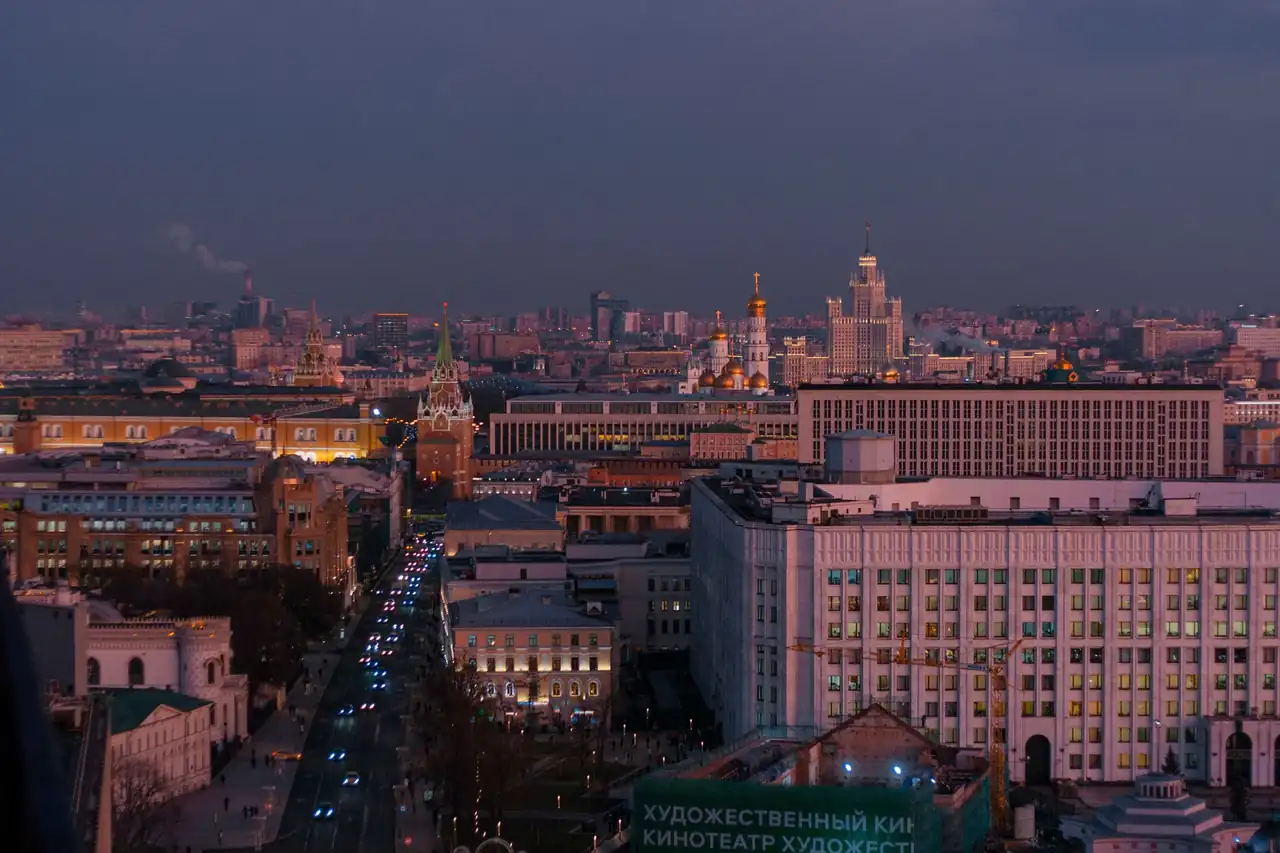
The Moscow Marathon has established itself as one of Europe’s great autumn city races thanks to a very unusual combination: a fast course, a monumental backdrop, and massive participation that turns the city into a continuous ribbon of asphalt and the sound of running shoes.
Since its debut in 2013, the race has restored the heartbeat of a capital with a long-distance tradition and has grown to comfortably exceed 30,000 entrants in its best recent editions. The key figure is not only the scale, but the way the organizers have managed to blend international elite athletes, recreational runners, and a certified course that runs along the Moskva River and passes many of the city’s most recognizable landmarks.
A young race with a long heritage
The modern history of the marathon began in 2013 as the successor to the Moscow International Peace Marathon, a previous event that had defined an era but had lost momentum after the fall of the Soviet Union. The new race arrived to rebuild a culture of street running and long distance in the Russian capital, this time with contemporary standards of measurement, timing, and safety.
World Athletics certifies the course, and the race is also part of the AIMS orbit, a credential that matters more than it may seem: it means the distance is exact, the route is reviewed rigorously, and the times achieved have international sporting value. That seal has helped the race become a magnet for athletes looking for a fast urban marathon, but also for amateurs who want to run among avenues, bridges, and monumental facades without losing the reassurance of serious organization.
The event is usually held in the second half of September, typically taking over the central or final weekend of the month. That timing is no accident. Moscow usually offers a milder climate then than in summer: cool mornings, dry or slightly humid air, and temperatures that, in marathon terms, make it easier to sustain pace. In a long race, the thermometer can be just as decisive as the elevation profile.
A course that shows off the city without punishing the legs
The classic route is known for its favorable profile. It is a mostly flat course, with urban asphalt and a succession of straight sections, broad turns, and stretches along the river that make it easier to find rhythm early on. This is not a marathon to climb; it is a marathon to pace carefully and let the legs work efficiently, as if the city were setting a long, steady beat.
The start and finish are located in the Luzhniki Olympic complex area, a spacious and logistically practical point for handling thousands of runners. From there, the route heads through central avenues, runs along the banks of the Moskva, and sketches a visual map of the capital that includes sights such as the Kremlin, Red Square, the Bolshoi Theatre, Christ the Saviour Cathedral, and several of the Stalin-era skyscrapers known as the Seven Sisters. Running there is not just about collecting kilometers; it is about crossing a city that puts itself on display.
The race usually shares that showcase with a parallel 10K, a distance that attracts runners less focused on the full marathon and also helps concentrate spectators at the most visually striking points of the course. Taken together, the event works as a two-part day: endurance for some, speed for others, but with the same story of a city opening itself to sport.
Why the course favors fast times
Fast times do not happen by chance. A low elevation profile, continuous asphalt, and the absence of sudden changes in altitude reduce the energy cost of each stride. On top of that, there is pacing logistics designed for runners of all levels, with staggered starts and groups that help avoid chaos in the first kilometers.
The marathon has been the stage for standout performances since its earliest editions, but the leap in quality has been especially noticeable with the rise in elite level and the event’s consolidation on the international calendar. In 2024, Moroccan runner Youness Bennar set the men’s course record at 2:11:34, while the women’s best mark belongs to Russian runner Sardana Trofimova, who ran 2:28:02 in 2020. These are times that reflect both the speed of the course and the race’s competitive maturity.
For an urban marathon to produce times like these does not mean it is easy. Quite the opposite: a fast course demands precision. A slight overexertion in the first ten kilometers can take its toll in the second half, where fatigue settles in like a slow fog. Moscow gives nothing away, but it also hides no wild traps. That is why it appeals to those who want to run fast without giving up a powerful visual experience.
The scale of the event and its growth
The race’s growth has been one of the most visible phenomena in Russian running. The first edition brought together around 5,000 participants across all distances, a modest figure compared with today, but enough to mark the return of a major urban marathon to the capital. Over the years, the event multiplied its reach until it drew tens of thousands of people and established itself as the country’s leading long-distance race.
By 2019, the marathon had already surpassed 10,000 finishers and the 10K nearly 13,000, while in 2020 the overall event once again came close to very high figures despite the restrictions of the public health context. The pandemic forced the 2021 edition to be canceled, but the later return confirmed that demand remained intact. In 2024, the event once again set a participation ceiling and reinforced its status as a major mass event.
That volume changes the race experience. It is not just about running fast or finishing. You are running inside a huge machine, with aid stations, checkpoints, volunteers, runners from many countries, and a city that shares hours with thousands of moving people. The feeling is that of a human river flowing alongside the real river.
The elite, the prizes, and the weight of competition
The Moscow Marathon does not live solely on its mass-participation base. The elite field plays an important role, and the organizers reserve substantial prizes to attract top-level athletes. In recent editions, the overall podium has received amounts far beyond the symbolic, strengthening the appeal for international runners with serious personal bests on their records.
The bonus system also rewards records, national marks, and certain time thresholds. That scheme adds competitive tension because winning is not the only thing that matters: it also matters to do it quickly, fine-tune strategy, and take advantage of a favorable day. For professionals, the race offers a double reading. On one hand, it is a prestigious event in a historic capital. On the other, it is a setting where performance can be pursued with tangible reward.
The presence of athletes from Africa, Europe, and Asia has given the event a more cosmopolitan identity over the years. In 2024, Bennar’s victory confirmed that the race no longer belongs only to a local narrative. Moscow has gone from being a national rebuilding event to a marathon with its own voice on the international distance-running map.
More than 42.195 kilometers: a complete urban experience
The organizers have added elements that broaden the scope of race day. In addition to the marathon and the 10K, there are corporate and student relays, children’s races, and spaces designed for family audiences. All of this turns the event into a city festival with different layers of participation, where pure performance coexists with the social dimension of sport.
The relays and children’s races help ensure the event is not limited to elites or classic marathon runners. They also reinforce the logic of a sports weekend, with an ecosystem that begins before the main start and extends through the Luzhniki complex with an almost festival-like rhythm. The result is a race that feels less isolated and more integrated into urban life.
The city gains visibility and the runner gains context. Few marathons allow you, within a matter of hours, to move from an open sports venue to a monumental axis where Russian history appears in the form of domes, walls, and avenues. That contrast is part of the appeal. Moscow does not present itself as a neutral backdrop, but as a protagonist in the same way as the athlete.
Registration, requirements, and details not to overlook
Participation is handled through official channels, and the process requires basic documentation, especially a valid medical certificate. That requirement is not decorative. In a 42.195-kilometer race, safety cannot be treated as an afterthought. There are also specific rules for bib pickup, which is usually done at the pre-race expo, with no improvised distribution on race day.
Fees vary depending on the registration date and the participant’s nationality. In recent editions, marathon prices have ranged from 5,000 to 9,000 rubles, with discounts for certain groups. For relay teams, the fees are considerably higher because of the race format itself. These are important figures for anyone comparing European races and wanting to assess the real cost of traveling to and running in Moscow.
There is also a six-hour time limit to complete the long distance, a reasonable margin for a mass marathon but demanding enough to require pace control. For many runners, that clock creates a very simple mental framework: start cautiously, do not yield to early enthusiasm, and save energy for the stretch when the legs begin asking for negotiation.
International participation, sports tourism, and the atmosphere of a major event
One of the reasons the race has grown so much is its ability to attract runners from outside Russia. In some recent editions, participants have come from dozens of countries, placing the race firmly in the international sphere. The marathon then functions both as a sporting product and as an engine of urban tourism: hotels, transport, restaurants, and cultural activity all move around race weekend.
The tourist course is not just decoration. It is a sporting and city strategy. A runner who crosses the historic center, passes over bridges, and sees the dome of a cathedral or the silhouette of an iconic theater does not only run; they remember the race. That visual memory is worth a lot in a calendar crowded with similar events. Moscow competes with legs, yes, but also with image.
Membership in the BRICS Marathon League has also strengthened the event’s profile within a broader network of major Russian marathons. That framework helps give it continuity, narrative, and a certain circuit logic, something that appeals to those looking to combine travel and long-distance races in different cities.
What the Moscow Marathon leaves on the running map
The Moscow race neatly captures what a large part of the experienced recreational runner is looking for today: a fast course, solid organization, and a recognizable urban identity. It is not an anonymous marathon or a route designed only to collect bibs. It is a race with recent history, ambition, and the ability to turn the city into a living backdrop for human effort.
Its evolution also says a great deal about the current state of running in major capitals. Where there used to be a single distance event, there is now a race with multiple distances, family formats, mass participation, and a narrative that blends sport, tourism, and local pride. That mix, when well executed, explains why Moscow has gone from being a novelty to occupying a permanent place in international conversation about urban marathons.
The race remains, at its core, what the name of a great capital promises: a long race, hard in the right way, and visually powerful. Anyone who runs in Moscow is not just chasing a time or a medal; they are crossing a city that has learned how to run itself.
You may also like: Galaxy Vladivostok Marathon 2026: route, schedules, and key information.



How to prevent thigh chafing: causes and real solutions

Women’s running windbreakers: seven jackets and how to choose

Do more workouts get rid of soreness? A guide for runners

Jaén Half Marathon 2026: Record 3,800 Runners Registered

Men’s short running tights: how to choose the right pair

World Triathlon confirms data breach involving medical data

Izan Edo targets podium at Miyazaki World Cup

María Pérez ranks ninth in World Athletics’ 2026 top ten

Dos Santos, Duplantis and Sawe: World Athlete of the Year finalists

San Silvestre Vallecana 2026: 42,000 places, prices and start times

 Races3 months ago
Valencia Half Marathon 2027: date and registration

 Reviews and Comparisons4 months ago
Asics Gel-Roadmiles 3 for men: review and current price

 Races3 months ago
Valencia Marathon 2026: entry, ballot and course

 Reviews and Comparisons4 months ago
Asics Gel Sonoma 8 Gore-Tex: complete analysis for trail and rain

 Sneakers3 months ago
Saucony Endorphin Pro 4: full review and verdict

 News5 months ago
Strava API 2026: what changes for clubs, challenges and runner apps?

 Reviews and Comparisons5 months ago
Nike Alphafly 3: opinions, sensations, and real key points

 Reviews and Comparisons4 months ago
Under Armour running shoes review 2025-2026: models and key features

 Sports Equipment4 months ago
Shoe sizes in cm: a clear guide to getting the right fit for your footwear

 Sneakers3 months ago
Skechers GO RUN Consistent 2.0 analysis: comfort and limits

 News5 months ago
Valencia Marathon 2026 route: key tips to train and run better

 Sneakers4 months ago
Adidas Adizero Boston 13 for men: review and verdict