Races
White Nights Marathon: complete guide to the St. Petersburg race
One of Europe’s most unique urban marathons, among palaces, wide avenues, and near-constant light.

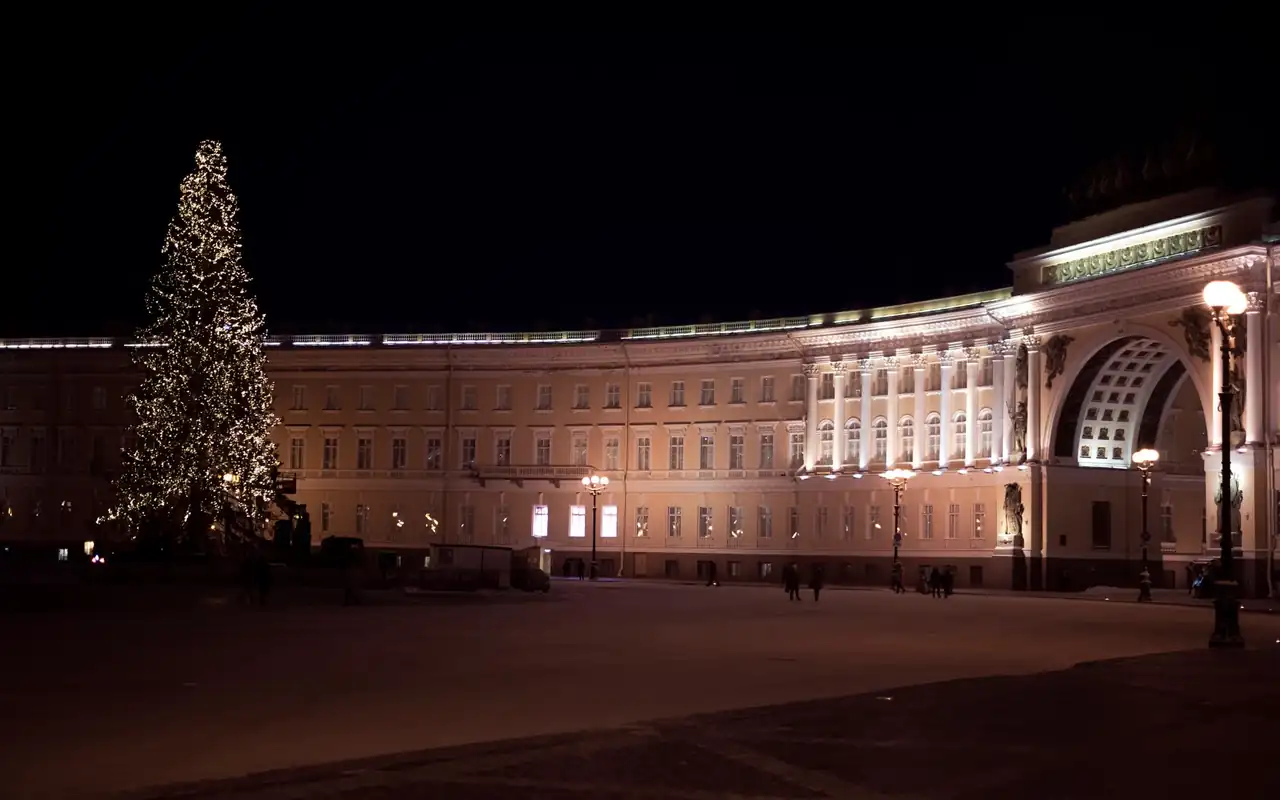
Saint Petersburg turns the White Nights Marathon into something more than a long-distance race: an urban run in which the clock shares the spotlight with the light, imperial architecture, and a sense of summer that stretches into the early hours of the morning. Held in early July, the event takes advantage of the white nights phenomenon to create a scene that is hard to mistake for that of any other European marathon.
The event combines a certified 42.195-kilometer marathon with a 10-kilometer race and, in some editions, a relay format. The route runs through the historic center of the Russian city and passes landmarks such as Palace Square, St. Isaac’s Cathedral, the Admiralty, and the Peter and Paul Fortress, a monumental lineup that turns every stretch into a moving postcard.
A race born to the rhythm of northern light
The origins of the White Nights Marathon go back to 1990, in the former Leningrad, as part of the white nights festival. Its founding idea was as simple as it was powerful: to run when the day never quite goes away. In its first editions, the start was set at night, even as late as 11:00 p.m., so that the city would be wrapped in a twilight brightness that remains the event’s defining feature.
Over time, the race adopted more conventional schedules, but without losing that very special atmosphere. There were years with an early morning start and, in more recent stages, returns to nighttime schedules to reinforce the bond with the natural phenomenon that gives the race its name. That balance between tradition and organizational adjustment explains part of its staying power: it is not just a race, but a way of reading the city from the asphalt.
Recent history has also been marked by interruptions. There was no edition in 2020 or 2021 because of the pandemic, and the event was not held between 2022 and 2023 due to the geopolitical context linked to Russia’s invasion of Ukraine, according to the results history and available public references. The return in 2024, however, confirmed the race’s ability to regain momentum and once again attract thousands of runners.
A course designed for fast running among monuments
One of the features that has most strengthened the race’s prestige is its route. The marathon covers a significant part of the heart of Saint Petersburg with an urban layout that, in performance terms, is very friendly: very flat profile, little elevation gain, and wide avenues. For runners chasing a fast time, that combination matters as much as the beauty of the setting.
The start is usually near Gazprom Arena, on the western side of the city, and the finish is set in Palace Square, one of the country’s most recognizable settings. Along the way appear Nevsky Prospect, the Neva River, St. Isaac’s Cathedral, the rostral column, and the Peter and Paul Fortress. There is no mountain scenery or rugged terrain here: what dominates is a fast, very urban line, crossed by monumental facades, bridges, and embankments that amplify the feeling of running inside a museum-city.
That design favors fast paces and, in fact, the event has produced internationally competitive times. The historic men’s course record stands at 2:11:46, set by Nikolay Kerimov in 2003, while the women’s record had long been 2:35:35 by Vera Trubnikova in 2012, until the race rewrote its list of marks again in 2025. For an urban race with so much visual appeal, that is no small feat.
Distances, levels, and a shorter entry point
The White Nights Marathon is not designed for elites alone. The presence of a 10K widens the field of participants and allows the event to work as a celebration of road running, not just as an extreme endurance test. That combination of distances helps explain why the event has grown so much in the number of entrants and why it remains relevant beyond the professional circuit.
In certain editions, a relay format has also been offered, with four-person teams sharing the 42.195 kilometers. This formula introduces a social dimension that fits well with an event that, from the start, has sought to connect sport, tourism, and international fellowship. The full marathon remains the main showcase, but the 10K opens the door to runners who prefer a shorter experience without giving up the atmosphere of a major event.
More recent starts have been concentrated in the afternoon or at night, with staggered times for the different races. That detail is not minor: running under a light that never quite disappears changes the perception of effort, softens the feeling of the day ending, and makes the city seem suspended. In a marathon, that kind of atmosphere is part of the race too.
Prizes, elite competition, and a growing purse
The race has strengthened its competitive profile with an increasingly ambitious prize structure. In 2025, the total prize fund reached 9 million rubles, with awards of up to 900,000 rubles for the overall marathon winners and specific amounts for the top 10K finishers. The distribution rewards not only the international elite, but also national runners and age-group categories.
That prize structure has helped attract a range of profiles, from top-level African athletes to very solid Russian marathoners. The recent history shows wins by runners from Kenya, Morocco, Turkey, Ethiopia, and Russia, reflecting a more diverse competitive level than its geographic location might suggest. The race no longer belongs to a single distance-running school; it serves as a meeting point for several.
Symbolic forms of reward have also become established beyond money: medals for finishers, trophies for winners, and recognition for age groups. In an urban course so closely tied to sports tourism, those details are part of the event’s story just as much as the times. The prize is not only crossing the finish line; it is also entering a kind of city album.
Recent results and the race’s evolution
The marathon’s restart after the health-related pause and the later interruption came with a notable level. In 2024, Sammy Korir won the men’s race in 2:15:33 and Alena Tatarinova won the women’s category in 2:32:46. A year later, the course once again delivered strong times in a race that had fully recovered in sporting and participation terms.
Before that return, the recent history had featured highly recognizable names. Yuri Chechun dominated several editions between 2016 and 2019, while on the women’s side runners such as Maria Osokina and Nadezhda Leshchinskaya stood out. In 2019, for example, Chechun posted 2:18:41 and Osokina won in 2:34:11, times that confirm the competitive stability of a race that rarely falls outside the regional and international elite map.
The 2025 event raised the bar even further with performances very close to the historic bests. Ilham Tanui Özbilen took the men’s victory in 2:11:55, just nine seconds off the course record, while Lensa Debele Jaleta stopped the clock at 2:29:05, a new women’s best for the course. In a city where summer seems to stretch the minutes, the race has learned to do the same with its records.
What the white nights factor gives a runner
The White Nights Marathon’s great singularity is not only aesthetic. Running in Saint Petersburg in late June or early July means doing so under a prolonged brightness that changes the way effort is perceived. The mind relaxes sooner than usual, the end of the race feels more cinematic, and fatigue seems to blend into a kind of temporal suspension.
In purely athletic terms, the race also favors those seeking a fast event. The flat course, the layout of the wide avenues, and the absence of major changes in elevation turn the route into a long, open track, closer to a great city road than to a scenic marathon over mountains or demanding cobblestones. That mix of speed and beauty explains why so many runners include it among their goals.
The experience, however, goes beyond the clock. Saint Petersburg offers the image of a major cultural capital: monumental facades, water, reflections, bridges, and a low light that turns buildings golden. For a runner, that means moving through a city that does not merely serve as a backdrop, but actively takes part in the race. Every kilometer seems to have its own staging, as if the course were unfolding in chapters.
International participation and an increasingly massive event
The race has gone from being a national event with regional reach to a high-volume one. In 2013 it already brought together runners from 40 countries, and in 2015 it surpassed 11,000 participants across all its formats. More recently, the 2024 edition brought together around 17,000 runners, a figure that confirms its status as one of Russia’s major running events.
That growth rests on several factors. On the one hand, the combination of marathon, 10K, and relays multiplies interest. On the other, the city has obvious tourist appeal. And finally, the event has managed to build a clear identity: it is not just any marathon in a major capital, but the race that capitalizes on a unique natural phenomenon in a first-rate historic setting.
Membership in the Association of International Marathons and Distance Races has helped reinforce its technical credibility. The certification of the course and the presence of measurement controls provide guarantees for runners competing for official times. In modern running, where many races compete to distinguish themselves, that certification remains an essential part of prestige.
What the race feels like from the inside and why it continues to attract so many runners
The organization of the White Nights Marathon has gone through very different eras, from more informal stages with less crowd support to a more and more professional format. Even so, it retains something of a marathon with its own personality, less polished than other major Western European events and, precisely for that reason, more recognizable. That controlled roughness gives it character.
Those who arrive at the start find the atmosphere of a major urban occasion, but not necessarily the constant buzz of the majors. There are local runners, international visitors, groups of friends, relay teams, and a sense that the whole city adapts to the route for a few hours. Aid stations, hydration, and logistics have evolved over the years, although the event still carries the aura of a race with history and, at the same time, room to improve.
The race also has a memory component. Across its different stages it has reflected political, economic, and sporting changes in Russia, and it has survived suspensions, adjustments, and returns. In that sense, the White Nights Marathon is not just a date on the calendar: it is an X-ray of urban running in a specific context, a mix of physical endurance, heritage, and light that refuses to disappear.
A race that sums up the city in 42.195 kilometers
Some marathons stand out for natural scenery, others for historical density. The White Nights Marathon clearly belongs to the second group, but it adds a variable that is hard to copy: the perpetual light of the northern summer. That condition turns the race into a visual and emotional experience that matches the monumental personality of Saint Petersburg.
The result is an event that combines speed, history, and an atmosphere almost suspended in time. That is why it keeps growing, why it attracts runners from many countries, and why its times are as interesting as its images. It is not just a marathon in a beautiful city. It is a race where the city, the season, and the clock seem to have agreed to run at the same pace.
On the global running map, few events join the epic of long-distance racing and the magnetism of a night that never ends so naturally. That is its strength, and also its difference.



How to prevent thigh chafing: causes and real solutions

Women’s running windbreakers: seven jackets and how to choose

Do more workouts get rid of soreness? A guide for runners

Jaén Half Marathon 2026: Record 3,800 Runners Registered

Men’s short running tights: how to choose the right pair

World Triathlon confirms data breach involving medical data

Izan Edo targets podium at Miyazaki World Cup

María Pérez ranks ninth in World Athletics’ 2026 top ten

Dos Santos, Duplantis and Sawe: World Athlete of the Year finalists

San Silvestre Vallecana 2026: 42,000 places, prices and start times

 Races4 months ago
Valencia Half Marathon 2027: date and registration

 Races4 months ago
Valencia Marathon 2026: entry, ballot and course

 Reviews and Comparisons4 months ago
Asics Gel-Roadmiles 3 for men: review and current price

 Reviews and Comparisons4 months ago
Asics Gel Sonoma 8 Gore-Tex: complete analysis for trail and rain

 Sneakers3 months ago
Saucony Endorphin Pro 4: full review and verdict

 News5 months ago
Strava API 2026: what changes for clubs, challenges and runner apps?

 Reviews and Comparisons5 months ago
Nike Alphafly 3: opinions, sensations, and real key points

 Reviews and Comparisons4 months ago
Under Armour running shoes review 2025-2026: models and key features

 Sports Equipment4 months ago
Shoe sizes in cm: a clear guide to getting the right fit for your footwear

 Sneakers3 months ago
Skechers GO RUN Consistent 2.0 analysis: comfort and limits

 News5 months ago
Valencia Marathon 2026 route: key tips to train and run better

 Sneakers4 months ago
Adidas Adizero Boston 13 for men: review and verdict