Races
Nitty Gritty Marathon: date, route, prices, and key details
Schedules, fees, route, distances, and requirements for a very particular mountain race in Montana.

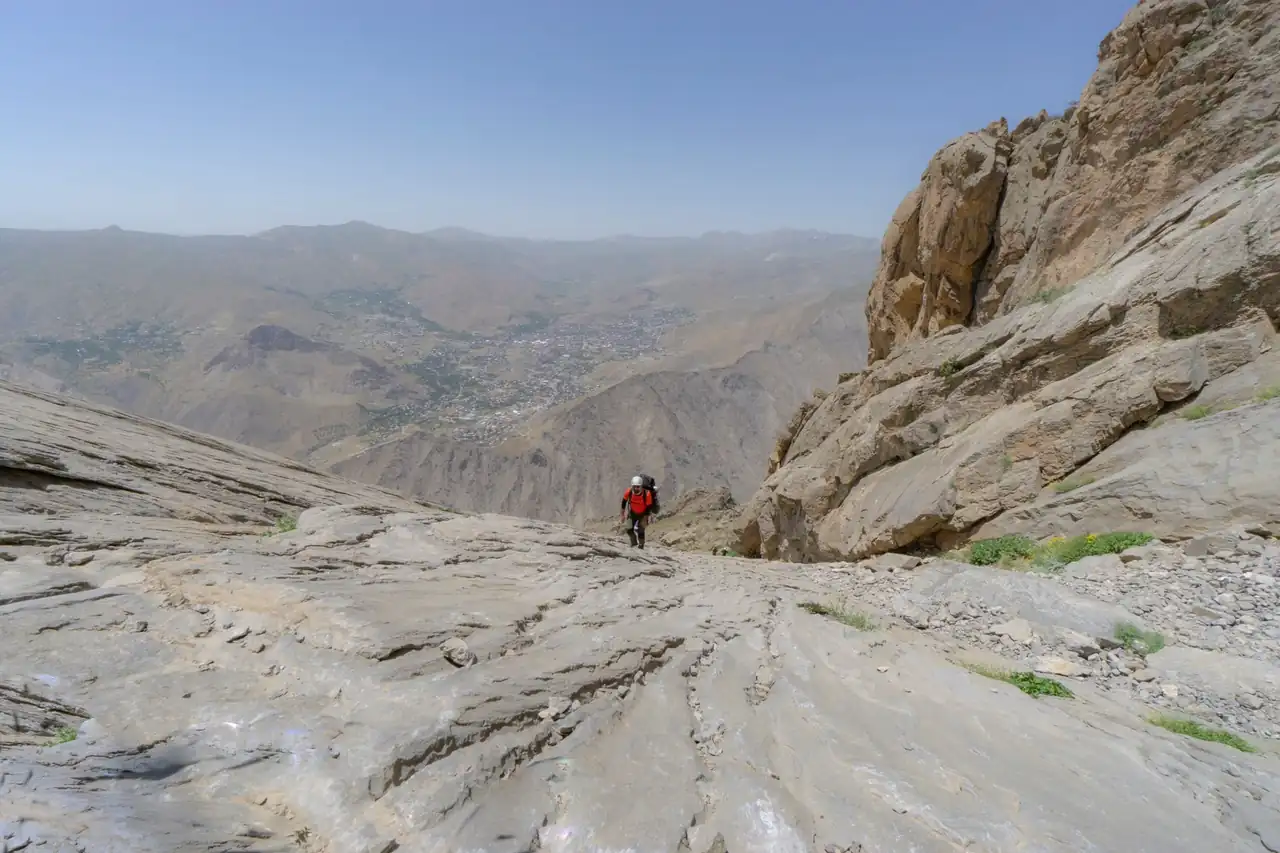
Red Lodge Mountain once again brings together road, trail, and mountain runners in an event that does not resemble a conventional marathon. The course changes every year, the elevation gains are serious, and the mix of access roads, singletrack, and stretches of bushwhacking gives character to a race that embraces trail running in its roughest and most social form.
The 2026 edition of the Nitty Gritty Marathon is scheduled for Sunday, August 16, in Red Lodge, Montana, with the start and operations base at Red Lodge Mountain, 305 Ski Run Rd. The event offers an individual marathon, a half marathon, relay races, and a short hot lap distance, with prices starting at 40 dollars and increasing depending on the chosen format.
A mountain marathon with a base-camp spirit
The image this race projects is that of an unadorned mountain day: people coming and going from the start area, backpacks on the ground, dogs tied up or running loose, brief conversations before taking position, and a snack table that ends up being as visible as the finish arch. The atmosphere is informal, but the challenge is not; the terrain demands legs, patience, and a certain ability to accept that pace falls apart quickly as soon as the incline bites.
Its slogan, low key, high elevation, sums up very well what it offers. There is no grandiose staging here, nor a record-chasing narrative. What matters is something else: a race with a very distinct identity, where elevation gain, surface conditions, and the sense of adventure all carry weight. The organizers present it as a return to the roots of trail running, with good terrain, good company, and beer at the end as part of the ritual, not as an excuse.
That approach has made the race a very singular fixture on the local calendar. Runners arriving looking for a mountain experience find a race that leaves mud, dust, and muscle memory behind. And those entering as a team discover an almost playful version of the marathon, because the relay format opens the door to groups of two, three, four, five, or six members, a detail that eases the competitive load without making the course any less demanding.
Date, location, and start times
The race takes place at Red Lodge Mountain Resort, in the town of Red Lodge, in the state of Montana. The address provided for the start and finish is 305 Ski Run Rd, Red Lodge, MT 59068. The setting fits the race profile: alpine surroundings, technical terrain, and a constant sense of altitude and openness that accompanies runners from the very first meter.
The 2026 schedule sets several start times, staggered by category. The individual marathon starts at 7:30, the relays start at 8:30, the half marathon at 9:30, and the hot lap at 10:30. The organizers themselves recommend arriving 45 minutes early for registration and the pre-race meeting, a reasonable margin in a race where logistics can matter as much as the elevation gain.
The timing is not trivial, because August usually brings still-warm days in the valley floor, but more changeable conditions at higher elevations. The combination of temperature, sun, dust, and sustained effort gives the race a very recognizable late-summer profile. The race does not rely on a single difficulty, but rather on the sum of small setbacks that, together, make the day demanding even for runners used to the mountains.
Distances, formats, and entry fees
The official program includes a marathon, a half marathon, marathon relays, and a short 4.31-mile distance known as the hot lap. That short figure is equivalent to a little over 6.9 kilometers, a distance that sits between hard training and a short race, although here the terrain turns it into a much harsher experience than the number suggests on paper.
The published 2026 prices place the hot lap at 40 dollars, the half marathon at 40 dollars, and the individual marathon at 75 dollars. In the case of the relays, the range goes from 95 to 240 dollars, depending on team size. There is also a price of 25 dollars for runners under 17, an uncommon reference in races of this type and one that broadens the participation base.
In terms of registration, the race offers a fairly clear relationship between cost and format. The most accessible option is not necessarily the least demanding, because even the short distance still includes elevation gain and unstable terrain; the longest option, on the other hand, concentrates the technical side of the challenge. The price therefore does not buy ease, but rather time exposed to the mountain setting.
What the course is like and why it is so punishing
The course changes every year, a feature that means there is no illusion of memorizing a route and repeating it automatically. The organizers indicate that each lap measures approximately 4.31 miles and gains around 1,150 feet of elevation per lap, which is about 350 meters of ascent. The half marathon is completed in three laps and the marathon in six, a structure that multiplies the wear and tear as the miles go by.
The terrain combines singletrack, access roads, and stretches of bushwhacking. In runner language: narrow trails, wide roads, and areas where vegetation, irregular routing, or the lack of a clear track force you to read the ground carefully. This is not a race to be taken on autopilot. The body works, yes, but so does the mind, because the course calls for constant adaptation and a certain tolerance for uncertainty.
In addition, the organizers note that there are no aid stations on the course. Runners pass through the start/finish area, where they can get water, food, and use the restroom, but if they need fluids or fuel between passes, they must carry it with them. That detail makes the event feel closer to a self-supported endurance outing than to a race with constant support. Effort management matters just as much as fitness.
The marking is also designed for a mountain environment, with pink and green ribbons and signs at intersections. There are no course marshals, so attention cannot relax. In its 2026 version, the event is presented as a continuous circuit that does not repeat trail segments, which adds interest and reduces the feeling of a mechanical loop, though not the difficulty. Every new stretch brings its own reading of the terrain, as if the race changed its mood with each lap.
Who can run it and what kind of atmosphere to expect
The organizers describe it as a race suitable for all ages and levels, although in practice that label sits alongside a tougher reality: this is an event where strong hiking, pacing, and accepting the elevation gain are part of the craft. The phrase power hiking appears almost as a statement of intent, and not by chance. Walking uphill here is not a secondary resource, but a tactical part of the race.
Dogs are also allowed, on or off leash, reinforcing the rural, laid-back tone that sets the event apart. That said, organizers ask for control, especially in the food areas. The coexistence of runners, companions, and animals creates a scene rarely seen in more urban races: a marathon with the feel of a mountain weekend, where mud on the shoes goes hand in hand with the smell of dry grass and beer.
Runners are also asked to bring bear spray, a requirement that is not decorative in this kind of environment. The organizers even note that some can be borrowed, which gives a clear hint of the local reality. They also recommend carrying a mobile phone during the course and warn that there will be medical staff at the main base, though no patrols on the route. It is a modest logistical framework, very much in keeping with the race’s character.
The logic of a small race with a very strong identity
Part of the appeal of this marathon is that it does not try to be something it is not. It does not aim for the polish of a major city event or the cleanliness of a fast circuit measured to the millimeter. Its value lies in the personality of the terrain, in the relationship between the local community and runners, and in that blend of toughness and closeness that often disappears in larger events.
The event’s own summary describes it as small but powerful. That description fits a trend that is increasingly appreciated in trail running: races of modest scale, but with enough ingredients to deliver an intense experience. In the Nitty Gritty Marathon, the mountains, the elevation gain, the dry August weather, and the feeling that the runner is not just covering a distance but entering into a kind of pact with the place all carry weight.
The fact that the course changes every year also helps keep that interest alive. There is no automation, no routine of identical routes. Each edition forces runners to read the mountain again, and that adds sporting and narrative value. For some runners, that element of uncertainty is precisely what makes an event memorable; for others, it is a useful warning that planning here has to remain flexible.
What to keep in mind before this race
The first key is to understand that the terrain calls for gear and attitude suited to mountain trail running. A circuit with continuous climbs, technical sections, and no aid stations is not approached the same way as an urban marathon. Self-sufficiency matters more, as does the ability to move confidently on uneven surfaces. The race does not reward only running faster; it rewards moving better in a complex environment.
The second key is accepting that the lap-based structure has a major impact on strategy. Three laps for the half and six for the marathon mean repeating climbs and descents, even if the route is not identical from year to year. That format wears down concentration, because each lap leaves the body a little more exposed and the mind a little more tired. It is a race that forces you to live with fatigue in layers.
The third is coexistence with the environment. This is not just a race; it is a mountain day in which weather, wildlife, and the logistics themselves can alter the experience. Carrying a phone, respecting the use of bear spray, and planning for water between checkpoints are practical aspects that are obvious in this kind of setting. Safety here is not separate from performance, but integrated into it.
Finally, there is a social dimension that should not be overlooked. The beer, the snacks, the basecamp, and the option to race in relay reflect a more open, less solemn idea of competition. That mix explains why the race appeals to very different runners: from those seeking a hard challenge to those who simply want to spend a trail day with friends, dogs, and plenty of elevation gain.
A race that tests both lungs and adaptability
The Nitty Gritty Marathon stands out not for speed or for chasing benchmark times. Its identity lies elsewhere: a changing course, accumulated elevation gain, rough terrain, and an atmosphere that blends community, rustic character, and endurance. It is a race that makes it clear from the very first glance that mountain trail running is still a discipline where the way you run matters just as much as the finish time.
The 2026 edition reinforces that idea with a clear program, concrete prices, and a logistical rulebook that does not try to soften the experience. Anyone showing up at Red Lodge Mountain will find a marathon with personality, demanding and unfiltered. The race does not promise comfort; it promises mountains, and it does so with the frankness of someone who knows that is precisely where its appeal lies.
In a calendar full of races that look alike, this one stands out because it retains an almost handcrafted feel. It is an event that smells of dust, warm wood, open trail, and rest earned at the end. And on the North American trail map, that kind of authenticity still counts for more than any gimmick.



How to prevent thigh chafing: causes and real solutions

Women’s running windbreakers: seven jackets and how to choose

Do more workouts get rid of soreness? A guide for runners

Jaén Half Marathon 2026: Record 3,800 Runners Registered

Men’s short running tights: how to choose the right pair

World Triathlon confirms data breach involving medical data

Izan Edo targets podium at Miyazaki World Cup

María Pérez ranks ninth in World Athletics’ 2026 top ten

Dos Santos, Duplantis and Sawe: World Athlete of the Year finalists

San Silvestre Vallecana 2026: 42,000 places, prices and start times

 Races3 months ago
Valencia Half Marathon 2027: date and registration

 Races3 months ago
Valencia Marathon 2026: entry, ballot and course

 Reviews and Comparisons4 months ago
Asics Gel-Roadmiles 3 for men: review and current price

 Reviews and Comparisons4 months ago
Asics Gel Sonoma 8 Gore-Tex: complete analysis for trail and rain

 Sneakers3 months ago
Saucony Endorphin Pro 4: full review and verdict

 News5 months ago
Strava API 2026: what changes for clubs, challenges and runner apps?

 Reviews and Comparisons5 months ago
Nike Alphafly 3: opinions, sensations, and real key points

 Reviews and Comparisons4 months ago
Under Armour running shoes review 2025-2026: models and key features

 Sports Equipment4 months ago
Shoe sizes in cm: a clear guide to getting the right fit for your footwear

 Sneakers3 months ago
Skechers GO RUN Consistent 2.0 analysis: comfort and limits

 News5 months ago
Valencia Marathon 2026 route: key tips to train and run better

 Sneakers4 months ago
Adidas Adizero Boston 13 for men: review and verdict