Races
Paavo Nurmi Marathon in Hurley: guide, history, and route
Hurley’s quote combines Finnish tradition, rural scenery, and a local-flavored goal on Silver Street.

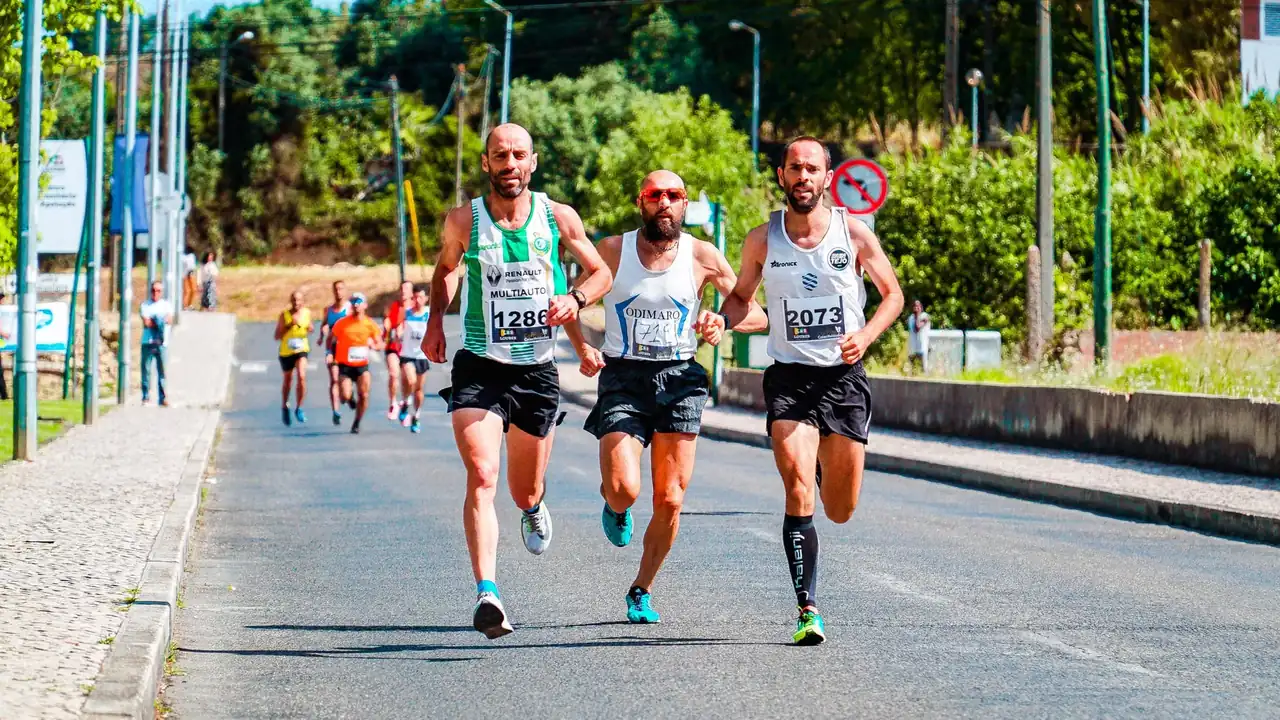
The Paavo Nurmi Marathon has earned its own place on the American running map thanks to an unusual mix of history, scenery, and local culture. It was born in 1969 and is still alive as Wisconsin’s oldest marathon, with a start in the Upson area and a finish in downtown Hurley, in Iron County.
Its personality is not found in the big spotlight or media records, but in the sum of its details: rural roads, small communities, local volunteering, and a finish line with Finnish tradition. It is a road race, long and demanding, but also a celebration of identity for a region marked by immigrant heritage and the pride of keeping an annual event that has already become part of the landscape.
A race born to honor a distance-running icon
The event takes its name from Paavo Nurmi, one of the great legends of world athletics. The Finn, nicknamed the Flying Finn, dominated middle- and long-distance events in the 1920s and left a mark that still weighs heavily in the sport’s imagination. The Hurley marathon was conceived as a tribute to that figure, but also as a cultural bridge between Finland and northern Wisconsin, where Finnish immigration left a very visible presence in towns, trades, and customs.
That context matters because it explains why the race is understood as more than just a sporting event. Since 1969, the event has functioned as a piece of collective memory. The community has sustained it with an almost handcrafted logic: neighborhood support, local committees, simple but solid logistics, and a ritual repeated year after year. In a calendar crowded with marathons that have a big-city aesthetic, another scale rules here. Less spectacle, more roots.
Its longevity also gives it historical weight. For decades, this race has been a meeting point for regional runners and visitors drawn by the blend of nature and tradition. In Wisconsin, where road races are abundant, its continuity has allowed it to build a very recognizable identity: a serious race, yes, but one that has not lost a festive, almost family-like air that sets it apart from more impersonal marathons.
The route between Upson and Hurley
The main course is a point-to-point race that usually starts in Upson and ends on Silver Street in Hurley. It covers about 42.195 kilometers on secondary roads, passing through small communities such as Iron Belt, Pence, and Montreal, and turning onto County Highway C before connecting with U.S. Route 51 toward the finish city. The underlying idea is simple, but very effective: move through the north of Iron County as if following a seam line between forests, gentle hills, and traces of the area’s mining past.
The profile is not flat in the textbook sense, although it does not punish runners with extreme climbs either. The route alternates paved stretches with nearly two miles of gravel and a constantly rolling terrain that demands smart running. That makes it an honest marathon: it does not hand out fast times, nor does it set an impossible trap. Those who reach the finish line usually have truly worked for it, both physically and in managing their effort, especially when August heat presses in and humidity creeps into the breathing.
One of its hallmarks is the rural character of the course. There are no grand avenues or tightly packed crowds לאורך the entire route. Instead, there are open road sections, wooded areas, and landscapes that change slowly. That kind of setting has a particular effect on runners: it reduces visual noise but amplifies inner dialogue. Every kilometer becomes clearer, almost more audible. The stride, the wind, the crunch of gravel, the sound of aid stations being set up at the edge of the route.
The organization has adapted the course over the years, though the essence remains. Today, the race still embraces that linear format that requires precise coordination of transport, starts, and returns. That logistical complexity does not diminish its charm; on the contrary, it reinforces the feeling that this is an event with personality, closer to a one-day expedition than to a closed-loop urban race.
Distances, atmosphere, and a program that goes beyond the marathon
The race’s name is the most visible part, but its weekend includes several options for different profiles. The full marathon is joined by a half marathon, relays, handcycle, and a nighttime 5K that serves as a family-friendly prelude to the big Saturday race. That diversity has been key to keeping the event from targeting just one audience. There is room for those seeking the classic 42.195-kilometer challenge and also for those who prefer a shorter distance or a more social participation.
The evening 5K, known as the Twilight 5K Run/Walk, adds a different atmosphere. It is usually held on Friday, alongside the pre-race fair or expo, and works as a small celebration open to all ages. It is a smart part of the program because it makes the marathon feel less like an isolated morning and more like a full weekend. In races like this, the schedule matters as much as the course: the atmosphere is built in layers.
The half marathon also has its own role, with a different start and a less demanding logic, although it shares the same core language: road, community, and the landscape of northern Wisconsin. In recent years, the organization has set tiered fees based on registration date, with prices in 2026 at $80 for the marathon, $60 for the half, $200 for the relay, and $30 for the general 5K, while the youth 5K event was around $20. These figures place the event in a mid-range bracket for the U.S. market, without flashiness or luxury promises.
The weekend structure is designed to support participation and tradition at the same time. There is bib pickup, a pre-race dinner, a torch-lighting ceremony, staggered starts, and a post-finish party with food, music, and a local presence. It is not a decorative add-on to the sport; it is part of the event’s DNA. Those who finish do not find a cold finish line, but a small social hub where the race continues at a different pace.
A finish line that smells like soup and small-town life
The finish in Hurley is what makes this race so memorable. On Silver Street, finishers are welcomed with a combination of celebration and regional cooking, with mojakka as the most recognizable symbol. It is a traditional stew with Finnish roots that has become associated with the event’s identity almost as much as the medal itself. Instead of limiting itself to standard post-race refreshments, the organization offers a scene with local flavor, and that leaves a mark.
That cultural dimension is no small thing. Many races adopt identity elements to stand out, but here they do not feel like a cosmetic strategy. The connection to Finnish heritage is structural. The music, the food, the cultural references, and the language of community are part of a broader narrative about immigration, labor, and persistence. In a country with thousands of road races, that anchor gives it a different texture.
The finish celebration also has a sporting meaning. After so many miles of road, wind, and open stretches, entering downtown Hurley creates an almost cinematic change of pace: from rural calm to the contained bustle of Silver Street. The runner moves from the outdoors into human shelter in a matter of minutes. It is a simple but effective contrast, and it helps explain why those who return, come back: the experience does not end with the stopwatch.
Records, times, and competitive profile
The race’s sporting history has left marks that have stood for decades. The men’s marathon record is 2:19:10, set by Richard Wilde in 1978, while the women’s record is 2:47:49, achieved by Mary Bange in 1979. Both marks speak to another era, but also to the relative toughness of the course and the identity of an event that has never tried to become an exclusively elite showcase.
In a race like this, records matter, but they do not monopolize the conversation. The list of winners usually mixes regional talent, historic names, and participants who return year after year out of loyalty more than ambition for a personal best. That mix is one of the reasons the event has remained alive for so long. It does not depend on a single star or a momentary spike in fame, but on a steadier and less flashy base.
In addition, the race maintains a certified course and has been treated as a marathon suitable for official achievements within the criteria established by the organization. That nuance matters for those seeking a well-measured distance and a serious competitive experience, even though the event retains a community spirit above commercial shine. Seriousness is not at odds with local character; here they coexist without difficulty.
The competitive level is also shaped by the course profile. Gravel sections, slight rolling terrain, and the August weather context mean that times depend as much on talent as on race-day management. It is not a course built to chase record times in series. It is, rather, a marathon for reading your body well, managing energy, and accepting that the race has its own voice.
The real logistics of a linear marathon
Behind the beauty of the route lies a complex organizational machine. The point-to-point format requires transport, schedule coordination, and a finely tuned volunteer network. Runners do not just arrive, race, and leave; first they must pick up their bib, get to the start, adjust their planning, and then return from the finish to their vehicles or accommodations. All of that is part of the experience and, in a way, part of its charm too.
Aid stations are placed at regular intervals along the course, with water, sports drinks, and other basic support to sustain the effort. On a course like this, the distribution of resources is crucial, because there is no visual containment from a big city or an easy opportunity to improvise. The race asks for preparation and a sober management of effort; that is why it tends to be appreciated by those who enjoy classic, unadorned challenges.
The cancellation of the 2020 and 2021 editions because of the pandemic also reminded everyone how much these events depend on local coordination and community will. When the race returned, it did so by reinforcing its role as a seasonal fixture and confirming that it is still more than a name on a calendar. In small regions, endurance sport often acts like a thread stitching together economy, memory, and civic pride.
That fabric shows up in the small details: the pre-race dinner, the torch, the volunteers’ work, the transport, and the way the whole town gets ready to receive the runners. This is not an anonymous marathon. Even those who come from far away sense that they have entered a community that understands the race as part of the way it tells its own story.
Why it still matters on the running calendar
The Paavo Nurmi Marathon endures because it offers something many races have lost over time: a clear identity. It does not try to resemble a big metropolitan marathon, nor does it compete in the logic of mass spectacle. Its strength lies elsewhere: a long history, a course with character, and a local culture that has not been diluted. In journalistic terms, that makes it interesting; in sporting terms, it makes it recognizable.
It also connects with a beloved idea in running: that a race can be a total experience, not just a sum of kilometers. Here there is landscape, memory, logistics, custom, and a finish that is enjoyed in an almost domestic way. The marathon is run on the road, but it is understood in the town square, at the pre-race dinner, and in the conversation afterward. That breadth gives it depth and explains why it continues to attract runners of very different profiles.
The premier distance remains the marathon, but the event has managed to open doors without giving up its core. That balance between fidelity and adaptation is probably its greatest virtue. Hurley preserves a marathon that speaks of distance running, community, and legacy, and does so without needing to raise its voice. In a sport that is increasingly global and homogeneous, that restraint has special value.
For that reason, more than just an annual race in Wisconsin, this event works like a small capsule of living history. The runner who steps onto its course is not only chasing a time; they are also crossing a region, a memory, and a concrete way of understanding athletics. And at that intersection of sport and culture, the Paavo Nurmi Marathon still occupies a place that is hard to mistake for any other race.



How to prevent thigh chafing: causes and real solutions

Women’s running windbreakers: seven jackets and how to choose

Do more workouts get rid of soreness? A guide for runners

Jaén Half Marathon 2026: Record 3,800 Runners Registered

Men’s short running tights: how to choose the right pair

World Triathlon confirms data breach involving medical data

Izan Edo targets podium at Miyazaki World Cup

María Pérez ranks ninth in World Athletics’ 2026 top ten

Dos Santos, Duplantis and Sawe: World Athlete of the Year finalists

San Silvestre Vallecana 2026: 42,000 places, prices and start times

 Races3 months ago
Valencia Half Marathon 2027: date and registration

 Races3 months ago
Valencia Marathon 2026: entry, ballot and course

 Reviews and Comparisons4 months ago
Asics Gel-Roadmiles 3 for men: review and current price

 Reviews and Comparisons4 months ago
Asics Gel Sonoma 8 Gore-Tex: complete analysis for trail and rain

 Sneakers3 months ago
Saucony Endorphin Pro 4: full review and verdict

 News5 months ago
Strava API 2026: what changes for clubs, challenges and runner apps?

 Reviews and Comparisons5 months ago
Nike Alphafly 3: opinions, sensations, and real key points

 Reviews and Comparisons4 months ago
Under Armour running shoes review 2025-2026: models and key features

 Sports Equipment4 months ago
Shoe sizes in cm: a clear guide to getting the right fit for your footwear

 Sneakers3 months ago
Skechers GO RUN Consistent 2.0 analysis: comfort and limits

 News5 months ago
Valencia Marathon 2026 route: key tips to train and run better

 Sneakers4 months ago
Adidas Adizero Boston 13 for men: review and verdict