Races
Pattaya Marathon: route, distances, and key aspects of the Thai race
Pattaya’s major race combines beach, heat, and a fast but demanding circuit, with distances for all levels.

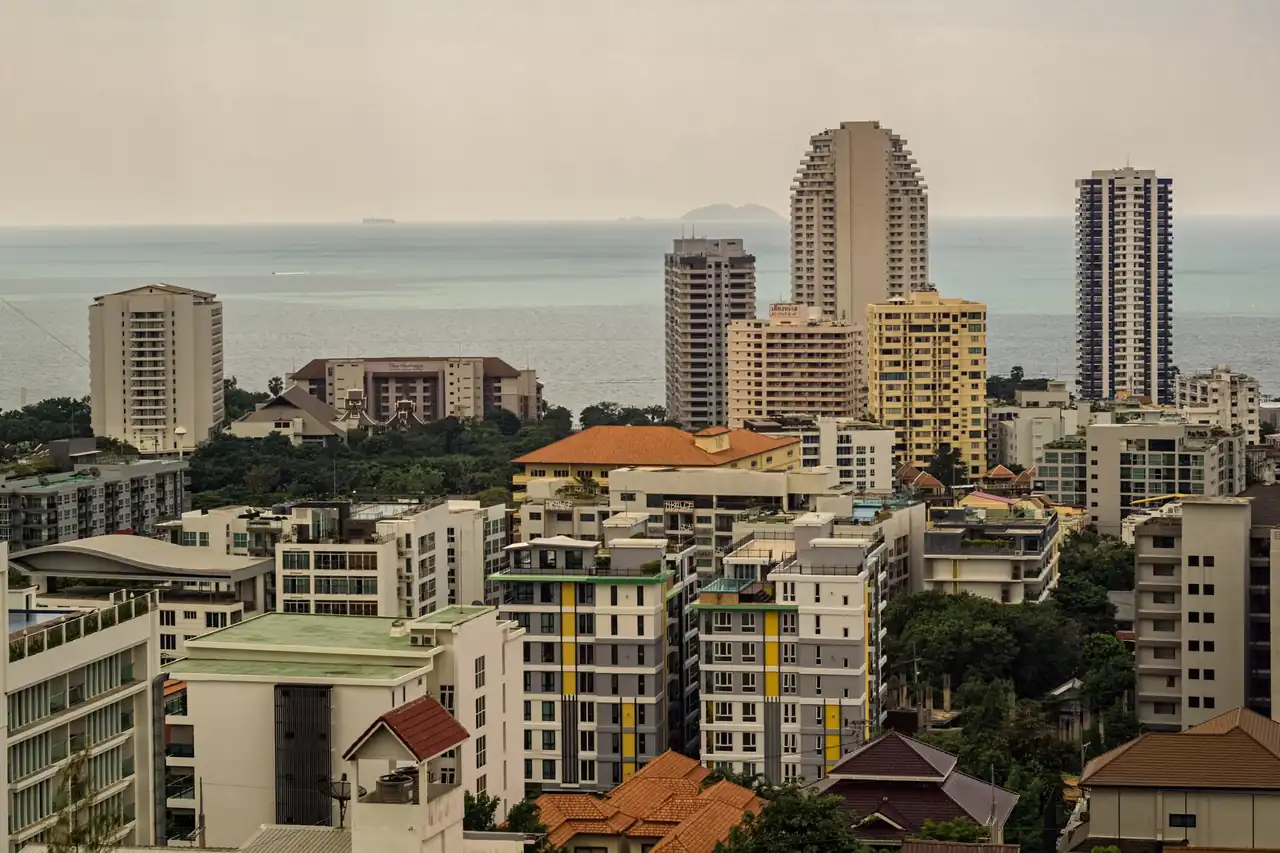
The Pattaya Marathon has established itself as one of Thailand’s most recognizable road races, with the start and finish in the coastal city of Pattaya, in Chonburi Province. Its most visible trait is also the one most remembered by those who run it: a course that combines stretches by the sea, urban avenues, and sections of false flat that force runners to manage their effort wisely.
The race takes place every July and is part of the international marathon map in Asia. In recent editions, it has brought together thousands of participants and offers several distances, with a program that includes a marathon, half marathon, and 10 kilometers. Added to that is a very tourist-oriented setting, with the seafront promenade, Jomtien Beach, and the North Pattaya area as the backdrop for a competition that blends sport, humid heat, and urban scenery.
A race born to show Pattaya from the inside
The race was born as a sporting showcase for the city. For years, Pattaya has sought to project itself not only as a beach destination, but also as a place capable of hosting large-scale events. The marathon fits that strategy because it runs through some of its best-known streets and turns the city into a living circuit, with traffic restrictions, aid stations, volunteers, and an atmosphere that changes completely at dawn.
The organization is tied to Pattaya City Hall and, in practice, the event has become a benchmark on Thailand’s road-running calendar. The contemporary version of the race has grown in size and prominence, surpassing 15,000 registered runners in some editions, a figure that helps explain its real scale: it is not just a local race, but a gathering with the ability to attract runners from different countries and backgrounds.
That growth has not erased its identity. Pattaya remains a race with an urban and coastal stamp, where the environment matters as much as the pace. The salty air, humidity, and exposure to the sun can turn an apparently friendly course into a demanding experience. The result is a competition that rarely rewards improvisation, but rather a careful reading of the course and one’s own strength.
Official distances and race profile
The competitive program is organized into several distances that allow runners of very different levels to take part. The main events are the marathon, half marathon, and 10 kilometers. In the 2025 edition, the event also added recreational and mobility-restricted categories, with a 4.5-kilometer wheelchair race and a 4.5-kilometer family walk, reflecting its broad and festive spirit.
The full marathon retains the classic standard of 42.195 kilometers, while the half marathon covers 21.1 kilometers and the 10K offers a more accessible entry for those not yet tackling longer distances. The overall experience, however, keeps the same DNA: asphalt, long straight sections, urban turns, and the need to run with a certain amount of caution in a climate that can be harsher than the course profiles suggest.
In terms of layout, the event is presented as a road race with flat sections and others with gentle rolling terrain. It is not a mountainous race or a technically demanding course in the strict sense, but it is a circuit with enough nuance to break monotony. For many runners, that is precisely part of its appeal: it looks fast, but it gives nothing away if you go out too hard.
The course: beach, tunnels, and avenues that expose the runner
One of the most talked-about features of the Pattaya Marathon is its route, which passes through well-known areas such as Pattaya Nuea Road, Pattaya Beach Road, Pattaya Sai 2 Road, Thappraya Road, Jomtien Sai 2 Road, and Sukhumvit Road. The start and finish are located at Terminal 21 Pattaya, in North Pattaya, a very visible and easy-to-identify point within the city’s urban layout.
The opening section along the coastal strip has an obvious appeal. The sea is close, the atmosphere is usually cooler early in the morning, and the scenery gives a sense of openness that is uncommon in a Southeast Asian urban race. But that closeness to the coast should not be mistaken for ease. The wind can blow sideways, humidity weighs on the legs, and the transition to the inland sections completely changes the rhythm of the effort.
According to information released by organizers and registration platforms, the marathon and half marathon alternate segments along the beach with others of rolling terrain, passing through areas such as Jomtien Beach Road, Sukhumvit Road, and the Pattaya Klang tunnel. It is a route that forces runners to manage their heart rate and not be fooled by the terrain. As the kilometers go by, the city stops looking like a postcard and becomes a succession of landmarks: roundabouts, avenues, wide intersections, and long straight sections where the heat sets the pace more than the clock.
The 10K also shares part of that logic. Although it is a shorter distance, its route is not designed as a leisurely run. In fact, the course retains the mix of seafront and urban segment, making it a demanding race for anyone chasing a fast time. The finish, shared by all distances, brings runners back to the Terminal 21 Pattaya area, closing a circuit known for its visibility and the width of its streets.
When it is run and how the weekend is organized
The race is held in July, in the middle of the Thai summer, and that is no small detail. The date places runners in a combination of high heat, persistent humidity, and city traffic fully regulated during the race hours. In 2025, the event took place on the weekend of July 19 and 20; for 2026, the official AIMS reference places the edition on Sunday, July 19. That calendar pattern reinforces its seasonal character and calls for a serious approach even in the shorter distances.
The organizers usually split the starts between Saturday and Sunday. In the 2025 edition, the 10K and recreational events were held on Saturday, while the marathon and half marathon were reserved for Sunday. The marathon started at 03:30 and the half marathon at 05:10, times that make one fundamental idea clear: in Pattaya, runners start before dawn to avoid, in part, the harshest effects of the climate.
This scheduling detail is not decorative. Running so early changes preparation, sleep beforehand, and the day’s logistics. It also alters the perception of the course, because dawn arrives halfway through the race in some cases and transforms the beach-and-city scenery. There is a kind of double atmosphere: first the dim light of an almost nocturnal start and then the light that slowly wakes over the Gulf of Thailand.
What makes the race distinctive compared with other Asian marathons
Its identity is not based on altitude or extreme toughness, but on a very specific mix of factors: climate, tourist setting, and large-scale organization. There are faster marathons, more technical ones, and many more famous ones. But Pattaya belongs to that category of races where the setting matters as much as the distance. The race cannot be understood outside its city.
Comparing it with other major marathons in the region helps define its personality. Compared with more closed or more monumental courses, Pattaya offers an open coastal experience, with an urban layout that changes in width depending on the avenue and with spectators who tend to gather at very specific points along the route. That creates stretches of relative silence and others with a denser, almost festive atmosphere.
There is also a powerful visual element. Running in Pattaya means crossing a city known for its beach life and tourist energy, but from a less superficial perspective: that of the runner observing the city at road level, with the sound of footsteps, heavy breathing, and the echo of feet on pavement as the soundtrack. It is a race that looks beautiful from the outside, but is experienced with tangible demands from within.
Recent winners and sporting level
Recent podiums have been dominated by East African athletes, a common trend in major road races. In 2024, the men’s marathon was won by Kenya’s James Tallam in 2:25:41, while Caroline Cherono, also Kenyan, won the women’s race in 2:52:53. In the half marathon, Emmanuel Kiprono prevailed in 1:06:46 and Ethiopia’s Misa Yimer won among the women in 1:17:00.
A year earlier, in 2023, the men’s marathon winner was Ethiopia’s Yimer Bililign in 2:22:27, and the women’s winner was Tsega Desta, also Ethiopian, in 2:56:28. In 2022, the overall victories went to Kenya’s Cornelius Kibiwott in 2:28:34 and Thailand’s Nateewan Rattanaphan in 3:32:08. That mix of international dominance and local prominence offers a fairly accurate picture of the event: a competitive showcase where regional elite runners and Thai runners share the stage.
The records in the shorter distances show the same pattern. In the 10K and the derivative categories, leading times are usually very fast, confirming that the race is not just a seaside stroll. There is speed, but not without endurance. The key is that even a fast course can fall apart if the runner is caught out by the heat or by the false comfort of the first stretch along the sea.
Registration, slots, and prices: what has been seen in recent editions
Registration has been a very visible element in recent editions, especially because of the level of demand. In 2025, the organizers opened registration in May and kept it open until the field was full, with closure announcements once the expected capacity was reached. That behavior confirms that this is a race with enough pull to sell out bibs in a relatively short time.
The prices published for that edition were a useful reference: the marathon cost 950 Thai baht, the half marathon 900 baht, and the 10K, along with the 4.5-kilometer events, were priced at 600 baht, plus a 50-baht processing fee. These are moderate figures for an event of this scale, although availability always depended on the timing of registration and the status of the quota.
That pricing pattern and the closing of slots say a lot about its positioning. It is not a niche event, but a race with commercial, tourist, and sporting appeal. For runners, that means planning matters: the race may fill up before the stated deadline, and the mere fact that there are multiple distances does not guarantee availability in all of them until the end of the registration period.
The race atmosphere and the runner’s experience
Anyone running in Pattaya encounters a city that wakes up differently. The streets are cleared of traffic, barriers appear, support staff and water stations are set up, and the usual noise is replaced by a kind of collective hum. The race is experienced as a temporary takeover of urban space, and that is one of its great attractions: for a few hours, the asphalt belongs to the runners.
The organization in recent editions has stood out for offering broad support, with water stations, medical assistance, clear signage, and chip timing in the official distances. Additional services such as a runner’s bag, T-shirt, finisher medal, bag drop, and post-race refreshments have also been included. In an event of this size, those details are not extras; they are part of the experience and, above all, of safety.
Temperature and humidity remain the true judges of the day. A runner who arrives with good legs but a poorly adjusted strategy can fall apart halfway through. That is why this race tends to reward patience more than impulse. It does not ask for theatrical heroics; it asks for discipline, constant hydration, and the ability to hold a sensible pace when the body begins to argue with the environment.
Why Pattaya keeps attracting runners from outside Thailand
The combination of vacation destination and sporting event works remarkably well. Pattaya offers beaches, hotels, restaurants, and easy logistics for those traveling from other countries. That makes the marathon a getaway with its own identity, where the race is not an appendix to the trip, but the center of the experience. Runners come for the bib and stay for the city.
That appeal is reinforced by the event’s international visibility. Its presence on reference calendars and its status as a race recognized by road-running bodies give it legitimacy that goes beyond the local level. It is not unusual to find participants who add the race to other Asian marathons precisely because of its mix of accessibility, scenery, and broad organization.
The city also provides a distinctive backdrop. The seafront, markets, wide avenues, and the mix of local life and international tourism create a very recognizable setting. In other races, the memory is often defined by a summit, a cathedral, or a bridge. In Pattaya, the memory is usually tied to a coastline, an early start, and the feeling of having run with the sea just a few meters away, even though you could rarely look at it for long.
A race that makes more sense when you look at the clock and the weather
The Pattaya Marathon carries a virtue and a warning in the same package. The virtue is clear: it offers an attractive setting, varied distances, and an organization capable of mobilizing thousands of runners. The warning is also clear: heat, humidity, and changing terrain can turn a promising performance into a much tougher experience than expected.
That is why, more than a postcard race, it is a race of context. Anyone who sees it only as a seaside event is missing half of it. The city, the July calendar, the start time, and the type of pavement are all part of the same equation. It is precisely this combination that has helped Pattaya remain interesting year after year, both for elites and for recreational runners looking for a different challenge.
In the end, the value of this event lies in its rare balance: international enough to belong on serious calendars, accessible enough to attract many types of runners, and demanding enough not to give away fast times. It is a marathon with a coastal flavor, but also with competitive character, one of those races that leaves your clothes soaked and your memory full of vivid images: the sunrise over the bay, the long asphalt straight, and the finish arch in the middle of a city that, for a few hours, beats to the rhythm of thousands of strides.
You may also like: Songkhla Marathon 2026: route, dates, and key information.



How to prevent thigh chafing: causes and real solutions

Women’s running windbreakers: seven jackets and how to choose

Do more workouts get rid of soreness? A guide for runners

Jaén Half Marathon 2026: Record 3,800 Runners Registered

Men’s short running tights: how to choose the right pair

World Triathlon confirms data breach involving medical data

Izan Edo targets podium at Miyazaki World Cup

María Pérez ranks ninth in World Athletics’ 2026 top ten

Dos Santos, Duplantis and Sawe: World Athlete of the Year finalists

San Silvestre Vallecana 2026: 42,000 places, prices and start times

 Races3 months ago
Valencia Half Marathon 2027: date and registration

 Races3 months ago
Valencia Marathon 2026: entry, ballot and course

 Reviews and Comparisons4 months ago
Asics Gel-Roadmiles 3 for men: review and current price

 Reviews and Comparisons4 months ago
Asics Gel Sonoma 8 Gore-Tex: complete analysis for trail and rain

 Sneakers3 months ago
Saucony Endorphin Pro 4: full review and verdict

 News5 months ago
Strava API 2026: what changes for clubs, challenges and runner apps?

 Reviews and Comparisons5 months ago
Nike Alphafly 3: opinions, sensations, and real key points

 Reviews and Comparisons4 months ago
Under Armour running shoes review 2025-2026: models and key features

 Sports Equipment4 months ago
Shoe sizes in cm: a clear guide to getting the right fit for your footwear

 Sneakers3 months ago
Skechers GO RUN Consistent 2.0 analysis: comfort and limits

 News5 months ago
Valencia Marathon 2026 route: key tips to train and run better

 Sneakers4 months ago
Adidas Adizero Boston 13 for men: review and verdict