Races
Photos of the 2025 Barcelona Half Marathon: guide and key points
Records, atmosphere and an urban route in a race that once again filled Barcelona with runners and cameras.

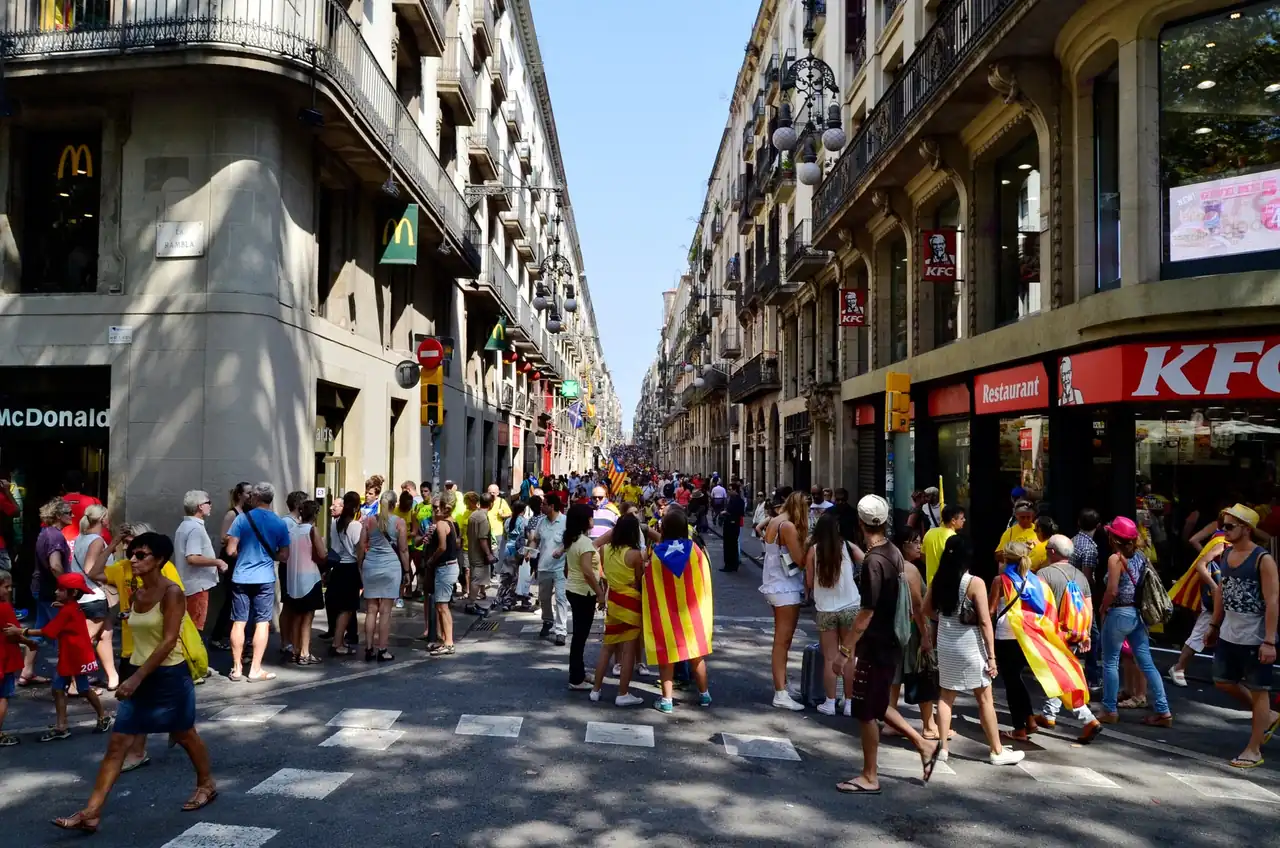
The images from the Barcelona Half Marathon 2025 condense everything that made that edition great: the compact start, the sea of bibs, the clean February light over the avenues, and a human tide that turned the city into a ribbon of asphalt in motion. They were not just photos of a race; they were the portrait of an event that confirmed its international weight, with more than 30,000 participants, 40% women, and runners from 95 nationalities.
That visual archive explains why Barcelona has established itself as one of the most sought-after events for photographers, brands, and runners. In 2025, the race also had the brilliance of a historic record: Ugandan Jacob Kiplimo lowered the half marathon world record to 56:42, a mark that gave meaning to every frame of the finish, to every strained arm, and to every look of disbelief at the finish line. The race was not just run; it was documented as a first-rate sporting event.
The image of a race that is already part of the world map
The photographs from that morning show a different Barcelona, wider and louder, with an energy that clings to the frame. The half marathon route produced recognizable scenes: elite groups stretching the pack, recreational runners seeking their pace, and volunteers directing the flow in an almost invisible choreography. All of that was captured in close-ups full of effort and in wide shots where the city seemed to be running at the same time as its participants.
The 2025 edition also left a very clear takeaway for any image archive: this race works as a great urban postcard and, at the same time, as a scene of pure performance. The wide avenues favor clean images, with less visual clutter than in other more enclosed events, and that makes each photograph gain depth. At the best moments, you could see the geometry of the course, the skyline, the crowd, and the movement, all in a single composition.
The visual key lies in the contrast. On one side, Barcelona’s architecture and the texture of the pavement; on the other, the color of the shirts, the long shadows, and the faces of concentration. That balance explains why image searches related to the race are not limited to a simple sports gallery: what attracts attention is the mix of a major athletic event and a recognizable, almost cinematic city.
What the most sought-after photos of the 2025 edition showed
The images that best summarize the race tend to repeat every year, but in 2025 they took on special weight because of the scale of the event. The start, with thousands of runners packed together before the gun, was one of the most powerful scenes. In sports photography, that moment always has something of a collective heartbeat: the tense stillness of the seconds before, and then the explosion of movement. In Barcelona, moreover, the framing benefits from a very orderly, almost sculptural mass.
Photos taken during the fast sections of the course also stood out. The elite athletes, alone or in small groups, offered a very clean picture, with long strides and steady expressions. That kind of snapshot sums up the nature of the Barcelona half marathon better than any other: a race designed to be run fast, with fewer pace changes than other urban races and a constant feeling of fluidity. Speed and openness become a visual language here.
The finish-line photos complete the story. There, everything changes scale: the stopwatch, the exhaustion, the arms raised to the sky, the blank stare after the effort, or the relieved smile upon receiving the medal. These are images that attract because of their emotional value, but also because of what they say about the event itself. Barcelona offers not only numbers; it offers a stage where every runner, elite or recreational, finds their moment in the spotlight.
A course that favors clean and recognizable images
One of the reasons why the Barcelona half marathon generates so many shared images is its route. The 2025 course kept the essence of wide avenues and few turns, a combination very welcome for anyone photographing races. Fewer corners mean better leading lines, more visual continuity, and an easier sense of speed to capture. The photos don’t just show runners; they show direction, space, and rhythm.
Barcelona also has that urban backdrop that works even when the frame is full of runners. The city adds identity without stealing the spotlight. Shots along Passeig Picasso, the approach to Passeig Pujades, and the central sections make the race recognizable without any great artifice. In a half marathon with so much participation, that detail matters: the image doesn’t get lost in the chaos; it orders the movement.
The February light also worked in its favor. There was no harsh summer contrast or the dull color palette of a gloomy day. The result was a set of photographs with crisp tones, clear skies, and shadows that helped outline bodies and volumes. In many scenes, the red, blue, and white of the shirts mixed with the gray of the road and the warm color of the buildings, creating an almost editorial effect.
The world record changed the way the race was seen
Kiplimo’s victory was not just a sporting feat; it also transformed the race’s visual memory. When a runner crosses the finish line in 56:42, the photo stops being just a finish and becomes a historical document. That is why the elite images of 2025 were so widely shared: they showed extreme speed, the winner’s solitude in the final stretch, and the contrast between human effort and the precision of the clock.
That world record also raised interest in everything surrounding the race. The photos were no longer viewed only as a souvenir of a popular race day, but as part of an edition that entered half marathon history. The visual narrative changed scale: Barcelona stopped being just a major European race and moved to the center of the international running conversation.
The celebration photos also gained value. In an edition like this, images of the podium, the hugs, and the astonished faces have an almost documentary weight. These are not embellishments; they are proof that a city can become the stage for a global milestone without losing the human dimension of sport. The record brought prestige, but it was the images that закрепed it in collective memory.
The crowd as an invisible protagonist
Anyone looking for photos of the Barcelona Half Marathon 2025 is not just looking for a fast race. They are also looking for the event’s social texture. The edition brought together more than 30,000 runners, a number that shows in every wide shot. There is a visual density that resembles an overflowing river: thousands of bodies advancing with a common logic, even if each has their own story of training, debut, or personal best.
The female presence reached 40%, a figure reflected in images where diversity is evident and the race appears less homogeneous than in other eras. That kind of photo matters because it shows the evolution of recreational running: more participation, more ages, more accents, and more ways of running. Barcelona, with its cosmopolitan character, amplified that mix and made it one of the defining features of the edition.
Images of groups running together, of couples supporting each other to the end, or of participants checking the clock as they pass key points on the course have a special force. They are less spectacular than elite shots, but more relatable. And in such a massive race, those everyday scenes end up defining the soul of the event almost as much as the world record.
How to read the photos of an urban half marathon
A gallery from this race works like a layered reading. First comes the data: Barcelona, February, 21.097 kilometers, thousands of registered runners. Then comes the atmosphere: wide streets, scattered music, spectators in specific spots, runners moving steadily. And finally, the emotion, which is what turns a correct image into a memorable one. That sequence explains why this kind of event attracts so much visual content in search engines.
In photos from an urban half marathon, the interest is not only in the body in motion, but in the context. The city is not a neutral background; it is part of the story. In Barcelona, the architecture, the breadth of the streets, and the Mediterranean character bring a sense of openness uncommon in other European capitals. Even moments of fatigue seem more photogenic, because the race has an orderly, almost luminous aesthetic.
That is why the 2025 edition left so many useful images for media outlets, fans, and participants. There were control shots, speed shots, celebration shots, and shots of fatigue. There were close-ups and wide shots. In short, there was a complete archive of what a major contemporary half marathon means: sport, city, and community condensed into a sequence of frames.
What Barcelona shows when it goes running
The great virtue of these images is that they do not sell an idealized postcard, but a living reality. Barcelona appears beautiful, yes, but also demanding, full of human traffic, with runners turning public space into a shared stage. In the best photographs, you can feel that urban pulse, that small disorder that only arises when a city gives itself over to a large and well-organized race.
In 2025, the half marathon once again confirmed that recreational running can no longer be understood without its visual dimension. Runners want a time, but also a memory. They want a photo of the start, another from the course, another at the finish, and, if possible, one that captures that exact point where there is still energy in the legs. The Barcelona race offers all that with an added value: a first-class urban backdrop and a sporting story of global reach.
That is why the photographs from that edition continue to be interesting long after race day. They are not just a calendar memory. They are the trace of a day when Barcelona ran fast, brought together an unprecedented crowd, and was the setting for a world record that changed the race’s narrative. In running memory, image and result have rarely gone hand in hand so closely.
The scene left by February and what it says about running today
The Barcelona Half Marathon 2025 left a very clear image of where recreational athletics is headed: more participation, more diversity, and greater sporting ambition. The photos from that edition do not just tell what happened on a specific morning; they also explain why these races have become a global showcase. People no longer just run; they want to be seen running, to be part of the story, and to recognize themselves in a collective scene.
That phenomenon is evident in every image search. Anyone looking for Barcelona 2025 wants to understand how the start felt, how the elite runners made their way through, what the finish arch looked like, and what the city looked like when taken over by running. The answer lies in the sum of small details: a bib bent by the wind, a perfectly aligned stride, a face of effort, a cheer on the roadside. The truth of the race is in those pieces.
And perhaps that is why this race continues to generate so much visual interest. Because it does not portray only those who competed, but an entire city taking on the role of a great sporting stage for a few hours. The photos of the Barcelona Half Marathon 2025 preserve precisely that: the moment when a massive, fast, and cosmopolitan race turned asphalt into memory.



How to prevent thigh chafing: causes and real solutions

Women’s running windbreakers: seven jackets and how to choose

Do more workouts get rid of soreness? A guide for runners

Jaén Half Marathon 2026: Record 3,800 Runners Registered

Men’s short running tights: how to choose the right pair

World Triathlon confirms data breach involving medical data

Izan Edo targets podium at Miyazaki World Cup

María Pérez ranks ninth in World Athletics’ 2026 top ten

Dos Santos, Duplantis and Sawe: World Athlete of the Year finalists

San Silvestre Vallecana 2026: 42,000 places, prices and start times

 Races4 months ago
Valencia Half Marathon 2027: date and registration

 Races4 months ago
Valencia Marathon 2026: entry, ballot and course

 Reviews and Comparisons4 months ago
Asics Gel-Roadmiles 3 for men: review and current price

 Reviews and Comparisons4 months ago
Asics Gel Sonoma 8 Gore-Tex: complete analysis for trail and rain

 Sneakers4 months ago
Saucony Endorphin Pro 4: full review and verdict

 News5 months ago
Strava API 2026: what changes for clubs, challenges and runner apps?

 Reviews and Comparisons5 months ago
Nike Alphafly 3: opinions, sensations, and real key points

 Reviews and Comparisons4 months ago
Under Armour running shoes review 2025-2026: models and key features

 Sports Equipment4 months ago
Shoe sizes in cm: a clear guide to getting the right fit for your footwear

 Sneakers3 months ago
Skechers GO RUN Consistent 2.0 analysis: comfort and limits

 News5 months ago
Valencia Marathon 2026 route: key tips to train and run better

 Sneakers4 months ago
Adidas Adizero Boston 13 for men: review and verdict