Races
Photos of the Santa Pola Half Marathon 2026
Practical guide to locating, identifying, and downloading the Santa Pola 2026 images, with formats and deadlines.

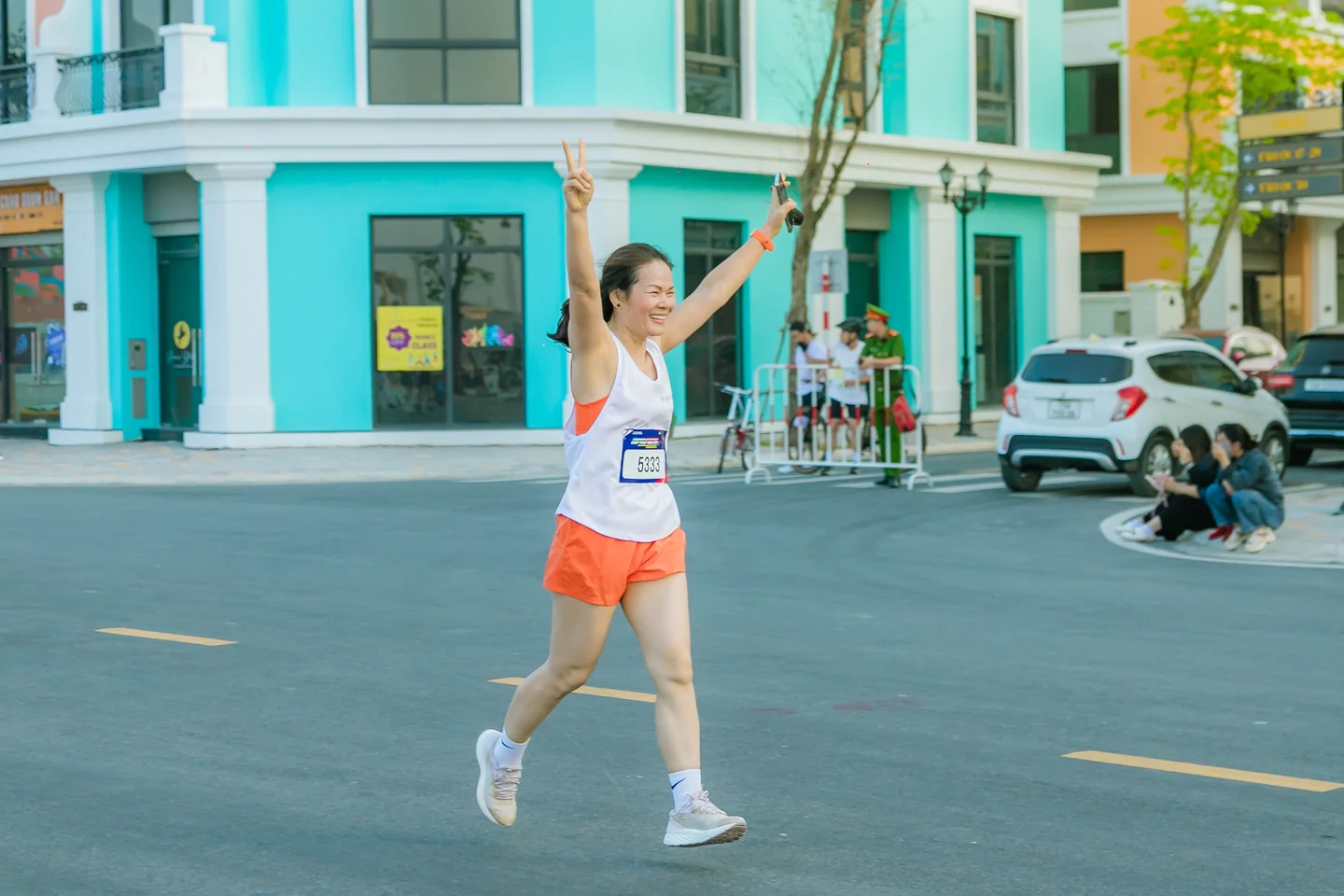
Images from the 2026 Santa Pola half marathon have become a natural extension of the race: the moment of crossing the finish line, the expression of effort in the final stretch, or the brief smile of the runner who is already easing the pace. In this event in Alicante, one of the most well-known on the Spanish calendar, the demand for photographs grows at the same pace as participation and the desire to preserve a vivid memory of the day.
The usual location system relies on facial search, designed so that each participant can find their photos using a selfie or a clear image of their face. This method, now widely used in large-scale events, makes it possible to narrow down among thousands of shots taken לאורך the course, with the advantage that downloads are usually offered digitally, without watermarks and in high resolution.
How images from a mass race are organized
A popular half marathon with thousands of bibs is not photographed like a small event. The start, the cheering points, the pace changes on the avenue, and the finish line generate an enormous flow of scenes, and photographers work with long sequences to capture expressions, strides, and line crossings. In a race like the one in Santa Pola, the visual logic is almost cartographic: each athlete leaves a fleeting trace that then has to be tracked among many others.
That is why the image search engines for these events usually rely on facial recognition technologies or bib-number filters, when available. The goal is to simplify a task that would otherwise require reviewing hundreds of galleries. The runner is not buying just any photo; they are looking for theirs, the one that matches their gesture, their shirt, and their number, as if pulling a specific piece out of the noise of the mosaic.
In the case of Santa Pola, the competitor reference shows an offering centered on digital formats, with delivery via download link and different presentations: full pack, individual photo, commemorative image, or photographic certificate. That variety responds to a very simple reality: not everyone wants the same thing. Some prefer a single clean image, some value the whole set, and some are looking for a more polished piece to share or archive.
What kind of photos usually appear in Santa Pola
The most sought-after photographs are finish-line shots, because they concentrate emotion, fatigue, and relief in a single gesture. In a 21-kilometer race, that final stretch is usually the most expressive: shoulders dropping, glances at the watch, hands on the face, or arms raised when crossing the line. There are also scenes from along the course, especially at points where the runner loosens up a little, lifts their head, and lets the surroundings enter the frame.
Santa Pola, with its route and its fast-race profile, offers a very recognizable aesthetic. The sea, the open light of the coastline, and the breadth of some avenues give the photos a clean feel, almost like a seaside postcard, even though the effort is pure Mediterranean. That contrast between landscape and athletic suffering makes many images work very well visually, even for people who did not take part in the race.
It is also common for the image bank to include motion photographs of compact groups, small packs, runners with pace balloons, and scenes of the general atmosphere. In races with so many participants, the perfect photo is not always the most spectacular; sometimes it is the most recognizable. An outstretched arm, a furrowed brow, a bib wrinkled by sweat. Tiny details that, for someone who was there, are worth more than a polished scene.
How to find your image without wasting time
Facial search has become the standard because it reduces the margin for error. The user uploads a clear photo of their face, preferably recent and with no people around, and the system compares features to return matches. The key lies in the quality of the input image: a large face in the frame, good light, no sunglasses if possible, and no confusing backgrounds. The cleaner the photo, the easier the recognition.
In some cases, the site itself warns that it does not accept formats such as .webp or .heic and that .jpg is preferable. It can also happen that the image is not valid if it is cropped or if the face appears too far away. The accuracy of the search engine depends as much on the algorithm as on the selfie, so a simple, front-facing, sharp photo usually performs better than an improvised portrait.
If the system does not return immediate results, that does not necessarily mean that no images are available. Often, the files are processed little by little, and part of the gallery may take time to be completed. In large events, staggered publication is common, and the runner may later find new shots of their passage through different points on the course.
What digital formats include
The digital offering usually revolves around three ideas: quick access, high quality, and no watermark. The individual image lets you keep a specific shot; the pack gathers all the photographs associated with one person; and the commemorative versions add elements such as the event logo or a time marker. It is a way of organizing the archive without forcing everyone to buy the same product.
In the reference information, the photos are presented in JPG format and with a resolution of 3,456 x 2,304 pixels or higher. That detail is not minor. Good resolution makes the difference between an image that is useful for sharing and one that breaks apart when enlarged. It also makes printing in large sizes easier, something that still has value for those who frame their bib, their time, or the exact moment they crossed the finish line.
Another practical detail is delivery by email after completing the order. The maximum stated time is 3 business days, although most cases are resolved within a few hours. That speed fits the usual behavior of the modern runner, who wants to review the photo almost at the same time as they go over sensations, times, and heart rate. The race ends at the finish line, but the visual memory continues on the phone.
The visual reading of a half marathon on the coast
Races in a maritime setting have a different light. In Santa Pola, the brightness of the coastline softens shadows and highlights the colors of shirts, bibs, and technical gear. That benefits sports photography, which depends heavily on the contrast between subject and background. A tired runner, slightly leaning forward, gains presence if behind them there is an open avenue or a clear sky.
Moreover, the event’s own atmosphere leaves very recognizable scenes. The groups running at a steady pace, the volunteers at key points, the applause in the final zone, and the profile of the town all provide context. This is not just about photographing effort, but about fixing the setting in which that effort took place. The memory changes when the background also says something.
That is why these galleries have value beyond the simple digital product. They serve as an archive of a specific edition, of a specific year, of a specific morning. And that matters in a race with its own identity, where each season adds different stories and at the same time repeats the same sporting ritual: bib, start, fatigue, finish, and memory.
What is worth checking before downloading
Before completing a purchase, there are three details worth paying attention to: the delivery format, the actual resolution, and the usage policy. In the information reviewed, the images are delivered without watermarks, in JPG, and with download links. It is also indicated that they can be viewed on mobile, tablet, computer, or TV and that they are valid for large-format printing.
That kind of precision helps avoid misunderstandings. A digital photo is not just a pretty picture; it is a file that can be saved, forwarded, printed, or shared on social media. Its value lies in the combination of sharpness and flexibility. That is why it is important to know whether the final file keeps enough size, whether the download is immediate or delayed, and whether it includes all the shots associated with the participant.
The reference information also mentions that some options may include commemorative elements, such as the event logo and the finishing time. For many runners, that detail adds context without detracting from the cleanliness of the image. For others, however, the priority is a neutral photo, without additions. The variety of formats responds precisely to this duality between sporting memory and visual document.
Privacy, facial recognition, and image use
Searching via selfie raises a sensitive issue: privacy. The model described in the reference clarifies that the face photo is used only to locate the event photographs and is not stored on the server. That nuance is important because it clears up one of the common concerns in facial recognition systems linked to sporting events.
There is also a reference to the privacy policy and data protection. In an environment where faces, names, and sometimes bib numbers are handled, transparency is not an ornament but an obligation. The runner should know what is processed, for what purpose, and for how long. That clarity, in addition to being legal, is a sign of trust for a tool that works with personal information.
In mass events, the participant’s image also becomes part of the event’s communication. The visual material serves memory, dissemination, and promotion, and that explains why many organizations include specific clauses about usage rights. The runner, in the end, does not just run: they also enter a collective narrative that the camera records and organizes.
Why these galleries have become so popular among runners
The popularity of race photos comes from a mix of pride and usefulness. A bib means there was an entry; a photo proves there was presence, effort, and a finish. In a half marathon like Santa Pola’s, where the atmosphere is part of the appeal, the image ends up functioning almost like a documentary record of the day lived.
There is also an emotional component that does not depend on the finishing time. Sometimes the best photo is not the one where the runner looks fresh, but the one where they cross with a twisted expression, exhausted and happy at the same time. That visual honesty carries a lot of weight. It does not beautify the sacrifice; it shows it as it is. And in recreational sport, that sincerity usually matters more than the pose.
The galleries, on the other hand, have adapted to digital culture. Today runners share their result, their wristband, their bib, or their final image on social media with the same ease with which they once kept a paper clipping. Photos no longer stay in an album: they circulate, are commented on, and travel. And that gives them a second life.
The value of memory in a race with its own identity
The Santa Pola half marathon is not measured only by times. Its importance on the Spanish calendar is also explained by the full experience: the route, the participation, the atmosphere, and the number of runners who want to leave a record of their passage there. The 2026 photos fit into that tradition as one more layer of storytelling about a race that is already well established.
In journalistic terms, sports imagery serves a dual purpose. It records and preserves. It shows the moment and turns it into memory. A well-captured photograph can sum up an entire race: the tension of the start, the concentration of the middle distance, the drooping shoulders in the final kilometer, and the silent satisfaction of the finish. All of that fits within one frame.
That is why, when a participant looks for their images, they are not just looking for a file. They are looking for proof of their passage, a scene in which to recognize themselves and perhaps share it with the people who saw them train, get up early, or complete the final long run. In a race with so much personality, that visual memory ends up being part of the medal itself.
A visual archive that extends the race beyond the finish line
The photographs of the 2026 Santa Pola half marathon extend the life of the event once the clock has already stopped. Their usefulness is practical, but also symbolic: they organize memory, certify participation, and give shape to an experience that, for a few hours, was pure concentration on the asphalt.
Between the selfie that activates the search and the final download there is a simple process, but one that is highly refined for races with a large number of entrants. The promise of watermark-free, high-resolution files and fast digital delivery responds to a very specific demand from today’s runner. Whoever finished the race wants to recognize their effort in a clear, clean, and faithful image.
And in Santa Pola, where the half marathon has for years marked the athletic winter with a mix of speed, atmosphere, and sporting showcase, that image has added value. It does not just remember that they ran. It also records how they ran, with what expression, under what light, and in which exact corner of a morning that, for many, ended up being unforgettable.



How to prevent thigh chafing: causes and real solutions

Women’s running windbreakers: seven jackets and how to choose

Do more workouts get rid of soreness? A guide for runners

Jaén Half Marathon 2026: Record 3,800 Runners Registered

Men’s short running tights: how to choose the right pair

World Triathlon confirms data breach involving medical data

Izan Edo targets podium at Miyazaki World Cup

María Pérez ranks ninth in World Athletics’ 2026 top ten

Dos Santos, Duplantis and Sawe: World Athlete of the Year finalists

San Silvestre Vallecana 2026: 42,000 places, prices and start times

 Races4 months ago
Valencia Half Marathon 2027: date and registration

 Races4 months ago
Valencia Marathon 2026: entry, ballot and course

 Reviews and Comparisons4 months ago
Asics Gel-Roadmiles 3 for men: review and current price

 Reviews and Comparisons4 months ago
Asics Gel Sonoma 8 Gore-Tex: complete analysis for trail and rain

 Sneakers3 months ago
Saucony Endorphin Pro 4: full review and verdict

 News5 months ago
Strava API 2026: what changes for clubs, challenges and runner apps?

 Reviews and Comparisons5 months ago
Nike Alphafly 3: opinions, sensations, and real key points

 Reviews and Comparisons4 months ago
Under Armour running shoes review 2025-2026: models and key features

 Sports Equipment4 months ago
Shoe sizes in cm: a clear guide to getting the right fit for your footwear

 Sneakers3 months ago
Skechers GO RUN Consistent 2.0 analysis: comfort and limits

 News5 months ago
Valencia Marathon 2026 route: key tips to train and run better

 Sneakers4 months ago
Adidas Adizero Boston 13 for men: review and verdict