Races
Photos from the Movistar Madrid Half Marathon 2025: the great gallery
Visual gallery of the 2025 Madrid Half Marathon: start, effort, and emotion in the most crowded edition.

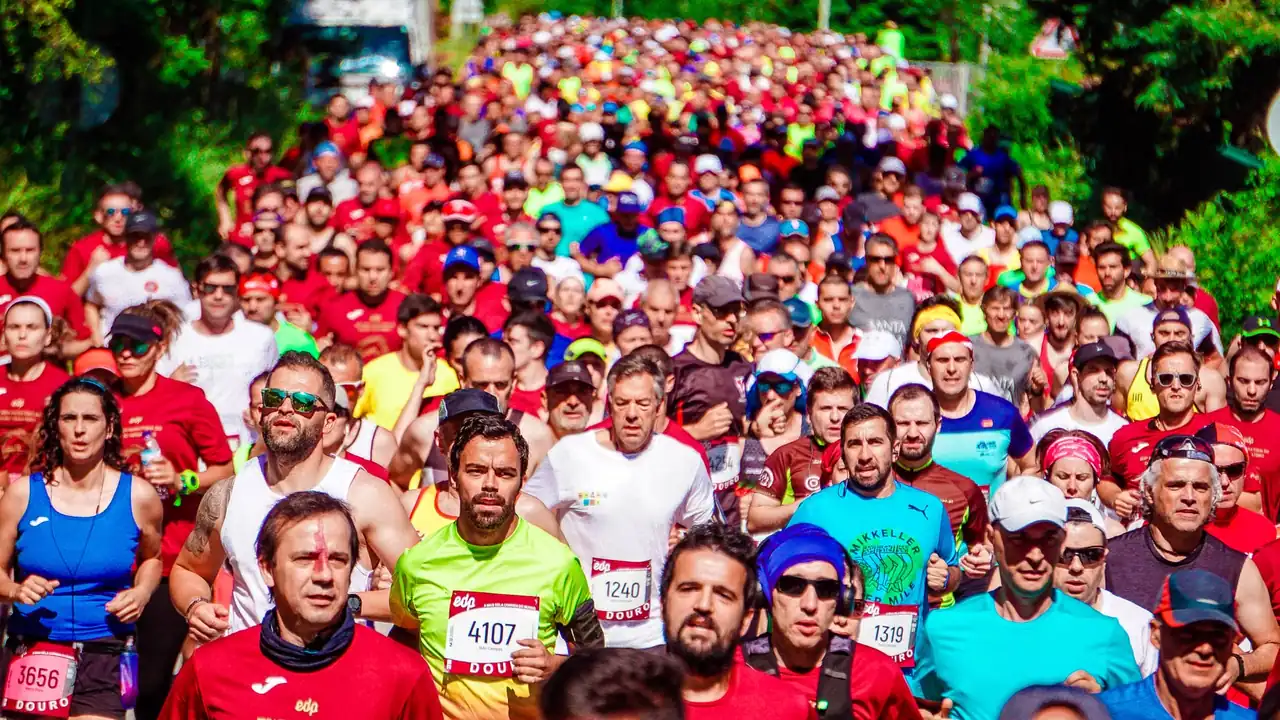
The Movistar Madrid Half Marathon 2025 left behind a scene of a big city in motion: crowded streets, fast paces, tense faces, and a finish line built on heartbeats. The April 6 event brought together 24,000 entrants between the half marathon and the 5-kilometer race, a figure that confirms the appeal of a race now firmly established among the most prominent on the national calendar.
The photo gallery from that day serves as a faithful summary of what the race was like: a debut course, more participation than ever, and a very Madrid-like mix of toughness, atmosphere, and urban symbols. In every image, effort and the city appear at the same time, with the kind of scenes that explain why this event is measured not only by the clock, but also by its ability to fill the asphalt with popular history.
A record-breaking edition that was visible in every stretch
The 2025 images reflect an event with an unusual scale. Madrid turned out in force for a race that premiered a new route and, according to the mood of the day, gained prominence at the most recognizable points in the city center. It was not just any morning: runners were spread out in waves, pacers set references, and the flow of participants traced a human avenue that changed shape with every kilometer.
That mass-participation character is especially noticeable in sports photography when the race is well covered with close-up and wide shots. There are close-ups of held breath, shoes striking the ground, arms easing at aid stations, and eyes fixed on a point that cannot be seen but can be sensed. The density of the pack and the variety of paces gave the edition a very lively, almost cinematic look, which explains the gallery’s appeal.
There is also a broader reading: a race like this not only shows runners, but also a city that sees itself reflected in them. Madrid has that way of raising the noise without losing order, and the half marathon became a showcase for that balance. The photos show a big event, yes, but also an organization that knew how to support the influx of people with corrals, pacers, and a staggered start designed to avoid an early bottleneck.
What the images tell us about the atmosphere
The first strength of a gallery like this lies in the atmosphere. The color of the bibs, the mix of clubs, groups of friends, and solo runners, and the constant presence of spectators create a backdrop that needs no explanation. Just look at the sides of the roadway to understand that this is not an isolated race, but an urban celebration in which every gesture adds to the story.
The photos also capture the contrast between pre-race tension and the gradual sense of relief. At the start, high shoulders, concentration, and the final adjustments to watch, shirt, or laces dominate. Later, more open expressions appear, even while the effort remains considerable. The face of the recreational runner changes over the kilometers, and in a 21.097-kilometer race that visual transition has enormous value for those following it from outside or looking to find themselves in the picture.
In an edition with such a large number of participants, photography also acts as a map of emotions. Some run for a personal best, some aim to finish with good sensations, and others simply want to cross the finish line. All three scenes coexist in the same gallery, and that coexistence is precisely what turns the visual material into more than an album: it is a human chronicle of wheels, quadriceps, and breathing.
The new route and its effect on the race’s look
The debut of the course added a different visual layer. A new circuit not only changes strategy; it also changes the way the city appears in the frames. The streets, turns, and sequence of urban backdrops alter the race narrative. For the reader, that translates into less predictable and richer images, because the race is renewed without losing its identity.
Madrid, with its hills and deceptive straightaways, offers a rewarding setting for running photography. It is not a flat postcard. There are visible changes of pace in the legs, torso lean on the climbs, and expressions of relief in the stretches where cadence begins to flow again. The difficulty of the profile is visible, almost audible, in the gestures of those who manage their effort carefully.
This blend of beauty and demand gives a Madrid half marathon gallery a very recognizable tone. It does not aim for grandiose epicness, but for an epic of the city, the corner, and the step by step. The result is a sequence of images that may seem restrained at first glance, but is actually full of information: where the course bites, how the pack responds, and at what moments the race stretches out.
The start, aid stations, and the quiet work of the organization
In start-line photographs, the key to any distance race is usually there. The minute before condenses nerves, anticipation, and a certain orderly chaos that only works when there is a solid operation behind it. In Madrid, the organization once again showed resources: start corrals, clearly identified pacers, and a structure designed so that thousands of runners could find their place without turning the beginning into a stampede.
Aid stations also leave a visual mark. Though they are not always the most spectacular scenes, they are the ones that uphold the truth of the race. A half-empty cup, an outstretched hand, a bottle caught on the fly, or a sponge on the neck say a lot about the strain. Real effort is rarely elegant, and that is why photos from those mid-race points are so valuable: they show the race without makeup.
The finish line, in turn, usually speaks a different language. There you find a freshly recovered smile, an embrace, a glance at the watch, and a gesture of relief that erases fatigue for a few seconds. In such a large edition, that final area becomes a small city within the city, with exhausted runners, family members, volunteers, and photographers crossing paths in the same space.
Why these photos matter so much to recreational runners
A gallery of this kind is appealing not only because of the scale or status of the event. The recreational runner sees themselves in it because it portrays a shared experience: the accumulated training, the doubt of kilometer 15, the negotiation with the legs, and the satisfaction of having made it. Seeing an image from the race activates a physical memory that many know all too well.
There is also a practical side. The photos help people find themselves, yes, but they also help them understand the race from the inside. A runner who was in Madrid can review their own passage through the course and gauge how their expression changed from start to finish. Someone who did not participate gets a clear reference for how the most crowded edition in its recent history was experienced. Sports photography makes visible what the result alone does not tell.
In that sense, the gallery has both informational and documentary value. It does not merely illustrate a news item; it preserves a specific moment in Madrid running. And that matters in a city where every major race leaves a different mark, even as the calendar keeps moving. The images freeze a moment that, without them, would dissolve among standings, times, and blurry memories.
Madrid as the setting: a race that only makes sense within the landscape
The photos from the 2025 half marathon also confirm something anyone who has run in the capital already knows: Madrid is run with the head. The course, the pace, and the city’s energy force a better management of effort than on a gentler circuit. That is visible in posture, movement economy, and the points where the race seems to open a small crack in the participants’ technique.
The city also brings a visual quality that is hard to replicate. Its broad avenues, changes in elevation, and mix of modernity and old stone allow for very different photos within the same event. One image can seem almost institutional, and the next, just a few meters away, can have an almost intimate urgency. That urban contrast adds depth to the gallery and keeps it from becoming just a simple parade of bibs.
In a race this large, the city is not a backdrop: it is part of the effort. The asphalt, the noise, and the geometry of the streets influence the runner’s form, and the camera captures it without needing to underline it. That is why these images are so interesting, because they link sport and environment with a naturalness that few disciplines allow. The final result is not just a race; it is a snapshot of how Madrid runs when given the space.
The visual memory of a day that is already part of the calendar
The 2025 edition left a clear impression: the Madrid half marathon continues to grow as both a sporting event and a photographic story. The number of entrants, the new route, and the response from the public created a day with many layers, easy to sum up in data but much richer when viewed in images.
That is the merit of a good gallery: not to decorate everything, but to organize memory. In these photos there is fatigue, pride, technical form, and also that contained joy that appears when the race is over and the body can finally lower its guard. Madrid provided a powerful backdrop and the runners did the rest, with a mix of ambition and endurance that explains why the edition left behind so much material worth remembering.
The great virtue of this visual collection is that it does not exaggerate anything. It tells the race exactly as it was: large, demanding, well organized, and very recognizable to anyone who experiences running as part of the city. And that, in a popular event, is worth almost as much as the final result. The images capture the pulse of an entire morning and make it clear that the race’s appeal lies not only in running it, but in watching it pass by.



How to prevent thigh chafing: causes and real solutions

Women’s running windbreakers: seven jackets and how to choose

Do more workouts get rid of soreness? A guide for runners

Jaén Half Marathon 2026: Record 3,800 Runners Registered

Men’s short running tights: how to choose the right pair

World Triathlon confirms data breach involving medical data

Izan Edo targets podium at Miyazaki World Cup

María Pérez ranks ninth in World Athletics’ 2026 top ten

Dos Santos, Duplantis and Sawe: World Athlete of the Year finalists

San Silvestre Vallecana 2026: 42,000 places, prices and start times

 Races4 months ago
Valencia Half Marathon 2027: date and registration

 Races4 months ago
Valencia Marathon 2026: entry, ballot and course

 Reviews and Comparisons4 months ago
Asics Gel-Roadmiles 3 for men: review and current price

 Reviews and Comparisons4 months ago
Asics Gel Sonoma 8 Gore-Tex: complete analysis for trail and rain

 Sneakers4 months ago
Saucony Endorphin Pro 4: full review and verdict

 News5 months ago
Strava API 2026: what changes for clubs, challenges and runner apps?

 Reviews and Comparisons5 months ago
Nike Alphafly 3: opinions, sensations, and real key points

 Reviews and Comparisons4 months ago
Under Armour running shoes review 2025-2026: models and key features

 Sports Equipment4 months ago
Shoe sizes in cm: a clear guide to getting the right fit for your footwear

 Sneakers3 months ago
Skechers GO RUN Consistent 2.0 analysis: comfort and limits

 News5 months ago
Valencia Marathon 2026 route: key tips to train and run better

 Sneakers4 months ago
Adidas Adizero Boston 13 for men: review and verdict