Races
Photos from the Elche Half Marathon 2026: gallery and atmosphere
Visual gallery of a historic date in Elche: atmosphere, route, departure, and scenes of the Palm Grove.

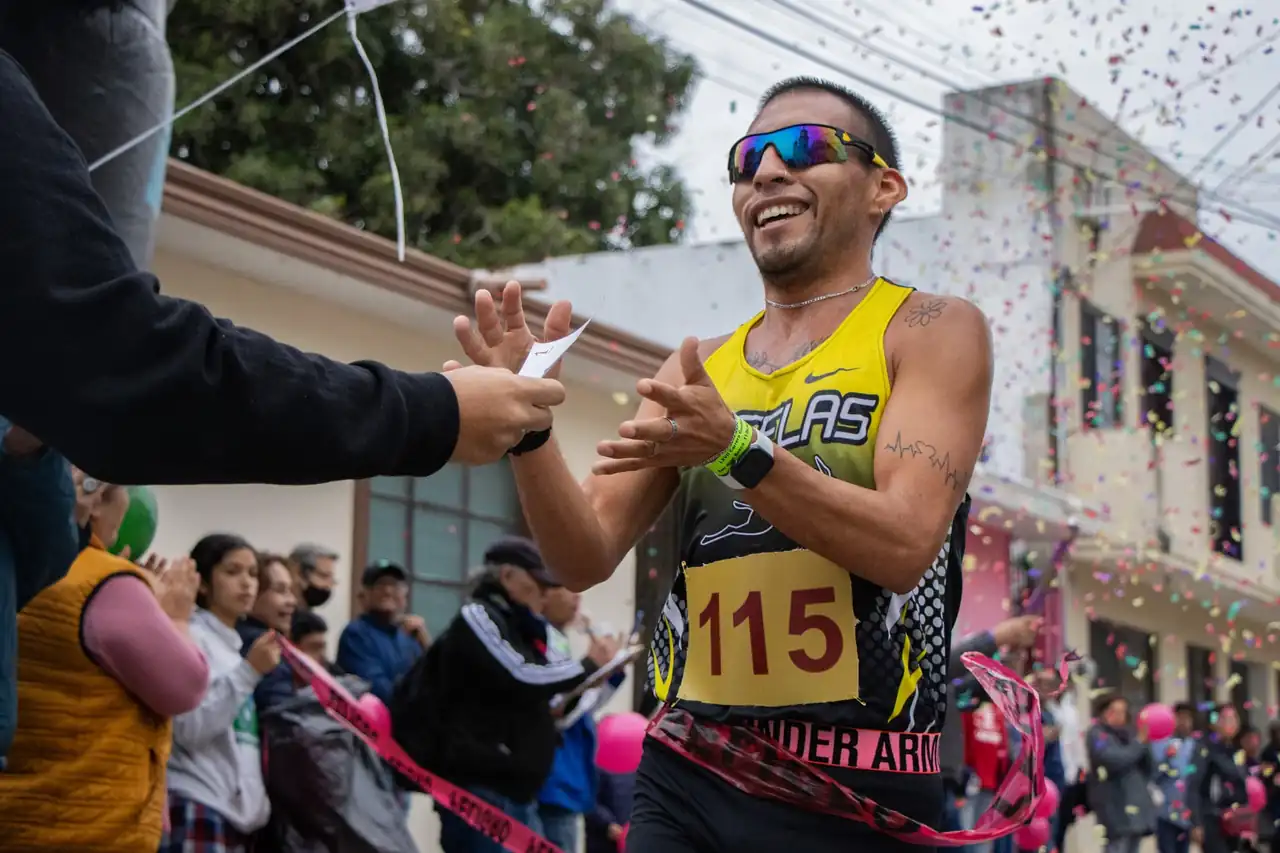
The Elche Half Marathon 2026 left behind a scene that sticks in the collective memory: streets packed with people, steady pace, spectators close to the roadway, and the Palmeral as a backdrop. The images from the race neatly capture what this event means to the running calendar in the province of Alicante: a race with history, its own identity, and a unique ability to blend competition and city life.
The photo gallery captures that pulse with journalistic precision. It is not just a succession of bib numbers and strides; there are also gestures of effort, glances at the watch, arms raised at the finish line, and scenes of companions that turn the morning into a small sports festival. In a race so closely tied to Elche, each photograph functions almost like a moving postcard: the city breathes, the runners move forward, and the surroundings are instantly recognizable.
A race with its own image
Elche has a long and very visible relationship with its half marathon. The race was born in 1968 and, since then, has built a recognizable personality, marked by tradition, popular participation, and a route that makes use of the urban fabric and local heritage. This combination explains why the galleries from each edition attract so much interest: they show a race that does not look like a generic photo with a white background and a clean bib, but rather like a scene with character.
In the 2026 edition, that personality is evident in every frame. There are compact packs of runners in the opening meters, groups looking for pace, isolated athletes managing their strength, and an urban landscape that does not stay on the sidelines. The passage through the city center and areas linked to the historic Palm Grove adds a very powerful visual layer, almost cinematic, giving the race an identity that is hard to confuse with any other Spanish half marathon.
That is why the photos work both as a document and as a memory. For those who ran, they help reconstruct the morning; for those who followed the race from the outside, they offer a clear reading of the atmosphere. Sports photography, when done well, does not just illustrate, it also tells a story: it shows when the group stretches out, where fatigue appears, and at what point the race breaks apart or settles. And in Elche, that visual story finds a particularly rewarding setting.
What the best images from the edition show
Half marathon photography is not only about the finish line. In a race like Elche’s, the best shots usually come at several very different moments: the start, when hope still weighs more than fatigue; the middle sections, where concentration and discipline come to the fore; and the final kilometers, when the face says as much as the clock. The 2026 edition was no exception.
The starting scenes usually offer a wave of colors, bodies, and tense gestures, with that brief instant when everything is just about to begin. Later, the route fills with small stories: the runner loosening an arm to check the watch, the female runner holding her cadence with almost mechanical serenity, the group still chatting before the effort tightens. These are minor details, but they sustain the strength of a good photo gallery.
The finish line provides the most visible contrast. There the race becomes more expressive: heavy legs, exhausted smiles, hugs, hands on heads, or clenched fists in relief. In Elche, that finish is also infused with the energy of the crowd, which usually comes close to cheer and turns the final effort into a shared little stage. Cameras capture exactly that: not only performance, but also the human atmosphere surrounding the race.
A route that can also be read in images
The course is an essential part of the race’s visual value. The Elche Half Marathon runs through the city and part of its most recognizable heritage, resulting in photographs with a depth that is uncommon in more neutral urban races. The city is not reduced to a backdrop; it takes part in the storytelling. Wide streets, open spaces, and tree-lined areas provide a visual rhythm that matches the distance.
The race’s organization, with a shared start for the half marathon and the 10K, also creates very powerful images in the opening stages. That joint start, ordered by pace, has an almost choral aesthetic: a crowd that unfolds little by little, as if the city were breathing in unison. In sports photography, this kind of start offers very useful shots to understand the true scale of the event.
The passage through the historic Palm Grove gives the gallery a very different texture. It is not just about running among palm trees; it is about recognizing a first-class heritage site while the race moves on. That dialogue between sport and surroundings turns the image into something broader than a simple athletic snapshot. The race becomes integrated into the city’s identity, and the camera captures precisely that bond.
The journalistic value of a sports photo gallery
A good photo gallery does more than show runners. It also captures the atmosphere of an event, the way the city welcomes it, and how participants relate to the effort. In a historic half marathon like Elche’s, this is especially relevant, because the race is no longer just a competition: it is a civic event with memory, continuity, and clear symbolic weight.
The 2026 images document that weight clearly. There are wide shots in which the volume of participants is visible, and tighter ones where the focus falls on a single expression. That alternation matters because it builds a complete narrative. The race appears as a collective phenomenon, but also as the sum of individual gestures. Each runner lives 21 different kilometers, and the camera hints at that.
In terms of visual memory, these galleries serve a simple and very valuable function. They make it possible to remember a bib number, a position, a specific reaction, or a moment of contained happiness. In endurance sports, where time is measured in pace and sensations, photography helps fix what the body quickly forgets. Fatigue softens, sweat becomes anecdotal, and the finish line is frozen in an image that sums up hours of preparation and only a few seconds of reward.
Atmosphere, crowd, and emotion on the streets
The atmosphere of the Elche Half Marathon 2026 was one of the day’s greatest strengths. The photos show families, groups of friends, and local residents stationed at different points along the route, giving the race a close, almost homely tone without losing its sporting demands. That balance between celebration and effort is not easy to achieve, and in Elche it is clearly visible.
In many images, the crowd acts as a second narrative layer. An applause on the edge of the roadway, an outstretched hand, a child watching the athletes, or a runner returning the gesture with a brief smile completely changes the reading of the scene. The race stops being a linear route and becomes a sequence of fleeting encounters. That is where much of its visual appeal lies.
Emotion does not always come in the form of drama. Often it appears in more understated things: a deep breath before resuming the stride, a runner wiping sweat from their forehead with a sleeve, a couple searching for each other’s eyes near the finish. They are small images, but they give the event human depth. In such an established race, that intimacy coexists with the organizational scale and makes the photographic coverage especially rich.
Why these photos matter so much to runners and readers
The interest in race images has a simple explanation: a half marathon creates identity. Those who take part want to see themselves, recognize themselves, share the achievement, or check what the effort was really like. Those who do not run want to understand how a morning like this feels from the inside. Photography answers both views without needing long explanations, because the race speaks for itself when it is captured well.
In addition, the Elche Half Marathon has a historical element that amplifies this interest. It is not an improvised event or just any date on the calendar. Its evolution since the late 1960s has given each edition an added layer of continuity. Looking at the 2026 photos is, in a way, to glimpse a tradition that renews itself every year and keeps intact the relationship between the city and popular athletics.
There is also a practical component. The galleries make it easier to identify specific moments of the route, visualize the overall mood, and appreciate organizational details that sometimes go unnoticed in real time. For readers who follow the racing circuit in the Valencian Community, these images work as a barometer: they say a great deal about participation levels, crowd response, and the race’s atmosphere without the need for grandiose adjectives.
An edition that strengthens Elche’s visual memory
The Elche Half Marathon 2026 once again shows that running is also told through images. The race is not exhausted by the standings or official times. It is completed by faces, streets, long shadows, palm trees, firm steps, and that silent language understood only by those who have crossed a finish line after two hours of effort or who have closely followed the tension of the route.
Elche offers a particularly fertile setting for this visual memory. Its urban center, heritage, and constant presence of the Palm Grove make the race leave a recognizable mark in any gallery. The photos do not only record what happened; they also explain why this half marathon continues to hold a prominent place in Spain’s long-distance calendar.
In an era of rapid image consumption, these scenes retain a rare virtue: they tell something real. They show the value of perseverance, the weight of the surroundings, and the sober beauty of a competitive morning. That is why the 2026 gallery is not viewed only as a sports album, but as a visual chronicle of a race that is already part of Elche’s emotional landscape and its relationship with popular athletics.



How to prevent thigh chafing: causes and real solutions

Women’s running windbreakers: seven jackets and how to choose

Do more workouts get rid of soreness? A guide for runners

Jaén Half Marathon 2026: Record 3,800 Runners Registered

Men’s short running tights: how to choose the right pair

World Triathlon confirms data breach involving medical data

Izan Edo targets podium at Miyazaki World Cup

María Pérez ranks ninth in World Athletics’ 2026 top ten

Dos Santos, Duplantis and Sawe: World Athlete of the Year finalists

San Silvestre Vallecana 2026: 42,000 places, prices and start times

 Races3 months ago
Valencia Half Marathon 2027: date and registration

 Races3 months ago
Valencia Marathon 2026: entry, ballot and course

 Reviews and Comparisons4 months ago
Asics Gel-Roadmiles 3 for men: review and current price

 Reviews and Comparisons4 months ago
Asics Gel Sonoma 8 Gore-Tex: complete analysis for trail and rain

 Sneakers3 months ago
Saucony Endorphin Pro 4: full review and verdict

 News5 months ago
Strava API 2026: what changes for clubs, challenges and runner apps?

 Reviews and Comparisons5 months ago
Nike Alphafly 3: opinions, sensations, and real key points

 Reviews and Comparisons4 months ago
Under Armour running shoes review 2025-2026: models and key features

 Sports Equipment4 months ago
Shoe sizes in cm: a clear guide to getting the right fit for your footwear

 Sneakers3 months ago
Skechers GO RUN Consistent 2.0 analysis: comfort and limits

 News5 months ago
Valencia Marathon 2026 route: key tips to train and run better

 Sneakers4 months ago
Adidas Adizero Boston 13 for men: review and verdict