Races
Pikes Peak Marathon: the extreme race of Manitou Springs
A mountain marathon in Colorado, with brutal elevation gain, thin air, and a story that began as a challenge against tobacco.

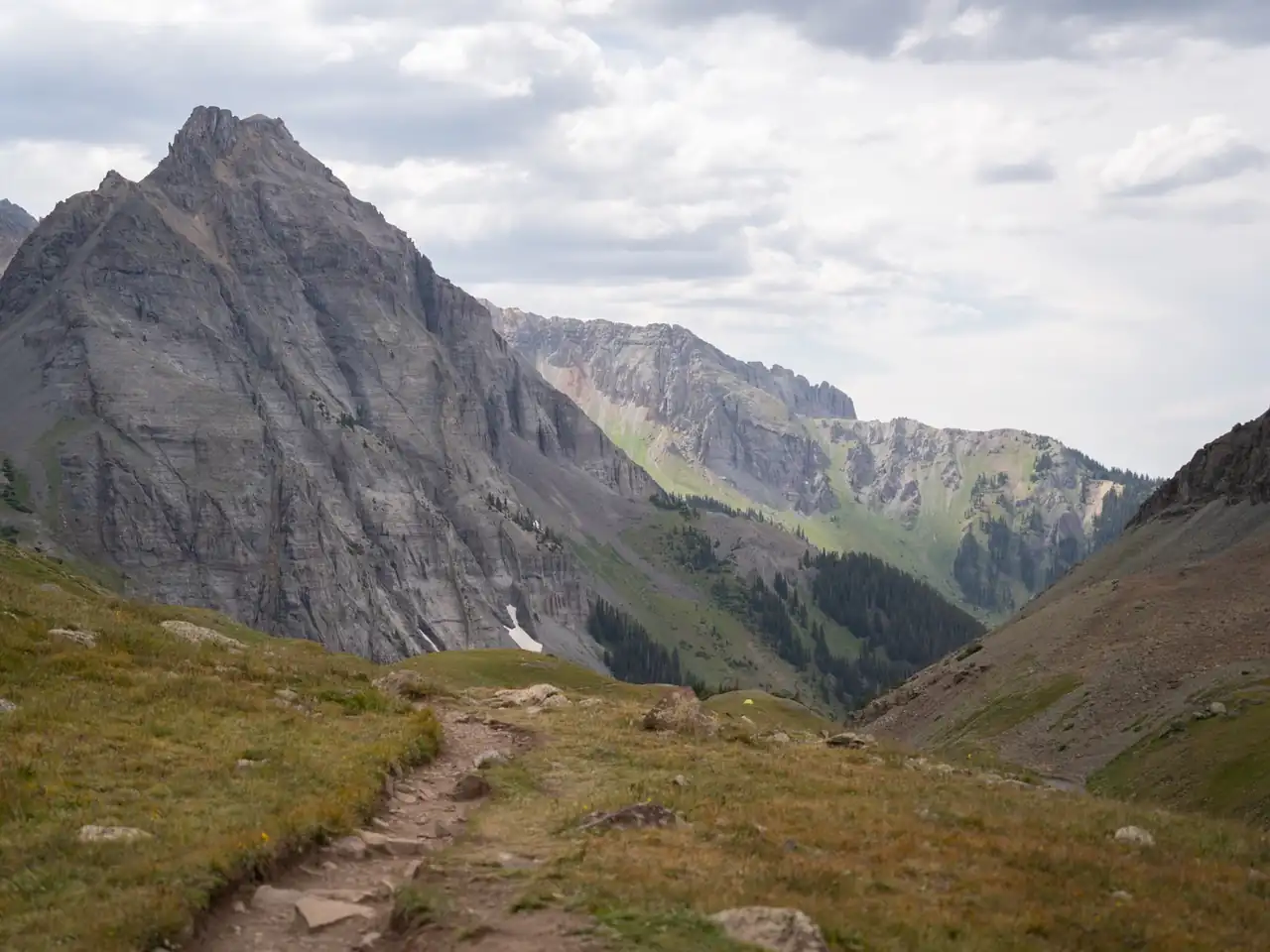
Pikes Peak Marathon is synonymous with elevation gain, altitude, and physical punishment. The race starts in Manitou Springs, climbs the historic Barr Trail to the summit of Pikes Peak at 4,302 meters, and returns to the valley in a 42.195-kilometer course that seems designed to break any notion of a conventional marathon.
Its fame comes not only from the distance, but from the combination of factors that make it unique: 7,815 feet of positive and negative elevation change, uneven terrain, abrupt temperature shifts, and an altitude that drains oxygen meter by meter. That is why it is known as one of the most demanding mountain races in the United States and one of the most recognizable on the international trail running and skyrunning calendar.
A race that began as a provocation
The history of this event began in 1956 with an unusual idea even by the standards of the time. Doctor Arne Suominen, a former Finnish marathoner living in Florida, issued a public challenge to pit smokers against non-smokers in an ascent and descent of Pikes Peak. He wanted to prove, with the clock as judge, that tobacco harmed endurance. That first edition had an almost experimental feel, but it also planted a sporting seed that did not take long to grow.
The debut coincided with the 150th anniversary of Zebulon Pike’s sighting of the mountain, and the course quickly became more than a local curiosity. Monte Wolford won that first edition in 5:39:58, and over time the race built its own story, somewhere between alpine epic and the American tradition of major marathons. What began as an act of provocation ended up becoming a benchmark event for mountain runners from around the world.
Another early milestone changed its place in history: from the beginning, women were allowed to participate, which was unusual in a mid-20th-century American marathon. Arlene Pieper became in 1959 the first woman to officially finish a marathon in the United States by completing Pikes Peak. Her name remains a fundamental part of the event’s story because it connects this race with the evolution of equality in endurance running and mountain running.
A course that forces you to read the mountain
The current route keeps the original spirit: start in Manitou Springs, climb Barr Trail to the summit, and return the same way. That apparent simplicity is deceptive. The profile is far from uniform, and runners face a very steep first section, a more rolling middle section, and a final stretch, already near alpine elevation, where the terrain becomes even tougher. The descent, moreover, offers no rest: going down is not recovery, but a different kind of muscular burden, with impact and strain on the quadriceps, ankles, and knees.
The race takes place on dirt trail, rock, roots, and technical sections, with an average gradient of around 11% and much steeper segments in several areas. The first kilometers are especially punishing; after that, the route opens into switchbacks and rolling rises before tightening again at altitude. The final kilometers above the tree line demand balance, strength, and a cool head. This is not a marathon to run on autopilot. It is a constant exercise in reading the terrain.
At the summit, altitude adds its own law. The air is thinner, breathing becomes shorter, and perceived effort skyrockets. The body works with less available oxygen, while weather can shift from one extreme to another within hours. At the base, temperatures may be mild or even warm; at the summit, by contrast, cold, wind, or snow can completely alter the race. That volatility explains why times vary so much from year to year.
The challenge lies in the combination, not in a single stat
Many mountain races are hard because of the elevation gain. Others, because of the altitude. Pikes Peak Marathon combines both and adds a very clear psychological component: the same path that demands hours of climbing then forces you to descend with a beaten-up body. In a flat marathon, fatigue is spread out; here it concentrates and multiplies. What on pavement would be a wall of reference points becomes, on Barr Trail, a battle between pace, conservation, and adaptation.
That is why winners usually post times that, compared with road marathons, seem like they belong to another discipline. The men’s marathon record is 3:16:39, by Matt Carpenter in 1993, and the women’s record belongs to Maude Mathys, with 4:02:41 in 2019. These are times that on a flat city course would tell a different story, but at Pikes Peak they summarize a battle against gravity, exhaustion, and altitude. Every second costs more than in almost any conventional marathon.
The route is also shaped by participation limits and environmental protection. The U.S. Forest Service sets entry caps to protect Barr Trail and reduce the impact on a fragile ecosystem. That restriction contributes to high demand for bibs and gives the race a selective air, almost like a small sporting expedition, despite its global profile.
A two-race weekend on the same mountain
The event cannot be understood without its sister race, the Pikes Peak Ascent. The uphill-only version, about 13.3 miles, takes place on Saturday, and the full marathon on Sunday. Together they create a weekend that brings together very different runners, from ascent specialists to athletes capable of completing both races in what there is called a Doubler. That format has given rise to a culture of its own within the event, with fans chasing not just one medal, but two days of carefully measured suffering.
The Ascent has acquired a distinct identity in its own right and, in some years, has served as a showcase for elite competition and a laboratory for high-altitude performance. The course is equally brutal, with about 2,382 meters of vertical gain and a summit finish that leaves little room to spare. It is not unusual for conversation around Pikes Peak Marathon to shift to the Ascent as well, because both events form a single sporting postcard: one mountain, two ways of conquering oneself.
In 2023, for example, the ascent saw Rémi Bonnet break a historic record by stopping the clock at 2:00:20, surpassing Matt Carpenter’s mark that had stood for three decades. That kind of milestone confirms that the race is not a frozen museum piece, but a living competition, capable of absorbing international talent and continuing to produce records that seem almost improbable.
Who wins here learns to suffer methodically
The names on the winners’ list help explain the event’s prestige. Matt Carpenter dominates the men’s marathon history with 12 victories between 1988 and 2011, while Erica Larson leads the women’s field with five wins. These figures speak not only to talent, but to exceptional adaptation to terrain that punishes both engine and decision-making. At Pikes Peak Marathon, repeating success matters almost as much as winning once.
The international roster has also added shine to the event. Kilian Jornet won in 2012 and 2019, and his presence reinforced the idea that this marathon is not a local oddity, but a relevant race within the global mountain circuit. Jonathan Aziz, winner in 2022, 2023, 2024, and 2025, has recently continued the tradition of specialists able to combine power, control, and a very precise understanding of the descent.
On the women’s side, names such as Stevie Kremer, Kim Dobson, and Brittany Charboneau have delivered performances that fit the race’s changing nature. Each edition can reward a different strategy: climb without blowing up, save the legs for the descent, or accept that the mountain does not negotiate and demands sustained effort without shortcuts. There is no single formula for success here, but there is one constant: no one wins without patience and tolerance for accumulated pain.
The calendar, registration, and pace of a highly limited event
The organizers have made field management part of the appeal itself. In recent editions, registration opened very early, with general entry on March 1 and staggered price increases as spring and summer progress. For 2026, the marathon is set for September 20 at 7:00, while the Ascent is scheduled for September 19. That weekend arrangement allows efforts to be separated and reduces trail congestion.
An entry does not always require a hard qualifying time, but there are criteria for assigning starting waves. Recent results from other races, or even timed workouts, are used to order participants and avoid bottlenecks in the early sections. On such a narrow climb and such a delicate descent, the initial order is not an administrative detail: it is a safety and flow tool.
There are also clear rules about gear and race conduct. The logic is simple: self-sufficiency, safety, and respect for the route. On a mountain where the weather can turn quickly, carrying what you need is not a formality, but a form of sporting survival. The same logic explains the presence of aid checkpoints, cutoff times, and strict pace monitoring, especially on the climb and in areas where the narrow path makes congestion more likely.
A trail icon ahead of the road marathon
Comparing Pikes Peak Marathon with an urban marathon helps measure its uniqueness. In a city, runners usually battle pace and logistics; here that exists too, but the mountain is added as the main rival. The surface stops being a flat line and becomes a story of changing textures, shadows, forests, loose stone, and increasingly dry air. The strain is not linear, but wave-like.
That difference makes the race a bridge between the classic marathon and the most demanding trail running. It has the symbolic distance of the 42K, but also the vertical brutality of a skyrace. That is why it has earned respect among endurance runners, mountain specialists, and fans who want to understand how far the marathon concept can be stretched without losing its identity. Pikes Peak Marathon does not break the mold; it bends it, scratches it, and pushes it to the limit.
Its continuity since 1956 and its connection to Manitou Springs have also made it a tourist and cultural asset for the Colorado Springs area. The event brings together volunteers, visitors, local businesses, and a community of runners who return each year for different reasons: times, history, prestige, or simple fascination with a place where the challenge seems written into the geography itself. The mountain serves as stage, judge, and memory.
What this race leaves in the memory of running
The strength of Pikes Peak Marathon is that it needs no artifice. The mountain does the storytelling on its own. Its start in a frontier-style town, the wall of Barr Trail, the broken tree line, the cold at the summit, and the agony of the return are enough to build one of the most recognizable stories in mountain running. Few races have such a clear identity or one so hard to imitate.
It has also been a laboratory for sporting and social milestones. It gave women a place from the start, offered an early platform for long-distance racing at altitude, and ultimately brought local and international figures together on the same course. At its core, its appeal remains the same as in 1956: measuring the runner against a mountain that does not negotiate. The clock matters, of course, but here the real mark is another one: the ability to finish with the feeling of having crossed a territory that was never meant to be tamed.
Pikes Peak Marathon continues to hold a special place because it combines history, toughness, and landscape with a rare honesty. It does not promise comfort or prepackaged epicness. It offers the opposite: thin air, stone, slope, and a summit earned step by step. And that, for running, is almost a complete definition of challenge.



How to prevent thigh chafing: causes and real solutions

Women’s running windbreakers: seven jackets and how to choose

Do more workouts get rid of soreness? A guide for runners

Jaén Half Marathon 2026: Record 3,800 Runners Registered

Men’s short running tights: how to choose the right pair

World Triathlon confirms data breach involving medical data

Izan Edo targets podium at Miyazaki World Cup

María Pérez ranks ninth in World Athletics’ 2026 top ten

Dos Santos, Duplantis and Sawe: World Athlete of the Year finalists

San Silvestre Vallecana 2026: 42,000 places, prices and start times

 Races4 months ago
Valencia Half Marathon 2027: date and registration

 Races4 months ago
Valencia Marathon 2026: entry, ballot and course

 Reviews and Comparisons4 months ago
Asics Gel-Roadmiles 3 for men: review and current price

 Reviews and Comparisons4 months ago
Asics Gel Sonoma 8 Gore-Tex: complete analysis for trail and rain

 Sneakers3 months ago
Saucony Endorphin Pro 4: full review and verdict

 News5 months ago
Strava API 2026: what changes for clubs, challenges and runner apps?

 Reviews and Comparisons5 months ago
Nike Alphafly 3: opinions, sensations, and real key points

 Reviews and Comparisons4 months ago
Under Armour running shoes review 2025-2026: models and key features

 Sports Equipment4 months ago
Shoe sizes in cm: a clear guide to getting the right fit for your footwear

 Sneakers3 months ago
Skechers GO RUN Consistent 2.0 analysis: comfort and limits

 News5 months ago
Valencia Marathon 2026 route: key tips to train and run better

 Sneakers4 months ago
Adidas Adizero Boston 13 for men: review and verdict