Races
Ponle Freno Madrid 2025 Rankings: Results and Key Data
Results, highlights, and figures of a record edition in Madrid with a strong charitable focus and great participation.

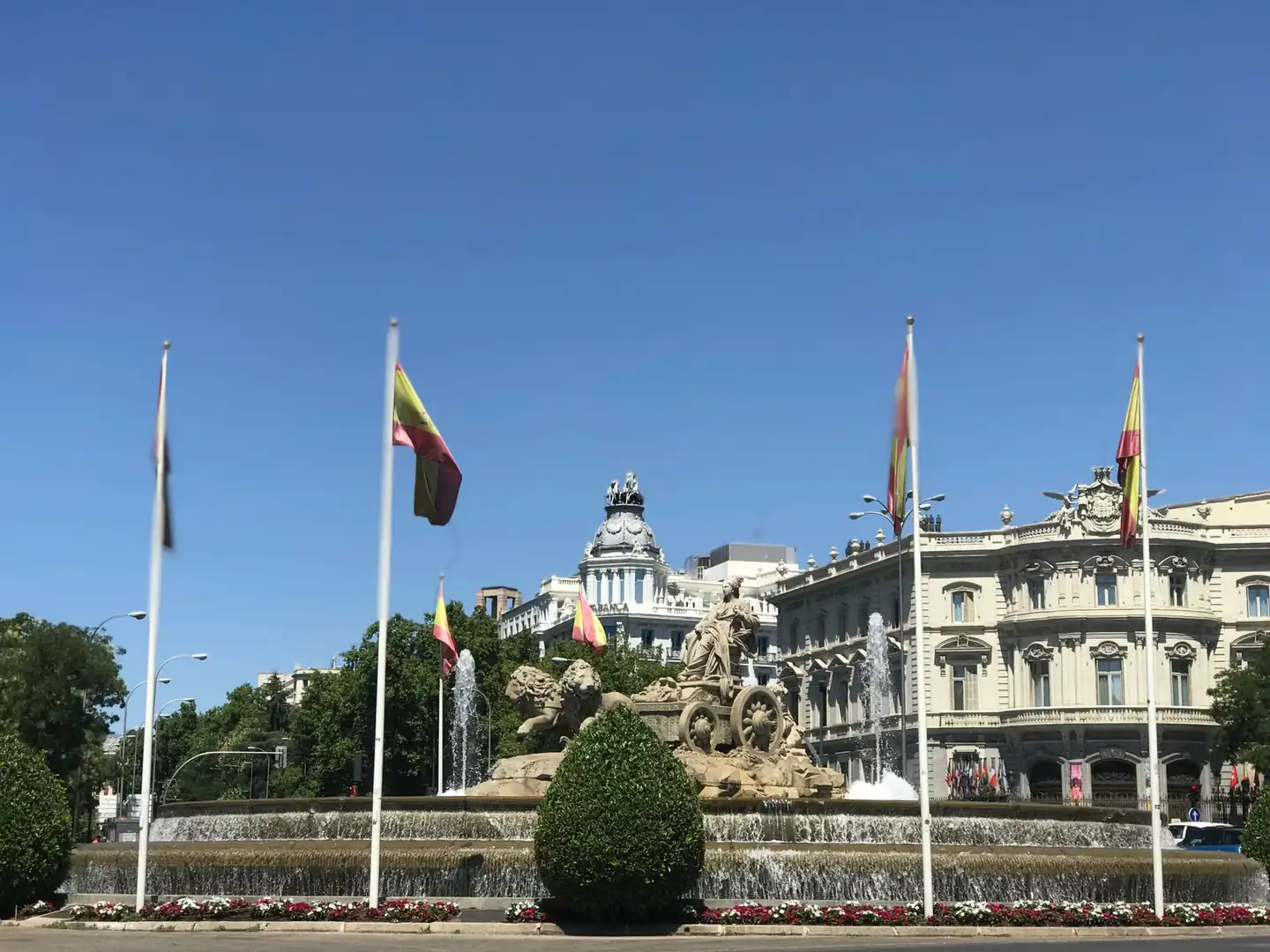
Madrid’s solidarity race left in 2025 a scene that will be hard to repeat: 21,182 participants, 285,000 euros raised, and a city fully engaged in an event that blends sport, remembrance, and social commitment. The standings for Ponle Freno Madrid 2025 reflect a race that was much more than reaching the finish line: it was a massive response on the World Day of Remembrance for Road Traffic Victims.
On the sporting side, the top spots in each category shaped an intense and varied day, with victories in the 10 kilometers for Mohamed Massat Bouzahar and Leire Castrejón Valero, wins in the 5 kilometers for Iván Amador García and Claudia Gómez Menéndez, and dominance by Juan José Arroyo Abenza and Covadonga Sanz Gutiérrez in handbike. There was also a leading role for the junior category, where Francesco Galeando and Ivana Pulido headed the finish lists.
An edition marked by massive participation and symbolic weight
Madrid responded with a human tide that turned the center of the capital into a corridor of solidarity. The event was held on Sunday, November 16, on a morning that began with a minute of silence before the starting gun. The scene had a solemn, almost ceremonial air before the race gathered momentum through some of the city’s most recognizable streets. That combination of reflection and movement explains why this race holds such a unique place in the Spanish urban calendar.
The organizers put the number of runners in the Madrid edition at 21,182, a figure that confirms the appeal of a race with a well-established identity. It is not only an opportunity to compete; it is also a date with a specific cause. The funds raised, 285,000 euros, will go to the National Spinal Cord Injury Hospital in Toledo, a key institution in rehabilitation and support for people with spinal cord injuries and serious consequences derived from traffic accidents.
The solidarity dimension is not decorative; it is the event’s center of gravity. Since 2008, the Ponle Freno circuit has surpassed 3.5 million euros in accumulated funds and has brought together more than 389,000 people. It is a long trajectory for an initiative that, over the years, has managed to combine media visibility with tangible social impact. In Madrid, that footprint was also felt in the atmosphere: families, recreational runners, elite athletes, and participants with disabilities shared the same city space.
Here is how the top spots in the standings finished
The official results from the day left standout names in each distance. In the men’s 10-kilometer race, Mohamed Massat Bouzahar led the finish, followed by Esteban Patiño Ramírez and Gabriel Muñoz Páez. In the women’s category, Leire Castrejón Valero posted the best time, ahead of Sara Guijarro and Lucía Sánchez García. The full list, as is often the case in these large-scale races, is then ordered by net time and chip time on the results platforms, where each runner can locate their exact position.
In the 5 kilometers, the men’s victory went to Iván Amador García, with Rafael Usoz Buitrago and Daniel Romero Takagi completing the podium. Among the women, the first across the line was Claudia Gómez Menéndez, followed by Miryam Paredes and Mónica Vega Plasencia. The shorter nature of this distance does not reduce its competitive value; on the contrary, it usually brings together very different profiles, from those chasing a time to those who simply want to be part of the collective gesture of the day.
The handbike category provided a particularly powerful perspective on the race. Juan José Arroyo Abenza finished first in the men’s category, ahead of Rubén Martín Rodríguez and Miguel Ángel León Carrasco. In the women’s race, the victory went to Covadonga Sanz Gutiérrez, with Manuela Vos van den Bouwhuijsen and Cris Adrados Artal behind her. The presence of handbike in an urban event like this broadens the reach of the race and reminds us that street sport can also be a more accessible and representative space.
The junior category also had its own spotlight. Francesco Galeando topped the men’s standings, followed by Ian Otero and Álvaro Usoz. In the women’s category, first place went to Paula Maroto Martín, with Carmen Lara Gómez and Ivana Pulido next. That youth base gives continuity to a race that, without losing its social focus, has become a meeting point for different generations of runners.
The route once again put central Madrid in the spotlight
The 10-kilometer course took runners past some of the city’s most recognizable landmarks. Puerta del Sol, Plaza de Colón, Paseo de la Castellana, Nuevos Ministerios, Gran Vía, Callao, Preciados, Neptuno, and Cibeles were all part of a moving postcard that blended pavement, monuments, and urban noise. It was not just any route: passing through Sol added an obvious symbolic layer, because that is where the kilometer zero of Spain’s road network and the race’s own founding reference converge.
The 5-kilometer route, meanwhile, also had its own identity. It included Paseo de la Castellana, Serrano Street, the area around the National Library, and the Recoletos axis before linking up with the finish. That combination of broad avenues and urban landmarks offers a clear reading: the race is designed to be experienced both by runners and by those watching from the sidewalk, with a city that recognizes itself while running.
Logistics were supported by the Police, Civil Guard, and SAMUR, in addition to the institutional collaboration of the Madrid City Council. In a race with thousands of people and several categories, success does not depend only on the stopwatch. Access control, medical coordination, safety at crossings, and start-line organization also matter. In events of this size, the invisible machinery is just as important as the finish-line moments: if everything fits together, the runner barely notices it, and that is precisely where the effectiveness lies.
Why these standings matter beyond the podium
The standings in a popular race are not only there to crown the fastest runners. They also structure the experience of thousands of participants who want to see themselves reflected in a time, a position, or a sense of personal progress. In a 5- or 10-kilometer race, a results table works like a mirror: the runner compares themselves with their effort, their pace, and the circumstances of that particular day. For some, it will be a mark; for others, confirmation that the body responded as it should.
In an event like Ponle Freno, moreover, interest in positions is mixed with an emotional context different from that of other competitions. Here the podium matters, but it coexists with a broader story about prevention, remembrance, and support for road traffic victims. That is why the standings attract both those looking for a runner’s name and those who want to understand what the day left behind in human and collective terms.
The race also offers a useful snapshot of the state of popular running in Madrid. The high level of participation confirms that urban races remain one of the major drivers of amateur sport in Spain. The city acts as a showcase, but also as a setting for coexistence. On a November Sunday, with milder temperatures and less competitive noise than in major marathons, a solidarity 5K or 10K can bring together very different profiles without losing cohesion.
What the results reveal about the race level
The winning times help read the race’s sporting profile. In an event with strong popular participation, the leading times are usually highly competitive, even if the media focus is shared between the elite and the large mass of runners. The fact that the organizers highlight winners in the 10K, 5K, handbike, and junior categories shows a structure designed to integrate different levels, not just to reward the fastest runner of the day. That approach broadens the base and adds depth to the event.
The calendar effect also matters. Held in November, Ponle Freno Madrid takes place at a time when many runners are wrapping up autumn goals or beginning to look toward the next season. It is not a race designed to seek extreme performance peaks, but rather to offer a solid urban experience, with enough demand to fill the city with bibs and with a meaning that goes beyond the simple result. In that sense, the atmosphere matters almost as much as the final time.
The presence of well-known faces linked to Atresmedia and the project’s own appeal boosted the event’s visibility. But real success is measured not by spotlights or cameras, but by the public response. Every bib raises funds, yes, but it also builds an image of community that has become more recognizable year after year. In a sports ecosystem crowded with events, that is no small thing: it means the race has found its own voice.
How result tables are read in a race like this
Standings platforms usually organize information by category, sex, and bib number or runner name. That makes it quick to find the exact position, official time, and, in many cases, average pace per kilometer. In events with tens of thousands of entrants, those search tools are extremely useful because they prevent you from getting lost in endless lists. Just enter the name or bib number to reconstruct the morning with clockwork precision.
In Ponle Freno Madrid 2025, checking the results is especially interesting because several categories with different logics coexist. The 10K brings together those looking for a fuller performance reference; the 5K opens the door to more heterogeneous profiles; the handbike category puts the spotlight on competitive accessibility; and the junior race reminds us that the event also builds a future generation, habit, and a bond with popular athletics from an early age. Each table tells a different story, even though they are all part of the same Sunday.
In journalistic terms, the standings also serve as documentary evidence of a day. They establish who arrived first, in what order, and under which category, but they also put the scale of the event into context. When a race surpasses 21,000 participants, the winner’s data loses meaning if it is not accompanied by the total size. Here the informational value lies in the whole: results, participation, fundraising, and route all support one another.
A race that blends the stopwatch, the city, and collective memory
Few events manage to make a sporting result coexist with such a clear social message. In Madrid, Ponle Freno once again showed that urban running can also be a form of public storytelling. The winners’ times, the images of a packed Castellana, and the initial silence before the start make up the same scene, built from elements that often seem incompatible: speed and remembrance, competition and solidarity, the street and the institution.
The race also left behind a figure that is hard to ignore: 285,000 euros for the National Spinal Cord Injury Hospital in Toledo. It is not an incidental detail, but the direct result of thousands of registrations turned into real support. In a time when events with plenty of visibility but little substance are common, this race maintains a rare coherence. And that coherence is part of the reason why it continues to grow.
The Ponle Freno Madrid 2025 standings, at heart, are the visible part of something bigger. Behind every name and every mark there is a city in motion, a shared cause, and a calendar that sets aside a special place for races with meaning. Madrid responded once again, and it did so with numbers, effort, and a very clear idea of sport: running can also be a form of remembrance.
Reference results in the 2025 Madrid edition: men’s 10 kilometers with Mohamed Massat Bouzahar, Esteban Patiño Ramírez, and Gabriel Muñoz Páez; women’s 10 kilometers with Leire Castrejón Valero, Sara Guijarro, and Lucía Sánchez García; men’s 5 kilometers with Iván Amador García, Rafael Usoz Buitrago, and Daniel Romero Takagi; women’s 5 kilometers with Claudia Gómez Menéndez, Miryam Paredes, and Mónica Vega Plasencia; handbike with Juan José Arroyo Abenza and Covadonga Sanz Gutiérrez at the front; junior with Francesco Galeando and Ivana Pulido as the first names across the finish line.
You may also like: Results put the brakes on Madrid 2025: standings and key points.
Official results: sportmaniacs.com.



How to prevent thigh chafing: causes and real solutions

Women’s running windbreakers: seven jackets and how to choose

Do more workouts get rid of soreness? A guide for runners

Jaén Half Marathon 2026: Record 3,800 Runners Registered

Men’s short running tights: how to choose the right pair

World Triathlon confirms data breach involving medical data

Izan Edo targets podium at Miyazaki World Cup

María Pérez ranks ninth in World Athletics’ 2026 top ten

Dos Santos, Duplantis and Sawe: World Athlete of the Year finalists

San Silvestre Vallecana 2026: 42,000 places, prices and start times

 Races3 months ago
Valencia Half Marathon 2027: date and registration

 Reviews and Comparisons4 months ago
Asics Gel-Roadmiles 3 for men: review and current price

 Races3 months ago
Valencia Marathon 2026: entry, ballot and course

 Reviews and Comparisons4 months ago
Asics Gel Sonoma 8 Gore-Tex: complete analysis for trail and rain

 Sneakers3 months ago
Saucony Endorphin Pro 4: full review and verdict

 News5 months ago
Strava API 2026: what changes for clubs, challenges and runner apps?

 Reviews and Comparisons5 months ago
Nike Alphafly 3: opinions, sensations, and real key points

 Reviews and Comparisons4 months ago
Under Armour running shoes review 2025-2026: models and key features

 Sports Equipment4 months ago
Shoe sizes in cm: a clear guide to getting the right fit for your footwear

 Sneakers3 months ago
Skechers GO RUN Consistent 2.0 analysis: comfort and limits

 News5 months ago
Valencia Marathon 2026 route: key tips to train and run better

 Sneakers4 months ago
Adidas Adizero Boston 13 for men: review and verdict