Races
Results put the brakes on Madrid 2025: standings and key points
Rankings, winners, and context of a charity event that set records in Madrid.

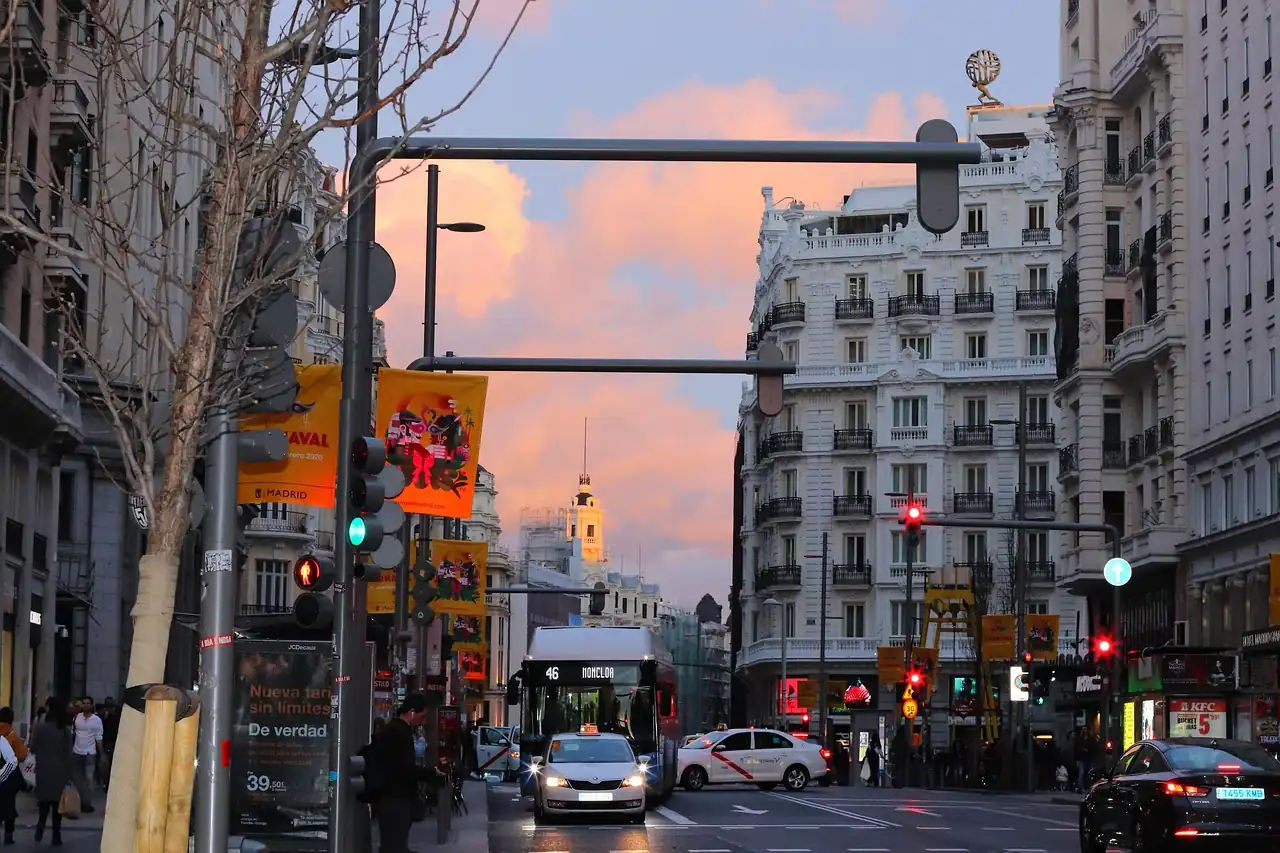
Imagen: ataioli / Pixabay
The results of Ponle Freno Madrid 2025 are already drawing the attention of those who took part, those who followed the race, and those who want to check how one of the most crowded charity events on the runner calendar in the capital turned out. The race held on November 16, 2025 left a highly unusual scene even for Madrid: a human tide united around road safety, with a sporting and social impact that went far beyond the clock.
The Madrid edition once again showed why this event has a place of its own on the popular running map. There were more than 21,000 participants, exactly 21,182, and fundraising of 285,000 euros destined for the National Hospital for Paraplegics in Toledo. At the same time, the official standings made it possible to organize a day marked by symbolism, remembrance of road traffic victims, and a route that turned the city center into a sporting and civic stage at the same time.
Official standings in Madrid
The standings for the Madrid edition were organized by format and showed the race’s usual mix: road runners, handbike participants, and categories with a strong popular presence. The main circuit was split between 10 kilometers and 5 kilometers, with the start at around 09:02 in both cases, while the handbike race started at 09:01 on a course equivalent to the 10-kilometer route.
In the longer distance, the men’s order was led by Mohamed Massat Bouzahar, followed by Esteban Patiño Ramírez and Gabriel Muñoz Paez. In the women’s standings, first place went to Leire Castrejón Valero, ahead of Sara Guijarro and Lucía Sánchez García. In the 5-kilometer race, the men’s victory went to Iván Amador García, with Rafael Usoz Buitrago and Daniel Romero Takagi behind him; in the women’s race, the podium was formed by Claudia Gómez Menéndez, Miryam Paredes, and Mónica Vega Plasencia.
The handbike category also produced standout names on a day of huge visibility. In the men’s race, the standings were led by Juan José Arroyo Abenza, followed by Rubén Martín Rodríguez and Miguel Ángel León Carrasco. In the women’s race, the benchmark was set by Covadonga Sanz Gutiérrez, ahead of Manuela Vos van den Bouwhuijsen and Cris Adrados Artal. The junior race completed the picture with Francesco Galeando, Ian Otero, and Álvaro Usoz in the boys’ category, and Paula Maroto Martín, Carmen Lara Gómez, and Ivana Pulido in the girls’ category.
A podium that matters less than the collective gesture
In this event, the value of the standings coexists with a broader reading. The sporting result matters, of course, but it does not by itself explain the race’s significance. The 2025 edition once again put the symbolic side of an event in the spotlight, born to gather support for traffic victims and to remind everyone that safe mobility is not an abstract idea, but an issue that affects real lives.
The minute of silence before the start gave the day a solemn tone, almost like a civic ceremony. Then, the starting gun fired by Matías Prats marked the transition from memory to action, from pause to movement. That sequence, simple as it may seem, sums up the essence of the event well: running not only to compete, but to represent a shared cause in an urban setting that for a few hours changes both pace and meaning.
The public response was notable not only because of the number of entrants, but also because of the continuity of a trend already seen at other stops of the initiative during 2025. Madrid closed the city calendar with record participation within this edition, in a line that also reached Badalona, Palma, Zaragoza, Málaga, Valencia, Vigo, and Bilbao. The message is clear: the project retains a very high capacity to attract people and a distinctive identity that stands the test of time.
What the 2025 edition reveals about the race
The Madrid race once again showed the combination that has made Ponle Freno recognizable since 2008: a large-scale organization, an appealing urban route, and a cause that turns each registration into a contribution with a specific destination. Since its inception, the initiative has brought together 389,036 people and has raised more than 3.5 million euros for projects linked to road safety and improving the quality of life of victims.
That figure helps explain why the results of Madrid 2025 should not be read as just another popular race. The event has a dimension that goes beyond the usual logic of the podium and the bib number. Every finish line crossed carries a double weight: that of individual effort and that of a cumulative fundraising total that ends up going to a very specific care project, the National Hospital for Paraplegics in Toledo. In journalistic terms, that makes the standings an important piece, but not the only one, within a broader story.
There is also an urban reading. Madrid offered a highly recognizable course, with locations of strong symbolic value such as Puerta del Sol, Plaza de Colón, Castellana, Nuevos Ministerios, Gran Vía, Callao, Preciados, Neptuno, and Cibeles. In the 5-kilometer race, passing through Serrano, the National Library, and the Recoletos axis added a classic postcard of the capital’s center, very familiar to any runner who has stepped on those streets on a day closed to traffic and taken over by sport.
The route and logistics behind the times
High-participation races are not explained only by the desire to run. Behind them is logistics that shapes the experience of thousands of people, and in Ponle Freno Madrid 2025 it was once again decisive. The presence of the Police, the Civil Guard, and the medical deployment of SAMUR guaranteed the smooth running of the day in a city where a course like this requires precise, almost millimetric coordination.
The fact that the starts were concentrated around 09:00, with slight differences between formats, made for a morning in which the transition from one race to another remained orderly. That organization is key in races of this kind because it avoids bottlenecks, improves safety, and allows the amateur runner to feel that they are part of a well-run event, without unnecessary friction. On a cool November morning, every detail matters more than it seems.
Choosing the center of Madrid as the setting was no coincidence either. The capital offers a hard-to-match blend of visibility, breadth, and symbolic weight. Passing through landmarks such as Puerta del Sol, the historic starting point of many references in the Spanish road network, and broad avenues like Castellana gives the race the feel of a major civic event. It is not just running through familiar streets; it is running through a collective city story.
Results, times, and the real meaning of a classification
In a popular race, the first glance at the standings usually goes to the name, category, and overall position. Then comes the nuance: tiny differences at the front, very different paces across formats, and a wide spread of times among the full field. In Ponle Freno Madrid 2025, the official focus was on the top finishers in each category, but the real scale of the event lies in the mass of runners who turn the race into a shared celebration.
The 10-kilometer distance is usually the most closely watched because it gathers those looking for a more competitive benchmark. The 5-kilometer race opens the door to a wider range of profiles, from first-timers to those who prefer a shorter, more manageable effort. The handbike race, meanwhile, adds a dimension of sporting inclusion that broadens the meaning of the event and reinforces its social character.
That is why, when talking about results, it is worth looking beyond first place. The standings in this type of event organize the effort, but they do not fully define the experience. The final image of Madrid 2025 is that of an event where the stopwatch coexisted with the cause, where the bib number mingled with memory, and where thousands of people turned a November Sunday into a public show of support for victims of road crashes.
Why this event has become a benchmark for charity running
Ponle Freno has achieved something uncommon: keeping a popular race relevant year after year without relying solely on sporting performance. Its strength lies in the consistency between message, organization, and the destination of the funds. The brand was not built on empty aesthetics, but on a recognizable cause, easy to explain and supported by figures, participation, and continuity.
In Madrid, that formula also finds an ideal setting. The city offers infrastructure, media visibility, and a broad running community, but also a symbolic weight that fits the road safety message. Running through the center of the capital, on a date linked to the remembrance of traffic victims, adds a contained, serious, and highly fitting emotional component to the nature of the race. Nothing is unnecessary; nothing feels decorative.
The result is a race that each year leaves more than just standings. It leaves a trail of public image, a concrete fundraising total, and a reference point for runners who understand running as a space for civic participation. The 2025 edition, with its record number of entrants and funds, confirmed that the formula is still alive and that Madrid remains the major closing stop for a nationwide initiative.
What remains after crossing the finish line
The list of names that topped each format in Madrid 2025 will remain in the official statistics, but the most lasting imprint will be something else. What remains is the sum of people who took to the streets for a common goal, the memory of a city transformed by sport, and the certainty that a popular race can have a very concrete public purpose. That mix of distance, solidarity, and memory gives the results a different value, broader than that of a simple finishing order.
Madrid closed the day with a message that is easy to read even for those who do not usually follow the running circuit. Commitment, participation, and record fundraising formed a trio that is hard to separate. And in the middle of it all, the standings worked as a precise snapshot of the morning, a way to record who led each distance without losing sight of the fact that, in this race, the greatest victory does not always fit in a leaderboard.
That is the backdrop that explains why the results of Ponle Freno Madrid 2025 are so interesting: they do not just sort out a race, they document a day in which popular sport once again served as a loudspeaker for a cause that remains powerfully relevant. In a city accustomed to major events, this one retains something distinctive, almost intact: the feeling that every stride has its own weight and a usefulness that goes beyond the finish line.
You may also like: Ponle Freno Madrid 2025 Rankings: Results and Key Data.



How to prevent thigh chafing: causes and real solutions

Women’s running windbreakers: seven jackets and how to choose

Do more workouts get rid of soreness? A guide for runners

Jaén Half Marathon 2026: Record 3,800 Runners Registered

Men’s short running tights: how to choose the right pair

World Triathlon confirms data breach involving medical data

Izan Edo targets podium at Miyazaki World Cup

María Pérez ranks ninth in World Athletics’ 2026 top ten

Dos Santos, Duplantis and Sawe: World Athlete of the Year finalists

San Silvestre Vallecana 2026: 42,000 places, prices and start times

 Races4 months ago
Valencia Half Marathon 2027: date and registration

 Races4 months ago
Valencia Marathon 2026: entry, ballot and course

 Reviews and Comparisons4 months ago
Asics Gel-Roadmiles 3 for men: review and current price

 Reviews and Comparisons4 months ago
Asics Gel Sonoma 8 Gore-Tex: complete analysis for trail and rain

 Sneakers3 months ago
Saucony Endorphin Pro 4: full review and verdict

 News5 months ago
Strava API 2026: what changes for clubs, challenges and runner apps?

 Reviews and Comparisons5 months ago
Nike Alphafly 3: opinions, sensations, and real key points

 Reviews and Comparisons4 months ago
Under Armour running shoes review 2025-2026: models and key features

 Sports Equipment4 months ago
Shoe sizes in cm: a clear guide to getting the right fit for your footwear

 Sneakers3 months ago
Skechers GO RUN Consistent 2.0 analysis: comfort and limits

 News5 months ago
Valencia Marathon 2026 route: key tips to train and run better

 Sneakers4 months ago
Adidas Adizero Boston 13 for men: review and verdict