Races
The best photos from the Madrid Women’s Race
The most moving images of Madrid, from the start to the finish, in the great pink event.

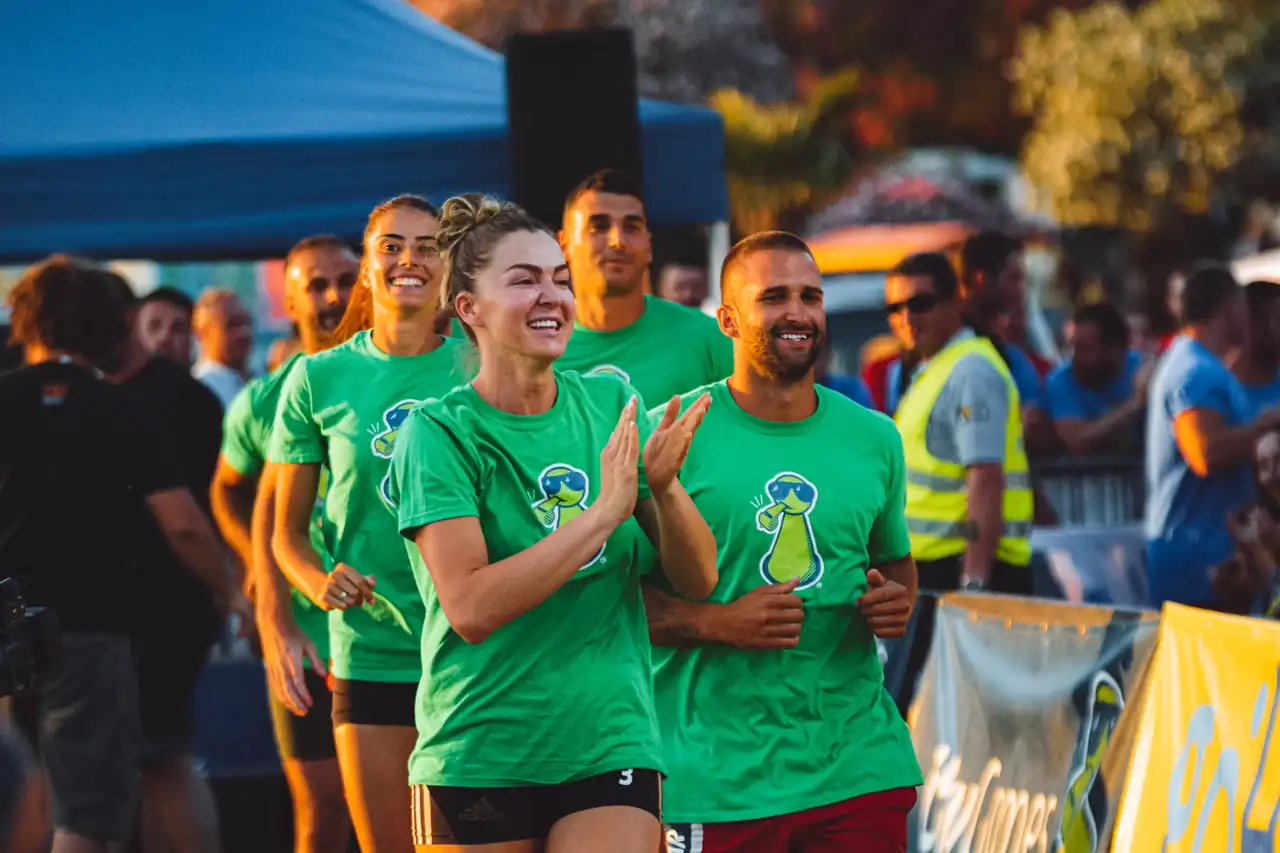
The Madrid Women’s Race leaves behind, every year, a scene that is hard to mistake: a pink tide moving through the streets with the pulse of a sporting celebration and the echo of a collective claim. The best images from the event do not just show runners in motion; they capture hugs, gestures of effort, group smiles, and that mix of fatigue and pride that appears when the finish line is already behind.
In a well-built gallery, the strength of the event lies not only in the number of participants, but in the details that tell what the stopwatch does not explain. Pink dominates the color palette, yes, but what truly sustains the visual story is the shared energy: banners, groups of friends, cheering families, and an atmosphere of support that turns the race into something bigger than a 5-kilometer road race.
The image Madrid leaves when it runs in pink
The capital changes its skin during this day. The avenues fill with runners moving forward with a steady stride, many of them experiencing a popular race for the first time, others with the ease of those who already know the route and know where the effort bites hardest. In the most powerful photographs, Madrid appears as an open stage, with the asphalt turned into a runway of endurance, solidarity, and celebration.
The start usually concentrates the greatest visual tension. There is concentration on the faces, human warmth along the edges of the course, and a sense of collective drive that can be felt even in a still image. The photos taken at that moment have clear documentary value: they show the crowd, the organization, the anticipation, and that brief second when everything is still to be decided.
Then comes the stretch of the course, where the gallery gains nuance. There appear the details that separate a routine sequence from a memorable coverage: hands raised in encouragement, runners looking at one another to keep pace, shirts soaked with sweat, and the glow of a morning in which sport blends with public emotion. Sports photography works here as a chronicle, not as mere decoration.
What turns a gallery into the best selection
Not every photo says the same thing, even if all belong to the same race. The best images from the Madrid Women’s Race combine wide, medium, and close shots to build a complete narrative. A wide shot explains the scale of the event; a medium shot reveals camaraderie; a close-up, on the other hand, exposes the truth of the effort in a half-open mouth, furrowed brows, or a smile that appears just as someone looks at the camera.
The variety of framing matters as much as technical quality. A solid gallery needs start scenes, stretches of the route, and the finish line, but also those apparently secondary moments that end up being the most human. A runner adjusting her bib, a group posing before the starting gun, or a volunteer cheering from the side add texture and context. Without those fragments, the story feels flat.
Visual continuity also matters. Images from a popular race should convey movement without losing clarity. That is why photos work especially well when the Madrid background is slightly blurred, while the protagonist stands out sharply in the foreground. The contrast between physical effort and the urban landscape gives the series a very recognizable, almost cinematic power.
The documentary value of a race with so much participation
The Women’s Race is not just any race on the popular calendar. Its participation numbers and social dimension have made it a benchmark for women’s recreational athletics in Spain. That is why photo galleries interest even those who did not run: they work as an archive of a morning in which thousands of people share the same language, that of popular sport.
That documentary value explains the interest in retrospective images. Looking back at photos from previous editions makes it possible to see how the event has grown, how the sense of community has become established, and how pink has become an immediate visual hallmark. It is not only about remembering a specific edition; it is also about observing the evolution of a race that has managed to unite sport, visibility, and the street.
In this kind of coverage, the camera does not only record what happens. It also selects what deserves to be remembered. And at the Women’s Race there is plenty of material: the compact crowd, the anticipation before the start, the excitement of the applause, and the moment of relief at crossing the finish line. Emotion is not manufactured in the lens; it appears on its own when the image finds the right moment.
The start, the course, and the finish: three key scenes
The start concentrates the most recognizable energy. The runners gather, the noise rises a few notches, and the photograph begins to capture a movement that has not yet fully exploded. It is the most useful moment for showing the scale of the event: thousands of participants, chromatic uniformity, and an emotion that can be felt even in a silent image.
On the course, expressions change. The initial adrenaline gives way to rhythm, sustained effort, and the simplest strategy possible: keep moving forward. The best photos along the route are usually the most honest, because they show fatigue, concentration, and mutual support without makeup. That midpoint between effort and joy is probably the race’s strongest visual signature.
The finish line offers another kind of truth. There you see faces distorted by effort, arms raised, and hugs that arrive almost without thinking. For a well-ordered gallery, that ending is essential because it closes the story with a clear idea: the race does not end when the clock says so, but when the runner understands she has crossed more than a line painted on the ground. She has completed a personal challenge within a collective event.
Why these photos matter so much beyond the running circuit
The popularity of these galleries does not depend only on interest in athletics. They also attract family members, friends, companions, and readers who want to recognize themselves in the scene. A popular race of this size has something of a community album: anyone may have been there, cheering, competing, or simply watching from the sidewalk.
The photos connect with a shared memory. Those who took part look for their face, their bib number, or their group’s silhouette; those who were in the stands want to relive the atmosphere; those who did not attend find a visual reading of a city that gives itself over to sport with a festive and activist tone. That broad audience explains why a good photo selection has so much life in search engines and on social media.
In addition, the Women’s Race concentrates a type of image that works very well in journalistic terms: movement, color, emotion, and social cause. It is not a cold gallery or a simple succession of portraits. It is a sequence with internal rhythm, with tension and release, with a beginning and an end. Sports photography, when it gets it right, tells a story without needing to explain too much.
Madrid as the visual backdrop for a highly recognizable day
The city provides a backdrop that reinforces the event’s identity. Madrid is not a neutral set: its wide avenues, changing light, and mix of architecture and asphalt offer a highly recognizable setting for the race. In the best images, the city does not compete with the runners; it accompanies them and organizes them within a composition that breathes urban scale.
The light of spring or autumn, depending on the edition, has a major impact on the final result. When the sun falls cleanly on the route, the pinks shine more strongly and the outlines are sharper. When the sky is overcast, the scene gains density and the faces become more expressive. In both cases, photography benefits from that contrast between the crowd and the open city.
Madrid also helps the event maintain a stable visual identity year after year. The images do not seem interchangeable with those from any other popular race. There is a distinctive mark in the scale of the turnout, in the type of audience, and in the way the course fills with participants. That makes the gallery both an archival piece and a celebration of the present moment.
How to read a photo selection with discernment
A good gallery is not consumed all at once; it is walked through. It is worth looking first at the wide shots to understand the scale of the event and then narrowing the focus toward specific gestures. That makes the whole story easier to appreciate: the magnitude of the start, the density of the course, and the emotional relief of the finish.
Details often reveal more than excess spectacle. Hands resting on knees, a runner turning her head to look for someone, a group entering the finish line together, or an unexpected smile in the middle of fatigue say more than an image designed only to impress. In a popular race, authenticity matters more than posing.
It also helps to read the sequence as a small feature story. If the series is well ordered, the emotional progression becomes clear: start, development, and finish. That simple structure allows the photos to breathe and the reader to feel they are walking alongside the race, not consuming a disorganized gallery. Photography, when well edited, turns a sporting morning into a story with its own pulse.
A visual archive that is already part of popular memory
The images of the Madrid Women’s Race are no longer just current-affairs content. They are also collective memory, a kind of urban album where sport, activism, and community intersect. Each edition leaves a different mark, but they all share the same foundation: thousands of women occupying public space with naturalness and determination.
That is the true appeal of these photos. Beyond the bib number or the finishing time, they show a social scene that has gained weight over the years. The race is a sporting event, yes, but also a way of seeing the city function according to another logic, less individual and more shared, where personal effort fits within a common story.
That is why a carefully curated selection of images has such staying power. It does not age like an ordinary news item because it points to something broader: the evolution of popular running, the growing presence of women in major city races, and the symbolic strength of a tide that returns every season to color Madrid pink. The best photos do not just remember a race; they explain why it still matters.
The power of an image when the city runs at the same pace
In an event like this, photography becomes a shared language. Anyone who sees the gallery immediately recognizes the energy of the start, the color of the pack, the tension of the final meters, and the final relief. Little else is needed to understand the scope of the day, because the image already contains the entire atmosphere of the race.
Madrid provides the stage and the runners provide the emotion. Between the two, a visual narrative is built that blends popular sport, urban identity, and an activist claim that still carries weight. That combination explains why the photos from the Women’s Race are so interesting: because they do not limit themselves to documenting an event, but preserve a way of being together in the street.
And that is where their most lasting value lies. Photos pass, are archived, and circulate again, but what they leave behind is more solid than a postcard. They leave the feeling of having seen a city in motion, with thousands of strides setting a shared rhythm. When a popular race reaches that human density, the camera does not only look: it also bears witness.



How to prevent thigh chafing: causes and real solutions

Women’s running windbreakers: seven jackets and how to choose

Do more workouts get rid of soreness? A guide for runners

Jaén Half Marathon 2026: Record 3,800 Runners Registered

Men’s short running tights: how to choose the right pair

World Triathlon confirms data breach involving medical data

Izan Edo targets podium at Miyazaki World Cup

María Pérez ranks ninth in World Athletics’ 2026 top ten

Dos Santos, Duplantis and Sawe: World Athlete of the Year finalists

San Silvestre Vallecana 2026: 42,000 places, prices and start times

 Races4 months ago
Valencia Half Marathon 2027: date and registration

 Races4 months ago
Valencia Marathon 2026: entry, ballot and course

 Reviews and Comparisons4 months ago
Asics Gel-Roadmiles 3 for men: review and current price

 Reviews and Comparisons4 months ago
Asics Gel Sonoma 8 Gore-Tex: complete analysis for trail and rain

 Sneakers3 months ago
Saucony Endorphin Pro 4: full review and verdict

 News5 months ago
Strava API 2026: what changes for clubs, challenges and runner apps?

 Reviews and Comparisons5 months ago
Nike Alphafly 3: opinions, sensations, and real key points

 Reviews and Comparisons4 months ago
Under Armour running shoes review 2025-2026: models and key features

 Sports Equipment4 months ago
Shoe sizes in cm: a clear guide to getting the right fit for your footwear

 Sneakers3 months ago
Skechers GO RUN Consistent 2.0 analysis: comfort and limits

 News5 months ago
Valencia Marathon 2026 route: key tips to train and run better

 Sneakers4 months ago
Adidas Adizero Boston 13 for men: review and verdict