Races
Women’s Race photos: the best images from València
A visual roundup of the great pink event in València: atmosphere, solidarity, and the most notable scenes.

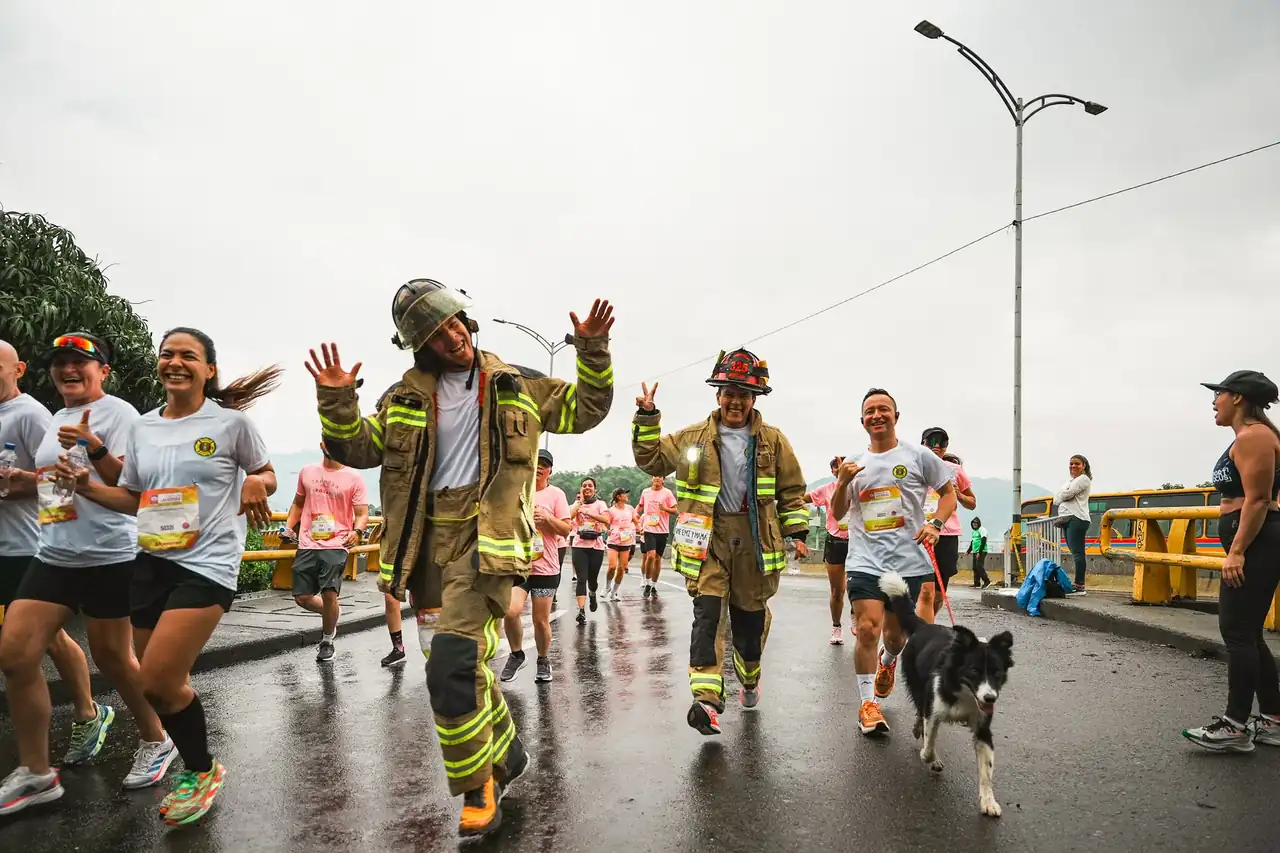
València woke up dressed in pink with a human tide that turned the seafront promenade into a postcard of shared effort, solidarity, and sporting celebration. The 2025 edition brought together 10,000 women in a day marked by remembrance for the municipalities affected by the DANA and by a turnout that overflowed the area around the Hotel Las Arenas with an energy that is instantly recognizable to anyone who follows this event year after year.
The images from the day sum up much more than a popular race. They speak of sport, advocacy, and community, with families, groups of friends, regular runners, and first-timers mixed into the same scene. Along the route and in the post-race activity area, the Pink Tide left behind scenes of hugs, race bibs, T-shirts, and smiles that help explain why this event continues to hold such a prominent place on Spain’s popular running calendar.
The still image of a crowded morning
The first photographs of the day showed a tightly packed, almost electric start, with pink as the common language. The crowding, far from reducing clarity, added clear visual force: an avenue turned into a river, legs in motion, signs, focused expressions, and that mix of nerves and joy that always appears a few seconds before the starting gun. At an event like this, each image becomes a piece of collective memory.
There was also one detail that gave context to the edition: 2,000 participants came from the municipalities affected by the DANA, a fact that changed the tone of the day and moved it away from any purely sporting reading. The race thus became a visible platform of support, with the funds raised going to those affected. In photography, that kind of meaning is usually seen more in faces than in banners: an expression, a look, a hand raised as it crosses the finish line.
The result was a very complete sequence of images, from the pre-race gathering to the later activities on the promenade esplanade. That narrative arc explains why a photo gallery of this race is of interest not only to those who were there, but also to anyone looking to reconstruct the atmosphere of an event that, due to its scale and symbolism, has become one of the most recognizable in women’s popular running in Spain.
The start, where pink gains density
The start of the Carrera de la Mujer is usually one of the most photogenic moments of the year on the popular running calendar. The reason is simple: density, color, and movement come together over just a few meters. In València, the scene also had a pleasant setting, with clean morning light and a coastline that added depth to the shots. For the photographer, that means wide frames with layers of participants and details that help build a story.
In these images, the runners appear packed together before setting off, with an expression that blends tension and celebration. There is no artificial heroism, but rather a very specific emotion: knowing oneself to be part of something bigger than the clock. In practice, that translates into photographs where the value is not only in the action but also in the composition, in the repetition of T-shirts, in the contrast between the white of the pavement and the advancing pink tide.
The start also sets the tone for the entire gallery. Anyone looking for this kind of content usually wants to see exactly that: what the opening feels like, what the atmosphere is, how the city responds, and which gestures best sum up the experience. In an event this popular, photography has an almost documentary role; it does not decorate, but rather verifies and preserves.
The course, between effort and celebration
Images from the course are usually less explosive than those of the start, but they are often more human. That is where the runners who keep up the pace appear, those who encourage one another, those who adjust their stride so they don’t lose their group, and those who simply enjoy the journey. This kind of scene offers a very clear reading of the spirit of the event: participation above time, experience above speed.
In València, the seaside setting provided a clean, almost cinematic backdrop, with a gentle topography for both the eye and the camera. The promenade became a runway of shared effort, where the repetition of pink ended up giving a sense of continuity, as if the race were not a sum of people but a single current in motion. The best photos along the route capture just that, the steady pulse of an event that moves forward without losing its identity.
There was also room for closer shots, very useful for conveying the emotional dimension of the event. A waving hand, an improvised laugh, a runner looking at the camera, another wiping sweat at the end of a demanding stretch. They are small details, but in sports photography they are often the ones that best explain the real scale of a popular event. The statistic says 10,000 participants; the image, on the other hand, tells the story of 10,000 different ways of being there.
Finish line, hugs, and relief: what the cameras do capture
The finish line is always its own world. There the expressions change, concentration relaxes, and an almost universal emotion appears: relief, pride, and joy. In races like this, the finish does not separate winners and losers in the strict sense, because what dominates is the feeling of having completed a shared experience. Finish-line photos usually capture deep breaths, broad smiles, and hugs that last longer than the final kilometer.
In the Valencian edition, that area also had a clearly festive dimension. The participants were not only closing out their effort, but also opening themselves up to a later gathering space on the promenade esplanade. That continuity between the sporting part and the social activities is one of the visual keys of the event, because it allows the gallery to go beyond a succession of bibs and move toward a full celebration of the day.
Photographically, the finish always offers contrast. The body arrives tired, posture becomes freer, and the face reveals the mark of the effort. In a mass race, that contrast is worth gold: it makes the previous minutes visible and turns each gesture into a small victory. That is why the best images of the Carrera de la Mujer are not limited to the spectacular; they also find beauty in the labored breathing, in the hand on the hip, in the glance toward those waiting on the other side of the tape.
The post-race activities, the second act of the day
A large part of the visual power of this event comes after the run. The activities scheduled on the promenade esplanade, next to the Hotel Las Arenas, until 12:00 noon, expanded the story with other kinds of scenes: groups dancing, participants chatting, stretching, souvenir photos, and a sports-fair atmosphere that gives the event a broader character than that of a simple competition. The race does not end at the finish line; it transforms.
That second act matters because it explains why the gallery works so well for readers and search users alike. They are not only looking for the athletic moment, but also the atmosphere afterward, the social pulse of the day, and the way the event occupies public space. The esplanade, with its combination of sea, promenade, and activity, offered a highly recognizable setting for a race designed to be experienced as a community.
In that phase, the cameras capture another truth about the event: the Carrera de la Mujer is also a meeting point. The photos show greetings, groups posing with medals or T-shirts still damp with sweat, girls looking at their mothers, and runners pausing for a second before leaving. They are less obvious images than the start, but often more enduring in memory, because they capture the atmosphere, not just the action.
Solidarity, DANA, and a race with a message
The València edition stood out for a very visible spirit of solidarity. The funds raised will go to those affected by the DANA, and that intention was present in the story of the day from the very beginning. In a popular race, that dimension changes how the photos are read: pink is no longer just a color associated with the event, but also a symbol of support and repair.
The presence of 2,000 participants from the municipalities hit by the DANA added a deeply human element that is hard to ignore. In images, that fact is not always directly visible, but it can be felt in the way people carry themselves, in the intensity of the hugs, in the emotion of certain group shots, and in the way the day was experienced as a collective response. Sometimes a photo does not need to explain the entire context; it is enough to suggest it honestly.
That is why this kind of photo report works beyond sport. The race blends with current events, solidarity, and a city that gets involved. The best images do not seek to turn the gesture into propaganda, but to show the extraordinary normality of a crowd running for a cause, not just for a bib number.
What a good gallery reveals about this event
A successful gallery of the Carrera de la Mujer is measured not only by the number of photos, but by its ability to organize the experience. It must show the beginning, the development, and the end; it must capture the scale of the event as well as individual faces; it must show the tide, but without losing the person. Sports photography works best when it mixes context and closeness, and this event offers more than enough material for both.
In València, the abundance of scenes made it possible to build a very complete narrative: a compact start, a dynamic course, an emotional finish, and an active post-race atmosphere. That sequence is precisely what someone arriving at this content for informational or visual interest is looking for. It is not just about seeing who won or how long each runner took, but about understanding what it felt like to be there. And that answer, in an event like this, lies in the details: a ribbon in the hair, a family waiting, a runner raising her arm, a sea of T-shirts under the sun.
The Carrera de la Mujer has turned its aesthetic into a hallmark. Pink works as a shared code, and photography is responsible for fixing it in public memory. Each edition adds new faces, new stories, and new layers of meaning, but keeps one essential idea intact: running can also be a social act, a gesture of support, and a celebration of the collective.
The Pink Tide as a living archive of a city
The images from València leave a clear impression: this race is no longer just a sporting event, but a living archive of emotions, participation, and commitment. Each edition adds a different chapter, and the 2025 one was marked by the solidarity response to the DANA and by massive participation that turned the seafront promenade into an open and recognizable stage.
In an age when photographs are consumed quickly, this kind of gallery preserves a classic virtue of good visual journalism: pausing the moment to give it meaning. The Pink Tide of València offered exactly that, a sequence of scenes that allow the city, the event, and the mood of its participants to be read at a glance. And that is where its most lasting value lies: it not only shows what happened, but also the way a community chose to gather around it.



How to prevent thigh chafing: causes and real solutions

Women’s running windbreakers: seven jackets and how to choose

Do more workouts get rid of soreness? A guide for runners

Jaén Half Marathon 2026: Record 3,800 Runners Registered

Men’s short running tights: how to choose the right pair

World Triathlon confirms data breach involving medical data

Izan Edo targets podium at Miyazaki World Cup

María Pérez ranks ninth in World Athletics’ 2026 top ten

Dos Santos, Duplantis and Sawe: World Athlete of the Year finalists

San Silvestre Vallecana 2026: 42,000 places, prices and start times

 Races4 months ago
Valencia Half Marathon 2027: date and registration

 Races4 months ago
Valencia Marathon 2026: entry, ballot and course

 Reviews and Comparisons4 months ago
Asics Gel-Roadmiles 3 for men: review and current price

 Reviews and Comparisons4 months ago
Asics Gel Sonoma 8 Gore-Tex: complete analysis for trail and rain

 Sneakers3 months ago
Saucony Endorphin Pro 4: full review and verdict

 News5 months ago
Strava API 2026: what changes for clubs, challenges and runner apps?

 Reviews and Comparisons5 months ago
Nike Alphafly 3: opinions, sensations, and real key points

 Reviews and Comparisons4 months ago
Under Armour running shoes review 2025-2026: models and key features

 Sports Equipment4 months ago
Shoe sizes in cm: a clear guide to getting the right fit for your footwear

 Sneakers3 months ago
Skechers GO RUN Consistent 2.0 analysis: comfort and limits

 News5 months ago
Valencia Marathon 2026 route: key tips to train and run better

 Sneakers4 months ago
Adidas Adizero Boston 13 for men: review and verdict