Races
Reykjavik Marathon: route, distances, and key points of the race
Reykjavik’s great race combines a marathon, half marathon, 10K, and 3K on a flat, urban course closely tied to the city’s festivities.

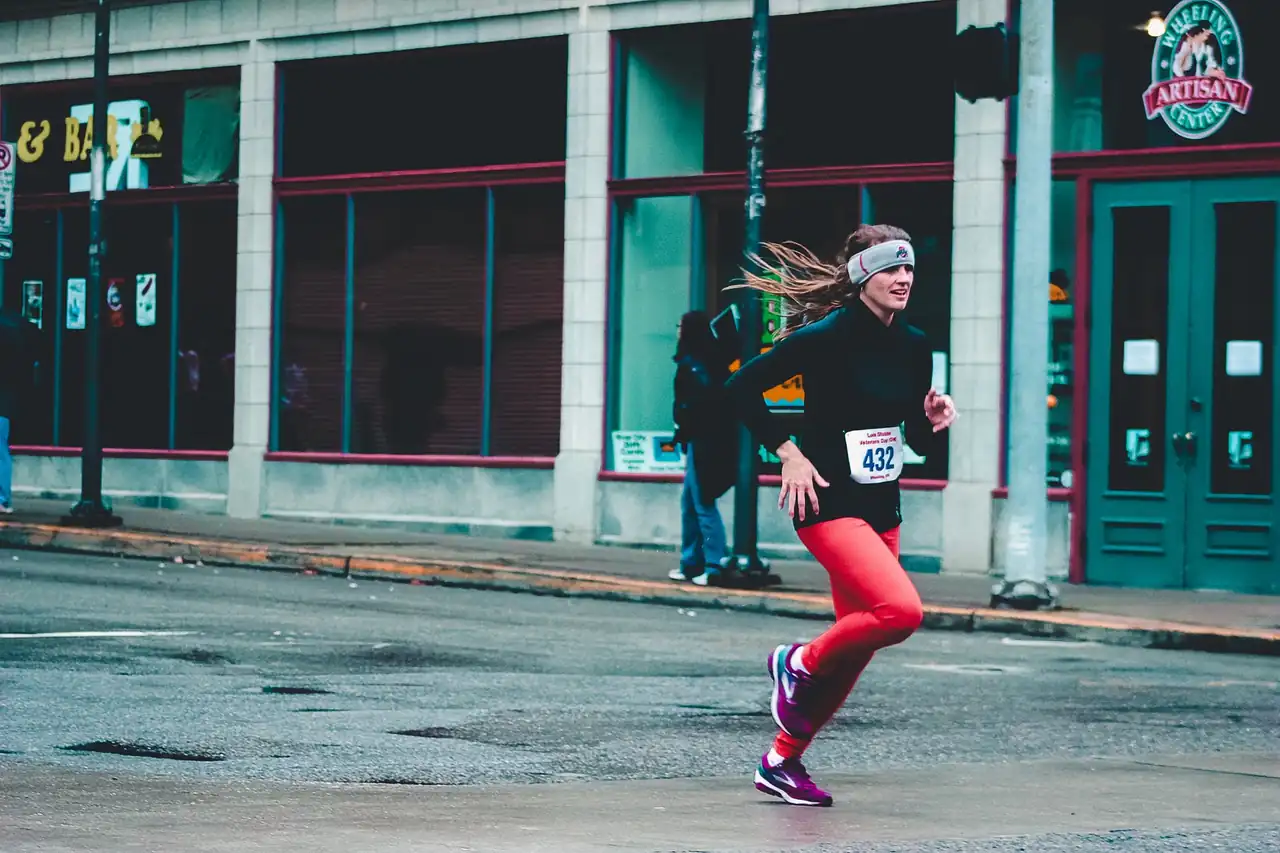
The Reykjavik Marathon has become one of the most recognizable August events in Northern Europe thanks to a blend that is hard to copy: an urban course, Atlantic air, open scenery, and a city that celebrates its cultural night at the same time as it runs. It was born in 1984 and, ever since, has maintained a very marked identity, with the exception of 2020 and 2021, when it was not held. The main race coexists with the half marathon, 10 kilometers, and a popular 3-kilometer race, turning it into a broad event, almost for the whole city.
The 2026 edition is scheduled for August 22 and places the start and finish in the heart of the Icelandic capital, between Sóleyjargata and Lækjargata, with the city center as the main stage. For runners, that means a route that mixes open avenues, stretches along the coast, and residential areas where the public comes out to the sidewalk to cheer. For the city, it creates a sporting postcard that blends with the festive pulse of mid-August.
A race that is better understood as an urban experience than as a simple competition
Reykjavik runs in its own way. It does not have the monumental noise of the great mass marathons or the varnish of races that live only for the stopwatch. Here, the value lies in the whole: the late-summer light, the cool weather, the ocean line, the mountain profile, and a route designed so that participants see the city in layers, as if an animated map were opening beneath their shoes.
The event takes place alongside Cultural Night, one of the major days in the Icelandic calendar, and that changes the tone of everything happening around it. There is more life in the street, more pedestrian traffic, and a feeling of a city occupied by runners, families, and visitors. That combination explains why the race attracts both those seeking a fast time and those who prefer a sporting experience less suffocating than the one offered by the major international showcases.
There is also an element that makes it especially interesting for running readers: its accessible and varied character. Not all participants are looking for the same distance or the same goal, and the program reflects that clearly. The race is not limited to the classic marathon; it opens the door to a range of options that turn the day into a kind of large neighborhood athletic festival, a city open to sport and strolling.
Dates, times, and what really matters in the planning
The 2026 edition is listed for Saturday, August 22, and the schedule distinguishes several start times depending on distance and category. The competitive marathon starts at 08:30, while the non-competitive version begins at 08:40. The same pattern applies to the half marathon: the competitive version starts at 08:30 and the non-competitive one at 08:40. The competitive 10K shares the 09:30 start, and the non-competitive 10K is set for 09:40. The 3-kilometer race begins at 12:00.
The difference of a few minutes between categories is not decorative; it reflects an organization designed to spread out the flow, avoid congestion, and give each group of runners room. In races like this, staggered starts help participants find their pace with less human traffic and allow the city to better absorb the movement. That seemingly small detail says a lot about the event’s logistics.
As for registration, the published 2026 fees show a wide range. The 3K costs 20 euros for those under 17 and 30 euros for adults; the 10K ranges from 50 to 71 euros depending on age and category; the half marathon ranges from 62 to 87 euros; and the marathon is priced between 139 and 141 euros. The registration deadline is set for August 14, a relatively short window for an event that usually draws considerable international interest.
Course & elevation Edition 2026
Per-kilometre table
| Km | Elevation | Grade |
|---|---|---|
| 1 | 4 m | 0.0 % |
| 2 | 0 m | -0.4 % |
| 3 | 1 m | 0.1 % |
| 4 | 5 m | 0.3 % |
| 5 | 0 m | -0.4 % |
| 6 | 0 m | 0.0 % |
| 7 | 3 m | 0.3 % |
| 8 | 8 m | 0.5 % |
| 9 | 2 m | -0.5 % |
| 10 | 5 m | 0.2 % |
| 11 | 4 m | -0.1 % |
| 12 | 2 m | -0.2 % |
| 13 | 5 m | 0.3 % |
| 14 | 13 m | 0.8 % |
| 15 | 9 m | -0.4 % |
| 16 | 7 m | -0.2 % |
| 17 | 11 m | 0.4 % |
| 18 | 11 m | 0.0 % |
| 19 | 5 m | -0.7 % |
| 20 | 5 m | 0.1 % |
| 21 | 3 m | -0.2 % |
| 22 | 10 m | 0.7 % |
| 23 | 22 m | 1.2 % |
| 24 | 18 m | -0.3 % |
| 25 | 11 m | -0.7 % |
| 26 | 4 m | -0.8 % |
| 27 | 3 m | 0.0 % |
| 28 | 17 m | 1.4 % |
| 29 | 8 m | -0.9 % |
| 30 | 6 m | -0.2 % |
| 31 | 7 m | 0.2 % |
| 32 | 3 m | -0.4 % |
| 33 | 7 m | 0.4 % |
| 34 | 9 m | 0.2 % |
| 35 | 3 m | -0.6 % |
| 36 | 4 m | 0.1 % |
| 37 | 5 m | 0.0 % |
| 38 | 7 m | 0.3 % |
| 39 | 9 m | 0.2 % |
| 40 | 18 m | 0.9 % |
| 41 | 8 m | -0.9 % |
| 42 | 6 m | -0.2 % |
| 43 | 6 m | 0.0 % |
Plan your pace on this course →
Route source: OpenRunner
A flat, long course open to the sea
The Reykjavik Marathon course is known for being fairly comfortable in terms of elevation gain. The official description and third-party references agree on its flat profile and asphalt surface, with a sense of speed in many sections, though not without stretches that can feel tough because of the wind or the accumulation of kilometers. In Iceland, the weather is not negotiated; it is accepted. And that adds another layer of character to the effort.
The route passes through much of the city and approaches the Reykjavik and Seltjarnarnes shoreline, allowing runners to race with ocean views and mountains on the horizon. The 2025 documentation mentions areas such as Ægisíða, Grandi, Sæbraut, Laugardalur, Elliðaárdalur, Bryggjuhverfi, Fossvogur, and Þingholt, with the finish in the city center. That variety makes the race a changing course: first urban, then more coastal, then more residential, with sections where the landscape seems to open suddenly.
The start and finish area matters too. Sóleyjargata and Lækjargata place runners in a lively city center, next to recognizable spots in the capital. In urban marathons, starting in a central setting usually provides a stronger image and denser logistics, but also a more direct connection with the city. Here, the route does not hide; it shows Reykjavik without filters or excessive embellishment.
Distances for very different audiences, but with the same personality
The half marathon and the 10K have greatly expanded the appeal of the event. They are not minor add-ons, but a structural part of its attractiveness. The half marathon retains the weight of a serious race, with interest for those training for a specific time, while the 10K opens the door to faster runners or those who prefer a demanding but shorter day. The 3-kilometer race, moreover, adds a family-friendly tone that softens the purely competitive profile.
The organization even distinguishes between competitive and non-competitive categories across several distances. In practice, this allows those seeking rankings, prizes, or time goals to be separated from those who want to complete the course without that pressure. That dual approach is useful because it adapts the race to very different profiles without breaking the event’s identity. Not every race manages that with such clarity.
The marathon requires participants to be 18 or older, and the organization sets a time limit of 6 hours and 30 minutes. If the finish line is not crossed before that deadline, the runner is disqualified and the finish area closes. This detail is relevant because it gives a realistic idea of the event’s level of demand and how the final operation is protected, especially in a city that combines sport and public celebration on the same date.
Participation, atmosphere, and the weight of a race that is not experienced alone
Historical figures help explain the scale of the event. The 2011 edition brought together 12,481 participants across all distances, and there were only 595 runners in the full marathon. More recently, the 2019 reference places marathon participation at around 1,180 registered runners. In other words, this is not a gigantic event in absolute numbers, but one that spreads interest across several distances and creates a more distributed atmosphere.
That changes the way the public experiences it. The marathon does not monopolize the morning; it shares the stage with other starts, with families, young runners, and visitors moving between one race and another. The result is a sense of running in a city, not running inside a sports bubble. For many participants, that is precisely the appeal: the finish line does not erase the city, it extends it.
The summer setting helps too. In August, Reykjavik usually offers relatively mild conditions for running, as far as Iceland allows: cool temperatures, a breeze, and that northern clarity that lengthens the day and gives the landscape special sharpness. It is not an environment of extreme heat or oppressive humidity, but rather one of wind, quick changes, and very clear light. In an urban marathon, those nuances matter as much as the elevation profile.
What the organization offers and why logistical details matter so much
The public information for the 2026 edition indicates a fairly complete service package: finisher medal, timing chip, pace groups, photo service, expo access, drink and nutrition stations, medical assistance, baggage storage, toilets, and showers. That combination says a lot about the event’s standard. It is not just about covering a distance, but about sustaining an organized experience with enough layers for very different runners.
The bib is collected at Laugardalshöll Sports Hall, Engjavegur 8, and pickup is open on Thursday from 15:00 to 20:00 and Friday from 14:00 to 19:00 before the race. Another person may also collect the race pack with a QR code or barcode. These are standard details, yes, but in international races they are enormously practical: they reduce queues, organize the pre-race flow, and remove friction on race day.
The change and cancellation policy is also clearly defined. Registration can be changed to another distance at no additional cost, although if the new option is more expensive, the difference must be paid. On the other hand, bibs are non-refundable and cannot be transferred to a new edition, but they may be given to another person. In addition, the organizer offers a full refund within 24 hours after registration if the participant changes their mind. All of this creates a fairly transparent framework for runners comparing options before deciding.
An event with Icelandic identity and international reach
The marathon is organized by the Reykjavik Sports Association and has had the main sponsorship of Íslandsbanki since 2006. That support has not turned the race into a depersonalized product; on the contrary, it seems to have helped consolidate a strong, recognizable, and stable local brand. In a world calendar saturated with races that look alike, continuity matters as much as media shine.
The list of winners of the marathon and half marathon shows precisely that mix of local identity and foreign influence. Athletes from Iceland have won, but also from the United States, the United Kingdom, Canada, Poland, Romania, Sweden, Kenya, and the Czech Republic, among other countries. The podium is not a national wall; it is a window. That speaks of a race that, while deeply rooted in Reykjavik, has managed to enter the international circuit.
Reference times also help measure the sporting weight of the event. In the marathon, the men’s course record stands at 2:17:06, set by Ceslovas Kundrotas in 1993, while the women’s record is 2:38:47, set by Angharad Mair in 1996. These are not museum marks: they remain clear references showing that the course, despite being friendly in many sections, still demands pace, endurance, and a smart reading of the wind and the asphalt.
Why this event attracts so much attention from runners watching the calendar
Reykjavik offers something rare: a marathon with a strong image, reasonable logistics, manageable summer weather, and an urban setting that does not overwhelm. That blend makes it appealing to runners looking to leave the beaten path of Europe’s major capitals and try a different experience, more Nordic, more open, less noisy, and perhaps also cleaner in its city-and-landscape narrative.
The race does not sell a postcard setting without effort. On the contrary, it lays out the reality of running in an Atlantic capital, where the wind can be a silent presence and where the asphalt, even if flat, remains asphalt. But that is precisely part of its charm: it does not disguise the challenge. Every kilometer has both an urban and natural texture, as if the city were breathing alongside the runner.
On the international running map, this race holds a singular place because of its ability to combine sport, tourism, and culture without turning any of the three ingredients into an empty decoration. The marathon, half marathon, 10K, and 3K work as a complete system, not as isolated compartments. And in August, with Reykjavik in full cultural swing, the city ends up making the race something bigger than a simple results sheet.
The strength of a marathon that measures both time and the city
The course, schedules, fees, atmosphere, and tradition outline a race with its own personality. It does not compete to be the toughest or the fastest on the continent; it competes to offer a coherent, well-organized, and recognizable experience. That is an important difference in a calendar where many races try to resemble one another.
The Reykjavik Marathon retains the virtue of races that know what they are: an athletic celebration with local roots, an event open to different levels, and a way of reading the city through effort. For runners, that translates into an August morning where the stopwatch matters, yes, but so do the scenery, the breeze, the light, and the way the Icelandic capital lets itself be run step by step, without haste and without masks.



How to prevent thigh chafing: causes and real solutions

Women’s running windbreakers: seven jackets and how to choose

Do more workouts get rid of soreness? A guide for runners

Jaén Half Marathon 2026: Record 3,800 Runners Registered

Men’s short running tights: how to choose the right pair

World Triathlon confirms data breach involving medical data

Izan Edo targets podium at Miyazaki World Cup

María Pérez ranks ninth in World Athletics’ 2026 top ten

Dos Santos, Duplantis and Sawe: World Athlete of the Year finalists

San Silvestre Vallecana 2026: 42,000 places, prices and start times

 Races4 months ago
Valencia Half Marathon 2027: date and registration

 Races4 months ago
Valencia Marathon 2026: entry, ballot and course

 Reviews and Comparisons4 months ago
Asics Gel-Roadmiles 3 for men: review and current price

 Reviews and Comparisons4 months ago
Asics Gel Sonoma 8 Gore-Tex: complete analysis for trail and rain

 Sneakers3 months ago
Saucony Endorphin Pro 4: full review and verdict

 News5 months ago
Strava API 2026: what changes for clubs, challenges and runner apps?

 Reviews and Comparisons5 months ago
Nike Alphafly 3: opinions, sensations, and real key points

 Reviews and Comparisons4 months ago
Under Armour running shoes review 2025-2026: models and key features

 Sports Equipment4 months ago
Shoe sizes in cm: a clear guide to getting the right fit for your footwear

 Sneakers3 months ago
Skechers GO RUN Consistent 2.0 analysis: comfort and limits

 News5 months ago
Valencia Marathon 2026 route: key tips to train and run better

 Sneakers4 months ago
Adidas Adizero Boston 13 for men: review and verdict