Races
San Antón Race 2026 Results in Jaén
Classification, atmosphere and figures from the 43rd San Antón Night in Jaén, with thousands of runners and spectators.

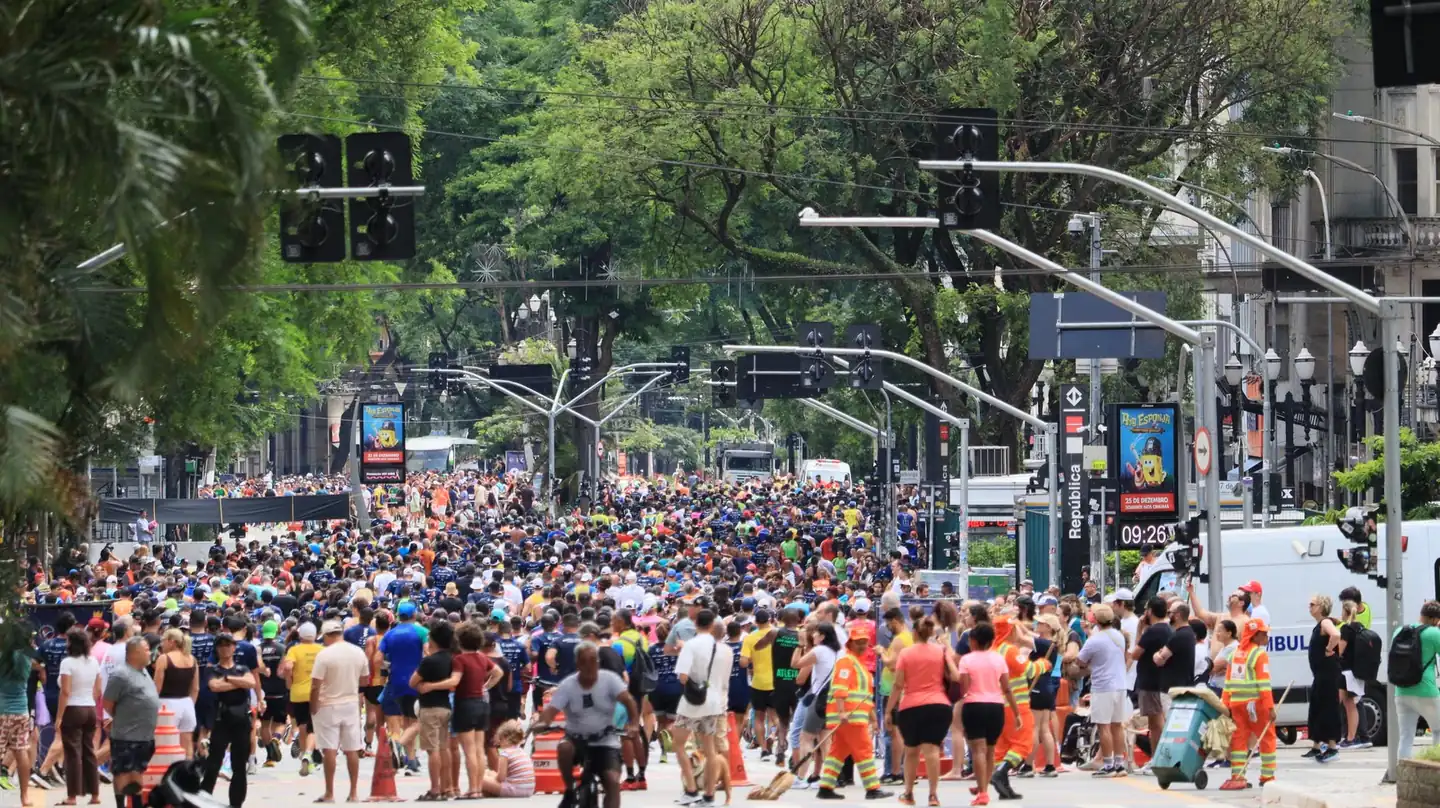
The 43rd International Urban Race Noche de San Antón once again turned Jaén into a corridor of fire, noise, and endurance. With an improvised start and finish on Virgen de la Cabeza street, the event brought together thousands of participants across children’s, elite, and popular categories, and left a highly recognizable image: torches, rosettes, January cold, and a city fully behind every stride. The San Antón Race 2026 results once again reflected the weight of this event on the Spanish calendar, both for participation and atmosphere, with more than 14,000 brave runners taking on the 10-kilometer course.
More than just a race, San Antón acts as a barometer of Jaén’s athletic pulse. The elite add competitive sparkle, but the main story is still the popular tide that fills sidewalks, corners, and roundabouts to drive the runners forward. That blend, uncommon even in very established races, explains why the standings matter, yes, but do not exhaust the meaning of the night: the sporting data coexists with an almost ceremonial scene, of a city lit up and athletics in its purest form.
An edition marked by the crowd and the symbolic weight of the night
The 2026 edition confirmed a trend that has been consolidating for years: Jaén sees itself in San Antón and San Antón sees itself in Jaén. There is no improvisation in the use of the street, nor in the public response, which accompanies the race as if every meter of the circuit belonged to it. The result is a dense atmosphere, warm despite the cold, where the sound of footsteps mixes with applause and the crackling of nearby bonfires.
Participation again became one of the day’s main benchmarks. More than 14,000 runners took part in a race that, without losing its popular identity, continues to attract high-level athletes and clubs from different parts of the country. In races like this, the clock does not erase the context: every placing is celebrated or lamented within a collective scene in which individual effort is, at times, suspended inside a civic choreography.
The 10-kilometer route, with start and finish on Virgen de la Cabeza, retains that profile that forces runners to pace themselves from the outset. It is neither a casual urban stroll nor a race for simply saving energy; it is an event where the head matters as much as the legs. That is why the official results do more than sort out the classification: they also show who best read a demanding night and who ended up paying the price of the terrain, the cold, or the push of the crowd.
What the times say: elite, popular runners, and young talent on the same stage
On the competitive side, the race once again offered a rarely seen image in road athletics: elite and popular runners sharing the stage with a naturalness that gives San Antón its own identity. That coexistence multiplies the interest in the standings, because each stretch of the course serves to measure different paces, different goals, and also very different levels of form. A winner is not explained only by top speed; in this event, the ability to manage the climb, the warmth of the crowd, and the tension of an atmosphere that offers no rest also matters.
The children’s race, for its part, added that relay-like component that keeps the tradition alive. On a night so marked by adult epic, the young talent provides a valuable reading: the race is not an isolated event, but a custom passed down through age, neighborhood, and memory. Entire families come out to the street as if attending an appointment that is already part of the city’s emotional calendar.
In the popular race too there were names and gestures that were etched into the memory of the day, even if the main headline was not a single record but the scale of the whole. San Antón 2026 was, above all, a mass snapshot: thousands of bibs, thousands of stories, and a handful of standout performances that made more sense within the broader frame of an extraordinarily crowded night.
Why San Antón’s standings always draw so much attention
The results of this race are not only of interest to those who look at the podium. In Jaén, the standings are checked almost the way one reviews the list from a celebration of one’s own. Some runners look for their time with the excitement of someone confirming a job well done; others compare feelings, splits, or place, and many simply search for their name among thousands of records. That broad appeal makes the publication of results a closely followed moment, because the race is experienced both inside and outside the circuit.
The reason for that magnetism lies in the race’s identity. San Antón blends tradition, sport, and local pride with a naturalness that few competitions achieve. The fact that it takes place in the heart of January, with the cold as an inevitable companion, adds a layer of toughness that the public perceives and values. Each classification, therefore, has a double reading: it orders the competition and at the same time measures a city’s resistance to its own sporting customs.
In a context like this, talking about results does not mean limiting ourselves to a list of positions. It means explaining a phenomenon of participation, fandom, and belonging. A good time at San Antón is worth the training behind it, but also the ability to withstand a course full of stimuli. And a bad day, in this race, usually has more complex explanations than in a more aseptic and silent event.
Virgen de la Cabeza street, the epicenter of an unrepeatable scene
The improvised start and finish on Virgen de la Cabeza once again worked like a small open-air theater. There, the initial tension and the final relief were both concentrated, with families, friends, and fans filling every available space. The place, more than a logistical point, acts as a symbolic hub: from there the race is dispatched outward, and to there the runner returns when all that remains is to grit their teeth or manage whatever is left in the legs.
Jaén’s urban setting, with its terrain and tightly packed streets, gives the route character. It is not just about running through a city, but about crossing a space that actively participates in the event. The lights, the bonfires, the breath vapor, and the sound of applause compose a very recognizable scene that ends up influencing the participant’s experience. That is why many runners remember San Antón as one remembers an intense night: not only for the final time, but for the succession of stimuli that accompany every kilometer.
That urban, almost theatrical character also helps explain why the race generates so much conversation afterward. The official results are the technical closing act; the city, the route, and the public are the story. And, in races with so much personality, the story is often as important as the mark.
An event that combines popular tradition and top-level athletics
San Antón has managed to maintain a very clear identity without giving up sporting ambition. That coexistence between the popular and the competitive is one of its greatest virtues. The race attracts experienced runners, clubs aiming for a placing, and thousands of participants who pin on a bib simply to be part of a different kind of night. Few races manage to make all those profiles feel like protagonists at the same time.
In 2026, that duality was once again evident on the street. There was tension among the front runners, but also among those fighting to complete the course with dignity, without looking too much at the clock. The diversity of goals is one of the reasons why San Antón’s final result is so interesting: it rewards not only the fastest, but also orders a multitude of small personal victories.
From a journalistic perspective, the race also offers an unusual advantage: each edition leaves behind a story that makes sense without embellishment. There is a city fully committed, a recognizable route, an atmosphere that cannot be manufactured, and a race in which the epic does not feel forced. The sporting result rests on all of that, which is why reading it is richer than simply downloading a classification cold.
What is worth watching in the results to truly understand the race
Beyond the podium, San Antón’s times allow several layers of information to be read. The first is the difference between those who set off at an aggressive pace and those who save energy for the final stretch; the second is the behavior of the popular field, where the pace at each kilometer often depends as much on fitness level as on the atmosphere provided by the street. In a race like this, split times speak as much as the overall time.
It also matters where local runners from Jaén and those who repeat in the race year after year finish. That continuity draws a kind of statistical memory: there are participants who return because the race has become a personal benchmark, and their marks turn into a small history of loyalty to the event. In that sense, the results do not only describe a day; they also reconstruct a relationship.
The combination of cold, crowd density, and shifting sensations means that finishing San Antón is already news in itself for many runners. That is why the standings carry a broader meaning than mere placement. In other urban races the result is a number; here, it is also a test of belonging.
A night that left more than marks and positions
The 43rd edition left record figures, an intensely electric atmosphere, and confirmation that Jaén continues to host one of the most singular road races in Spanish athletics. Over its 10 kilometers, the race brought together effort, tradition, and an unusually strong civic response, with packed streets and a festive climate that lifted the day well beyond the merely sporting level.
In an increasingly broad and fragmented calendar, San Antón maintains an advantage that is hard to copy: it does not merely organize a race, it preserves a collective ritual. That is why its results are consulted with interest, but also with the feeling that behind every name there is a whole city night. The standings order the race; the atmosphere explains it. And in Jaén, both continue to move together with a naturalness that is already part of its identity.
The 2026 edition left, in short, a very recognizable scene for anyone who follows Spanish running: a city turned into an open stadium, thousands of bibs defying the Andalusian January, and a tradition that does not lose its shine. The data will remain in the tables; the image, by contrast, lasts much longer: an avenue full of light, a crowd cheering, and the echo of a race that remains, for Jaén, something more than just an event.
You may also like: San Antón Race Results 2025 in Jaén and San Juan Race 2025 in Ceuta: images, route, and atmosphere.
Official results: sportmaniacs.com.



How to prevent thigh chafing: causes and real solutions

Women’s running windbreakers: seven jackets and how to choose

Do more workouts get rid of soreness? A guide for runners

Jaén Half Marathon 2026: Record 3,800 Runners Registered

Men’s short running tights: how to choose the right pair

World Triathlon confirms data breach involving medical data

Izan Edo targets podium at Miyazaki World Cup

María Pérez ranks ninth in World Athletics’ 2026 top ten

Dos Santos, Duplantis and Sawe: World Athlete of the Year finalists

San Silvestre Vallecana 2026: 42,000 places, prices and start times

 Races4 months ago
Valencia Half Marathon 2027: date and registration

 Races4 months ago
Valencia Marathon 2026: entry, ballot and course

 Reviews and Comparisons4 months ago
Asics Gel-Roadmiles 3 for men: review and current price

 Reviews and Comparisons4 months ago
Asics Gel Sonoma 8 Gore-Tex: complete analysis for trail and rain

 Sneakers3 months ago
Saucony Endorphin Pro 4: full review and verdict

 News5 months ago
Strava API 2026: what changes for clubs, challenges and runner apps?

 Reviews and Comparisons5 months ago
Nike Alphafly 3: opinions, sensations, and real key points

 Reviews and Comparisons4 months ago
Under Armour running shoes review 2025-2026: models and key features

 Sports Equipment4 months ago
Shoe sizes in cm: a clear guide to getting the right fit for your footwear

 Sneakers3 months ago
Skechers GO RUN Consistent 2.0 analysis: comfort and limits

 News5 months ago
Valencia Marathon 2026 route: key tips to train and run better

 Sneakers4 months ago
Adidas Adizero Boston 13 for men: review and verdict