Races
Soria Half Marathon: guide, route, and key points of the race
Tour, atmosphere, and context of a highly followed event in Soria, with useful information and a journalistic perspective.

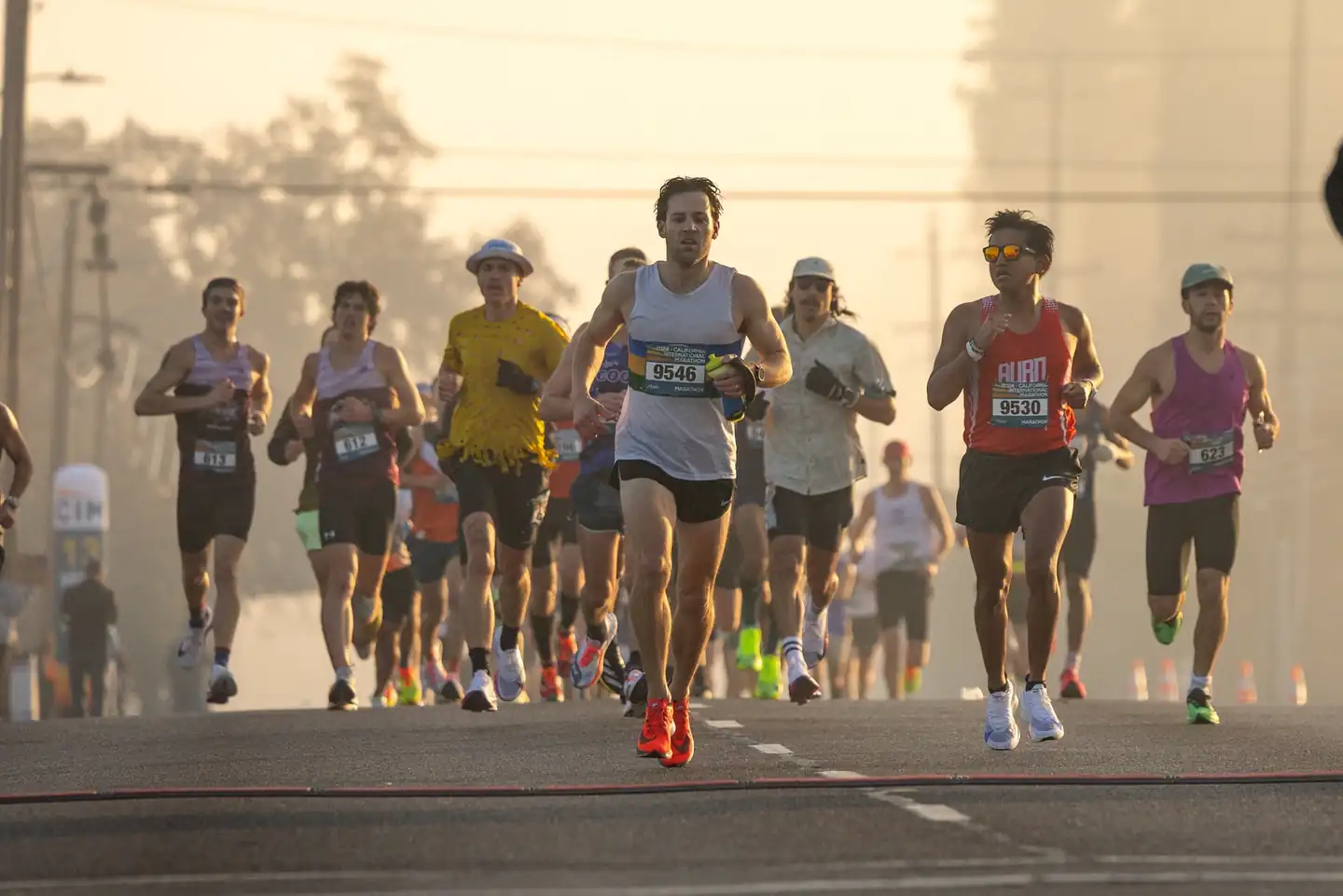
Imagen: Stephen Leonardi / Pexels
The Soria Half Marathon has become a benchmark on the provincial calendar for more than just its distance. Its significance comes from a city used to looking at athletics naturally, from a course that demands focus, and from an atmosphere that blends local tradition with competition without any fuss. In a place where running coexists with cross-country, trail running, and the memory of great names in Spanish long-distance running, the race is read as an event with its own identity.
The interest in this race is not explained by the bib number alone. The appeal also lies in the setting: Soria has breathed athletics for decades, and that is evident in the reception of the event, in the pre-race conversation, and in the way the city incorporates it into its sporting landscape. For runners, that means a familiar setting, with a certain climatic harshness depending on the time of year, and a sense of belonging that does not always appear in more anonymous half marathons.
A small city with a very big athletic culture
Soria has a special bond with long-distance races. It is not a large capital nor a destination automatically associated with huge masses of participants, but it is a place where athletics are part of the local sporting story. Names such as Abel Antón or Martín Fiz, closely linked to the history of Spanish distance running, helped project that image of a serious region, a city that understands the discipline and values it without artifice.
That context helps explain why a half marathon there attracts more attention than its size might suggest. The race does not compete with the noise of major urban events; it competes with a more restrained, almost classic-school idea. The race relies on a loyal amateur base, on clubs, families, and local runners who turn the day into something more like a grassroots sporting celebration than a big commercial showcase.
In addition, the city offers a setting that shapes the experience. The cold air can make the start of the race tougher, and the terrain, depending on the course and the edition, usually calls for measured effort, where patience matters as much as the ability to change pace. In Soria, running well usually means running with craft: managing energy, not getting carried away by the enthusiasm of the first stretch, and reading the day precisely.
What makes a half marathon in Soria unique
Some races are sold on the speed of the course, while others are sold on the urban backdrop. The Soria Half Marathon works under a different logic. Its value lies in the combination of human scale, controlled challenge, and a strong local identity. That makes it appealing to those who want to compete seriously without being swallowed up in a massive pack, and to those who want to gauge their sensations in a setting closer than a large metropolis.
The city itself provides a different visual rhythm. Soria’s streets, more compact than those in other middle-distance settings, encourage a race in which every footstrike, every turn, and every open stretch matters more. There are no skyscraper epics or endless kilometer markers; there is a more intimate geometry, where the runner feels the pulse of the urban core and the passage of the meters up close. That direct contact with the course is one of its hallmarks.
The type of runner it attracts also matters. The half marathon demands a complex balance: it is long enough to punish mistakes, but short enough to reward solid aerobic preparation. In Soria, that balance acquires its own nuances because of the climate, the possible presence of wind, and the competitive tradition of the venue. It is not a place for improvisation. It is a race that punishes disorganization and rewards control.
Course, pace, and tactical reading of the race
Without needing to reduce it to a diagram, a half marathon in a city like Soria usually requires attention to three variables: the start, the middle sections, and the management of the finish. The opening tends to be deceptive, because the body is still fresh and the atmosphere can push runners harder than is sensible. However, once breathing settles and the accumulated training work begins to show, the runner discovers the true nature of the effort.
The middle section is almost always the most honest part. That is where you see who started with too much ambition and who held back enough to sustain the pace when it no longer feels comfortable. In races of this category, a small split per kilometer quickly multiplies. Thirty seconds lost before the halfway point can become a wide gap by the end. That is why the race feels more like a negotiation than a long sprint.
The final stretch is usually a test of precision. The legs no longer respond with the same elasticity, and the runner moves between fatigue and the need to maintain form. The half marathon is not won with a spontaneous heroic gesture; it is won or lost through energy economy. In Soria, moreover, the surroundings can make the finish feel tougher than the clock suggests. Wind, temperature, and the course’s exposure can add a silent layer of difficulty.
The weight of climate and geography in a race in Soria
Talking about Soria without talking about its climate would leave out an essential piece. Because of its altitude and inland location, the city usually offers cool conditions for much of the year, with especially harsh winters. That has advantages for running, because moderate cold helps sustain long efforts, but it also has traps: the perceived temperature, wind, and humidity can turn what seems like a clean race day into a rougher effort than expected.
Soria’s geography is not decoration; it is part of the athletic experience. Even when the route does not feature major climbs, the runner feels the environment in the body. Small cities transmit the landscape more clearly, and Soria has that quality of open, austere, almost mineral space, accompanying the stride with a sense of resistance. It is not a neutral backdrop. It is a setting that demands respect.
That combination of climate and context explains why many runners value clothing choice, warm-up, and start strategy so much. A half marathon in these conditions can feel fast during the first minutes and harsh as soon as the adrenaline drops. Being overdressed or underdressed changes the race drastically, and that difference is usually felt more in places where the temperature does not forgive overconfidence.
The race’s connection with Abel Antón’s legacy
The name Abel Antón is part of Soria’s sporting imagination with a force that is hard to overstate. The athlete born in Ojuel, in the province of Soria, is one of the great references in Spanish distance running, and his figure has remained forever linked to the athletic prestige of the region. His double world marathon gold, achieved in 1997 and 1999, placed him among the essential names in the history of the event in Europe.
That legacy does not automatically turn any local race into a major event, but it does provide context. When a half marathon is held in a province where distance running has such a recognizable surname, the race inherits part of that memory. Antón’s symbolic presence works like a kind of cultural seal: it reminds us that here athletics are not a passing entertainment, but a tradition that has produced top-level results.
The emotional dimension matters too. For runners from the area, taking part in an event tied to Soria’s sporting landscape has something of historical continuity. It is not about running in the shadow of a legend, but about inhabiting a space where that legend is already part of the ground. The Soria Half Marathon gains value from what it represents within the local athletic story, not only from the time it allows runners to post.
How to approach a half marathon with confidence in this context
Preparation for a half marathon in Soria usually follows the common principles of the distance, but with extra sensitivity to the environment. Aerobic endurance remains the foundation, of course, but the runner who arrives best is usually the one who has also trained for sustained effort tolerance and the ability to hold pace when the body no longer feels light. The half marathon demands patience, not improvisation.
The warm-up becomes more important if the temperature is low. A cold body responds worse, the stride shortens, and the muscles take longer to find their rhythm. That is why, in a race like this, the start should be seen as a transition rather than a gunshot. The first kilometers should not be for showing off, but for settling into the race without paying a toll. Those who accelerate too early usually mortgage the second half.
Hydration and effort control also matter. Over roughly 21 kilometers, the most common mistake is not being completely out of shape, but distributing the pace poorly. Starting with a realistic plan, maintaining a steady cadence, and accepting that there will be uncomfortable moments make the difference between a solid race and a draining experience. In Soria, as in other demanding races, running intelligently is worth more than chasing the clock blindly.
What the runner finds in a race with its own identity
Beyond the finishing time, the Soria Half Marathon offers a type of experience that is increasingly uncommon on the calendar: a competition that retains the feel of a genuine sporting event. It does not rely on gimmicks or bombastic marketing; it is sustained by the relationship between city, tradition, and effort. That makes it especially appealing to those who value the honesty of running over the noise.
In that kind of race, memory matters. The runner remembers the start, the stretch where the wind was bothersome, the conversation with other participants, the moment when the legs asked for mercy. Soria leaves its mark because it does not try to hide its character. At times it seems like a restrained, almost discreet race; in reality, it is a demanding event that forces you to commit to every meter. That contrast between outward sobriety and inner toughness is part of its charm.
There is also a social value worth highlighting. Mid-sized city races sustain the sporting fabric, encourage clubs, and strengthen participation habits that do not always find space in other events. The middle distance, when well organized, serves as a gateway for runners who have already done the 10K and are looking for a greater endurance challenge, but also as a proving ground for those who want to measure their athletic maturity. The race serves both sporting ambition and community life.
An event that speaks of distance running, city, and sporting memory
The Soria Half Marathon does not need to be presented as a spectacle to be relevant. Its strength lies in the mix of athletic tradition, territorial identity, and real demands. In times when many races compete on volume or visual impact, a race like this reminds us that running also lives on other things: the silence of certain stretches, the cold at the start, and the discipline with which each kilometer is managed.
The city, moreover, provides its own story. Soria has built its prestige not on a string of major events, but on the continuity of a serious, restrained, and highly recognizable athletic culture. In that framework, the half marathon fits as a natural piece: it does not intrude on the landscape, it interprets it. You are left with the feeling of being in a race that is small in size but big in sporting meaning.
That is why it continues to draw interest. Because it offers no shortcuts or makeup, but rather a classic distance in a place with memory and character. And because, deep down, a half marathon like this sums up well what many people still seek when they lace up their shoes: a race where effort makes sense, where the city helps, and where every second truly counts. That is where Soria’s lasting value on the Spanish running map lies.



How to prevent thigh chafing: causes and real solutions

Women’s running windbreakers: seven jackets and how to choose

Do more workouts get rid of soreness? A guide for runners

Jaén Half Marathon 2026: Record 3,800 Runners Registered

Men’s short running tights: how to choose the right pair

World Triathlon confirms data breach involving medical data

Izan Edo targets podium at Miyazaki World Cup

María Pérez ranks ninth in World Athletics’ 2026 top ten

Dos Santos, Duplantis and Sawe: World Athlete of the Year finalists

San Silvestre Vallecana 2026: 42,000 places, prices and start times

 Races3 months ago
Valencia Half Marathon 2027: date and registration

 Races3 months ago
Valencia Marathon 2026: entry, ballot and course

 Reviews and Comparisons4 months ago
Asics Gel-Roadmiles 3 for men: review and current price

 Reviews and Comparisons4 months ago
Asics Gel Sonoma 8 Gore-Tex: complete analysis for trail and rain

 Sneakers3 months ago
Saucony Endorphin Pro 4: full review and verdict

 News5 months ago
Strava API 2026: what changes for clubs, challenges and runner apps?

 Reviews and Comparisons5 months ago
Nike Alphafly 3: opinions, sensations, and real key points

 Reviews and Comparisons4 months ago
Under Armour running shoes review 2025-2026: models and key features

 Sports Equipment4 months ago
Shoe sizes in cm: a clear guide to getting the right fit for your footwear

 Sneakers3 months ago
Skechers GO RUN Consistent 2.0 analysis: comfort and limits

 News5 months ago
Valencia Marathon 2026 route: key tips to train and run better

 Sneakers4 months ago
Adidas Adizero Boston 13 for men: review and verdict