Races
Stavanger Marathon 2026: date, distances, and key details of the event
The Norwegian race combines 5 km, a half marathon, and a marathon with landscapes of lakes and fjords.

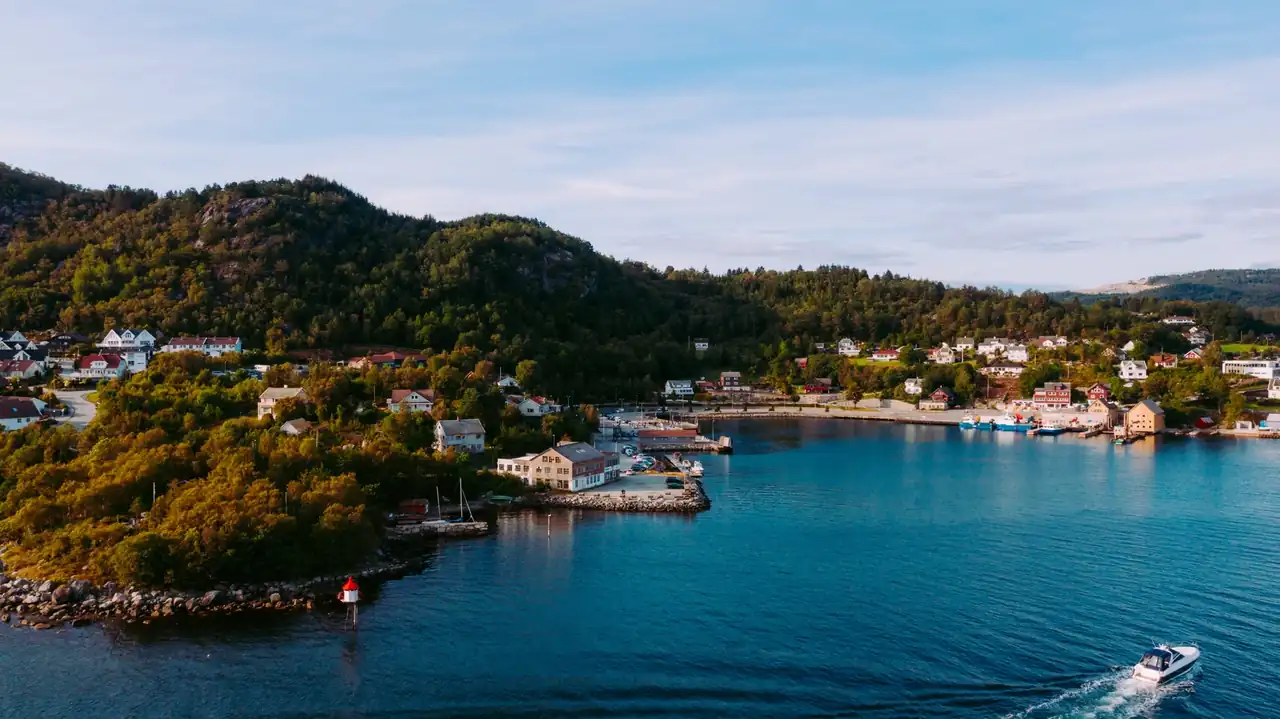
Stavanger Marathon puts the Norwegian city back on the running map with a proposal that mixes coastal scenery, solid organization, and distances designed for very different types of runners. The 2026 edition is set for August 29 at 08:45, with the start in the center of Stavanger and a late-summer atmosphere that is usually one of its main attractions.
The race is understood not only as a long-distance event, but also as an urban and natural experience at the same time: the route runs between lakes, fjords, and areas close to the city center, on terrain that alternates between asphalt and gravel. That contrast, simple on the map but demanding on the legs, explains much of the interest it arouses among runners looking for a well-organized race, postcard-worthy scenery, and a varied course.
A late-summer event with a Norwegian signature
The date is no coincidence. The race is held on the last Saturday of August, when Stavanger usually experiences a mild, changeable, and often pleasant maritime climate for running, although rain is never completely off the script. That combination of light, freshness, and humidity turns the day into something familiar for any distance runner: you do not need extreme heat to suffer, just a route that encourages pacing from the start.
At that time of year, the city also offers a very distinctive setting. Stavanger does not sell only a stopwatch; it sells atmosphere. The center fills with runners, companions, volunteers, and onlookers, and the event takes on that local-celebration feel that many races seek and few manage to sustain so clearly. In a calendar saturated with races, that personality matters as much as the chosen distance.
The organizers, according to their own channels and the reference information available, emphasize a key feature: this is a race well structured and with a strong presence of support staff. Aid stations, route signage, and a finish in the city center complete an approach that prioritizes the participant experience without losing sight of logistical seriousness.
Distances for different runner profiles
The official program includes 5 km, half marathon, and marathon, as well as a children’s race that rounds out the day’s popular character. That variety allows the event to be viewed from several angles: some tackle it as a debut at a short distance, others use it as an autumn competitive goal, and others travel with the idea of adding a marathon in a setting different from the usual one.
The 5 km version is especially interesting because it starts at the Mariero station bike lane, a point that is easier to reach by train, while the other distances are concentrated around central Stavanger. That seemingly minor detail helps explain the event’s design: the aim is not to fit in an isolated circuit, but to integrate the race into the city’s everyday life and take advantage of its transport network and urban layout.
The half marathon and marathon follow the logic of great scenic routes, with stretches where the runner moves from the city to the edge of bodies of water, and from there to more open and peaceful areas. In races like this, the difference is made not only by the kilometers, but by the succession of visual stimuli, changes of pace, and small effort adjustments demanded by the terrain. It does not feel like a flat route, even if the actual elevation profile may not be extreme.
A course that looks to the landscape without leaving the city behind
The image that defines this race is clear: water, sky, and asphalt in the same sequence. The organizers present it as an opportunity to run through the areas surrounding Stavanger, with views of idyllic lakes and beautiful fjords. That mix of coastline and natural surroundings is not just a tourist decoration; it is part of the race’s sporting value itself, because it changes the perception of effort and turns each section into a visual reference.
The surface combines asphalt and gravel, a detail that forces runners to pay closer attention to footstrike and form, especially when the legs begin to feel the wear of the kilometers. Anyone arriving expecting a smooth highway finds something else: a course with personality, a somewhat rustic feel in some sections, and a more technical reading than it seems at first glance.
The environmental component is also worth emphasizing. Stavanger is a city known for its relationship with the sea and for its Norwegian coastal landscape, but here the focus is not limited to a postcard backdrop. Passing by lakes and fjords adds depth to the route and explains why so many participants describe it as a particularly enjoyable race for those who value running with natural references on both sides of the road. The race is seen as much as it is run.
What makes this race different
Some marathons rely on course difficulty, others on sheer size, and others on a very long sporting history. Stavanger Marathon belongs to a different category: events that build their identity around careful organization, scenery, and atmosphere. That combination appeals to those who want a complete experience and not just a medal at the finish.
Volunteers and officials play a prominent role. The race information emphasizes that they are spread along the route to guide, encourage, and offer drinks. In road races and mixed-terrain events, that presence changes the runner’s experience a lot, because it reduces uncertainty at key points and creates the impression of being in a living event, where every crossing and every aid station matters.
The finish in the center of Stavanger reinforces that idea. Running toward an active urban area, with spectators and movement all around, provides a more intense ending than a peripheral or isolated finish line. The arrival is experienced in the middle of the city, with the pulse of the surroundings accompanying the final effort. For many runners, that kind of ending matters more than any elevation figure or ranking.
Registration, entries, and bib pickup
The reference information indicates that, at the time of the latest update, spots were still available in all distances. That detail is relevant because it suggests the race still has room for registration without reaching the limits seen in other similarly sized European events. It also reinforces its profile as an accessible race, at least in terms of availability, for those planning ahead.
Bib pickup takes place at the Radisson Blu Atlantic Hotel, with specific time slots on Friday, August 28, from 10:45 to 19:15, and on Saturday, August 29, from 07:30 to 15:00. That wide window makes travel logistics easier, something key in an international race where many participants arrive from outside Norway or fit the event into a short getaway.
The organizers also remind runners of a couple of practical aspects regarding the bib and the chosen distance. You cannot move up to a longer distance once registration is complete, although you can move down through the user portal. In addition, the bib can be transferred within the same distance, which avoids some administrative rigidity and gives more flexibility to participants whose plans change over time. It is flexible management, but with clear limits.
What it means to run in Stavanger for a marathoner
For a distance runner, Stavanger offers an unusual mix: an international race without the saturation of major capitals and a route that opens onto a very recognizable northern European landscape. That places it in a highly attractive middle ground for those seeking performance, but also a trip with meaning, where the destination becomes part of the final memory.
The mild late-August climate may favor those who do not tolerate heat well. It is not a guarantee of perfect conditions, because Norwegian weather changes quickly, but it does provide a reasonable basis for expecting a more forgiving day than those in the height of summer. That nuance matters in a marathon, where the environment can make or break the race plan.
There is also a psychological aspect that should not be overlooked. Races with open scenery and visual continuity tend to manage fatigue better, because runners find small goals within the route itself. A lake, a fjord stretch, a bridge, a curve, an urban landmark. Each one helps break up the effort. The brain runs better when the road gives it signals, and Stavanger seems built precisely with that logic in mind.
The event beyond the stopwatch
The event feels partly like a city festival and partly like a test of endurance. That dual character gives it an interesting balance, because it does not end up being only about time, nor does it become overly showy. It remains, first and foremost, a race, but one that knows how to use its setting as part of its added value.
In that sense, the name Stavanger Marathon almost functions as a promise of scenery: a runner crossing a setting of water and city, with volunteers along the course and a finish in the urban core. For someone coming off a long training season, that image may be worth more than a list of dry facts. And yet, the facts matter too: a precise date, clear distances, organized bib pickup, and a structure designed for different levels.
The race fits well into the late-summer calendar because it offers a balanced combination of challenge and visual appeal. It does not need to exaggerate its difficulty to be interesting. Its strength lies in the combination of serious logistics, a highly recognizable setting, and several official distances. That is the kind of race that leaves a mark through the accumulation of details, not through a single dramatic moment.
A race that wins by the sum of its details
Stavanger Marathon presents itself as one of those events where everything seems to be in the right place: the date, the scenery, the distances, the urban start, and the finish in the city center. It is not a race that tries to reinvent the marathon, but rather to refine its most effective ingredients and wrap them in a Norwegian setting of great personality.
For the runner, that translates into a complete experience that is fairly clear from the beginning. There is a course with mixed surfaces, visible organization, a lively atmosphere, and a city that can be explored without losing its character. In a global calendar where every weekend competes with dozens of options, that combination remains a strong selling point.
In the end, what makes this event stand out is not just its name or location, but the consistency between what it promises and what it delivers: running alongside lakes and fjords, feeling the pulse of central Stavanger, and finishing a well-executed race on the last Saturday of August. That combination explains why the race continues to attract runners of different profiles and why its identity is so easy to remember.
You may also like: DNB Oslo Marathon 2026: guide to the big autumn event.



How to prevent thigh chafing: causes and real solutions

Women’s running windbreakers: seven jackets and how to choose

Do more workouts get rid of soreness? A guide for runners

Jaén Half Marathon 2026: Record 3,800 Runners Registered

Men’s short running tights: how to choose the right pair

World Triathlon confirms data breach involving medical data

Izan Edo targets podium at Miyazaki World Cup

María Pérez ranks ninth in World Athletics’ 2026 top ten

Dos Santos, Duplantis and Sawe: World Athlete of the Year finalists

San Silvestre Vallecana 2026: 42,000 places, prices and start times

 Races3 months ago
Valencia Half Marathon 2027: date and registration

 Races3 months ago
Valencia Marathon 2026: entry, ballot and course

 Reviews and Comparisons4 months ago
Asics Gel-Roadmiles 3 for men: review and current price

 Reviews and Comparisons4 months ago
Asics Gel Sonoma 8 Gore-Tex: complete analysis for trail and rain

 Sneakers3 months ago
Saucony Endorphin Pro 4: full review and verdict

 News5 months ago
Strava API 2026: what changes for clubs, challenges and runner apps?

 Reviews and Comparisons5 months ago
Nike Alphafly 3: opinions, sensations, and real key points

 Reviews and Comparisons4 months ago
Under Armour running shoes review 2025-2026: models and key features

 Sports Equipment4 months ago
Shoe sizes in cm: a clear guide to getting the right fit for your footwear

 Sneakers3 months ago
Skechers GO RUN Consistent 2.0 analysis: comfort and limits

 News5 months ago
Valencia Marathon 2026 route: key tips to train and run better

 Sneakers4 months ago
Adidas Adizero Boston 13 for men: review and verdict