Races
Oslo Marathon 2026: date and distances
Dates, route, distances, price and atmosphere of Oslo’s big race, a very popular autumn event.

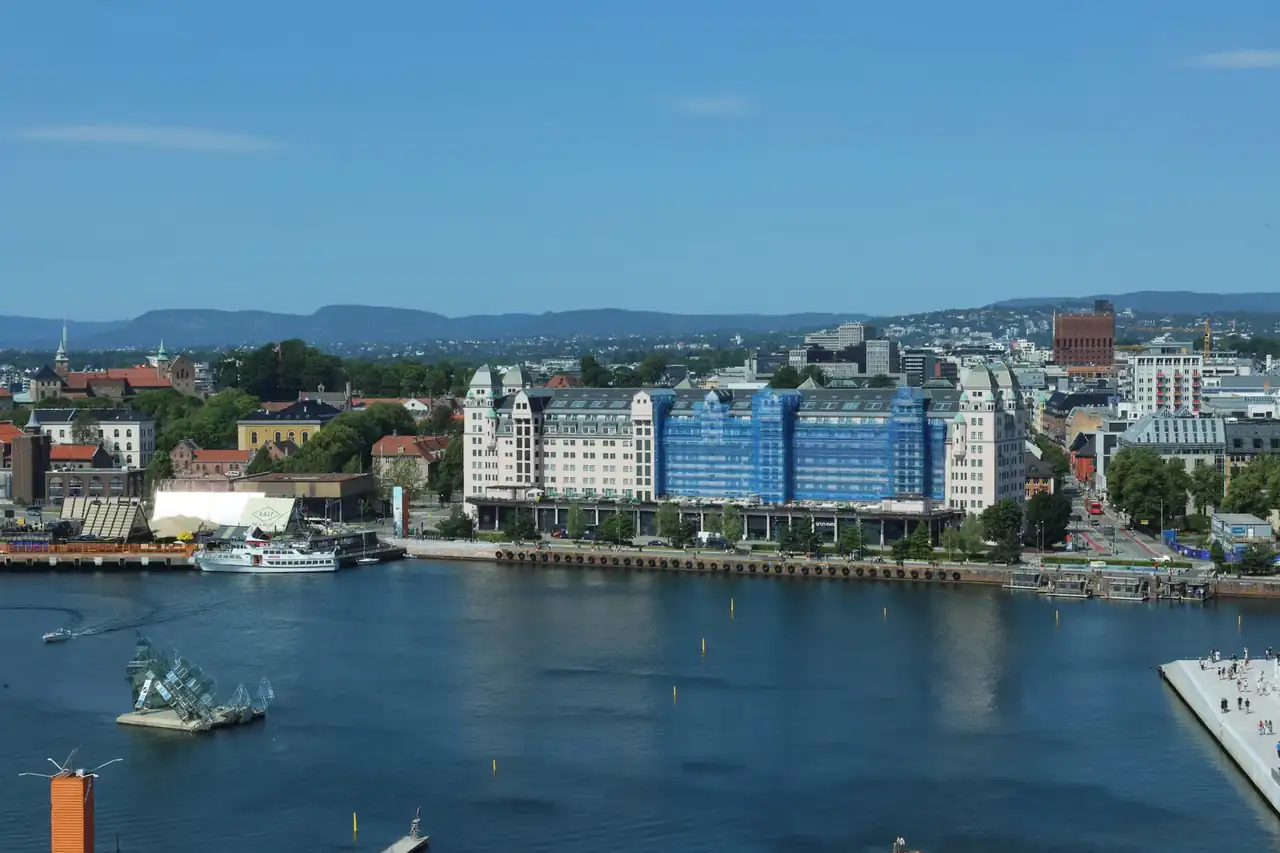
The DNB Oslo Marathon has established itself as one of the major urban events on the Nordic calendar, with more than 25,000 participants and an unusual mix of city, coastline, and physical challenge. The 2026 edition is set for September 12 in Oslo, with the main start at Rådhusplassen, right in the heart of the Norwegian capital.
Its appeal is not limited to the flagship distance. The event brings together several races on the same day and has earned a reputation for a course that alternates fast sections with long climbs, a detail that completely changes the tactical reading of the race. It is a big competition, yes, but also an urban experience that passes through some of the most recognizable places in Oslo.
A race with its own weight on the European calendar
Oslo reserves a central role for this marathon within its sports season. The race is part of the end of the athletic summer in Scandinavia and attracts both recreational runners and experienced participants looking for a well-organized event, with good logistics and a safe environment. The support of DNB, one of the country’s major banks, has helped strengthen the event’s visibility without erasing its identity as a city race.
The number of registrants also explains its relevance. This is not a niche event or a marathon with limited capacity for specialists. Here, different paces, very diverse goals, and a crowd ranging from those seeking a personal best to those who simply want to complete the distance solidly coexist. That mix gives it the feel of a great sporting festival, but without the anarchy that sometimes accompanies mass events.
The 2026 edition also arrives in an appealing context for traveling runners. Oslo combines contemporary architecture, green spaces, and a constant presence of water. The marathon takes advantage of that identity without turning it into an empty postcard: the city appears in motion, with wide avenues, residential areas, waterfront promenades, and stretches through the city center that force runners to keep pushing when their legs begin to feel the miles.
Course, elevation gain, and the real reading of the effort
The image of a fast race needs nuance. The route is mostly urban and may seem favorable at first glance, but the total elevation gain is around 350 meters, a figure that significantly changes the script compared with a flat closed-course marathon. It is not a mountain race, but neither is it a course that lets you run on autopilot.
The route usually traces a double passage through emblematic areas of the city and links points such as Rådhusplassen, Skøyen, Frogner, Aker Brygge, Akershus Fortress, Grønland, and Karl Johans Gate. The sequence is not only touristically valuable. For the runner, each section brings a different texture: open pavement by the water, the more prestigious straightaways in the center, denser atmosphere zones, and stretches where crowd support can carry the pace for a few more meters.
That combination makes it a marathon that is mentally demanding. The climb does not always announce itself dramatically, but it is there, spread across several sectors that force better effort management. Patience pays off more than impulse, and anyone who starts above their means usually pays the price before the half marathon. By contrast, those who understand the race as a sum of blocks can find room to finish strongly.
Distances for very different profiles
The range of races is one of its defining features. The marathon coexists with the half marathon, the 10K, and other formats that broaden the event’s reach. This structure makes the DNB Oslo Marathon function as a full day of running, not as a single elite start or a challenge reserved for specialists.
Among the usual distances are the 10K, the half marathon, and the full distance, as well as more specific formats such as the Oslo Triple and the children’s Mini Marathon. The result is an event with many entry points: from those who want to run 10 kilometers in the context of a major race to those who take on the full marathon as the season’s biggest goal.
This variety has a very clear practical effect. The event brings together families, clubs, amateurs, and high-level runners on the same day, which multiplies the atmosphere on the streets and gives continuity to the experience. It is not all about the stopwatch. The social dimension of the weekend also matters, as does the chance to share a start with different profiles and the feeling of a city occupied by running for hours.
Dates, times, and the importance of arriving with a margin
The 2026 edition takes place on Saturday, September 12. This matters because it places the race at a time of year when Oslo is beginning to say goodbye to summer and the weather can change quickly. The usual weather reference for that period points to cool morning temperatures and a moderate rise throughout the day, something that calls for light layers rather than sustained heat.
The reference data includes specific start times for the main marathon and for other distances in the program. In the case of the flagship distance, the start is set for 9:00, with a time limit of 6 hours. That combination makes it clear that the organization intends a serious race, well integrated into the city and without excessive delays in the final stretch of the day.
The race experience does not begin when the starter’s gun goes off. Oslo works with pre-race expos, bib collection, and services in the event area that usually require planning. In a city where public transportation works efficiently, arriving early is usually the smartest decision. Race morning can also be affected by traffic closures in the center, so time margin becomes part of the ritual.
Registration, prices, and how quickly spots sell out
Demand leaves little room for improvisation. Different references agree that registrations fly as soon as they open, especially for the most popular races. The Oslo Triple sells out in a matter of days or even sooner, while the marathon and half marathon also draw a lot of interest because of the event’s reputation and its well-placed date on the European calendar.
For 2026, one price reference places marathon entry at around 1,200 NOK, while other distances have different fees, such as 790 NOK for the 10K and 990 NOK for the half marathon. It is worth adding that some sources mention administrative fees and possible one-day licenses, an important detail for anyone calculating the budget for the full trip.
Beyond the exact figure, the pattern is clear: anyone interested in this race usually books well in advance. The registration window affects not only availability, but also the final price and accommodation planning. Oslo is not a cheap city, and that makes early purchase a logistical advantage, not just a sporting one.
What makes this marathon different within Oslo
The race is not limited to the fjord postcard. Its value lies in how it links very different spaces within a single experience. The runner moves from open areas to more urban stretches, from the elegance of certain boulevards to the denser pulse of the center, and in that transition the city stops being scenery and becomes part of the effort.
There is also a historical dimension that gives it substance. The race has gone through several decades of evolution and has transformed from a local event into a date with international presence. That maturity is noticeable in the organization, in the presence of pacers or set paces in some distances, and in the overall feeling of being in a race that knows its machinery well.
Another important feature is its inclusive character. The program includes races for different ages and profiles, as well as adapted modalities. That breadth does not dilute the marathon’s demand, but it does explain why the day attracts so many people. It is not only a race to chase a time; it is also a broad participation format, with room for modest and ambitious goals at the same time.
The course and the weather demand a sober approach
Oslo rewards discipline more than exuberance. The route can be tempting to start aggressively on, especially in the first kilometers, when the city still offers openness, crowd noise, and the feeling of a big race. However, the accumulated elevation and the succession of pace changes discourage excess. The effort does not break all at once; it wears you down little by little, like a rope losing tension with every pull.
The weather adds another layer of complexity. September in the Norwegian capital usually offers pleasant temperatures for running, but wind, humidity, or light rain can appear without warning. That variability forces runners to treat clothing and pace as parts of the same strategy. Too much layering can be unnecessary; starting too lightly can be too. Prudence is appreciated at km 30, when the body no longer negotiates easily.
That is why this marathon tends to appeal to those who enjoy reading the race. Legs alone are not enough. You need to look at the environment, recognize when to shelter from the pack, when to push, and when to conserve. It is a race that rewards the mind as much as physical condition, and that makes it especially attractive to runners who are not looking for a flat, predictable course.
Atmosphere, logistics, and a city that knows how to host runners
Oslo works well as a setting for a major sporting event. The transport network, the organization around the start and finish area, and the distribution of services help make the experience relatively smooth for a race of this size. There is space to leave bags, pick up gear, and move around with some comfort, something that does not always happen in high-participation urban marathons.
The city also provides a special atmosphere. The constant presence of water, the visual cleanliness of its avenues, and the mix between modernity and historic spaces create a very recognizable setting. For runners, that translates into scenes that pass quickly but leave a mark: a curve by the fjord, the brief silence of a less crowded stretch, the noise of a livelier square, or the straightaway where the city center seems to push toward the finish.
The crowd usually cheers with measured enthusiasm, more Nordic than loud, but very effective in the hard moments. You do not need constant roaring to support a marathon. Sometimes a series of well-placed cheers, a band, an attentive volunteer, or simply the awareness of running through a city that understands the value of sport in public space is enough.
Why it keeps attracting runners of different levels
The success of the DNB Oslo Marathon rests on a rare balance. It has enough prestige to attract those comparing European races, yet remains accessible for recreational runners. It offers a variety of distances, a solid organization, and an urban setting that is not overwhelming. And at the same time, it requires respect for the course, because it does not hand out an easy time or a comfortable run from start to finish.
The event’s narrative also helps. The race has been presented as a celebration of the city, shared effort, and the autumn atmosphere in Oslo. It is not a simple sum of kilometers. It is a day in which the Norwegian capital takes on a race rhythm and where urban identity blends with the repeated motion of thousands of strides on asphalt.
For all these reasons, the marathon occupies a singular place on the map of major races in Northern Europe. Those looking for a flat, bland course will find something else. Those who prefer a race with character, scenery, and mature organization will indeed find a solid proposal here. That balance between beauty and toughness is, in the end, what sustains Oslo’s reputation year after year.
A date that tests legs, mind, and context
The DNB Oslo Marathon is not understood only by its distance. The date, the setting, the elevation gain, the massive participation, and the way Oslo turns a sporting day into a city experience all matter. Those who take the start are not only tackling 42.195 kilometers; they enter an urban corridor where every decision counts and where the beauty of the setting does not soften the demand.
In a season saturated with marathons, its personality remains its best argument. The mix of fjord, historic center, modern avenues, and hilly stretches creates a recognizable race, with character and without artifice. That identity, together with the scale of the event and the variety of distances, explains why interest keeps growing among runners from both inside and outside Norway.
In September, Oslo does not merely receive a race. It incorporates it into its landscape, displays it in its streets, and lets it move toward the finish as if it were a natural part of its rhythm. That is where much of its strength lies: in a race that does not try to hide its toughness, but also does not give up the beauty of running through a capital that knows how to open itself to asphalt without losing the pulse of a living city.
You may also like: Midnight Sun Marathon: Arctic race under the midnight sun and Stavanger Marathon 2026: date, distances, and key details of the event.



How to prevent thigh chafing: causes and real solutions

Women’s running windbreakers: seven jackets and how to choose

Do more workouts get rid of soreness? A guide for runners

Jaén Half Marathon 2026: Record 3,800 Runners Registered

Men’s short running tights: how to choose the right pair

World Triathlon confirms data breach involving medical data

Izan Edo targets podium at Miyazaki World Cup

María Pérez ranks ninth in World Athletics’ 2026 top ten

Dos Santos, Duplantis and Sawe: World Athlete of the Year finalists

San Silvestre Vallecana 2026: 42,000 places, prices and start times

 Races3 months ago
Valencia Half Marathon 2027: date and registration

 Reviews and Comparisons4 months ago
Asics Gel-Roadmiles 3 for men: review and current price

 Races3 months ago
Valencia Marathon 2026: entry, ballot and course

 Reviews and Comparisons4 months ago
Asics Gel Sonoma 8 Gore-Tex: complete analysis for trail and rain

 Sneakers3 months ago
Saucony Endorphin Pro 4: full review and verdict

 News5 months ago
Strava API 2026: what changes for clubs, challenges and runner apps?

 Reviews and Comparisons5 months ago
Nike Alphafly 3: opinions, sensations, and real key points

 Reviews and Comparisons4 months ago
Under Armour running shoes review 2025-2026: models and key features

 Sports Equipment4 months ago
Shoe sizes in cm: a clear guide to getting the right fit for your footwear

 Sneakers3 months ago
Skechers GO RUN Consistent 2.0 analysis: comfort and limits

 News5 months ago
Valencia Marathon 2026 route: key tips to train and run better

 Sneakers4 months ago
Adidas Adizero Boston 13 for men: review and verdict