Races
Women’s Pink Race 2025: date, route and registration
The charity race in Los Palacios y Villafranca returns with 5 km, a huge turnout, and a cause against cancer.

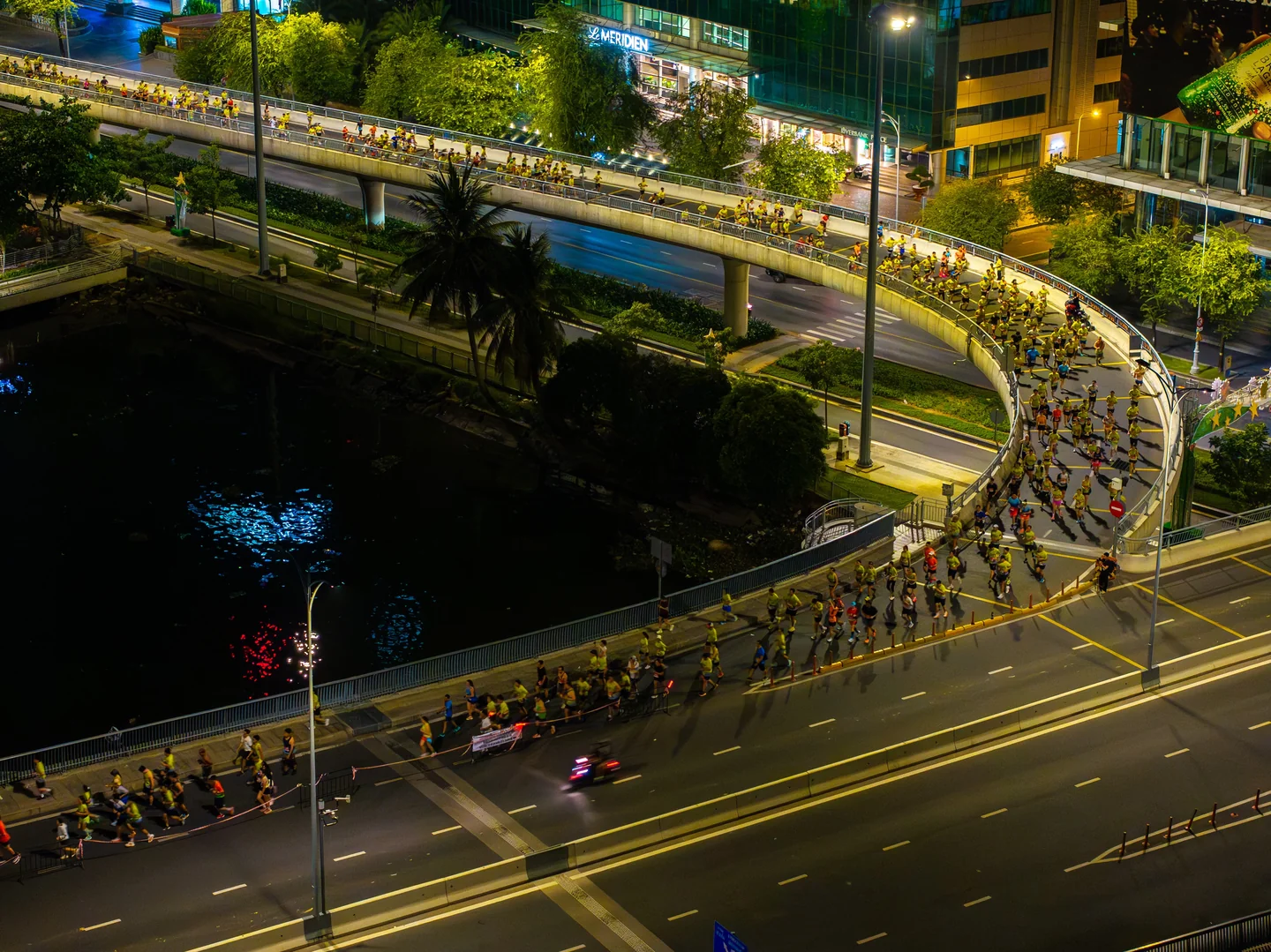
Los Palacios y Villafranca turns pink again with an event that is already part of its emotional and sporting calendar. The Women’s Pink Race brings together thousands of participants every year in a popular 5-kilometer walk-run with a clear goal: to raise support for cancer research and turn the streets of the Seville municipality into a sea of race bibs, T-shirts, and personal stories.
The 2025 edition was held on March 9 and came with a massive public response, surpassing 2,000 registrations in its early stages of organization, according to information released by local promoters. It is not just a race; it is a civic event that blends sport, remembrance, and solidarity, and has grown into one of the most recognizable popular walks in the province of Seville.
An event that goes beyond the clock
The race was created with a simple and powerful idea: run for a woman, for a mother, a sister, a friend, a teammate, or for anyone who has left a mark on the life of the person wearing a bib. That approach explains much of its success. It is not an event designed to measure times, but to mobilize an entire town around a cause that concerns society as a whole.
The message behind it is direct and far-reaching. The organization stresses the importance of prevention, early diagnosis, and support for cancer research. Its strength lies in the balance between symbolic gesture and health-related purpose. The route, the atmosphere, and the huge turnout serve as a loudspeaker for a simple idea: every registration adds up, every step counts, and every edition leaves a mark that does not fade when the finish line is crossed.
That charitable character also explains its family-friendly tone. The event has seen baby strollers, walkers, veteran runners, and entire groups who sign up more to share a cause than to compete. The start does not separate those who go fast from those who go slow; it brings them together in a single collective gesture, like an avenue beating to the same rhythm where effort matters as much as intention.
Los Palacios y Villafranca as the setting for a wave of solidarity
The Seville municipality has embraced this event so fully that it has become a local symbol. In recent editions, the response has been so broad that it has been described as participation equivalent to a significant share of the town’s population, with thousands of race bibs distributed among those who run, walk, or accompany. The Women’s Pink Race is no longer just another calendar event; it functions as a recognizable annual scene with its own social pulse.
The start and finish are set in a highly visible urban area, with central streets that encourage public presence and multiply the sense of community. In events like this, the course does not aim for toughness or the drama of elevation gain; it aims for closeness. The pavement, the corners, and the applause are part of the route just as much as the measured kilometers. The city becomes part of the message, not just the backdrop.
That local component helps explain why the race continues to attract such a strong turnout. Residents recognize the event as their own, embrace it as a tradition, and pass it on from year to year. The response is no longer driven only by the sporting call, but by a shared culture of support, belonging, and commitment to cancer research, which has been the main driving force behind the initiative since its first editions.
Distance, format, and level of challenge
The most established reference in the sources consulted places the event at 5 kilometers, an accessible distance that explains part of its popular appeal. It is the perfect measure for bringing together experienced runners, people new to running, and participants who prefer walking. In this type of event, mileage is not used to exclude, but to open the door to very different profiles under the same cause.
The format is that of a popular road race on asphalt, without the technical complexity of other disciplines or the rigidity of an elite competition. That allows the focus to shift from pure performance to the collective experience. The effort here is shared: heavier breathing, steady pace, applause from the sidewalk, and the feeling of being part of something bigger than the sum of individual strides.
The event’s history has also included longer and shorter distances in other years, although the most recent edition reported by the local press focused on the 5K. That detail is important for readers because it avoids confusing one specific event with the memory of previous seasons. In a living event, formats may evolve, but the core remains: a popular, inclusive event with strong symbolic weight.
Registrations, dates, and the weight of organization
One of the most striking features of the Women’s Pink Race is its ability to mobilize people in advance. In 2025, registration opened early enough to handle a very high flow of participation, and the organization reported 2,000 bibs already committed at the official presentation of the event. That figure illustrates the level of loyalty the race has achieved in just a few years.
In that same edition, registrations remained open until February 27, 2025, with the option to sign up in person or online. In-person registration was available at the Allianz-DKV offices on Álvarez Quintero Street, 2, with opening hours Monday to Friday from 10:00 to 13:30 and from 16:00 to 19:30, except Friday afternoon. Online registration completed the setup to make access easier for those unable to travel.
The organizational mechanics reveal more than just a well-planned schedule. They speak of a structure that requires volunteers, municipal coordination, private sponsorship, and a highly committed social base. Moving thousands of people for a common cause requires logistics, permits, signage, refreshments, timekeeping, and a friendly response for those arriving in a sporting mood as well as for those who simply want to walk with their bib on their chest.
The cause behind the event
The Women’s Pink Race cannot be understood without its health-related and emotional dimension. The fundraising and the event’s visibility are directed toward cancer research, a goal that the organization has strongly defended from the outset. The Spanish Association Against Cancer in Seville has taken part in the public narrative of the race, emphasizing that the sum of small contributions is essential to sustaining long-term scientific projects.
That focus on research coexists with another, less visible but no less important idea: the day after. At the presentation of one of the latest editions, the need to continue supporting patients after overcoming the illness was stressed, along with the so-called right to be forgotten after cancer. The race does not end with the morning photo in March; it seeks to extend its impact in public conversation about prevention, support, and resources.
The symbolism of dressing the town in pink is not a superficial layer, but a way to condense a message of support. In many charity events, color becomes a visual emblem; here, it also serves as a common language. Pink is not decoration: it is a declaration of presence, a way of saying that cancer is not fought alone and that the community can, at the very least, push in the right direction.
What has happened in recent editions
The 2025 edition left several figures that help explain the real scope of this event. Public response was notable from the official presentation, and the involvement of local authorities, associations, sponsors, and families connected to very personal stories was highlighted. The race thus opened itself to a human dimension that goes beyond mere sporting organization.
There was also room to remember those who had stepped forward in previous editions, with references to the large participation of prior years, when the number of registrants far exceeded several thousand. More than 6,300 people in a single edition show just how much the municipality has turned this event into a lasting tradition, not a passing fad. Regularity has been as important as the numbers.
That growth cannot be explained by promotion alone. There is a logic of word of mouth, closeness, and identification with a story that connects with very concrete experiences. When an event makes an entire city feel that it is taking part in something useful, loyalty appears naturally. And that is exactly what has happened here: a race that is shared as a just cause is shared, with naturalness and without pretense.
What those looking at this event from the calendar should know
From a strictly sporting point of view, the Women’s Pink Race belongs to the family of popular road races, with an accessible profile and a large crowd atmosphere. It does not require complex technical preparation or follow the pattern of high-level timed events. Its appeal lies in the mix of physical activity and collective meaning, in the ease of participation, and in the intensity of the human environment.
It is also worth bearing in mind that dates may vary from one edition to another and that some websites reflect unconfirmed data or information from previous seasons. In the 2025 edition, it took place on March 9, while other calendar references may show different days depending on the year consulted. In an event of this kind, official verification is as important as the bib.
The lack of major elevation, the moderate distance, and the urban setting make this event an ideal gateway for anyone who wants to join a mass event without facing the difficulty of a half marathon or the demands of a mountain race. It is a race designed to bring people in, not to filter levels, and that is where much of its popular appeal lies.
A recent tradition with a vocation for permanence
The strength of the Women’s Pink Race lies in its ability to repeat itself without losing meaning. Each edition renews a narrative that combines solidarity, sport, and everyday life. It does so in a context where popular races compete for attention, but few manage to strike such a broad chord. Here, it is not only the trained runner who takes part; it is also the person accompanying, remembering, supporting, and needing to feel part of an active community.
That vocation for permanence is fueled by a very recognizable local organization and a social fabric that has learned to make the project its own. The Town Hall, the promoting association, the volunteers, and the collaborators support a machine that works on a simple logic: the clearer the cause, the easier it is to add people. The race has found its place between sport and solidarity, without one diluting the other.
In an increasingly crowded calendar of events, this one stands out for a valuable rarity: it does not sell empty heroics or promise impossible times. It offers something less flashy and more lasting, which is the certainty of running or walking for a cause with a human face. And that, in the end, explains why the pink wave keeps growing year after year in Los Palacios y Villafranca.
When a race becomes a collective gesture
There are events that end with their own course and others that leave a social trail longer than their own kilometers. The Women’s Pink Race clearly belongs to the second group. Its value lies not only in the number of registrants or the start-line photo, but in the ability to bring an entire population together around a shared purpose. It is a race measured also in ties, in public conversation, and in the echo it leaves in cancer research.
That is why it continues to attract attention beyond Seville. In an era of fleeting events, this race retains something very valuable: continuity, meaning, and a clear identity. The strides pass, the asphalt is left behind, but the gesture of support remains. And in that persistence lies its true strength, more solid than any time and more visible than any podium.
The final image is that of a town turned into a collective runner, with a common color and a shared direction. There are no grand gestures, only a crowd moving forward. That is the essence of this race: turning an ordinary Sunday into a public affirmation of memory, health, and commitment.



How to prevent thigh chafing: causes and real solutions

Women’s running windbreakers: seven jackets and how to choose

Do more workouts get rid of soreness? A guide for runners

Jaén Half Marathon 2026: Record 3,800 Runners Registered

Men’s short running tights: how to choose the right pair

World Triathlon confirms data breach involving medical data

Izan Edo targets podium at Miyazaki World Cup

María Pérez ranks ninth in World Athletics’ 2026 top ten

Dos Santos, Duplantis and Sawe: World Athlete of the Year finalists

San Silvestre Vallecana 2026: 42,000 places, prices and start times

 Races3 months ago
Valencia Half Marathon 2027: date and registration

 Races3 months ago
Valencia Marathon 2026: entry, ballot and course

 Reviews and Comparisons4 months ago
Asics Gel-Roadmiles 3 for men: review and current price

 Reviews and Comparisons4 months ago
Asics Gel Sonoma 8 Gore-Tex: complete analysis for trail and rain

 Sneakers3 months ago
Saucony Endorphin Pro 4: full review and verdict

 News5 months ago
Strava API 2026: what changes for clubs, challenges and runner apps?

 Reviews and Comparisons5 months ago
Nike Alphafly 3: opinions, sensations, and real key points

 Reviews and Comparisons4 months ago
Under Armour running shoes review 2025-2026: models and key features

 Sports Equipment4 months ago
Shoe sizes in cm: a clear guide to getting the right fit for your footwear

 Sneakers3 months ago
Skechers GO RUN Consistent 2.0 analysis: comfort and limits

 News5 months ago
Valencia Marathon 2026 route: key tips to train and run better

 Sneakers4 months ago
Adidas Adizero Boston 13 for men: review and verdict