Races
Gijón Women’s Race 2025: route, atmosphere, and key details
Thousands of women took Gijón in a supportive, popular, and highly visual day that once again marked the Asturian calendar.

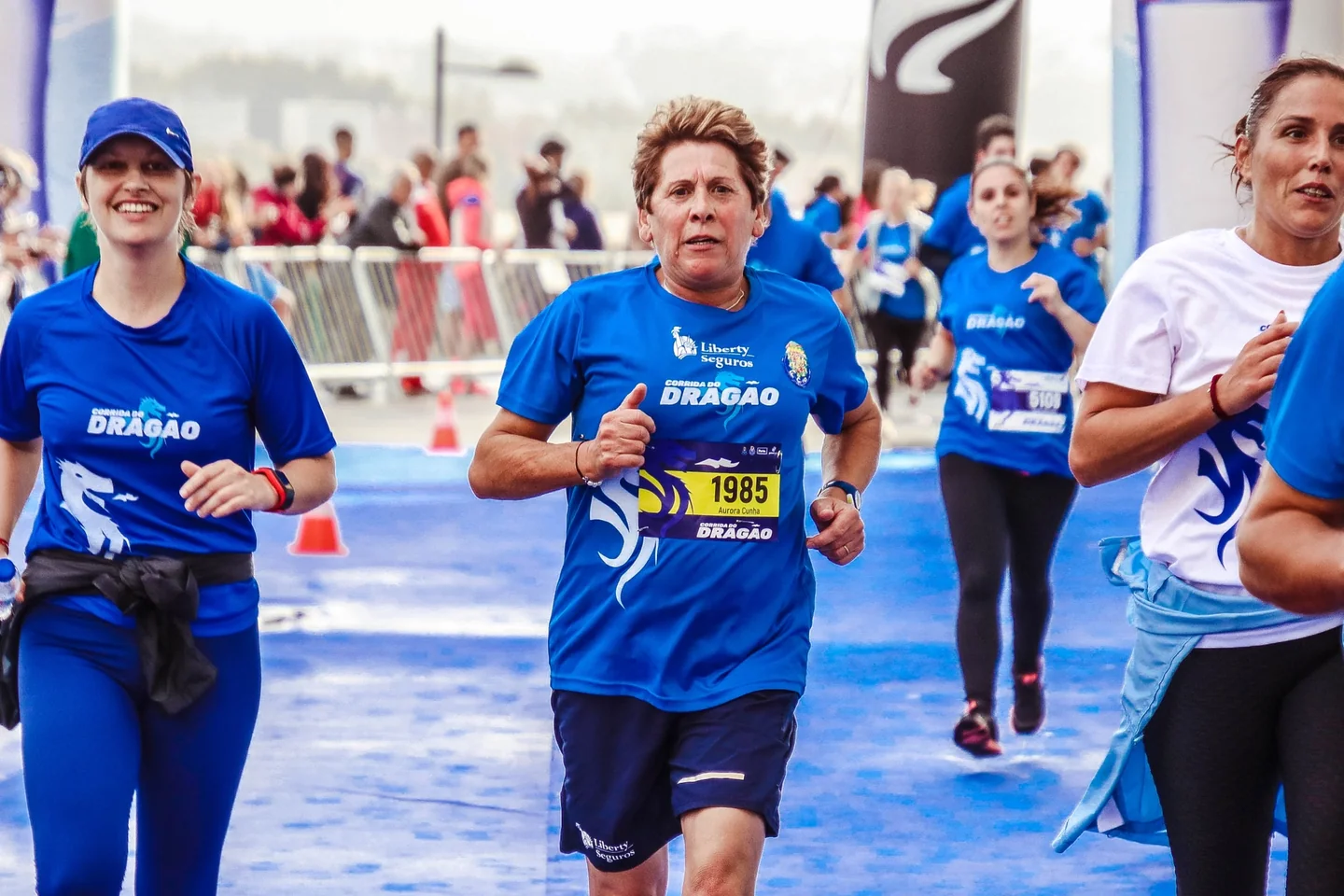
Gijón turned pink again with one of the most recognizable events on the Spanish popular sports calendar: the 2025 Women’s Race, a 5-kilometer event that brought together thousands of participants on a Sunday of sport, visibility, and urban togetherness. The start and finish, right at the heart of the city’s pulse, turned the asphalt into a compact tide, closer to a civic celebration than to a conventional race.
The 2025 Gijón edition stayed true to the essence of Europe’s largest women’s circuit: a non-competitive event, open to runners, walkers, and groups of friends, with a strong charitable component and a route designed to enjoy the city from a different perspective. The result was a morning of streets occupied by bibs, music, applause, and a pace that naturally blended effort and festivity.
A race that is already part of Gijón’s landscape
The Women’s Race in Gijón is not just another date on the sports calendar; it is now a recurring scene in the city, a kind of living postcard that repeats every season and transforms the city center into a stage for mass participation. In 2025, the event once again stood out as one of the key stops on the national circuit, with a hallmark that combines popular sport, advocacy, and a very recognizable atmosphere for those who follow mass running in Spain.
The image of thousands of bibs moving through Gijón’s streets says much more than a ranking ever could. It speaks of a sport that has learned to grow without losing its accessible character, with women of very different profiles sharing space, finish line, and story. In that intersection of generations and paces, the event finds much of its strength: it does not demand a time; it asks for presence.
The 5-kilometer format helps explain that reach. It is a short distance for elite athletes, but enough for those who are just starting out, for those returning to running after a break, or for those who prefer to walk without giving up the atmosphere of a major event. That breadth makes the race a gateway to urban running and, at the same time, a platform for collective participation that goes beyond the stopwatch.
A route that makes the city the protagonist
Gijón’s urban course was one of the great attractions of the 2025 edition. In races like this, the route does not merely connect start and finish: it builds a visual narrative. The asphalt, the wide avenues, the coastal profile, and the closeness of the crowd make the city function like a living backdrop, with the morning soundscape of breathing, clapping, and loudspeakers.
The lack of major elevation changes and the manageable length of the course make participation accessible to a very broad audience, which is key in an event of this kind. This is not a race designed to test your climbing ability, but rather to sustain a comfortable pace, enjoy the group, and finish feeling good. That also explains why many participants approach it more as a shared experience than as a sporting test.
In the race’s image, Gijón also offers added value: the mix of open city and Atlantic atmosphere. The light, the air, and the spaciousness of some streets provide a very different picture from that of a half marathon or a high-performance event. Here, what matters is the sum of small details: a pink T-shirt, a family on the sidewalk, a group running while laughing, a girl raising her hand above the barrier.
A pink tide with sporting and social significance
The event’s social dimension is inseparable from its success. The Women’s Race was created with a very clear purpose: to give prominence to women’s sport and link it to health and awareness causes. In Gijón, that idea once again took shape in 2025 with massive participation and an environment that reinforces the event’s collective meaning.
The color pink, as recognizable as it is controversial among some of the more purist running circles, works here as a shared code. It is not decoration; it is a visual identity. In the street, that color unifies very different profiles and turns the race into a compact image, easy to recognize even from far away. On a June morning, with the city awake and traffic adapted to the participants’ passage, the effect is that of a continuous, almost liquid human جریان.
That symbolic component does not diminish the sporting value. On the contrary, it helps many women take the step of pinning on a bib for the first time. In a city like Gijón, with a well-established enthusiasm for popular races, the event works both as an entry point and as a regular fixture for experienced runners. The same race serves to try out new shoes and to test fitness, to walk in a group or to gauge the body after weeks of training.
Registration, bib, and logistics: what shapes the experience
In the world of a mass-participation race, logistics matter as much as motivation. The 2025 edition was structured, as is usual in this circuit, around prior registration, the bib pickup, and the official guide with the practical details of the event. Organizing these processes reduces friction and allows race day to focus entirely on the sporting and social experience.
The Women’s Race usually mobilizes thousands of people, and that requires a precise mechanism: access to information, timing control, participant placement, gear handling, and coordination with the urban environment. Even if the final focus is on the start and finish, the real work begins much earlier, in the planning of streets, schedules, and services. In Gijón, the event once again revealed that invisible machinery that sustains major popular events.
The bib is not merely an administrative formality. In an event like this, it acts almost like a credential of belonging. Wearing it on the chest or T-shirt means being part, for a few hours, of a temporary community that shares space, noise, fatigue, and a common goal. That is one of the reasons race day is often so photogenic: each participant seems to carry a small story with them.
The value of a comfortable pace in a popular race
The 2025 Women’s Race in Gijón confirmed something that popular running repeats again and again: not all races are made to chase a personal best. In an event like this, a comfortable pace can be more interesting than speed. Those who run, jog, and walk all share the same setting, and that changes the way competition is understood. The goal stops being overtaking at all costs and becomes sustaining a complete experience.
Over a distance of 5 kilometers, the body gets involved quickly, but without the strain of longer races. For many women, that means being able to return to racing without specific preparation or with modest fitness. For others, it is a friendly challenge, a way to see how the body responds on a festive morning. In both cases, the event works because it does not punish different paces.
That balance between accessibility and excitement is one of the race’s keys. In 2025, Gijón offered a clear example of how a short race can have a huge urban and emotional impact without needing technical complexity. The route, the crowd, the logistics, and a sea of T-shirts are enough to turn 5 kilometers into an experience much larger than a number.
The growing presence of women’s running in Spain
The success of the Gijón event is also understood within a broader evolution. Women’s running has gained weight in Spain both in participation and visibility, and events like this have been decisive in opening space for new runner profiles. Popular racing is now seen not only as a performance event, but also as a space for meeting, health, and representation.
Gijón fits that trend well because it combines sporting tradition with ease of access. The city has experience hosting street races, and that shows in the public response, in traffic adjustments, and in the natural way the event is woven into the urban fabric. In 2025, that integration was once again visible: the race did not feel like a foreign body, but like a temporary extension of the city itself.
The continuity of the circuit reinforces that feeling even more. Each host city contributes its landscape and character, but the central idea remains the same: to give prominence to women athletes and place popular sport at the center of a broader conversation about lifestyle, visibility, and participation. In Gijón, that conversation took concrete shape on the pavement, without grand speeches, through the simple act of moving forward together.
Finish-line atmosphere, photos, and restrained emotion
The finish line of a race like this is often one of the weekend’s most expressive places. There you find heavy breathing, photos with friends, hugs, water, tired smiles, and a kind of shared relief that only exists after crossing the final line. In Gijón, that scene was repeated in 2025 with the force of the familiar, like a movie you already know but that still moves you because of its everyday truth.
The race photos help explain why this event has such wide appeal. They are not just about capturing speed, but about freezing an atmosphere: the light on the shirt, the look of effort, the line of participants along an avenue, the crowd cheering from the sidewalk. Each image works as proof of belonging and also as a memory of a shared morning.
In this case, emotion is not loud. It is restrained, almost domestic, but very effective. It appears in a small gesture, in a raised hand, in a participant looking at the camera as she passes, in another crossing the finish line with relaxed shoulders. Scenes like these explain better than any statistic why the race keeps its appeal year after year.
Solidarity, health, and an identity that goes beyond the bib
The race is not limited to the sporting experience. Its identity includes a charitable dimension that gives it substance and sets it apart from other popular races. In the Women’s Race circuit, that aspect has become one of its most recognizable trademarks, linking the act of running or walking with messages about health and support for various causes tied to women’s well-being.
In Gijón, that combination of sport and awareness was once again present in 2025 as a natural part of the event, not as a superficial add-on. It is the kind of proposal that fits especially well with popular running, because it uses an everyday activity that is easy to understand and widely shared to create public conversation. The result is a race that is seen, experienced, and interpreted as well.
The strength of the pink tide lies precisely there: turning a 5-kilometer day into a piece of sports culture. Some come for the time, others for the cause, others for the group, and others for the photo. In Gijón, all those reasons coexisted without getting in each other’s way, something uncommon in large-scale events and very valuable for understanding their staying power.
What Gijón leaves on the popular running calendar
The 2025 edition made one thing clear: mass races still have a central place in urban sports life when they manage to balance organization, symbolism, and closeness. Gijón did so naturally, supported by an accessible route, very broad participation, and a format that invites both running and walking without hesitation.
That balance also explains the interest each new edition generates. It is not just another race on the calendar; it is a meeting point where popular sport looks at itself. There coexist the minimal competitiveness some people carry in their heads, the conversation between friends, family presence, and the feeling of a city occupied in a friendly, almost festive way.
The 2025 Women’s Race Gijón left, in short, a clear picture of what women’s popular athletics means in Spain today: accessible, visual, massive, and with a very defined identity. In the echo of that morning, between the final applause and the city’s background noise as it resumed its pulse, there remained the certainty that some races are not only contested. They are also remembered.
A date that continues to weigh on the city’s sporting memory
Gijón once again understood the value of hosting a major urban race that does not aim to showcase records, but to add presence, health, and community. That is perhaps the deeper reason why the event remains so strong in the local imagination: because it leaves a visible mark on the streets and, at the same time, a sense of belonging that is very hard to replicate in other sports formats.
For running, the event works as both mirror and barometer. It shows how much women’s participation has grown, how a city can adapt to major events without losing its natural feel, and why the combination of sport and social cause continues to have particular power. What was seen in Gijón in 2025 was not just a race: it was a way of understanding popular sport as something shared, urban, and deeply alive.
At heart, that is the best definition of the pink tide when it lands in a coastal, open city like Gijón: a stream of steps that does not merely cross a finish line, but leaves behind a lasting image of shared energy, streets respectfully taken over, and sport turned into a calm celebration.



How to prevent thigh chafing: causes and real solutions

Women’s running windbreakers: seven jackets and how to choose

Do more workouts get rid of soreness? A guide for runners

Jaén Half Marathon 2026: Record 3,800 Runners Registered

Men’s short running tights: how to choose the right pair

World Triathlon confirms data breach involving medical data

Izan Edo targets podium at Miyazaki World Cup

María Pérez ranks ninth in World Athletics’ 2026 top ten

Dos Santos, Duplantis and Sawe: World Athlete of the Year finalists

San Silvestre Vallecana 2026: 42,000 places, prices and start times

 Races4 months ago
Valencia Half Marathon 2027: date and registration

 Races4 months ago
Valencia Marathon 2026: entry, ballot and course

 Reviews and Comparisons4 months ago
Asics Gel-Roadmiles 3 for men: review and current price

 Reviews and Comparisons4 months ago
Asics Gel Sonoma 8 Gore-Tex: complete analysis for trail and rain

 Sneakers4 months ago
Saucony Endorphin Pro 4: full review and verdict

 News5 months ago
Strava API 2026: what changes for clubs, challenges and runner apps?

 Reviews and Comparisons5 months ago
Nike Alphafly 3: opinions, sensations, and real key points

 Reviews and Comparisons4 months ago
Under Armour running shoes review 2025-2026: models and key features

 Sports Equipment4 months ago
Shoe sizes in cm: a clear guide to getting the right fit for your footwear

 Sneakers3 months ago
Skechers GO RUN Consistent 2.0 analysis: comfort and limits

 News5 months ago
Valencia Marathon 2026 route: key tips to train and run better

 Sneakers4 months ago
Adidas Adizero Boston 13 for men: review and verdict