Races
Zegama-Aizkorri: history, course, and key points of the legendary race
The great Basque trail event combines extreme toughness, a huge crowd, and a very unique organization.

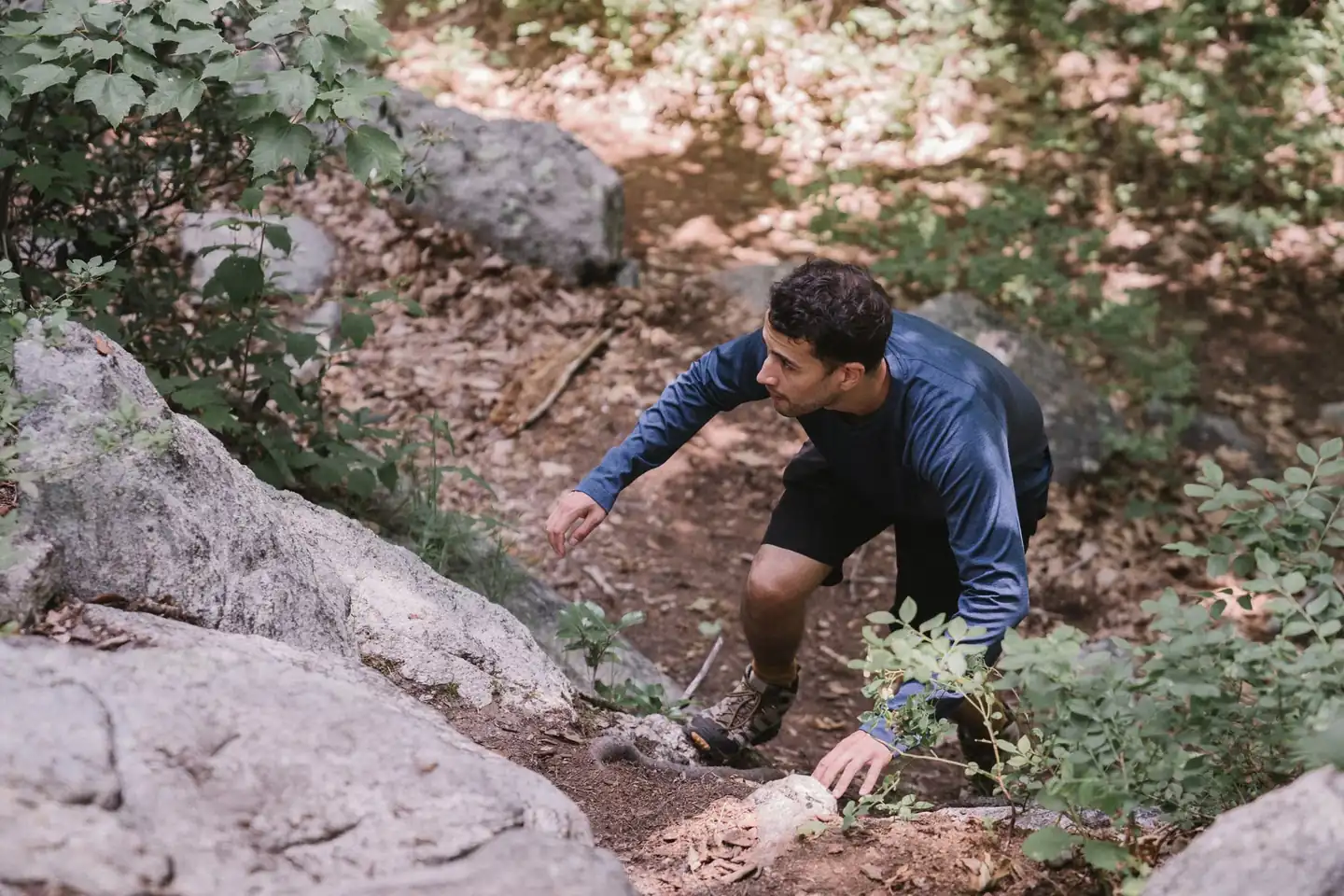
Zegama-Aizkorri is much more than a mountain marathon: it is a world reference in trail running, a 42.195-kilometer test with 2,736 meters of positive elevation gain in the heart of the Basque Country. It was born in 2002 and מאז has turned a small municipality in Gipuzkoa into a cult stage where elite runners, fans, and landscape cross paths at the same starting and finishing line.
The race takes place in May, starting and finishing in Zegama, and climbs through the Aratz massif and the Aizkorri range until reaching emblematic peaks in the area. Its fame is explained not only by the tough profile; the atmosphere also matters, with thousands of people cheering from the trails, and weather that can change the script in a matter of minutes, as if the mountain itself wanted to remind everyone who is in charge.
A mountain marathon with its own identity
The value of Zegama-Aizkorri lies not only in its technical difficulty, but in the way it has built a recognizable identity. The event has established itself as one of the great fixtures on the international skyrunning calendar and, since 2018, has been part of the Golden Trail World Series. This place in the global circuit has not diluted its local character; on the contrary, it has reinforced the idea that the Basque mountains can be a top-tier natural stadium.
In the trail world, there are races that impress because of altitude, others because of distance, and some because of accumulated toughness. Zegama combines the three variables with an addition that is hard to copy: a highly visible popular culture along every section of the route. This is not a silent or distant event, but an athletic festival where the pressure from the crowd feels almost like a wall of sound in the middle of the forest.
The comparison with other major mountain marathons is useful to understand its uniqueness. Here, it is not enough to run fast uphill or hold on downhill; you have to read the terrain, accept the mud when it appears, and live with a route that alternates forest, ridges, rock, and high pastures. That mix explains why the race has earned such a solid place in the imagination of international trail running.
The course: 42.195 kilometers and 2,736 meters of elevation gain
The official route keeps the classic marathon distance, 42.195 kilometers, but the figure is deceptive if you look only at the mileage. The effort multiplies because of the positive elevation gain, which is around 2,736 meters, and because of an orography that punishes every footstep mistake. The start is usually explosive, with an early climb toward the high sections, forcing athletes to manage their strength from the very first stretch.
The route crosses the Aratz massif and the Aizkorri range, with passages through well-known points such as Aratz, Sancti Spiritu, and Aketegi. The latter, at 1,551 meters, marks the highest point on the course and symbolizes one of the most demanding sections of the race. The route gives no respite: it climbs, gets tougher, opens up at altitude, and then punishes again on the descent, where the rocky ground demands almost surgical precision.
The slowing of pace in Zegama is due not only to the elevation gain, but also to the type of surface. In many sections, loose stone, roots, and mud force runners to choose between safety and aggression. On rainy days, the course becomes heavier and grip disappears like wet paint; in dry conditions, the tension changes, but does not disappear. The runner needs mountain technique, endurance, and a very fine reading of the terrain.
The surroundings are part of the competitive experience. Passing through the Aizkorri-Aratz Natural Park adds a setting of great beauty, but also of high demand. The race takes place in a protected area, with very clear environmental-respect rules and logistics designed to minimize the impact on trails, pastures, and high-traffic zones. In a race like this, the landscape is not decoration: it is part of the challenge and the reward.
Course & elevation Edition 2026
Per-kilometre table
| Km | Elevation | Grade |
|---|---|---|
| 1 | 364 m | 6.1 % |
| 2 | 529 m | 16.5 % |
| 3 | 686 m | 15.7 % |
| 4 | 751 m | 6.5 % |
| 5 | 785 m | 3.4 % |
| 6 | 732 m | -5.4 % |
| 7 | 670 m | -6.2 % |
| 8 | 805 m | 13.5 % |
| 9 | 790 m | -1.4 % |
| 10 | 724 m | -6.7 % |
| 11 | 822 m | 9.8 % |
| 12 | 942 m | 12.1 % |
| 13 | 992 m | 5.0 % |
| 14 | 1,084 m | 9.2 % |
| 15 | 1,147 m | 6.3 % |
| 16 | 1,344 m | 19.8 % |
| 17 | 1,299 m | -4.5 % |
| 18 | 1,193 m | -10.6 % |
| 19 | 1,116 m | -7.7 % |
| 20 | 974 m | -14.1 % |
| 21 | 1,055 m | 8.1 % |
| 22 | 1,326 m | 27.0 % |
| 23 | 1,457 m | 13.2 % |
| 24 | 1,450 m | -0.7 % |
| 25 | 1,190 m | -25.9 % |
| 26 | 1,123 m | -6.8 % |
| 27 | 1,107 m | -1.6 % |
| 28 | 1,155 m | 4.8 % |
| 29 | 1,136 m | -1.8 % |
| 30 | 1,180 m | 4.3 % |
| 31 | 1,309 m | 13.0 % |
| 32 | 1,049 m | -26.1 % |
| 33 | 977 m | -7.1 % |
| 34 | 935 m | -4.2 % |
| 35 | 818 m | -11.7 % |
| 36 | 770 m | -4.9 % |
| 37 | 727 m | -4.3 % |
| 38 | 727 m | 0.0 % |
| 39 | 677 m | -4.9 % |
| 40 | 602 m | -7.6 % |
| 41 | 445 m | -15.7 % |
| 42 | 300 m | -14.5 % |
| 43 | 303 m | 1.5 % |
Plan your pace on this course →
Route source: OpenRunner
Why this event has become legendary
The first reason is sporting. Zegama-Aizkorri brings together some of the best specialists on the planet and, at the same time, spares no one. Its list of winners reflects that combination of excellence and natural selection. Kilian Jornet has dominated much of the recent history with 11 victories between 2007 and 2024, a figure that shows the toughness of the course and the runner’s affinity with the terrain.
The second reason is aesthetic and emotional. The dense forests, high pastures, limestone ridges, and narrow passages create a very powerful visual narrative. The race has something of a moving film: the runner disappears among the trees, reappears on a hill, plunges into the mud, and emerges again amid cheers. That visual rhythm helps explain why it attracts so much interest beyond the purely sporting sphere.
The third reason is the crowd. In very few mountain races do you see such a high concentration of fans at specific points along the route. References to tens of thousands of spectators are not empty exaggeration: the atmosphere in Zegama has become a defining trait. Sancti Spiritu, in particular, functions as a natural amphitheater where the runner feels as if they are moving within a human wave.
Organization: quotas, lottery, and huge demand
Registration is not handled in a simple open way. Access to the marathon is limited to 500 participants, a number that explains how hard it is to get a bib. The organization combines reserved quotas, places for runners with a history in the race, and a public lottery that concentrates demand far above supply. That system has helped fuel the aura of exclusivity, while also keeping overcrowding under some control.
For the 2025 edition, pre-registration opened in January and the selected fee was 75 euros. That amount places the race within the usual range of major international mountain races, although the real value goes far beyond the bib: it includes a complex organization, specific logistics for a natural environment, and a safety setup tailored to the demands of the course.
The race is usually held in the final stretch of May, often around the last Sunday of the month. In the 2026 edition, the start is set for 09:00, with arrival expected in the early afternoon for the leading runners. That year’s official program also includes other events around the race, such as presentation sessions and activities linked to the anniversary of the event, further reinforcing its sporting and social dimension at the same time.
The race’s operation is not limited to the main day. There is previous work on access control, public information, shuttle transport, and traffic management in a rural setting where the influx of people can overwhelm the usual capacity of the roads. That invisible machinery, less flashy than the battle for victory, is one of the keys to the race continuing to grow without completely losing its human scale.
Rules, safety, and mandatory gear
On a course like this, the rules have obvious practical weight. Runners must follow the marked route, respect checkpoints, and accept a series of rules linked to safety and environmental care. Discarding waste outside the permitted areas can lead to immediate disqualification, a measure consistent with the protected environment where the event takes place.
The list of mandatory gear usually includes a windbreaker jacket, emergency blanket, and personal cup, along with other items that may vary depending on the edition and weather forecasts. This is not bureaucratic formalism, but the logic of self-sufficiency typical of mountain trail running. At those altitudes, weather can change quickly and a light garment can stop being secondary within minutes.
There are also checkpoints and time cutoffs. The best-known one is the one located in Aketegi, which serves as an intermediate reference to assess the progress of the race. The event has several aid stations and support points along the route, designed to sustain the effort in a mountain where energy expenditure is very high from the first kilometers.
Safety relies on medical teams, volunteers, and an organization that is highly coordinated with access to delicate sections of the course. In such an exposed race, any incident takes on a greater dimension, both because of the terrain and the weather. That is why the race demands not only legs: it also demands judgment, patience, and the ability to accept that the mountain imposes its own rhythm.
What makes Zegama different on the international calendar
Its uniqueness is best seen when compared with other Golden Trail World Series events. Many elite races opt for fast, carefully measured courses designed to favor television spectacle. Zegama, by contrast, retains an almost handcrafted toughness, a sense of real mountain that has not been softened to make running easier. The result is a race where performance depends as much on power as on adaptation to the terrain.
Another important difference is the weight of the local community. The race does not seem grafted in from outside, but born from within the territory itself. That is evident in the bond with the town, in the involvement of the public, and in the way the race has managed to preserve its Basque surname, mendi maratoia, as a statement of identity rather than a folkloric ornament.
In competitive terms, Zegama has also been a laboratory of champions. Runners with very different profiles have shone there, from specialists in explosive climbs to athletes with a great ability to sustain high paces on technical terrain. The list of winners confirms that there is no single winning mold, although one shared trait stands out: the ability to withstand the pressure of a mountain that gives nothing away.
The names that have shaped its history
The men’s list of winners is dominated by Kilian Jornet, who turned Zegama into one of the most recognizable stages of his career. His 2022 victory, in 3:36:40, remains the men’s course record, and in 2024 he prevailed again with 3:38:07. Before and after him, other major winners emerged, such as Stian Angermund, Rémi Bonnet, Manuel Merillas, and Elhousine Elazzaoui, champion in 2025 with 3:43:28.
In the women’s category, the story is more collective but just as powerful. Nienke Brinkman set the women’s record in 2022 with 4:16:43, a mark that significantly lowered the previous best. Before and after her, runners such as Oihana Kortazar, Maite Maiora, Ida Nilsson, Eli Anne Dvergsdal, Sylvia Nordskar, and Sara Alonso have left their mark, with Alonso winning in 2025 in 4:27:25.
Beyond the timing, the race has helped consolidate a tradition of top-level mountain running in the Basque Country and Spain. It has also helped bring women’s categories to a place of maximum international relevance, with prize money, media attention, and runners from different countries sharing the same showcase. That balance between local tradition and global elite is one of the race’s great achievements.
The points on the route that define the experience
There are places in Zegama that repeat in collective memory as if they were stations in the same story. Sancti Spiritu is probably the most famous because of its atmosphere; Aratz represents the hard start and the first major test; Aketegi condenses the highest and most exposed part, where the body is already battered and the terrain seems to tilt in on itself. Between those points, the race weaves a tale of climbing, endurance, and technical descending.
The final stretch deserves special attention. After cresting the high section, the way back punishes the legs with long, broken descents, where concentration becomes as important as strength. In those sections, fatigue makes the difference between running and surviving the terrain more visible. One misstep can cost seconds; a poor read can cost minutes.
The full experience is like a rough symphony. It begins with a burst of pace, rises to an almost epic note at altitude, and ends with a descent that crushes any temptation to relax. That structure explains why the race is not just a technical profile: it also has its own dramaturgy, built from altitude, noise, mud, and whistles of wind among the beech trees.
An event that keeps growing without losing its roots
The challenge for Zegama-Aizkorri has been to grow without losing its shape. The race has improved in visibility, international reach, and organizational quality, but it remains anchored in the same foundation: a town, a mountain, and a route that allows no shortcuts. That balance is not always easy in modern sport, where many races become interchangeable when they chase spectacle alone.
In Zegama, by contrast, the toughness has not been polished away and the landscape keeps its real weight. The mountain can be kind in one stretch and fierce in the next; the crowd can feel like a boost and then become another demand; the weather can open the race or shut it down with fog and rain. That uncertainty is an essential part of its prestige.
That is why this event continues to hold such a high place in trail running conversations. It is not just a race with history, nor just a hard race, nor just a popular festival: it is the sum of all that with a very marked identity. In the international calendar there are many memorable mountain marathons; few bring together so many ingredients, so well combined, as the great Basque event in May.
You may also like: La Gorbeia Suzien 2026: complete guide to the Zeanuri skyrace and Pikes Peak Marathon: the extreme race of Manitou Springs.



How to prevent thigh chafing: causes and real solutions

Women’s running windbreakers: seven jackets and how to choose

Do more workouts get rid of soreness? A guide for runners

Jaén Half Marathon 2026: Record 3,800 Runners Registered

Men’s short running tights: how to choose the right pair

World Triathlon confirms data breach involving medical data

Izan Edo targets podium at Miyazaki World Cup

María Pérez ranks ninth in World Athletics’ 2026 top ten

Dos Santos, Duplantis and Sawe: World Athlete of the Year finalists

San Silvestre Vallecana 2026: 42,000 places, prices and start times

 Races3 months ago
Valencia Half Marathon 2027: date and registration

 Races3 months ago
Valencia Marathon 2026: entry, ballot and course

 Reviews and Comparisons4 months ago
Asics Gel-Roadmiles 3 for men: review and current price

 Reviews and Comparisons4 months ago
Asics Gel Sonoma 8 Gore-Tex: complete analysis for trail and rain

 Sneakers3 months ago
Saucony Endorphin Pro 4: full review and verdict

 News5 months ago
Strava API 2026: what changes for clubs, challenges and runner apps?

 Reviews and Comparisons5 months ago
Nike Alphafly 3: opinions, sensations, and real key points

 Reviews and Comparisons4 months ago
Under Armour running shoes review 2025-2026: models and key features

 Sports Equipment4 months ago
Shoe sizes in cm: a clear guide to getting the right fit for your footwear

 Sneakers3 months ago
Skechers GO RUN Consistent 2.0 analysis: comfort and limits

 News5 months ago
Valencia Marathon 2026 route: key tips to train and run better

 Sneakers4 months ago
Adidas Adizero Boston 13 for men: review and verdict