Routes
Camino de Santiago in Astorga: stages, services, and key points
Astorga is a classic starting point on the French Way, with well-served stages, hostels, and good transport connections.

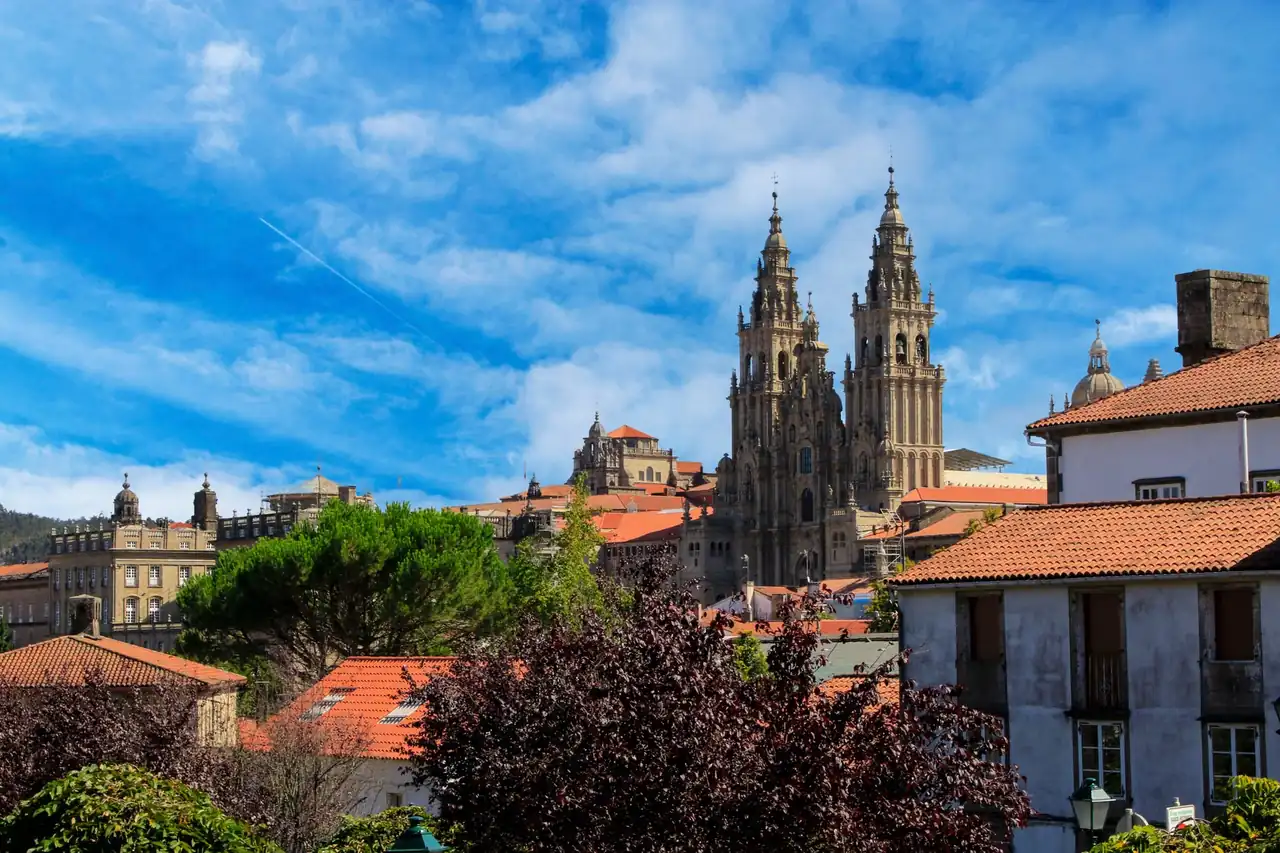
Astorga marks one of the strongest starts of the French Way for those who want to walk to Santiago with about two weeks ahead of them. From this Leonese city, the route advances through one of the most recognizable stretches of the Jacobean route: the Maragatería, the ascent to Foncebadón and Cruz de Ferro, the descent toward El Bierzo and, after that, the entry into Galicia via O Cebreiro. It is a stretch with scenery, heritage, and much clearer logistics than other smaller starting points.
The total distance to the cathedral in Compostela is around 260 to 300 kilometers, depending on the exact route and the variants, and it is usually covered on foot in 10 to 12 days, or by bicycle in 4 to 6 days. That combination explains why Astorga is appearing more and more among the favorite places to begin: it makes it possible to combine a city with full services, a reasonable transit stage, and a final stretch of the Camino with a strong identity, without yet entering the saturation experienced by the last hundred kilometers.
Astorga as a realistic starting point
Astorga has something that other starts of the Camino do not always offer: infrastructure, history, and a clear departure. The city is well connected by train and bus to Madrid and other capitals, and it has hostels, guesthouses, hotels, supermarkets, and shops where last-minute purchases can be sorted out. For the walker, that reduces friction. There is no need to improvise on the first day among disorganized backpacks and doubtful timetables.
Its location also matters. Starting here means fully entering a sequence of stages that already feel like the real Camino, with strongly marked Jacobean villages and a succession of landscapes that change naturally. Astorga is not just a place to pass through: it is a threshold. Gaudí’s Episcopal Palace, the cathedral, and the air of an old city give the departure an almost ceremonial backdrop, as if the journey were set in motion with more symbolic weight than physical weight.
From a practical point of view, the starting point fits well for those who have between 10 and 14 days of walking and some extra margin to arrive and return. It does not force you to face the toughest stretch of the Camino all at once, but it also does not leave the feeling of having started too late. In terms of balance, it is a very well-calibrated gateway.
Where to stay near Astorga
Accommodation in the area, with prices. Choose your dates on the map.
Affiliate links: if you book through this map we earn a commission, at no extra cost to you.
How many days it takes to reach Santiago
The most commonly repeated figure for the Camino from Astorga is 11 walking stages, although many pilgrims complete it in 10 or 12 depending on their fitness, available time, and the way they divide the days. By bicycle, the usual approach is to split the route into 4 or 5 days, with longer stops and planning that pays more attention to bike security in the accommodations.
The difference is not only about mileage. On this stretch, elevation gain matters as much as distance. The climb to Cruz de Ferro and the passage through O Cebreiro turn the route into one with very marked changes of pace. There are days that feel long because of the terrain, not the kilometers, and that forces you to read the Camino with a different logic: less obsession with numbers and more attention to how the body progresses.
That is why the most comfortable itineraries tend to space the days better between Astorga, Rabanal del Camino, Ponferrada, Villafranca del Bierzo, O Cebreiro, Triacastela, Sarria, Portomarín, and, finally, Santiago. The logic of the journey is not to rush, but to fit together stages that allow you to arrive with enough energy for the next pass, the next valley, or the next night of rest.
The stages that shape the stretch
The road from Astorga earns fame because it brings together several of the best-known landscapes of the French Way in an almost cinematic sequence. The departure usually runs across relatively gentle terrain until it nears the mountains of León, where the climb toward Rabanal del Camino appears and, shortly after, one of the most symbolic points on the entire route: Cruz de Ferro. The small mountain of stones, offerings, and silences has become a visual and emotional ritual that is hard to separate from the Camino itself.
Then comes one of the most memorable descents, the one that leads toward El Bierzo. It is a drop that changes the color of the landscape, opens the horizon, and gives way to villages such as Molinaseca, Ponferrada, and Cacabelos. Farther on, the Camino tightens again with the climb to O Cebreiro, where fog, wind, and stone pallozas change the tone of the journey. Galicia enters through the high door, not through a gentle transition.
Once in Galician territory, the route looks gentler in appearance, though no less demanding for the legs. Triacastela, Sarria, Portomarín, Palas de Rei, Melide, and Arzúa link the final straight. The landscape grows more humid, the paths fill with eucalyptus trees, and the flow of pilgrims increases visibly. It is a part of the route where the Camino becomes more social, more crowded, and, in high season, more shaped by the lodging and dining offer.
Where the pilgrim sleeps best
Astorga and its surroundings offer a broad network of accommodations to set off with room to spare. In the city itself there are public hostels, private hostels, hotels, and rural houses, which makes it possible to spend the previous night without complications. That peace of mind matters more than it seems: a bad departure night can ruin a better-packed backpack more than any luggage mistake.
On the rest of the stretch, the French Way maintains a clear advantage over other routes: almost all the important towns have some kind of lodging. That gives you flexibility to adjust stages as you go, as long as it is not the middle of summer. In July and August, booking becomes more important and improvisation loses its charm. The route fills up, hostels are occupied earlier, and smaller accommodations no longer offer as much room to maneuver.
For those traveling by bicycle, the criterion changes. It is no longer just about the bed, but also about a safe space to store the bike. Not all hostels have that solution, although more and more do each year. That is why, on this stretch, the bicycle requires slightly finer coordination than walking: it is not enough to arrive; you have to arrive and be able to rest with the equipment protected.
Astorga before setting off: more than a transit night
Astorga has enough urban substance to deserve more than a late arrival and an early departure. The city preserves Roman, medieval, and modernist layers that give it an unusual personality for a starting point. The cathedral and Gaudí’s Episcopal Palace are two stops so visible that they almost organize the traveler’s gaze before the walking even begins. That mix of stone and modernist lines creates a singular atmosphere, almost like a frontier between eras.
Gastronomy is also part of the beginning. Cocido maragato, served in reverse, with the meat first and the broth last, neatly sums up the local identity: nothing here follows the most obvious logic. There is also chocolate, mantecadas, and a table culture that makes the day before the effort easier to bear. That is no minor detail. The Camino often begins with the body at rest, and the previous day’s food weighs on the next day’s muscle memory.
The city also makes for an orderly departure. The pilgrim can check walking poles, footwear, credential, and reservations without having to battle the lack of services found in smaller places. In journalistic terms, Astorga works as a robust base: a city with enough density for the start not to depend on chance.
The climb to Cruz de Ferro and the weight of the landscape
There are stretches of the Camino remembered for the fatigue and others for their symbolic weight. The climb to Cruz de Ferro belongs to both categories. The ascent is not technical, but it is long, and it is often felt more for its constancy than for its difficulty. The reward is at the top, in a place where silence has something of gravel and wind.
Cruz de Ferro remains one of the most photographed and most interpreted landmarks on the Camino. The stones left by pilgrims from all over the world are not just a tourist custom; they speak of a tradition of release, memory, and promise that has survived the rise of hiking itself. It is a point where the Camino becomes a little more intimate, even when dozens of people are walking it each day.
Then comes the descent, as famous as the climb. It is terrain that demands attention, because the downhill sometimes punishes more than the effort of ascending. The body feels cheerful at first, but the knees and ankles soon remind you that the Camino rarely rewards euphoria. Between Rabanal, Foncebadón, Molinaseca, and Ponferrada, the landscape seems to breathe in layers: mountain, valley, village, river, mountain again.
Walking or biking from Astorga
The difference between walking and riding is not only speed. On the Camino from Astorga, the bicycle forces you to think about continuity, technique, and lodging. The route can be completed in a few days, but the management of effort changes completely. There is more attention to the type of surface, the descents, the long climbs, and the possibility that the accommodation may not have space to store the bike safely.
On foot, by contrast, the reading of the territory is slower and more intense. You notice terrain variations better, the change in aroma between pine forests, the dust on certain stretches, the Galician humidity, the small hamlets, and the rhythm of the breaks. Walking allows the Camino to adhere to the body little by little, like a fabric taking shape over the days. The bicycle compresses that experience; it makes it faster, sometimes more panoramic, but also less sedimented.
Both modes share an essential advantage from Astorga: the route is sufficiently established not to force you to invent a parallel path. You follow a historical current that is already very well signposted and, for much of the route, very used to receiving pilgrims of all kinds. That simplifies decision-making and leaves the effort where it belongs: in the legs, not in the logistics.
What to keep in mind before setting off
Preparation does not begin with the first step, but in the days before. On this stretch, well-tested footwear is worth more than a lighter backpack, and sensible planning matters more than any last-minute heroics. The Camino from Astorga does not demand exceptional physical condition, but it does require tolerance for several consecutive days of walking, specific elevation changes, and the daily repetition of the same movement.
The calendar also matters. Spring and autumn usually offer a more balanced combination of temperature, occupancy, and daylight. Summer brings more heat, more people, and less room for improvisation, especially in the busiest areas. Winter, for its part, empties some stretches and makes the terrain harsher. The Camino remains open, but the landscape becomes more severe and organization stops being optional.
The credential, minimal luggage, and planned stops remain basic elements. No grand ceremonies are needed to understand it: the simpler the logistics, the more room there is for what matters, which is walking. On a long route like this one, too many things end up sounding like background noise, like a badly tuned radio inside the backpack.
Why Astorga keeps gaining weight among pilgrims
Astorga has become established because it balances three factors that rarely appear together: heritage, transport, and a stage of the Camino with its own identity. It is not just any city placed in the middle of a long route, but a place that has a story, services, and a departure with personality. That explains why many pilgrims choose it as a starting point instead of a more neutral town or a point closer to Santiago.
In addition, the final stretch of the Camino from here offers a kind of synthesis of the Jacobean itinerary: mountain, plateau, El Bierzo, Galicia, and the entrance into Compostela. It is a route that does not simply add kilometers; it changes mood, climate, and texture. Those who start from Astorga cross several souls of the Camino in a single journey, and that is a value hard to match.
Astorga also acts as a natural filter. It is not an improvised start for just any getaway. It requires a certain decision. Those who begin here have already accepted a respectable distance, the challenge of elevation, and the organization of several days of walking. That initial seriousness usually translates into a more complete experience, with less of the feeling of having entered the Camino by accident and more of having chosen it consciously.
The stretch that leaves the clearest mark
Between leaving Astorga and arriving at the Obradoiro square there is a very recognizable thread: the ascent into the mountains, the symbol of Cruz de Ferro, the drop toward El Bierzo, the high gateway of O Cebreiro, and the advance through Galicia to Santiago. It is one of the most complete fragments of the French Way, not only for its beauty, but for the density of scenes it gathers in just a few days. It has moors, villages, bridges, forests, climbs, the murmur of bars, and, above all, continuity.
That continuity explains its journalistic appeal and its strength for the pilgrim. The stretch from Astorga does not drift; it gains shape, like a line of ink that thickens as it moves forward. Anyone who walks it quickly understands that this is not simply an itinerary for slow tourism, but one of the best-assembled sequences of the Camino de Santiago, with a clear start, a measured development, and an arrival that retains all its power to draw people in.
In an era when people seek experiences that are easy to consume, Astorga offers the opposite: a start with character, a route with craftsmanship, and a journey that requires time, attention, and moderate endurance. Precisely for that reason, it remains one of the most serious and rewarding gateways into the Camino de Santiago.



How to prevent thigh chafing: causes and real solutions

Women’s running windbreakers: seven jackets and how to choose

Do more workouts get rid of soreness? A guide for runners

Jaén Half Marathon 2026: Record 3,800 Runners Registered

Men’s short running tights: how to choose the right pair

World Triathlon confirms data breach involving medical data

Izan Edo targets podium at Miyazaki World Cup

María Pérez ranks ninth in World Athletics’ 2026 top ten

Dos Santos, Duplantis and Sawe: World Athlete of the Year finalists

San Silvestre Vallecana 2026: 42,000 places, prices and start times

 Races4 months ago
Valencia Half Marathon 2027: date and registration

 Races4 months ago
Valencia Marathon 2026: entry, ballot and course

 Reviews and Comparisons4 months ago
Asics Gel-Roadmiles 3 for men: review and current price

 Reviews and Comparisons4 months ago
Asics Gel Sonoma 8 Gore-Tex: complete analysis for trail and rain

 Sneakers4 months ago
Saucony Endorphin Pro 4: full review and verdict

 News5 months ago
Strava API 2026: what changes for clubs, challenges and runner apps?

 Reviews and Comparisons5 months ago
Nike Alphafly 3: opinions, sensations, and real key points

 Reviews and Comparisons4 months ago
Under Armour running shoes review 2025-2026: models and key features

 Sports Equipment4 months ago
Shoe sizes in cm: a clear guide to getting the right fit for your footwear

 Sneakers3 months ago
Skechers GO RUN Consistent 2.0 analysis: comfort and limits

 News5 months ago
Valencia Marathon 2026 route: key tips to train and run better

 Sneakers4 months ago
Adidas Adizero Boston 13 for men: review and verdict