Routes
Sneakers for walking the Camino de Santiago: key points and models
Keys to choosing the right footwear for the Camino de Santiago: fit, sole, weight, weather, and the models that respond best.

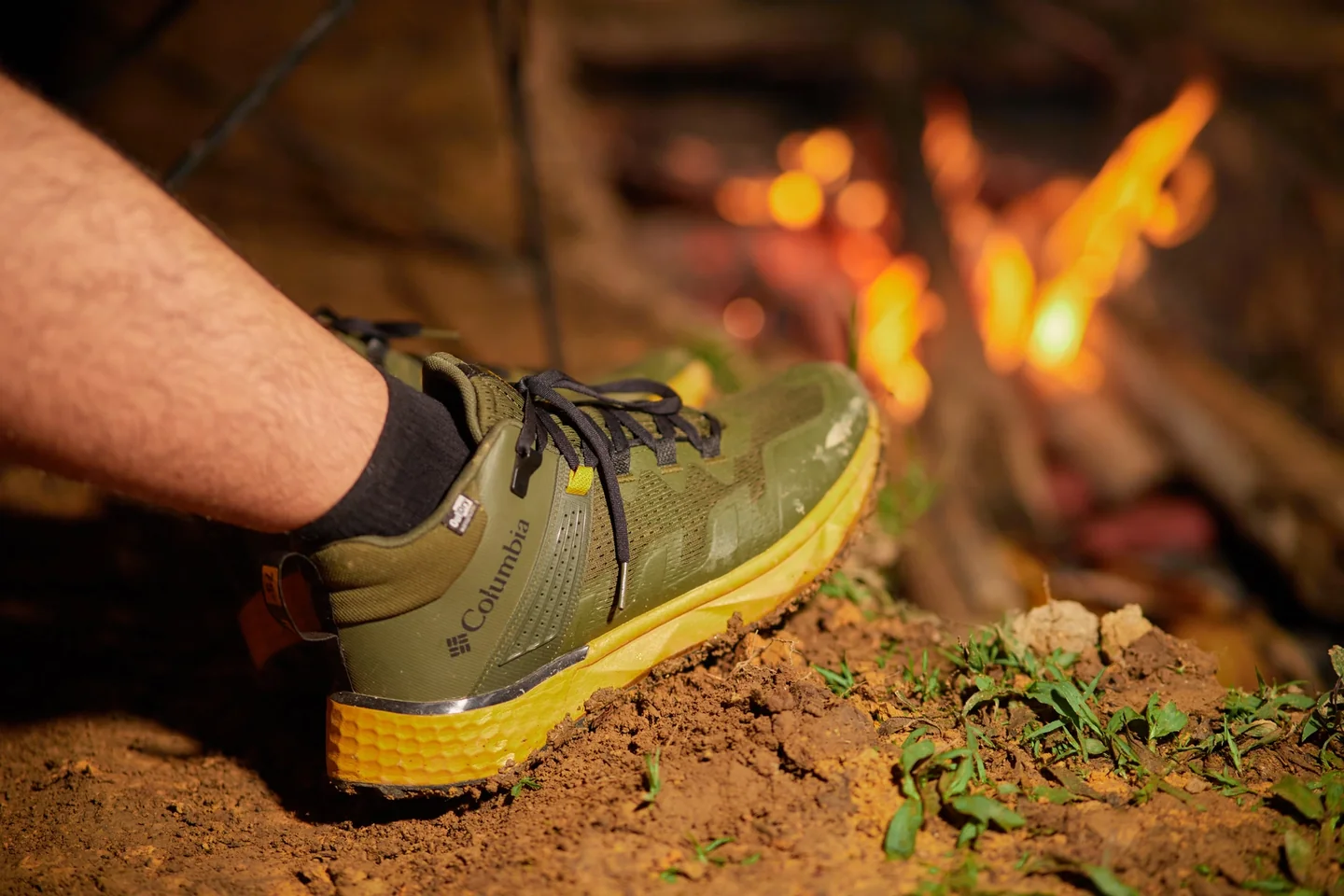
The choice of footwear makes the difference between a manageable route and a succession of blisters. On the Camino de Santiago, where days of 20 to 30 kilometers on asphalt, dirt, stone, and uneven stretches are strung together, comfort matters more than aesthetics. The right shoes must balance cushioning, grip, ventilation, and enough room in the toe box so the foot does not end up crushed by the end of the day.
The practical answer usually points to lightweight trekking shoes or sturdy trail running shoes, although there is no single formula that works for every pilgrim or every route. The terrain, the time of year, the weight of the backpack, and the shape of the foot completely change the equation. On the Galician winter route, a breathable model does not perform the same as it does in August on the Meseta, and a soft shoe does not behave like one with a firmer sole on Portuguese cobblestones.
The Camino terrain demands more than ordinary sneakers
The Camino alternates surfaces that punish the sole and ankle in different ways. There are forest tracks, loose gravel, asphalt, mud, stone sidewalks, and, on some stages, stretches with sustained slopes. That mix means that a city running shoe, however comfortable it may seem when tried on, falls short in durability and support. The result is usually a fatigued foot, an unstable stride, and constant rubbing on the heel or toes.
The toughness of the route does not depend only on the mountains. On many routes, what wears you down most is not a technical climb, but the sum of hours walking on unforgiving surfaces. The cobblestones of the Portuguese Way, for example, harden the sole and speed up fatigue; the humidity of the North or the Primitive route makes grip unpredictable; and the heat in summer multiplies sweating inside the shoe. That is why footwear should not be chosen as if it were for a weekend urban stroll.
A good shoe for pilgrims protects without becoming clumsy. It has to let the foot move naturally, absorb part of the impact, and not require a long adaptation period. If the chosen model is stiff, narrow, or too heavy, the body notices quickly. Over long distances, every gram and every millimeter of pressure matter more than they seem when you take the shoes out of the box.
Trail, light hiking, or boots: what really changes
Trail running shoes have become popular for a simple reason: they weigh less and breathe better. They are designed to move quickly over uneven ground and usually offer an attractive combination of cushioning and grip. Popular models such as Hoka Speedgoat, Altra Lone Peak, Brooks Cascadia, or NNormal Cadí often appear among pilgrims for their comfort and for a roomier toe box in several of their versions. They are not magical, but they handle many stages of the Camino well.
Light trekking or hiking shoes provide more structure and a slightly firmer sole. That extra stiffness can be useful on routes with lots of cobblestones, compact stone, or a heavy backpack. Brands such as Merrell, Salomon, or Oboz have established very popular models among long-distance walkers because they combine stability, protection, and a less soft stride than some pure trail shoes. For those who prefer to feel the foot more guided, this category is often more convincing.
High boots no longer dominate as they once did, but they still make sense in specific cases. On cold days, wet routes, or for pilgrims who prioritize support over lightness, a mid boot can work better than a low shoe. What has lost ground is the heavy, stiff leather boot, which tends to breathe worse and dry more slowly. On the Camino, where mud and sweat often coexist, an oversized boot ends up being more of a burden than a help.
The fit: the detail that decides whether the trip goes well or badly
The correct size is not your street size, but the one that lets the foot work while moving. During a long day, feet naturally swell and need room so they do not hit the toe box on descents. A good guideline is to try half a size or one full size up, always with the sock that will be used on the route. The key is not to let the foot move freely, but to avoid pressure on the nails, metatarsals, and sides.
The wide toe box reduces friction and helps the toes spread while walking. That small extra space improves load distribution, especially on long stages. When the front is narrow, the big toe and the little toe rub easily, and the problem can end in blisters or black toenails. A roomier last is usually a clear advantage on the Camino, where repetition matters as much as distance.
The heel must also stay secure, without wobbling or slipping. If the foot lifts too much with each step, friction increases. Sometimes a shoe seems perfect when sitting in the shop, but fails after several minutes of walking with a backpack. It is worth walking, turning, braking, and going up a small incline if the store allows it; the real fit appears in motion, not in a mirror.
Cushioning, drop, and outsole: three numbers worth checking
Cushioning does not always mean more comfort. A very soft chassis may feel pleasant in the first kilometers, but on long days it can sometimes cause an unstable stride, especially if the walker is carrying weight. That is why many pilgrims lean toward balanced midsoles, capable of protecting without turning every step into an uncontrollable pillow. On hard-packed paths, a base that is too spongy can be as tiring as a dry sole.
The drop, or height difference between heel and forefoot, affects walking posture. In trail shoes it is usually low or medium, while in some hiking shoes it appears somewhat higher. There is no single best value. A lower drop promotes a more natural feel, but requires adaptation; a higher one unloads part of the calf and Achilles tendon. The sensible thing is not to break in a radically different geometry in the middle of the Camino.
The outsole is the real contact with the journey. A tread that is too aggressive does not always help on asphalt, and one that is too smooth struggles on mud or wet stone. For the Jacobean route, outsoles with moderate lugs, versatile and durable, work well. Compounds such as Vibram Megagrip or equivalents have earned prestige for providing good grip on dry and wet rock, a valuable combination when the weather changes without warning.
Waterproof or breathable: the eternal dilemma in the rain
The waterproof membrane protects against water, but it also slows drying. That matters a lot on the Camino, where a shoe wet on the inside takes longer to recover than a breathable one. In spring and summer, when heat and sweating intensify, many pilgrims prefer models without a membrane to encourage ventilation. A dry foot on the inside is usually more decisive than theoretical waterproofing that rarely withstands heavy rain for hours.
In autumn, winter, and especially wet routes, the decision changes. The Camino del Norte, the Primitive, or stretches in Galicia under persistent rain may benefit from extra protection. In those cases, a shoe with a membrane can be reasonable, as long as breathability does not become suffocating. Even so, even the best waterproof fabric has limits: when water gets in from the top or sweat builds up, the inside gets soaked anyway.
That is why drying speed matters as much as water resistance. Footwear that drains well and airs out quickly reduces the risk of constant rubbing. Sometimes it is better to assume water will get in and focus on getting it out quickly. On several stretches of the Camino, that logic works better than waiting for a perfect barrier that does not exist.
Which types of shoes usually perform best
Trail running shoes with a wide last are one of the most repeated choices among experienced pilgrims. Their lightness eases the legs, the more flexible sole makes natural walking easier, and the generous toe box avoids squeezing the toes when wearing slightly thicker socks. Hoka Speedgoat, Altra Lone Peak, Brooks Cascadia, or NNormal Cadí represent that idea well, each with different nuances: some prioritize cushioning, others front-room, others stability on smooth or rolling terrain.
Light trekking shoes fit better for those looking for a more contained stride. Merrell Moab, Salomon X Ultra, or similar models usually combine a firmer structure with good grip and a feeling of security that is noticeable on stone and gravel. They work especially well when the backpack weighs more than desirable or when the walker prefers a less soft feel underfoot. The trade-off is that, in general, they weigh more than a pure trail shoe.
Mid boots are increasingly reserved for difficult weather or feet that are very sensitive to torsion. They are not the first option for everyone, but they are a valid solution if ankle support is valued and less ventilation is acceptable. On a route with mud, cold, and long stages, a light boot can be more sensible than an ultralight shoe exposed to knocks and constant moisture.
Which models come up again and again in pilgrim conversations
Hoka has become a recognizable presence thanks to its abundant cushioning. Speedgoat, in particular, appears as a reference when looking for comfort over long distances and a sole capable of performing on mixed surfaces. Its very soft feel attracts those who want to reduce impact, although not everyone adapts equally to that plush sensation. Over long distances, personal ergonomics matter more than the model’s fame.
Altra stands out for its wide toe box and zero-drop design in several models. Lone Peak represents that philosophy well, highly appreciated by those who want real space for the toes. That said, zero drop should not be improvised: if the body is used to another geometry, it needs time before a multi-day walk. The change can be comfortable or uncomfortable depending on prior adaptation, not on the label.
Merrell and Salomon remain very solid names for those who prefer a balance between firmness, durability, and mixed use. Moab and X Ultra are well-known examples for their versatility, stability, and reasonable performance on both track and asphalt. NNormal Cadí, with its more recent design, has gained presence thanks to a friendlier last and a highly grippy outsole. In all cases, the key is not the brand itself, but whether the model fits the foot and the planned route.
Route and season: footwear changes depending on which Camino you do
The Portuguese Way usually calls for a slightly firmer sole because of the cobblestones. The stones in the centers of many towns do not forgive a base that is too soft. Those who walk that route usually appreciate a stable shoe with good support and a midsole that does not sink too much. The problem is not just impact, but the accumulated fatigue of walking for hours on hard, uneven surfaces.
The Primitive Way demands more attention to grip and drainage. It is a route with a well-earned reputation for toughness, and rain can turn the ground into a slippery mix of mud and rock. There, models with reliable outsoles and enough structure to protect the foot without turning each step into a struggle stand out. A shoe that is too delicate is not enough for that scenario.
On the French Way, versatility usually wins. It is a long and changing route, with comfortable stretches and punishing ones, so an intermediate shoe works well for many people. In summer, ventilation matters more; in spring and autumn, the possibility of rain means drying speed must be considered carefully. The same shoe can be excellent in September and mediocre in January.
Socks, rotation, and other details that should not be underestimated
The sock is not a minor accessory, but part of the system. A good fabric reduces friction and helps manage sweat. Merino wool remains a highly valued option for its combination of feel, breathability, and ability to resist odor over several stages. With the wrong sock, even the best shoe loses part of its advantage.
Rotating between two pairs of shoes can make sense on long walks, but it does not always justify the extra weight. In an already loaded backpack, carrying a second pair means justifying every gram. Often it is more useful to have one well-chosen main shoe and a pair of lightweight sandals to rest in during the afternoon. The foot appreciates getting out of pressure and drying for a while; that break is worth gold at the end of the day.
Sandals are not usually the main option for walking full stages, but they are a good support in hostels and during breaks. They help ventilate and relax the foot after hours enclosed. In dry season, some pilgrims even use them for certain stretches, although that is not the safest choice on all routes. On loose stone or in rain, control is easily lost.
Signs that a model does not fit before setting out
Testing should be done while walking, not just standing at home. If rubbing appears on the side, pressure on the toes, or a feeling that the heel is slipping, it is worth taking seriously. Many problems show up early, with strange heat in a specific area or a small pain that increases after half an hour. Ignoring it usually becomes costly after forty accumulated kilometers.
Poor fit is noticed more when the foot swells and the stride repeats hundreds of times. The Camino magnifies any last defect. An annoying seam, a collar that rubs, or a poorly placed tongue can seem minor in the store and turn into torture by the third day. The useful rule is simple: if the foot needs space or stability and the shoe does not provide it, it should be discarded.
Wearing in new footwear without breaking it in is an unnecessary gamble. The shoe does not need to be worn out, but it should have gone through several walks before the trip. That period reveals how the sole behaves, how much the upper gives, and whether the foot accepts the design. A model that is perfect on paper can fall apart on the first long descent.
The ideal footwear for the Camino is chosen with the feet, not with fashion
The best option is not the best-selling or the lightest one, but the one that goes unnoticed while supporting you. On a long route, the right footwear fades into the background: it supports, protects, breathes, and does not demand constant attention. That is the true sign of success. If the walker ends up thinking little about their feet, the design has done its job.
For most pilgrims, the balance lies between sturdy trail shoes and light trekking shoes. The former win in lightness and ventilation; the latter in structure and firmness. Mid boots are for more specific cases, and waterproof models must be carefully assessed according to climate and duration. The Camino does not reward grandiose decisions, but sensible ones.
Choosing the right shoes for walking the Camino de Santiago is, in reality, choosing how the route will be remembered. A good fit turns the stages into a backdrop; a bad one turns every arrival into relief. Between those two realities are only a few centimeters of last shape, a well-chosen sole, and the honesty to try before leaving. On a journey where the feet support almost everything, that margin is not a detail: it is the foundation of the experience.
You may also like: Shoes for the Camino de Santiago: a guide to getting it right.



How to prevent thigh chafing: causes and real solutions

Women’s running windbreakers: seven jackets and how to choose

Do more workouts get rid of soreness? A guide for runners

Jaén Half Marathon 2026: Record 3,800 Runners Registered

Men’s short running tights: how to choose the right pair

World Triathlon confirms data breach involving medical data

Izan Edo targets podium at Miyazaki World Cup

María Pérez ranks ninth in World Athletics’ 2026 top ten

Dos Santos, Duplantis and Sawe: World Athlete of the Year finalists

San Silvestre Vallecana 2026: 42,000 places, prices and start times

 Races4 months ago
Valencia Half Marathon 2027: date and registration

 Races4 months ago
Valencia Marathon 2026: entry, ballot and course

 Reviews and Comparisons4 months ago
Asics Gel-Roadmiles 3 for men: review and current price

 Reviews and Comparisons4 months ago
Asics Gel Sonoma 8 Gore-Tex: complete analysis for trail and rain

 Sneakers3 months ago
Saucony Endorphin Pro 4: full review and verdict

 News5 months ago
Strava API 2026: what changes for clubs, challenges and runner apps?

 Reviews and Comparisons5 months ago
Nike Alphafly 3: opinions, sensations, and real key points

 Reviews and Comparisons4 months ago
Under Armour running shoes review 2025-2026: models and key features

 Sports Equipment4 months ago
Shoe sizes in cm: a clear guide to getting the right fit for your footwear

 Sneakers3 months ago
Skechers GO RUN Consistent 2.0 analysis: comfort and limits

 News5 months ago
Valencia Marathon 2026 route: key tips to train and run better

 Sneakers4 months ago
Adidas Adizero Boston 13 for men: review and verdict