Sneakers
Kids’ running shoes: models, foot strike and buying with a runner’s mindset
A practical guide to choosing the right running shoes for children: sizing, fit, outsole, cushioning and real-world use.

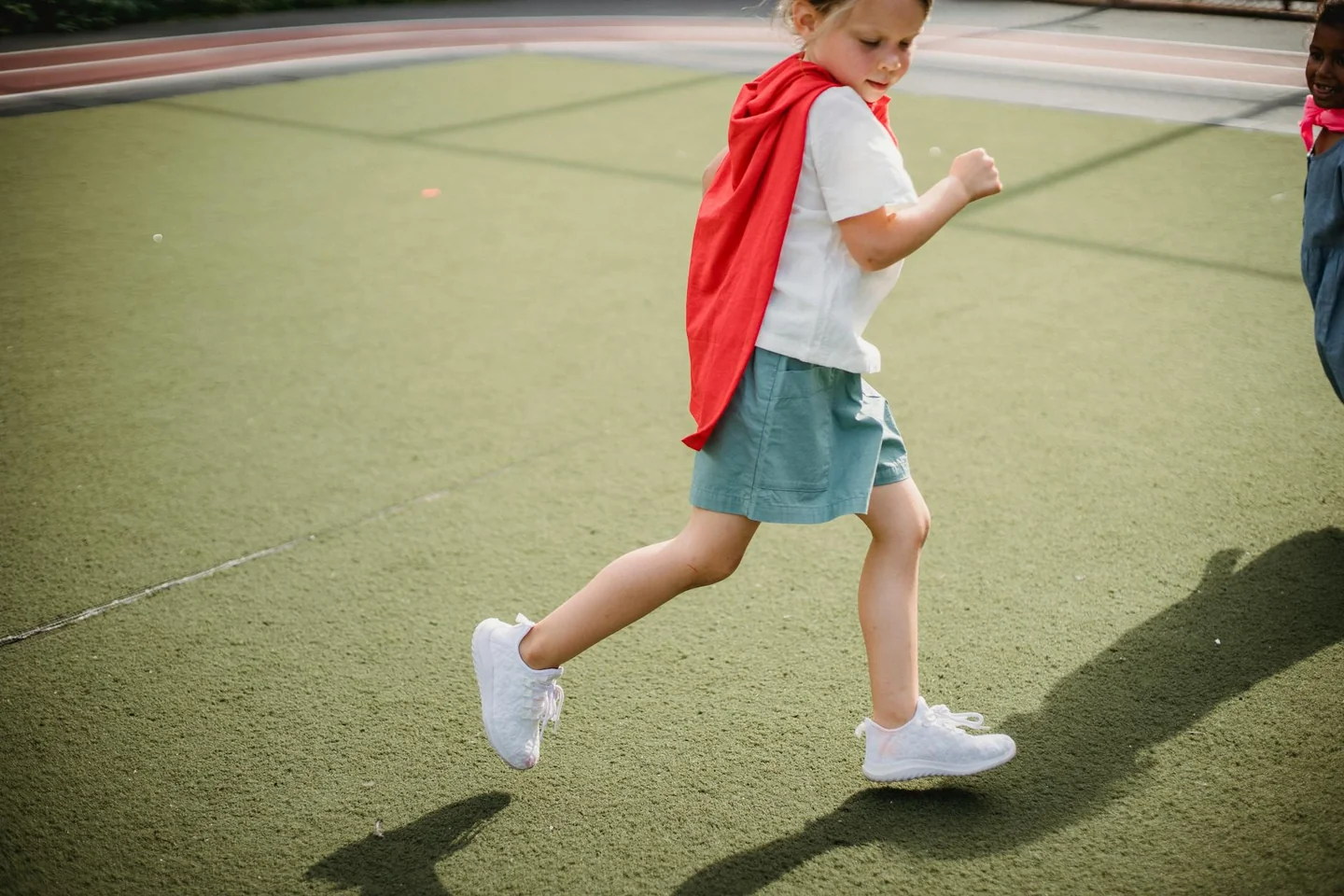
Imagen: Antonius Ferret / Pexels
Kids’ running shoes: models, foot strike and buying with a runner’s perspective
Children’s running footwear has evolved considerably: it is no longer just about choosing an eye-catching design or a sole that can withstand playtime, but about finding a balance between fit, lightness, durability and comfort that supports a growing, active foot. The market includes everyday models, footwear for school physical education and more technical options that draw closer to the spirit of trail running and easy training.
Understanding children’s feet and their biomechanics
A child’s foot is not a smaller version of an adult foot. It has developing bones, softer tissues and a different relationship between stability and mobility. In addition, biomechanics during school years are different: the foot is more flexible, the arch is still forming and loads are distributed differently. For this reason, footwear should allow the foot to move naturally without losing support, especially during activities that involve changes of pace, turns and frequent stops.
A model that is too rigid can feel uncomfortable and restrict movement, while one that is excessively soft can lead to instability. Finding the right balance is key to ensuring comfort, protection and functionality.
Choosing according to use and type of activity
The right choice starts by defining how the shoes will be used. A pair for physical education, school races, games in the park or a casual model with a sporty look are not the same thing. The difference does not always come down to price, but to aspects such as forefoot flexibility, heel firmness, ease of putting them on or the type of closure, which at an early age matter just as much as the brand or colour.
A child who does little running and spends more time walking in a school environment does not need the same cushioning as another who trains several times a week or takes part in school events. The more frequent the running motion, the more sense it makes to choose a comfortable, lightweight midsole with a smooth transition. For occasional use, durability and ease of use are usually the priority.
Key features of children’s footwear
Fit, size and last
The correct size is much more than just a number. In children’s footwear, it is advisable to leave a sensible amount of room in the toe box so that the toes do not hit the front when braking or landing while running. A gap of between 0.5 and 1 centimetre is a useful guideline: enough to allow for growth without leaving so much room that control is reduced.
The fit should hold the foot securely without squeezing it and allow it to move naturally. Shoe lasts can vary: some models have a wider forefoot, ideal for feet that spread when weight is placed on them or for higher insteps, while others are more snug and may put pressure on the top of the foot. That is why two children wearing the same size may experience the same shoe very differently.
As for closures, adhesive straps are common between the ages of 3 and 6, making it easier for children to put their shoes on independently and avoiding problems with poorly tied laces. From larger sizes onwards, laces allow for a more precise fit and firmer hold, especially for running or training. Hybrid solutions are also available, combining elastic laces with adhesive straps for greater comfort and control.
Cushioning and outsole
Cushioning for children should not be confused with a soft bed. What matters is that the midsole absorbs repeated impacts without sacrificing stability or adding unnecessary weight. Soft foams, phylon blocks or air units aim to provide a lively, balanced feel that softens the foot strike without compromising control.
The outsole is the point of contact with the real world and deserves special attention. It should provide grip without being excessively hard and flex in the forefoot to support push-off. Patterns with pronounced designs and strategically placed cuts increase flexibility, while reinforced rubber helps withstand the daily wear caused by sudden stops, turns and abrasive surfaces.
Toe protection is another important detail: it guards against scuffs and extends the life of the footwear, especially for children who tend to wear this area out first.
Materials, breathability and weight
The upper often says a great deal about how a shoe actually performs. Mesh fabrics improve ventilation and reduce the feeling of heat, which is crucial in spring, summer or for children who sweat easily. However, this ventilation should not weaken the structure, especially for children who alternate between running, jumping and stopping suddenly.
Weight is also key. A heavy shoe can alter technique and reduce agility, which is why children’s versions generally favour lightweight structures with reinforcements in strategic areas. The aim is not to create a fully armoured design, but a well-resolved chassis that supports movement without getting in the way.
Today, some brands incorporate recycled materials into their children’s models, a step towards more sustainable manufacturing without compromising quality and functionality.
Market options and price ranges
The collections from major brands offer a fairly clear and varied picture, with models ranging from basic options to technical proposals featuring technologies adapted to children’s feet.
- Entry-level models: These are usually priced below 50 euros and are ideal for general use, playtime and first training sessions. Examples include the Nike Cosmic Runner, Puma Flyer Runner V PS and ASICS Jolt 4. Priority: comfort and durability for everyday running.
- Mid-range models: Priced between 40 and 70 euros, they combine comfort and versatility. Popular models such as the adidas Runfalcon 5, adidas Duramo SL 2, ASICS Patriot 14 and New Balance 520V8 stand out for their balance of quality and price, firm outsoles and practical fits.
- Premium models: Priced between 75 and 120 euros, these include advanced technologies and greater cushioning for children who train regularly or run longer distances. Options such as the Nike Vomero 18, Nike Pegasus 41, ASICS Gel-Cumulus 27, Hoka Clifton 10 and Mizuno Enerzy Rider Jr. offer extra refinement and durability.
Brands such as Puma have strengthened their presence with families including FlexFocus, Pounce, Rickie, Flyer and Palermo, as well as lines such as Club II, Suede XL and Courtflex, covering everything from school use to casual and sporty styles.
How to read a technical product description without getting lost
Commercial descriptions often mix style and function, so it is useful to mentally separate the two. Expressions such as soft cushioning, breathable mesh, comfortable fit or durable outsole are helpful indicators, but they are not enough on their own.
To make the right choice, it is worth looking at:
- Toe and heel reinforcements.
- An opening that makes putting the shoes on easier and avoids a struggle.
- A closure type suited to the child’s age and independence.
- Enough room for growth without leaving excess space.
- The type of last (wide or snug) according to the shape of the foot.
- The model’s weight to encourage agility without sacrificing protection.
Children’s product descriptions may include terms such as junior, kids, PS, AC+ or inf, indicating age ranges or specific adaptations. Although the commercial name may change, the underlying principle is similar: smaller sizes prioritise simplicity and ease of use, while larger sizes incorporate more precise fit and styling closer to adult running shoes.
Age, independence and frequency of use: how needs evolve
Between the ages of 3 and 6, the priority is usually making it easy to put on and take off the shoes. Independence is important because children are beginning to dress themselves, and a simple closure prevents straps from being fastened incorrectly or laces from coming undone. At this stage, a forgiving fit and flexible structure are worth more than advanced technical features. The shoe should keep up with play, not hold it back.
From the age of 7 or 8, when physical activity becomes more intense and training sessions or school races appear, heel stability, grip and the ability to handle a greater number of kilometres become more important. A miniature competition shoe is not necessary, but a model that can cope with more demanding use is. A good midsole and stable base help distribute impact more effectively.
During preadolescence, sizes are already approaching adult ones and needs shift towards models with more advanced technologies and greater sophistication, while always keeping comfort and protection for the growing foot as the priority.
You may also like: Girls’ running shoes: models, foot strike and buying with a runner’s approach.
Este artículo contiene enlaces de afiliado: si compras a través de ellos, se genera una pequeña comisión sin coste adicional para ti. Más información.



How to prevent thigh chafing: causes and real solutions

Women’s running windbreakers: seven jackets and how to choose

Do more workouts get rid of soreness? A guide for runners

Jaén Half Marathon 2026: Record 3,800 Runners Registered

Men’s short running tights: how to choose the right pair

World Triathlon confirms data breach involving medical data

Izan Edo targets podium at Miyazaki World Cup

María Pérez ranks ninth in World Athletics’ 2026 top ten

Dos Santos, Duplantis and Sawe: World Athlete of the Year finalists

San Silvestre Vallecana 2026: 42,000 places, prices and start times

 Races3 months ago
Valencia Half Marathon 2027: date and registration

 Races3 months ago
Valencia Marathon 2026: entry, ballot and course

 Reviews and Comparisons4 months ago
Asics Gel-Roadmiles 3 for men: review and current price

 Reviews and Comparisons4 months ago
Asics Gel Sonoma 8 Gore-Tex: complete analysis for trail and rain

 Sneakers3 months ago
Saucony Endorphin Pro 4: full review and verdict

 News5 months ago
Strava API 2026: what changes for clubs, challenges and runner apps?

 Reviews and Comparisons5 months ago
Nike Alphafly 3: opinions, sensations, and real key points

 Reviews and Comparisons4 months ago
Under Armour running shoes review 2025-2026: models and key features

 Sports Equipment4 months ago
Shoe sizes in cm: a clear guide to getting the right fit for your footwear

 Sneakers3 months ago
Skechers GO RUN Consistent 2.0 analysis: comfort and limits

 News5 months ago
Valencia Marathon 2026 route: key tips to train and run better

 Sneakers4 months ago
Adidas Adizero Boston 13 for men: review and verdict