Sneakers
Men’s athletic shoes for plantar fasciitis: useful guide
Keys to choosing men’s footwear that relieves the fascia: fit, cushioning, and support without losing naturalness.

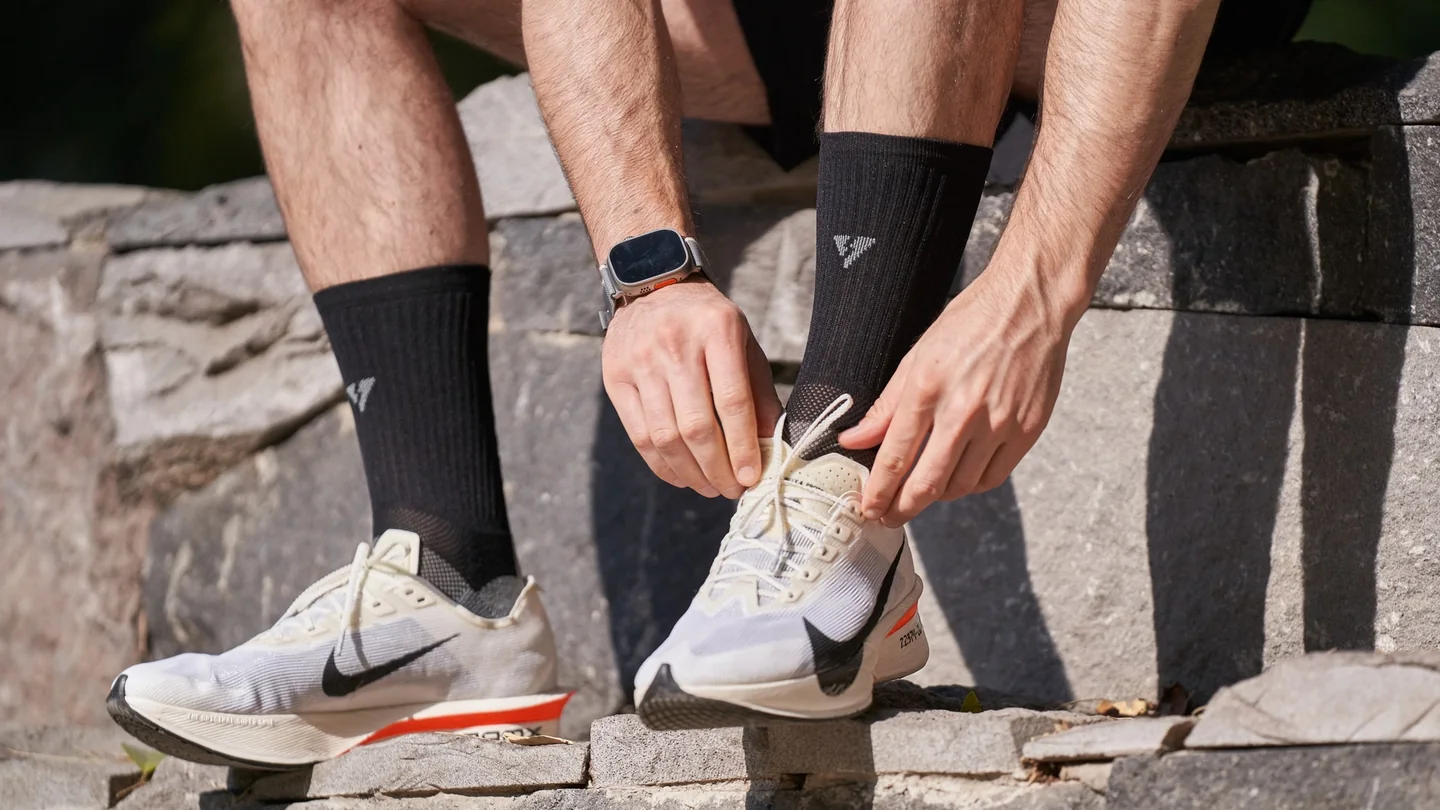
The right footwear can make a noticeable difference when the plantar fascia becomes inflamed or easily irritated. In the case of men’s sports shoes designed for this problem, what matters most is not just the softness of the midsole, but the balance between cushioning, stability, toe-box space, and a geometry that does not force the foot to work too hard with every step.
There is no miracle shoe, but there are better-designed models to relieve load on the heel and arch, reduce repeated impact, and better support the mechanics of the stride. For running, walking, or working out at the gym, that fine-tuning matters more than it seems: a poor distribution of pressure can turn a manageable discomfort into persistent pain that affects every session.
What a foot with a sensitive fascia really needs
The plantar fascia is a band of tissue that connects the heel to the front of the foot and acts like a taut cord that helps support the arch. When it is overloaded, pain is usually concentrated on the inner side of the heel, especially when getting up in the morning or taking the first steps after sitting for a while. In men who run frequently, walk a lot, or combine standing work with sport, that repeated tension can worsen with unsuitable footwear.
The priority is not cushioning alone. An overly soft shoe without structure can sink in like a mattress that is too empty and leave the foot out of control. By contrast, a well-designed model combines a stable base, a smooth transition, and support that prevents sudden twists. The desired sensation is closer to stepping on a firm surface with an elastic layer on top than walking on a sponge.
The height of the heel relative to the forefoot also matters, what is known as the drop. In many cases, a medium or high drop, usually between 8 and 12 millimeters, reduces some tension on the fascia and the Achilles tendon. It is not a universal rule, but it is a useful clue for those who feel relief when the heel sits a little higher and the landing feels less aggressive.
What a men’s shoe aimed at this problem should be like
Cushioning should feel generous but controlled. Materials such as advanced EVA, energy-return foams, or lighter compounds help filter impact, but it is best to avoid extremes. A shoe that is too hard punishes the heel; one that is too soft can blur the stride and increase fatigue in the midfoot. The ideal is a gentle landing followed by a stable toe-off.
The last is just as important as the midsole. If the forefoot is too tight, the toes are compressed and the arch works worse. If there is too much volume, the foot slides and blisters or an insecure landing appear. In a men’s fit, where wide sizes and somewhat larger feet are often sought, toe-box space and midfoot hold must be carefully checked. A good fit holds without strangling.
Lateral stability is another critical point. The shoe does not need to be stiff or harsh, but it should keep the foot aligned as fatigue builds. Wide bases, well-designed sidewalls, and subtle heel counters help prevent the landing from collapsing inward. For anyone suffering from plantar discomfort, that small margin of control can reduce strain on the fascia with every stride.
The sensations worth looking for when trying them on
The most useful test is not walking two steps on a carpet, but sensing how the shoe responds when body weight is loaded naturally. The heel should come down smoothly, without a harsh impact, and the arch should not feel an excessive void under the foot. If the first impression is one of instability, initial comfort can turn into fatigue later on.
The transition from heel to toe should flow. With a sensitive fascia, abrupt changes are noticed quickly: a shoe that forces a harsh push-off usually asks more of the sole. That is why balanced geometries, with a moderate rocker or gentle rocking motion, are useful, as they encourage a less traumatic toe-off. The goal is not to run faster, but to make each step cost the foot a little less.
It is also worth checking the collar and tongue. A well-padded heel does not solve everything, but it does reduce friction and improves the feeling of lock-in. If the heel slips, the plantar area has to work harder to stabilize the whole. And if the tongue presses too much on the instep, overall fit suffers. They are small details, although with this kind of discomfort, details weigh like stones.
Running, walking, or training: not everything calls for the same shoe
For running, the goal is to combine protection and continuity. Runners with sensitive fascia usually benefit from daily trainers, more protective than racing flats and less extreme than competition-maximized models. The priority is to add miles with less punishment on the initial impact and with a base that does not shift when fatigue arrives late in the session.
For walking many hours, the profile changes. Here, heel stability, lasting comfort, and a feeling of constant support matter more. A running model with a good base can work very well, but not all offer the same feel in prolonged use. Some shoes seem perfect at a jogging pace and yet become tiring at the end of a long day on your feet.
In the gym, the demands are different. If there are strength exercises, changes of direction, or machine work, it is important that the shoe is not too tall or unstable. A wide base and good floor grip provide security. For mixed sessions, where treadmill, elliptical, and weights are combined, the middle ground is usually the smartest choice: enough cushioning, but without losing composure.
Common mistakes that worsen plantar pain
One of the most common mistakes is choosing based on an immediate soft feel. That cloud-like touch can feel pleasant in the store, but if the shoe lacks control, the foot ends up doing extra work to stabilize itself. That overload eventually takes its toll on the fascia, especially in people with a high arch, rigid foot, or a history of previous discomfort.
Another classic mistake is wearing sizes that are too snug. When running, the foot expands with heat and effort, and in men with insoles, orthotics, or slightly long toes, that margin becomes even more important. If the toe box is too short, the toes claw at the ground and the arch becomes more tense. The correct size leaves enough room for movement without letting the foot swim inside the shoe.
It is also problematic to extend the life of a worn-out model. The midsole loses responsiveness with use, the outsole wears down, and support no longer functions the same. In frequent training, replacement usually comes sooner than it seems; a tired shoe can stop protecting just when the runner thinks nothing has changed. That invisible wear is one of the great allies of persistent pain.
What features usually deliver better results in men with fascia pain
Models with medium or high cushioning usually work well for profiles seeking to reduce impact without losing a reasonably firm stride. Brands strongly focused on training running have developed platforms with lightweight, stable foams designed to rack up miles without making the foot feel every strike like a hammer blow. They are not always the fastest, but often the most rewarding.
Slightly wider lasts are also gaining ground. When the foot has room to expand, the arch is not as compressed and the stance phase becomes more natural. This is especially useful in men with a wide forefoot, claw toes, mild bunions, or a tendency to swell after long periods of activity. Real comfort often comes from not fighting your own foot.
Moderate stiffness can be an ally. Instead of an overly flexible shoe that forces every muscle to compensate, some runners feel relief in models with a bit more structure in the midfoot. That consistency helps prevent the arch from collapsing on every impact and makes the heel feel less exposed. It is not armor, but a discreet handrail.
The role of insoles, socks, and daily load
Insoles can complement footwear when there is a well-defined issue and professional guidance. In this kind of pain, a favorable shoe is not always enough if the fascia is very irritated or if there is a specific mechanic that requires correction. The combination of insole and shoe should leave enough space inside the shoe to avoid squeezing the foot.
Socks matter more than they seem. A fabric that reduces friction, improves fit, and keeps the foot dry prevents small rubs that, when added up, alter the stride. In long sessions, a poorly placed seam can change the way you land. It does not solve plantar fasciitis, but it does remove noise from the system, and that sometimes matters.
Outside training, daily load still adds up. Walking a lot on hard floors, standing at work, or wearing flat, worn-out shoes can irritate the fascia even more. That is why proper sports footwear makes sense not only for running, but also for everyday routines. The sole does not distinguish between training and daily life; it only feels accumulation.
Which brands and model families tend to perform better in this area
Some names appear frequently in recommendations for sensitive fascia because they have developed training shoes with good cushioning and reasonable support. Families from ASICS, Brooks, New Balance, Hoka, Saucony, Mizuno, or Nike often offer variants that fit this profile, although the outcome depends more on the specific model than on the brand itself. Within each catalog, very different solutions coexist.
In real-world use, daily training models are usually more interesting than extremes. Max-cushioned shoes can soften impact, but they do not always hold the foot well. Very light shoes may be insufficient for a demanding foot. The middle ground, with a wide base, good foam, and stable transition, usually contains most of the best choices for runners who want to keep moving without punishing the fascia.
The final choice must respect the biology of the foot. A heavier runner does not need the same as a lighter one; a moderately pronating foot does not ask for the same as a neutral one; an athlete who runs three times a week does not demand the same as someone who trains daily. In this area, the right shoe is the one that adapts to the body, not the other way around. And that nuance, seemingly small, changes the entire experience.
A sensible purchase starts by listening to the foot and reading the terrain
The best sports shoe for a man with a delicate fascia is not the most famous one or the one most often seen in shop windows, but the one that reduces load where it hurts, stabilizes where it fails, and supports where the body tires. Cushioning, drop, last, and support form a whole; if one of those elements fails, the rest lose effectiveness. The foot works like a living architecture, and every piece matters.
Choosing well avoids repeat purchases and prolonged discomfort. Footwear with too little space, no structure, or foam that sinks too much may seem comfortable for minutes and awkward for weeks. By contrast, a good combination of support, moderate softness, and a stable base can return to the runner a nearly forgotten feeling: stepping and moving on, without every stride sounding inside the heel like an alarm.
The difference lies in how the shoe responds when the body is already tired. That is where everything is revealed: whether it protects, guides, or gets in the way. In the case of the plantar fascia, that final test does not allow tricks. What today seems like a simple design detail may tomorrow translate into less pain, less tension, and a much more manageable stride.
Este artículo contiene enlaces de afiliado: si compras a través de ellos, se genera una pequeña comisión sin coste adicional para ti. Más información.



How to prevent thigh chafing: causes and real solutions

Women’s running windbreakers: seven jackets and how to choose

Do more workouts get rid of soreness? A guide for runners

Jaén Half Marathon 2026: Record 3,800 Runners Registered

Men’s short running tights: how to choose the right pair

World Triathlon confirms data breach involving medical data

Izan Edo targets podium at Miyazaki World Cup

María Pérez ranks ninth in World Athletics’ 2026 top ten

Dos Santos, Duplantis and Sawe: World Athlete of the Year finalists

San Silvestre Vallecana 2026: 42,000 places, prices and start times

 Races4 months ago
Valencia Half Marathon 2027: date and registration

 Races4 months ago
Valencia Marathon 2026: entry, ballot and course

 Reviews and Comparisons4 months ago
Asics Gel-Roadmiles 3 for men: review and current price

 Reviews and Comparisons4 months ago
Asics Gel Sonoma 8 Gore-Tex: complete analysis for trail and rain

 Sneakers3 months ago
Saucony Endorphin Pro 4: full review and verdict

 News5 months ago
Strava API 2026: what changes for clubs, challenges and runner apps?

 Reviews and Comparisons5 months ago
Nike Alphafly 3: opinions, sensations, and real key points

 Reviews and Comparisons4 months ago
Under Armour running shoes review 2025-2026: models and key features

 Sports Equipment4 months ago
Shoe sizes in cm: a clear guide to getting the right fit for your footwear

 Sneakers3 months ago
Skechers GO RUN Consistent 2.0 analysis: comfort and limits

 News5 months ago
Valencia Marathon 2026 route: key tips to train and run better

 Sneakers4 months ago
Adidas Adizero Boston 13 for men: review and verdict