Sneakers
Red and white running shoes: a practical buying guide
How to choose a striking yet functional pair according to your pace, surface, fit and real running needs.

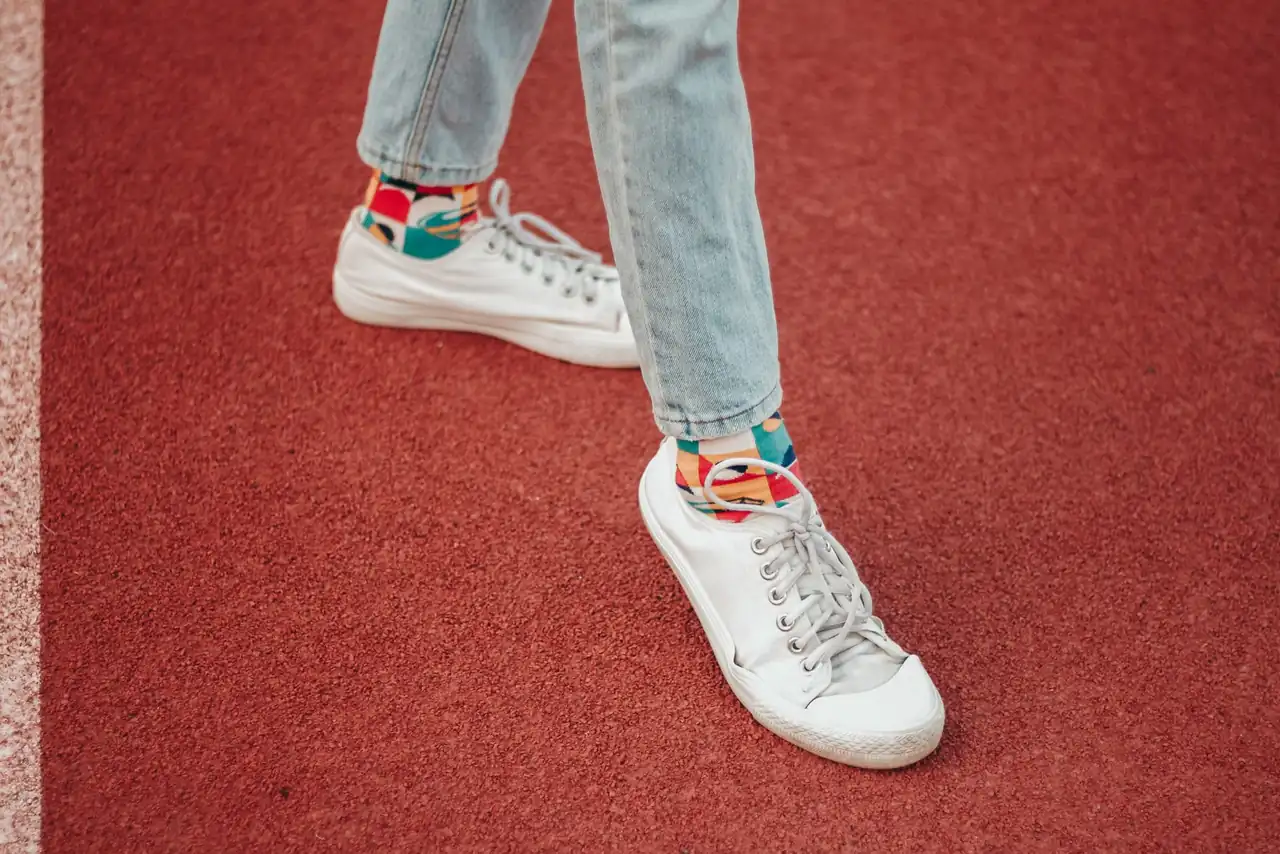
Red brings visual presence while white makes the design look lighter, but colour does not determine performance. Running shoes should be selected for their fit, cushioning, stability and intended surface, even when the design is the first detail to catch the eye. Red and white versions are available for road running, easy training, faster sessions and even compact dirt paths, with important differences between them.
The right choice combines appearance and function: a soft midsole can feel pleasant on long easy runs, while a firmer construction may make pace changes easier. Width, ventilation, grip and usual distance also matter. Red and white shoes can be found among daily trainers, highly cushioned models, lightweight options and shoes with stability features.
Colour attracts attention, but geometry decides
Red and white shoes stand out easily against grey asphalt and can create a clearly athletic look. White also contrasts with red details and makes the silhouette appear cleaner; the practical drawback is that dirt, dust and splashes show sooner than on a dark shoe. For anyone running regularly through parks or on wet streets, this affects maintenance.
From a technical perspective, colour does not change how the shoe responds. Two colourways of the same model usually share the same outsole, midsole and structure, although materials can differ between seasons or editions. It is therefore more useful to read the model specifications and examine its construction than to associate a bright shade with greater speed or protection.
A road shoe should provide a smooth transition from heel to forefoot and an outsole able to withstand repeated contact with hard surfaces. For compact dirt paths, a slightly more protective base and a rubber pattern that sheds small stones and dust are useful. The appearance may remain the same, but the outsole geometry must match the terrain where most miles will be accumulated.
Which runner suits each type of shoe
Daily trainers are the most logical option for someone running two to five times a week, combining easy runs with occasional progressive sessions and looking for one pair for most of the calendar. They usually prioritise a stable ride, durable materials and balanced cushioning. In red and white, this profile is common because it combines a distinctive look with versatile everyday use.
Lightweight and responsive models are more suited to faster paces, intervals, fartlek sessions or races. Their lower weight can make the stride feel agile, but that advantage does not always make them ideal for all-day walking or slow easy runs. A firmer foam and more responsive outsole may demand more from the calves and soleus, especially after switching from a very soft shoe.
Highly cushioned models are recognisable by their generous midsole, plush ride and, in some cases, a broad platform that improves stability. They suit comfortable mileage at relaxed paces, although they are not necessarily fast. More foam does not automatically mean more comfort: extra cushioning cannot compensate for a loose heel or cramped toes.
The surface completely changes the choice
Road running creates uniform and repeated impact, particularly on avenues, cycle paths and concrete pavements. A suitable shoe should have enough rubber in high-wear areas and a midsole that absorbs impact without collapsing excessively. The tread can be relatively flat because continuous contact and a regular transition are the priority.
Hybrid models work well on urban parks and compact dirt paths, provided the ground is dry and does not include deep mud, roots or technical slopes. They often feature modest lugs and an upper that offers some protection from dust. They should not be confused with trail shoes: a simple dirt path does not require the same grip as a mountain trail.
Loose dirt, gravel, mud and uneven surfaces call for trail-specific footwear with different protection and traction. Its lugs penetrate the ground more effectively and its upper may include reinforcements against impact and abrasion. An urban red and white shoe may look appealing in a photograph, but it can feel unsafe on a wet descent if its outsole was not designed for that environment.
Weather also changes the experience. In summer, an open mesh helps release heat, while in winter or light rain a denser construction may be preferable. White shows stains sooner, but cleaning should not involve harsh products that damage mesh or weaken certain finishes. A soft brush, lukewarm water and shade drying are usually enough.
Cushioning, stability and response: differences you can feel
Cushioning describes how the shoe manages load during foot strike. Soft foam can provide immediate comfort, like walking on a padded surface, but it may also make the transition feel less direct. Firmer foams often offer a more defined platform and quicker response. The decision depends on body weight, pace, running technique and personal tolerance.
Stability does not necessarily mean correcting the foot with a rigid component. Many modern shoes create it through a broad base, sidewalls, a well-grounded outsole and a platform that limits uncomfortable movement without locking the foot. This global stability can be useful when fatigue appears, especially during long runs or late in a race.
Responsiveness refers to the shoe’s ability to return some energy during the transition. It is noticeable when the forefoot supports the push-off and the shoe does not feel stuck to the ground. A lively ride is not automatically better for every use. Recovery runs may benefit from a calmer platform, while intervals demand a fast transition and a structure that remains controlled at speed.
Drop, the height difference between heel and forefoot, also influences the ride. A higher drop may reduce some of the work required from the ankle and feel familiar to many runners, while a lower drop changes the loading sensation and may require adaptation. There is no universally correct figure; the important point is avoiding a sudden change to a very different geometry.
How to get the size and fit right
Size should be checked at the end of the day or after walking, when the foot is often slightly more swollen. The longest toe should have a small amount of room in front, enough to avoid hitting the toe box on descents and during long runs. That space should not become excessive looseness: if the foot slides, rubbing and loss of precision become more likely.
Width deserves as much attention as length. Some shoes use a narrow last that closely wraps the midfoot, while others provide more room around the toes. A wide foot inside a narrow toe box can cause pressure, numbness and sore toenails; a narrow foot in a generous last may move inside the upper. The correct fit holds the foot securely without squeezing it.
The heel should be locked in place without requiring excessive lace tension. An extra eyelet can improve hold, but it should not be used to compensate for the wrong size. When trying the shoe, walk, flex the ankle and simulate braking. Persistent heel rubbing or localised toe pressure deserves attention before the shoe is used for a long session.
Socks also change the fit. Thick socks reduce interior space, while very thin ones can allow more movement. The most reliable test uses the type of socks normally worn for running and the insoles that will be used during training. Two pairs may have the same red and white colourway, but their comfort will depend on the relationship between foot, upper and outsole.
Materials, durability and keeping white areas clean
Mesh uppers improve ventilation and reduce weight, which is particularly noticeable during warm months in Valencia. In return, they may be more vulnerable to contact with branches, kerbs or rough ground. Heat-welded reinforcements remove some seams and help hold the foot, but they do not turn a road shoe into a mountain model.
The outsole may show wear first at the heel for runners who land there, although wear patterns should not be judged from a single photograph. It is also important to notice whether the midsole has lost height, the ride feels compressed or the shoe no longer provides the same control. Mileage is an approximate reference, not a universal expiry date.
A pair may wear out sooner if it is used for all-day walking, driving, training on abrasive surfaces and running in rain without proper drying. It may last longer when rotated with another pair and allowed to recover between uses. Rotating shoes reduces concentrated wear and makes it easier to notice when a model no longer feels stable.
To preserve a white and red colourway, remove dry dirt before wetting the shoe, hand-clean delicate areas and avoid washing machines, tumble dryers and prolonged direct sunlight. Heat can deform materials, harden adhesives and alter the fit. Cleaning should restore function, not simply chase the appearance of a brand-new product.
Which brands and shoe families commonly offer this design
The market includes red and white options from many different manufacturers. Some brands use vivid colours in daily trainers, while others reserve red for racing editions or combinations with white, black and reflective details. Lifestyle shoes inspired by running also appear, but an athletic appearance does not mean they are ready for regular mileage.
Common running families include neutral daily trainers, stability lines for runners seeking a more guided platform and mixed-use shoes for fast training and racing. Within one brand, the difference between ranges may be greater than the difference between colourways. The model family matters more than the colour in the photograph, because it determines the foam, weight, outsole and intended use.
Red and white versions may appear from brands such as Brooks, ASICS, adidas, Nike, New Balance, Puma, Hoka, Saucony, Mizuno, Joma and On, although availability changes with season, size and market. A specific technology should not be attributed to every model from one company: cushioning and stability systems differ across product families.
A running model must also be distinguished from a casual shoe with an athletic appearance. The latter may be comfortable for walking and easy to combine with urban clothing, but it often lacks the outsole, fit and impact management needed for regular running. The commercial label is not enough: check the stated purpose and the actual construction.
When to use red and white shoes for running
A striking design can work well for urban training, local races and sports commuting, especially when paired with neutral clothing. In low light, pale details can improve visual contrast, although they do not replace reflective elements or proper lighting. Safety depends on the combination of clothing, route, visibility and behaviour.
For an eight- or ten-kilometre easy run, the priority should be a familiar and comfortable ride, not the visual impact of the shoe. For racing, some runners prefer a lightweight model while others need the protection of a more substantial shoe. Distance alone does not decide the issue: a half marathon can demand more cushioning from one runner than a 5K does from another.
Wearing brand-new shoes on race day is poor practice, even when the size appears correct. The upper, insole and midsole need a few sessions to settle, and the runner should check for rubbing or discomfort. A sensible transition begins with walks and short runs before extending the time spent in the shoes.
Shoes cannot solve persistent pain by themselves. If discomfort worsens, changes the stride or remains after training, activity should stop and a healthcare professional should be consulted. Footwear is one part of the system, not a treatment for an injury or a guarantee against one.
A sensible purchase starts beyond the shop window
Price provides context, but it should not become the only criterion. The reference material includes running shoes from well-known brands at roughly 35 to 190 euros, with prices varying by model, season, discounts and size availability. A discount does not turn a trail model into a road shoe or fix a last that does not fit.
A useful comparison should consider category, approximate weight, midsole height, outsole type, available width and intended purpose. Exchange conditions also matter because a suitable size in one brand may not match another exactly. Conversions between European, US and UK sizing systems do not replace trying the shoe on.
Red and white create a strong visual identity and, when properly selected, can suit both everyday training and racing. The truly important decision happens below the surface: in the contact between rubber and ground, in the pressure around the toes and in the stability remaining when the legs become tired. The best shoe is the one that supports its real use, not the one that only stands out on a screen.
A well-considered purchase leaves room for personality without sacrificing basic biomechanics. Colour may be the starting point, the image that stops the eye; fit and construction decide whether the pair remains useful once the shine of the first outing fades and the miles begin to accumulate.
Este artículo contiene enlaces de afiliado: si compras a través de ellos, se genera una pequeña comisión sin coste adicional para ti. Más información.



How to prevent thigh chafing: causes and real solutions

Women’s running windbreakers: seven jackets and how to choose

Do more workouts get rid of soreness? A guide for runners

Jaén Half Marathon 2026: Record 3,800 Runners Registered

Men’s short running tights: how to choose the right pair

World Triathlon confirms data breach involving medical data

Izan Edo targets podium at Miyazaki World Cup

María Pérez ranks ninth in World Athletics’ 2026 top ten

Dos Santos, Duplantis and Sawe: World Athlete of the Year finalists

San Silvestre Vallecana 2026: 42,000 places, prices and start times

 Races3 months ago
Valencia Half Marathon 2027: date and registration

 Races3 months ago
Valencia Marathon 2026: entry, ballot and course

 Reviews and Comparisons4 months ago
Asics Gel-Roadmiles 3 for men: review and current price

 Reviews and Comparisons4 months ago
Asics Gel Sonoma 8 Gore-Tex: complete analysis for trail and rain

 Sneakers3 months ago
Saucony Endorphin Pro 4: full review and verdict

 News5 months ago
Strava API 2026: what changes for clubs, challenges and runner apps?

 Reviews and Comparisons5 months ago
Nike Alphafly 3: opinions, sensations, and real key points

 Reviews and Comparisons4 months ago
Under Armour running shoes review 2025-2026: models and key features

 Sports Equipment4 months ago
Shoe sizes in cm: a clear guide to getting the right fit for your footwear

 Sneakers3 months ago
Skechers GO RUN Consistent 2.0 analysis: comfort and limits

 News5 months ago
Valencia Marathon 2026 route: key tips to train and run better

 Sneakers4 months ago
Adidas Adizero Boston 13 for men: review and verdict