Training
Elliptical trainer benefits for runners
Improves cardio, protects the joints, and activates legs, arms, and core in highly effective sessions.

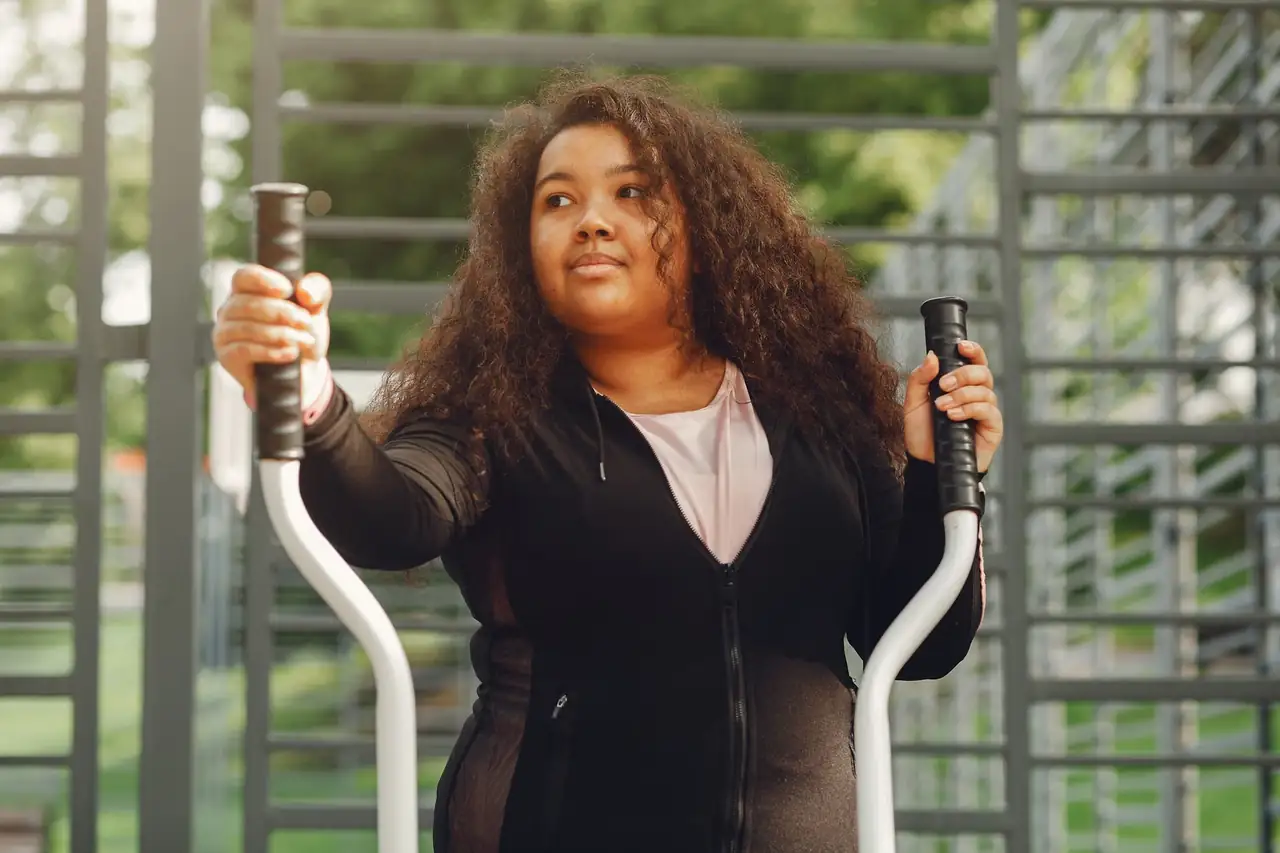
The elliptical trainer can be a useful option for runners: it raises your heart rate while reducing repeated impact on your knees, ankles, and hips. That balance makes it a practical way to work on fitness and add cardio when you want variety in your training or need to reduce your running load.
Its smooth movement, similar to walking or running but without the repeated impact against the ground, makes it a very versatile tool. It serves to accumulate cardio minutes, increase energy expenditure, and work several muscle groups at once. It does not promise miracles, but it does provide a solid foundation: consistency, low impact, and full-body work in a single routine.
An intense cardio workout that does not beat up the body
The elliptical’s biggest advantage is obvious from the first few minutes. The heart speeds up, breathing becomes deeper, and the body enters sustained effort that improves aerobic capacity. That cardiovascular stimulus is one of the most valuable in any exercise program, because it helps move blood more efficiently, tolerate prolonged effort, and recover faster between sessions.
The difference compared with running on asphalt or jumping rope lies in the impact. Every stride on a treadmill or a street transmits repeated load to the joints; on the elliptical, by contrast, the movement is continuous and much gentler. Less impact does not mean less intensity: with properly adjusted resistance and a demanding cadence, the workout can be very serious.
That is why it fits so well in return-to-exercise phases, for people with excess weight, or for those who have persistent discomfort that makes repeated impacts inadvisable. It also makes sense for athletes who want to add cardio volume without overworking their legs. In a way, it is like swapping a bumpy road for a smooth track: the effort is still there, but the ride becomes more tolerable.
Which muscles it really activates
The image of a leg machine falls short. By using the moving handlebars, the elliptical also involves the arms, shoulders, and upper back. The result is a full-body movement that, when performed well, distributes the load fairly evenly. Quadriceps, glutes, hamstrings, calves, abs, and upper body all take part to a greater or lesser extent depending on resistance, posture, and grip style.
In the lower body, pushing on the pedals mainly activates the quadriceps and glutes, while the return phase and control of the movement recruit the hamstrings and calves. In the trunk, the abs work as a silent support: they stabilize posture, prevent swaying, and help keep force from being lost in sloppy movement. In the upper body, the arms push and pull, but they also help coordinate rhythm and distribute effort.
It is worth, however, not overstating the strength component. The elliptical tones and keeps many muscles active, but it does not replace resistance training if the goal is to gain size or strength in depth. Its natural territory is different: improving tone, sustaining endurance, and giving continuity to muscular work without exhausting the joint system.
Why it helps burn calories
Calorie burn depends on multiple factors, such as body weight, intensity, duration, and the machine’s resistance level. Even so, the elliptical is usually among the most effective indoor cardio options because it engages large muscle groups and allows relatively high effort to be sustained for a good amount of time. The more muscles involved, the greater the energy demand.
In a moderate 30- to 45-minute session, many people fall in an approximate range of 300 to 500 calories; at higher intensity, expenditure can rise quite a bit more. It is a rough estimate, not a universal promise, but it helps explain why it is so often used in plans aimed at fat loss or weight control. The combination of duration and muscle mass involved makes the difference.
That calorie expenditure should not be understood as a kind of instant balance sheet, but as one more piece of the overall equation. The elliptical can help create the right context for losing fat or preventing weight gain, although the final result always depends on the whole package: diet, rest, frequency, and type of training. It is an effective piece, but not the only one.
An ally for protecting the joints
Low impact is the argument that comes up most often, and for good reason. In the knees, ankles, and hips, accumulated impact can take its toll over time, especially if technique is poor, volume is excessive, or there is excess weight. The elliptical reduces that mechanical strain and offers a much gentler transition for people sensitive to this kind of load.
That makes it an especially interesting option during rehabilitation phases or in periods when it makes sense to reduce joint stress without giving up cardio. It can also be useful in deload weeks, when the legs are already loaded from training and you need to move without adding more pounding. The smoothness of the movement is no small detail: often it is what makes regular training possible.
That said, low impact does not mean complete absence of discomfort. Poor posture, excessive resistance, or an unbalanced cadence can create discomfort in the lower back, hips, or feet. The machine helps, yes, but it remains important to keep the trunk stable, place the foot properly, and adjust the stride to each user’s body.
Aerobic endurance, stamina, and a sense of control
One of the less flashy but most valuable benefits is improved endurance. Over time, the body learns to move more oxygen, sustain effort better, and delay the onset of fatigue. You notice that not only when raising the intensity on the elliptical, but also outside it: when walking quickly, climbing stairs, or linking together everyday efforts.
For runners, cyclists, and endurance athletes, the elliptical can work as a complement when the goal is to add minutes without adding more impact. It also fits in weeks when the load on the legs is already high from other training. It is cardio that adds up without wearing you down as much, something that is almost priceless in periods of heavy activity.
That sense of control has no small psychological value. The machine allows you to regulate resistance, speed, and duration quite precisely, and that ability to adjust effort gives room to work by feel or toward specific goals. There are no traffic surprises, no unexpected hills, and no uneven ground: the environment is measured, and that makes consistency easier.
Beyond cardio: coordination, posture, and stability
The elliptical also requires a minimum of coordination between arms and legs. It does not seem like much until you try to hold a lively pace for several minutes. The body must synchronize push, pull, breathing, and posture without losing efficiency, and that coordination adds a neuromuscular component that often goes unnoticed.
In addition, when used properly, it forces you to maintain fairly clean body alignment. The back should not collapse, the shoulders should not creep up toward the ears, and the abs need to act like a control belt. Posture matters as much as speed, because poor technique reduces efficiency and can overwork the lower back or neck.
That stability work is especially interesting for people who spend many hours sitting. The elliptical activates the hips, wakes up the posterior chain, and helps break up some stiffness, even if only for the duration of the session. It does not correct the effects of sedentary living by itself, but it does offer a useful way to counterbalance them.
How it shows up in everyday life
The benefits do not stay in the gym. Improving aerobic capacity has very concrete effects in daily life: climbing a long flight of stairs stops feeling like a small battle, brisk walking becomes more comfortable, and the sensation of breathlessness takes longer to appear. That transfer is one of the reasons so many people in the general public turn to this machine.
There is also a visible improvement in effort tolerance. With the same amount of time, someone who trains regularly often feels less fatigue at the end of the day and recovers better after small demands. The elliptical builds physical base, and that base shows up in the body before dramatic aesthetic changes appear.
In weight control, it also helps establish a more stable routine. Because the movement is accessible and fairly predictable, many people manage to stack up more training weeks than with other, more punishing activities. And in fitness, consistency matters more than an isolated heroic effort.
Which kinds of sessions get the most out of the machine
Not all elliptical sessions aim for the same thing. There are gentle workouts for recovery, moderate work to maintain fitness, and more intense blocks that raise heart rate significantly. That flexibility is part of its appeal. The same machine can be used to get moving again after a break or to really push during demanding intervals.
Steady, uniform-pace sessions are usually the most comfortable for accumulating minutes and improving the aerobic base. Intervals, on the other hand, raise the bar: they alternate hard segments with brief recoveries and create a more vivid sense of effort. Well-dosed intensity is what determines the elliptical’s real usefulness, not just its presence in the room.
Resistance level also matters. A very light machine with no load may fall short, while an excessive level can distort technique and make the movement clumsy. Finding the middle ground is part of the exercise’s value: sweat, yes, but without turning every pedal stroke into a fight against your own movement.
What is worth knowing before using it often
The apparent simplicity can be misleading. Getting on and moving your legs is easy; using the machine well takes a bit more attention. The stride has to fit your height, the feet should be well placed, and the trunk should not sway excessively. They are small details, but they change the outcome.
It is also worth thinking about space, noise, and the machine’s stability. At home, a compact elliptical may be more practical than a huge, heavy model, especially if it will be used several times a week. In the gym, by contrast, what often matters more is smooth movement, the quality of the resistance system, and the overall feeling of comfort. The best machine is the one that lets you train consistently, not the one that looks best on a spec sheet.
And there is one last idea that should be clear: the elliptical works best when it is part of a larger whole. Combined with strength work, mobility, and some variety in cardio, it offers a far more interesting return than when used as the only tool. It is not a shortcut, but it is a highly valuable resource for anyone who wants to train smartly and avoid beating up the body more than necessary.
How runners can use the elliptical to complement training
For runners, the elliptical lets you work on cardiovascular endurance without adding more strides or impact. It can complement your runs when you want a different stimulus, want to maintain aerobic training, or need to temporarily reduce your running load. It is not a complete substitute for running: long runs and specific sessions still help your body adapt to the movement, terrain, and pace of racing.
Match the session to the rest of your plan. An easy effort can suit an active recovery day; higher resistance or a faster cadence makes the workout more demanding and should be treated accordingly. Start at an intensity that lets you keep a stable posture and smooth movement. If the machine has moving handles, use them without hunching or leaning heavily on them: keep your torso controlled and your feet supported on the pedals.
Notice how your legs feel during and after the session. Fatigue that changes your running form, discomfort that gets worse, or poorer-than-usual recovery are signs to lower the resistance, shorten the workout, or rest. Avoid a hard elliptical session just before a long run or intervals if your legs already feel heavy. If pain or symptoms persist, consult a healthcare professional. The machine is most useful when it helps you add adaptable aerobic work without neglecting recovery or the specific demands of your running goals.
A discreet machine, but very effective when used with purpose
The elliptical does not have the glamour of other disciplines or the epic aura of asphalt or trail running, but it brings something that is rarely unwelcome: balance. It lets you add cardio, move many muscles, control impact, and sustain effort with relative safety. In a landscape full of noisy solutions, its virtue is almost domestic: doing the job well, without much ceremony.
That is why it keeps showing up again and again in gyms and homes. It may not dazzle, but it delivers. And in a context where useful exercise is the kind you can repeat week after week, that reliability is worth more than any flashy promise. The elliptical bike does not replace everything, but it does hold a very solid place among the most effective tools for improving fitness wisely and with little joint stress.



How to prevent thigh chafing: causes and real solutions

Women’s running windbreakers: seven jackets and how to choose

Do more workouts get rid of soreness? A guide for runners

Jaén Half Marathon 2026: Record 3,800 Runners Registered

Men’s short running tights: how to choose the right pair

World Triathlon confirms data breach involving medical data

Izan Edo targets podium at Miyazaki World Cup

María Pérez ranks ninth in World Athletics’ 2026 top ten

Dos Santos, Duplantis and Sawe: World Athlete of the Year finalists

San Silvestre Vallecana 2026: 42,000 places, prices and start times

 Races3 months ago
Valencia Half Marathon 2027: date and registration

 Races3 months ago
Valencia Marathon 2026: entry, ballot and course

 Reviews and Comparisons4 months ago
Asics Gel-Roadmiles 3 for men: review and current price

 Reviews and Comparisons4 months ago
Asics Gel Sonoma 8 Gore-Tex: complete analysis for trail and rain

 Sneakers3 months ago
Saucony Endorphin Pro 4: full review and verdict

 News5 months ago
Strava API 2026: what changes for clubs, challenges and runner apps?

 Reviews and Comparisons5 months ago
Nike Alphafly 3: opinions, sensations, and real key points

 Reviews and Comparisons4 months ago
Under Armour running shoes review 2025-2026: models and key features

 Sports Equipment4 months ago
Shoe sizes in cm: a clear guide to getting the right fit for your footwear

 Sneakers3 months ago
Skechers GO RUN Consistent 2.0 analysis: comfort and limits

 News5 months ago
Valencia Marathon 2026 route: key tips to train and run better

 Sneakers4 months ago
Adidas Adizero Boston 13 for men: review and verdict