Training
What the elliptical is for: benefits for runners
Improves endurance, activates muscles, and protects joints with a very complete aerobic workout.

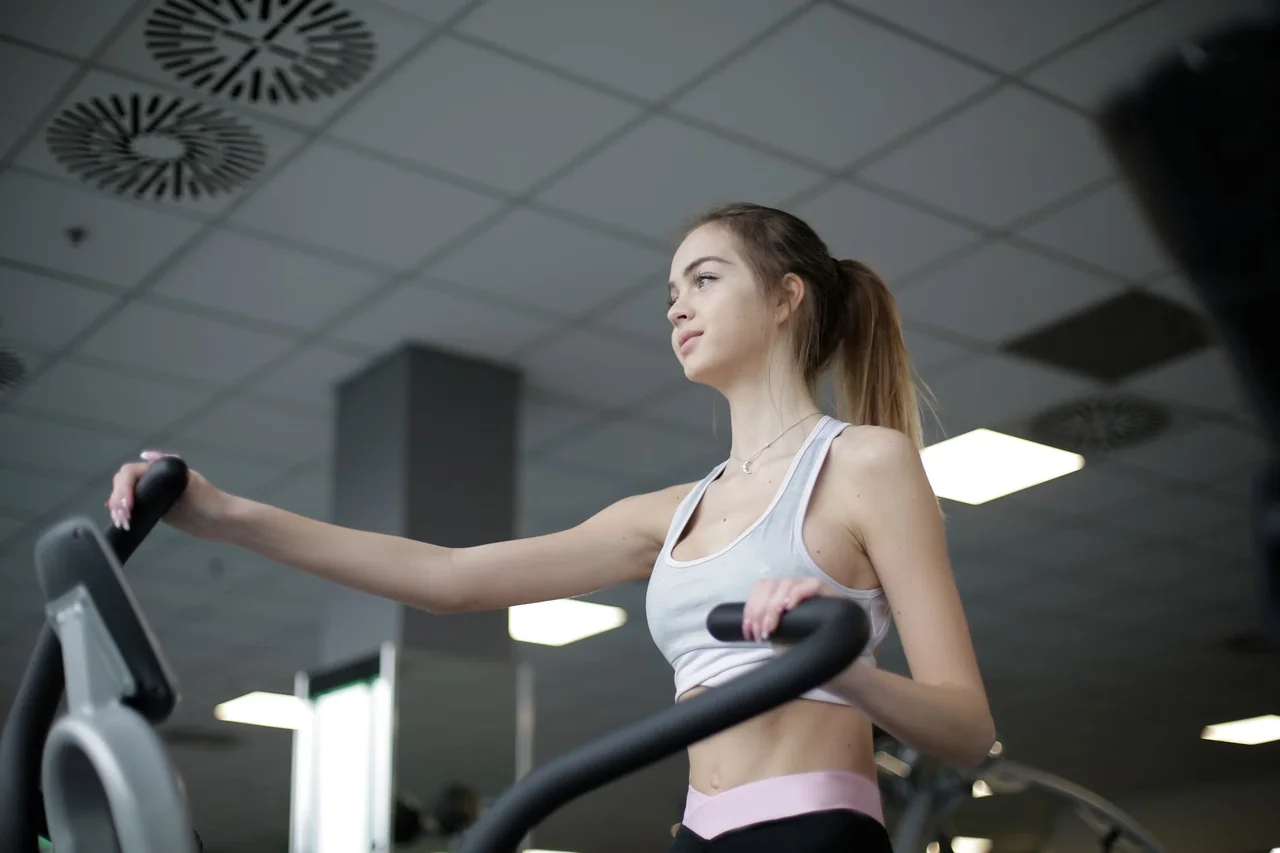
For runners, the elliptical can train the cardiovascular system, work much of the body with low impact, and support longer sessions with less stress on the joints. It does not reproduce the movement or impact of running, but it raises your heart rate, engages your legs, arms, and core, and lets you build exercise time with a controlled feel. That makes it a useful complement to your runs, especially when you want cardio without adding another running session.
Its real value goes far beyond burning calories. In a single session, aerobic endurance, coordination, posture, and, to a lesser extent, the supporting strength of several muscle groups are all worked. That is why it has become a useful tool for anyone looking to lose fat, for those who want to add cardio without overloading the knees or hips, and for anyone who needs a steady option on recovery days or lighter training days.
A gentle cardio workout that moves more than it seems
The elliptical’s main advantage is that it provides low-impact aerobic exercise. The foot does not strike the ground like it does when running; instead, it follows a path guided by the pedals, and that mechanism reduces mechanical stress on the ankles, knees, and hips. In practical terms, the movement feels like a mix of brisk walking, climbing a slight incline, and rowing with your hands, although everything happens at a more continuous and steady pace.
That continuity is what makes it so interesting for accumulating cardiovascular work. The heart responds to the effort, breathing quickens, and the body learns to move oxygen to the muscles more effectively. With frequent use, that stimulus helps improve aerobic capacity, which is simply the ability to sustain effort for longer with less fatigue. In running, that base later shows up in easy runs, steady runs, or deload weeks when it is wise to reduce impact without stopping altogether.
It is also useful for those returning to movement after a period of inactivity. The body gets loaded, but it does not take the jolts of other impact sports. That difference makes it a reasonable entry point for rebuilding habits, always within a sensible progression and without turning the ease of use into an excuse to train without a plan. The machine supports you; it does not correct poor programming on its own or replace the rest of physical training.
Which muscles it really activates
The elliptical does not work only the legs, even if they are the first to feel the effort. In the lower body, the quadriceps, hamstrings, glutes, calves, and hip flexors all take part. That distribution depends on resistance, incline, cadence, and whether you actively push the pedals or let the machine do almost all the work. The more active the elliptical stride is, the more the posterior chain and hip extension are engaged.
The upper body also gets involved if the moving arms are used. Shoulders, biceps, triceps, chest, and back muscles participate as support, more in terms of endurance and coordination than maximum strength. It is not a substitute for resistance training, but it is enough of a stimulus to add energy expenditure and create a full-body feeling. That shared participation changes how the exercise feels: it stops being simple pedaling and becomes something more global.
The core supports much of the posture. The abs, obliques, and spinal stabilizing muscles keep the torso upright and organize the movement. When the core is engaged, the motion becomes cleaner and the body sways less, which helps both balance and movement economy. It is a quiet advantage, because it is not always visible in the mirror, but it is noticeable in the way the body handles the work without falling apart into small compensations.
Why it can help you lose fat without beating up the body
Fat loss depends first and foremost on the energy balance. The elliptical does not work magic, but it does make it easier to burn calories consistently, especially in moderate-intensity sessions that can be repeated several times per week. That repetition matters: an exercise that feels manageable is usually easier to keep doing over time than one that is more aggressive, and consistency matters more than the heroics of a single day.
Its advantage over other machines is the balance between effort and physical tolerance. A treadmill workout or an outdoor run may burn more in less time, but it also asks more of tendons, joints, and stabilizing muscles. The elliptical, by contrast, makes it possible to lengthen the session with less mechanical punishment. That makes it especially useful in phases when the goal is to add cardio volume without leaving the legs wrecked for the next training day.
Calorie burn varies greatly depending on weight, resistance, and intensity. There is no universal number, but 30 minutes can become meaningful energy expenditure for someone working at a medium or high pace. The key is to understand that energy use depends not only on the machine, but on how it is used: a smooth, passive cadence is not the same as an intense block with resistance and pace changes. The same machine can be an active walk or a serious cardiovascular workout.
Cardiovascular health, breathing, and overall fitness
The heart adapts to repeated effort with increasing efficiency. With regular aerobic exercise, the heart muscle strengthens and pumps blood more effectively, improving oxygen delivery to tissues and muscles. That effect is behind the relationship between physical activity and a lower cardiovascular risk, always within a broader lifestyle that also depends on rest, diet, and other habits.
Breathing also becomes more responsive. The body learns to sustain more efficient ventilation, handle effort better, and recover faster between intervals. For a runner, this type of cardio can serve as a complement during high-impact weeks, when the goal is to add aerobic work without adding another running session. For non-runners, the improvement translates into better tolerance for everyday effort, from climbing stairs to walking at a brisk pace.
There is a less visible but very real benefit: control over perceived effort. The elliptical allows precise intensity adjustments, and that resistance ladder teaches the body to recognize paces. That sensitivity is valuable for both athletes and people who simply want to move more. Not every workout needs to leave a brutal mark; sometimes improvement is built at an intermediate intensity that barely changes technique, but does change the ability to sustain work.
Joints, impact, and days when it makes sense to ease off
One of its strongest arguments is low joint impact. The knees do not take blows against the ground, and the ankle does not absorb each stride as it does in running. That makes it kinder for people with excess weight, joint discomfort, or a history of overload from training too many days in a row. For those profiles, the elliptical can be the bridge between total rest and continuous aerobic work.
It also fits well into deload or relative recovery periods. When the legs are already tired from strength sessions, hills, or accumulated mileage, a gentle elliptical block can move blood without adding too much stress. The goal is not to prove toughness, but to maintain the habit of moving while the body rebuilds tissue and reduces stiffness. In that context, the machine works almost like a dynamic massage, though with much more metabolic intention.
That does not mean it is a neutral option for everyone. Poor posture, excessive resistance, or pedaling too often with too little variety can cause discomfort in the hips, back, or knees. Low impact does not remove the need for technique. It is often seen as an easy machine, and it is, but ease of use does not replace attention to body alignment or load progression.
Posture, balance, and the pelvic floor
Posture improves when the torso stays stable and the movement comes from the hips and legs without collapsing the trunk. On the elliptical, the user has to maintain a relatively upright position while coordinating arms and legs. That forces the body to organize itself better, as long as you are not training hunched over the console or hanging off the handlebars. Posture is not corrected by machine magic, but it can be reinforced by well-executed repetitions.
Balance also gets a useful stimulus. Although the machine guides the movement, the body must maintain stability with each push and pull. That interaction between limbs and trunk improves the ability to hold position and control the center of gravity. It is not balance work as demanding as training on unstable surfaces, but it is continuous training for intermuscular coordination, which later shows up when walking, running, or simply moving smoothly.
For the pelvic floor, the advantage is clear compared with impact activities. Because there are no repeated landings, the pressure on that area is lower than in sports with jumping or intense running. That makes it a reasonable option for those seeking cardio with less load in that region, although it is always worth remembering that every body responds differently and that technique, breathing, and intensity remain decisive factors. A gentle machine does not erase poor effort management.
Beyond cardio: stress, adherence, and a sustainable routine feeling
One reason the elliptical remains in so many routines is that it reduces the psychological friction of training. Getting on, starting to move, and maintaining a steady pace requires less mental preparation than other, more complex forms of exercise. That simplicity encourages adherence, and adherence in health matters almost as much as the physiological stimulus. What you repeat for months usually changes the body more than what you do brilliantly but only once in a while.
It also helps relieve accumulated tension. Aerobic exercise promotes the release of endorphins and leaves a feeling of release that many people associate with mental clarity and a better mood. The point is not to promise a cure for stress, but to recognize that regular movement brings structure to the day, breaks up sedentary time, and offers a space for physical and mental breathing room. On hard days, that regularity can be more valuable than a heroic session.
The possibility of training at home adds another advantage. In a small space, this type of machine makes it possible to maintain the habit without depending on gym hours or the weather. That makes it appealing to very different profiles: from someone who wants to move before work to someone looking for a calm evening session. The downside is obvious: it takes up space and is not always cheap, so deciding to buy one requires thinking about real use, not just passing enthusiasm.
How to use it so the effort really counts
The body performs better when posture is organized from the start. It is a good idea to place both feet properly, look forward, keep the torso tall, and avoid gripping the handlebars too tightly. The arms should accompany the movement, not block it. If the machine has too much resistance, the motion becomes awkward; if it has too little, the work fades. The middle ground is usually what lets you breathe hard without losing technique.
Intensity can vary greatly depending on the goal. A sustained moderate block helps accumulate minutes and improve general endurance. Interval work, with harder segments and recovery segments, raises the cardiovascular stimulus and makes the session more demanding in less time. For runners, this variability is especially useful in weeks when the goal is to keep sharpness without overly punishing the leg muscles.
Cadence matters too. Moving too slowly can turn the exercise into a kind of assisted walk; going too fast without enough resistance often disrupts the movement pattern. The best reference is a progressive sense of effort, with active but controlled breathing, in which the body is truly working without losing precision. That feeling, more than any isolated number, is usually what shows the session is doing its job.
When changes become noticeable and what expectations are reasonable
The first changes are often felt before they are seen. In the first few weeks, you may notice better tolerance for effort, less breathlessness when climbing stairs, and a general feeling of faster recovery. Fat loss, if it happens, will depend on the combination of exercise, nutrition, and total daily expenditure. What is visible in the mirror takes longer than improved energy and the ability to sustain longer sessions.
Muscle toning also requires patience. The elliptical improves muscle tone and endurance, but it does not replace strength training when the goal is to gain mass or clearly change body composition. As a complementary tool, however, it does add value: it keeps the muscles active, reinforces aerobic capacity, and helps prevent you from abandoning movement during periods of low time or motivation. The key is not to expect quick transformations, but to fit the machine into a coherent plan.
For people who use it regularly, the most consistent benefits are often the least flashy. Better endurance, less fatigue, calmer joints, better body control, and a more sustainable relationship with cardio. That sum of small advantages explains why the elliptical is neither a passing trend nor a miracle solution, but a useful tool, especially when the body calls for aerobic work without unnecessary noise.
How the elliptical can complement your running
For runners, the elliptical offers aerobic work without adding the impact of another run. It can help you stay active on a recovery day, add some cardio, or replace a session temporarily when running does not suit how you feel or what your schedule calls for. It does not reproduce running technique, loading, or the adaptations required of your muscles and tendons, so it cannot replace easy runs or long runs when your goal is to improve as a runner.
Match the session to the purpose of the day: keep the effort comfortable for an easy workout, and save harder intervals for when they are part of your plan. Start with a duration and resistance you can control. If you use the moving handles, avoid hunching or leaning heavily on them. Keep your torso steady and your movement smooth rather than chasing a high cadence at the expense of good posture. If the session leaves your legs feeling heavy, reduce the resistance or time so it does not compromise your next key workout.
Pay attention to how you feel during the session and afterwards. Pain that starts or worsens, persistent discomfort, dizziness, or unusual shortness of breath are reasons to stop and reassess the effort; seek advice from a healthcare professional if symptoms persist. The elliptical can add variety and activity, but fit it into the whole training week: consider your running intensity, rest, and recovery too. If you are returning to exercise, build up gradually and do not let the low-impact feel become a reason to ignore your body’s signals.
A useful machine when you understand what it does and what it does not do
The elliptical helps improve cardiovascular health, increase energy expenditure, move several muscle groups, and reduce impact on the joints. That list alone would justify its place in many routines, but its real value appears when it is used with intention: as a complement to running, as a low-load resource on fatigue days, as an entry point into exercise, or as steady cardio to support consistency.
It does not replace strength training or the specific mechanics of running. Nor does it turn an irregular habit into an active life on its own. But it does offer a sober, effective, and fairly accessible way to keep moving consistently. In a gym full of machines that promise more than they deliver, the elliptical stands out for the opposite reason: it delivers without making noise, and that, in sport as in health, is already quite a lot.



How to prevent thigh chafing: causes and real solutions

Women’s running windbreakers: seven jackets and how to choose

Do more workouts get rid of soreness? A guide for runners

Jaén Half Marathon 2026: Record 3,800 Runners Registered

Men’s short running tights: how to choose the right pair

World Triathlon confirms data breach involving medical data

Izan Edo targets podium at Miyazaki World Cup

María Pérez ranks ninth in World Athletics’ 2026 top ten

Dos Santos, Duplantis and Sawe: World Athlete of the Year finalists

San Silvestre Vallecana 2026: 42,000 places, prices and start times

 Races3 months ago
Valencia Half Marathon 2027: date and registration

 Reviews and Comparisons4 months ago
Asics Gel-Roadmiles 3 for men: review and current price

 Races3 months ago
Valencia Marathon 2026: entry, ballot and course

 Reviews and Comparisons4 months ago
Asics Gel Sonoma 8 Gore-Tex: complete analysis for trail and rain

 Sneakers3 months ago
Saucony Endorphin Pro 4: full review and verdict

 News5 months ago
Strava API 2026: what changes for clubs, challenges and runner apps?

 Reviews and Comparisons5 months ago
Nike Alphafly 3: opinions, sensations, and real key points

 Reviews and Comparisons4 months ago
Under Armour running shoes review 2025-2026: models and key features

 Sports Equipment4 months ago
Shoe sizes in cm: a clear guide to getting the right fit for your footwear

 Sneakers3 months ago
Skechers GO RUN Consistent 2.0 analysis: comfort and limits

 News5 months ago
Valencia Marathon 2026 route: key tips to train and run better

 Sneakers4 months ago
Adidas Adizero Boston 13 for men: review and verdict