Training
How to tell if I overpronate or supinate when running
Detecting your foot strike improves shoe selection and reduces strain on the feet, ankles, and knees.

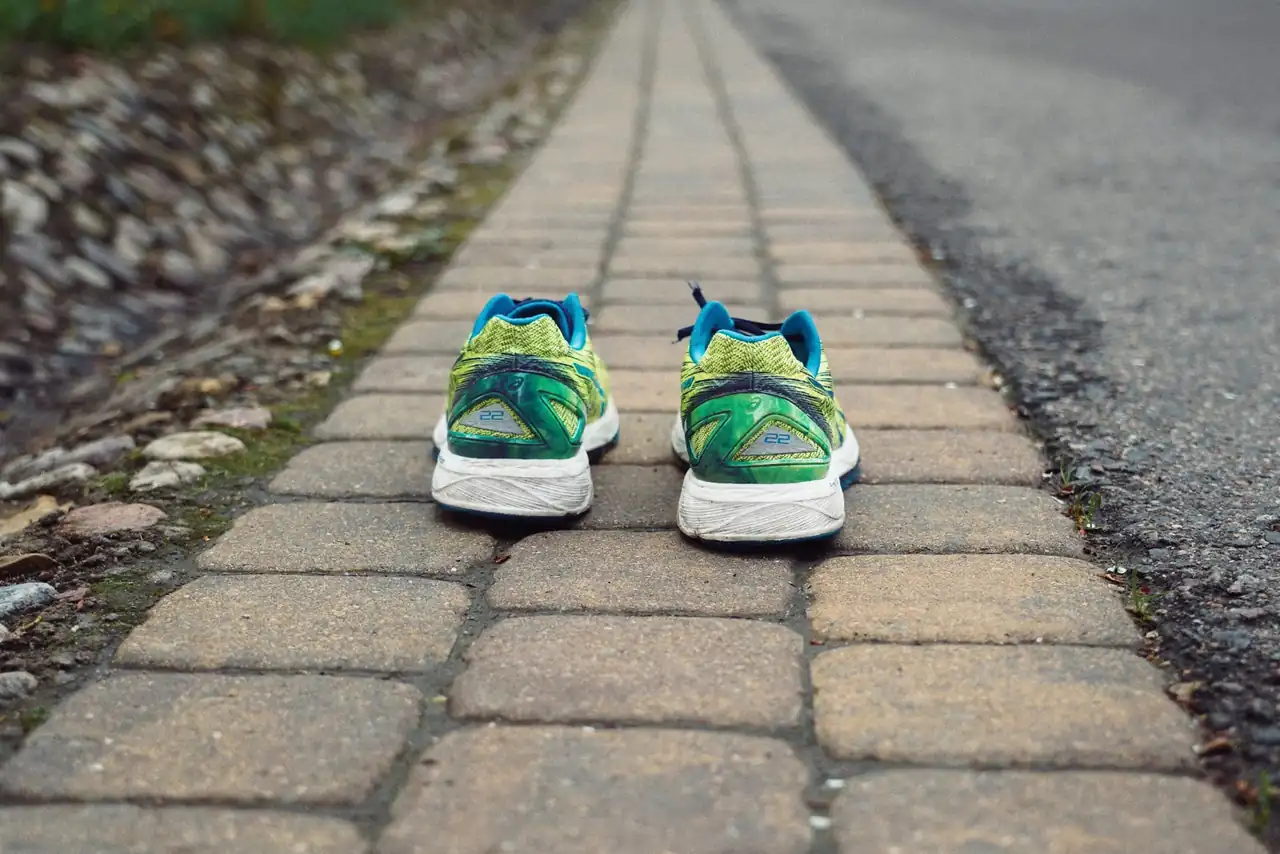
The foot strike leaves more clues than a footprint in the sand. The way the foot enters, lands, and pushes off speaks of stability, load distribution, and, in many cases, the source of aches that keep recurring without any obvious explanation. In running, that reading matters because the body does not run with a single gear: ankle, knee, hip, and foot work like a chain, and when one link deviates too much, the impact travels upward.
That is why distinguishing between inward, outward, or more balanced loading is neither a minor detail nor a catalog label. Pronation and supination are natural movements, but when they are exaggerated or combined with fatigue, previous injuries, or unsuitable footwear, they can increase the risk of overload. The useful question is not to pigeonhole oneself, but to recognize which pattern dominates and to what extent it affects day-to-day running.
What the foot strike reveals in each stride
With every step, the body cushions the blow with a brief but precise sequence. The heel usually touches first, the arch adapts to the ground, and the foot drives the forward motion again. A neutral foot strike keeps the ankle close to vertical and distributes pressure fairly evenly. It is the most mechanically efficient pattern and, in general terms, the one that usually causes the fewest problems when paired with good technique and gradual training load.
Pronation foot strike shows an inward tilt of the ankle. That twist is not an anomaly in itself: the foot is designed to pronate and absorb part of the impact. The problem appears when the movement becomes excessive, because the tibia follows that torsion and the knee receives an extra correction that it does not always tolerate well. From there, discomfort may arise on the inner side of the leg, in the patellar tendon, or in the plantar fascia.
In supination foot strike, the load shifts toward the outer edge and the foot turns outward. It is less common than pronation and usually translates into a reduced cushioning capacity. The result is a stiffer stride, as if the ground were being received on a board instead of a surface that gives way a little. That rigidity can favor tension in the calves, peroneal muscles, and ankle, especially in distance runners or people who log many weekly miles.
Signs that help identify the dominant pattern
The wear on your shoes offers a first reasonable clue, though never a definitive one. More wear on the inner area suggests a pronating tendency; if it is concentrated on the outer part, it points to supination. It is also worth looking at how the outsole behaves at the heel, because the landing phase usually gives away more than the front half of the shoe. Even so, a single heavily used shoe can be misleading: body weight, running technique, and training surface all alter the wear pattern.
Static observation also provides useful information. When standing barefoot on a flat surface, some people show a more pronounced arch and a clearly external load; others shift their weight inward, with an alignment that causes the ankle to collapse inward. The footprint of a wet foot serves as a home reference, but only to get a very rough idea. It does not measure rotation speed, asymmetries between feet, or the influence of old injuries.
Walking and running tell even more than standing still. On video, a foot may seem neutral while walking and behave very differently while running, when impact rises and stability becomes more important. It is not uncommon for a person to pronate with one foot and be neutral with the other after an ankle injury, surgery, or simply an unconscious protective response when landing. The body compensates before you notice it; that is precisely one of the reasons professional analysis still carries so much weight.
The most reliable test: analyzing your stride with criteria
Home methods help provide guidance, but the useful diagnosis usually comes with a biomechanical gait analysis. That analysis observes how the feet behave statically and in motion, which areas bear more load, how the tibia rotates, and what the knee does when accepting impact. In a specialized setting, the treadmill, cameras, and pressure sensors make it possible to draw a much more precise map than a simple visual inspection.
That map does not only answer the question of whether the load goes inward or outward. It also explains whether the problem is structural, functional, or circumstantial. Some runners overpronate when fatigued, others supinate when they pick up pace, and some change pattern depending on footwear. The same foot does not always behave the same way, and that variability is key to avoiding hasty conclusions.
It is also worth considering the sports context. An apparently perfect gait can stop being perfect when facing long runs, fast intervals, or extended downhills. Likewise, a runner with mild pronation may have no symptoms for years if their musculature supports it, but then start noticing discomfort when training volume increases. Mechanics matter, but load matters even more.
What usually happens with excessive pronation
Moderate pronation is part of the normal running motion. In fact, it helps distribute impact. The problem comes with overpronation or hyperpronation, when the foot turns too far inward and loses support capacity. That extra twist can make the knee seek inward compensations and force the hip to work through a less favorable range, especially in runners with weak glutes or a very flexible arch.
Among the most common issues are plantar fasciitis, patellar tendinitis, shin splints, and pain in the pes anserine area. This is not a closed or universal list, but it is fairly representative. Blisters or calluses may also appear due to repeated rubbing in areas of greater friction. When the foot twists too much, it does not just absorb worse: it also rubs, pushes, and compresses where it should not.
When pronation is very pronounced, the body tends to spend extra energy stabilizing each landing. That does not always translate into an immediate injury, but it does lead to a heavy running sensation, a stride that feels like it is sinking. The runner notices a loss of fluidity, as if part of the push-off were leaking through an invisible crack. In the medium term, that loss of efficiency usually ends up taking its toll in the form of early fatigue or recurring pain.
What usually happens with marked supination
Supination is less common, but no less relevant. Those who run landing too much on the outer edge usually cushion impact less effectively and distribute load poorly. The outer part of the foot bears too much weight, while the rest of the landing comes late or only partially. The result can be a feeling of stiffness in the ankle and a reduced ability to adapt to uneven surfaces or changes in pace.
Associated discomfort usually appears in the peroneals, calves, plantar fascia, and ankle. Sprains are more likely because outer-edge loading reduces the stable base of contact with the ground. In runners who train on asphalt frequently, overload can also occur in the fourth and fifth metatarsals, which bear more pressure than is desirable. Supination does not correct poor technique by itself; it simply makes the foot’s response to impact more fragile.
There is an important nuance: some people identify as supinators because of outer wear on their shoes, yet in biomechanical testing they appear neutral with a slight lateral tilt at the end of the stride. That is why isolated observation can be misleading. The foot may seem stiffer than it is if the runner is protecting an injury, avoiding a painful landing, or compensating for a functional leg-length difference.
Footwear helps, but it does not work magic
Running shoes are one piece of the system, not the whole system. On the market, neutral, stability, and more cushioned models coexist, but what matters most is that the shoe fits the runner’s real mechanics, as well as their weight, training surface, and fatigue level. A person with mild pronation and strong musculature may feel comfortable in a neutral shoe, while another with the same pattern and less control may need more support.
Stability shoes aim to limit excessive inward ankle collapse, and shoes designed for supinators usually offer generous cushioning and a smooth transition. Even so, no outsole can correct a weak hip, limited ankle mobility, or a strength asymmetry. Footwear supports; it does not replace. When used as the only solution, the problem usually reappears somewhere else.
Choosing well also means paying attention to size and fit. A foot that moves inside the shoe, or one that gets pressure in the toe box, alters the landing even in runners with clean technique. That is why comfort still carries enormous weight in the final decision. Often, a technically perfect but uncomfortable shoe ends up worsening gait because it forces the foot to defend itself from the shoe itself.
Insoles and habit changes come into play when symptoms appear
Custom insoles can be a useful tool when there is a clear excess of pronation or supination and the runner has pain or repeated injury. Their goal is not to turn one gait into another, but to redistribute loads and provide a more efficient support. When properly indicated, they work like a small engineering adjustment: they do not change the road, but they do improve the tire’s contact with the asphalt.
There is also room to work on strength and mobility. The foot and ankle need muscle, not just correction. Strengthening the intrinsic muscles of the foot, the calves, and the glutes can improve landing control, especially in pronators with dynamic collapse and supinators with poor absorption. Stable running often starts with a firm hip, not just a well-shaped arch.
Stretching, when appropriate in each case, helps relieve accumulated tension in the calves, soleus muscles, and plantar fascia. In supination profiles, that release can be especially useful after long sessions or speed work. And in pronators with tibial overload, a combination of strength, rest, and load adjustment usually helps more than any isolated correction. What does not change the habit rarely changes the problem.
When it is worth rechecking your gait
Gait is not a fixed photograph. It changes with age, fatigue, injuries, weight gain, loss of strength, and even the type of training. A runner may have been neutral for years and become functionally pronating after an ankle injury; another may supinate more when pace increases because they seek stability where power is lacking. The body rewrites its support with surprising ease.
That is why it is worth reviewing mechanics when new discomfort appears, when you start using shoes with a different profile, or when mileage increases significantly. It is also a good idea to do so if shoe wear changes abruptly or if one leg starts to take more load than the other. Signs rarely arrive without warning; they usually begin as a small discomfort that later settles in.
In long-distance training, this monitoring becomes even more important. The more miles a runner accumulates, the more costly a small landing flaw becomes. What is barely noticeable in a short race can become, in a marathon, a sum of micro-impacts that punish the fascia, tibia, or knee. Repetition amplifies the small things, and in running that changes everything.
A useful insight for viewing running with less myth and more precision
The idea that there is a good gait and a bad one oversimplifies a much more nuanced reality. Most runners show some degree of pronation, and that does not automatically mean injury or a problem. Likewise, being a supinator does not doom you to a specific pathology. What defines risk is the magnitude of the movement, symmetry between both feet, available strength, and training load.
The best reading is the one that combines observation, symptoms, and context. An inner wear pattern on the outsole, pain on the medial side of the tibia, and fatigue at the end of long runs point in a fairly clear direction. Outer loading, repeated sprains, and a feeling of instability when running through curves or uneven terrain point in another. Biomechanics are not guessed: they are interpreted.
Looking at gait with this logic avoids common mistakes, such as buying shoes based only on generic advice or thinking an insole solves any discomfort. Running is an ancient, almost primitive movement, but today it is exposed to paces, asphalt, and volumes that the body does not negotiate for free. Understanding how the foot lands is, in reality, a way of understanding how the runner defends themselves against impact.
When the detail of the landing changes the way you run
Interest in gait does not come from a fad, but from a practical truth: the way the foot touches the ground changes everything that comes after. In a healthy runner, that detail may seem invisible. In one with discomfort, it becomes a central clue. The foot is small, but its effect is huge, like a hinge that determines the movement of an entire door.
That is why gait should be treated with less superstition and more precision. Neither does a pronator need automatic correction, nor is a supinator doomed to get injured. The sensible approach is to observe, compare, check shoe wear, pay attention to discomfort, and above all understand that running is not solved by a single piece. The right landing is the sum of strength, technique, rest, and suitable footwear.
In that balance lies the difference between running while dragging small compensations and running with mechanics that distribute the work better. And in running, distributing the work well is not a luxury: it is almost always the simplest way to go farther without breaking your stride along the way.
Este artículo contiene enlaces de afiliado: si compras a través de ellos, se genera una pequeña comisión sin coste adicional para ti. Más información.



How to prevent thigh chafing: causes and real solutions

Women’s running windbreakers: seven jackets and how to choose

Do more workouts get rid of soreness? A guide for runners

Jaén Half Marathon 2026: Record 3,800 Runners Registered

Men’s short running tights: how to choose the right pair

World Triathlon confirms data breach involving medical data

Izan Edo targets podium at Miyazaki World Cup

María Pérez ranks ninth in World Athletics’ 2026 top ten

Dos Santos, Duplantis and Sawe: World Athlete of the Year finalists

San Silvestre Vallecana 2026: 42,000 places, prices and start times

 Races4 months ago
Valencia Half Marathon 2027: date and registration

 Races4 months ago
Valencia Marathon 2026: entry, ballot and course

 Reviews and Comparisons4 months ago
Asics Gel-Roadmiles 3 for men: review and current price

 Reviews and Comparisons4 months ago
Asics Gel Sonoma 8 Gore-Tex: complete analysis for trail and rain

 Sneakers3 months ago
Saucony Endorphin Pro 4: full review and verdict

 News5 months ago
Strava API 2026: what changes for clubs, challenges and runner apps?

 Reviews and Comparisons5 months ago
Nike Alphafly 3: opinions, sensations, and real key points

 Reviews and Comparisons4 months ago
Under Armour running shoes review 2025-2026: models and key features

 Sports Equipment4 months ago
Shoe sizes in cm: a clear guide to getting the right fit for your footwear

 Sneakers3 months ago
Skechers GO RUN Consistent 2.0 analysis: comfort and limits

 News5 months ago
Valencia Marathon 2026 route: key tips to train and run better

 Sneakers4 months ago
Adidas Adizero Boston 13 for men: review and verdict