Training
Treadmill in summer: how to train quality without fighting the real sun
The treadmill gains importance in the warmer months: more control, less impact, and safe sessions when the temperature outside starts to climb.

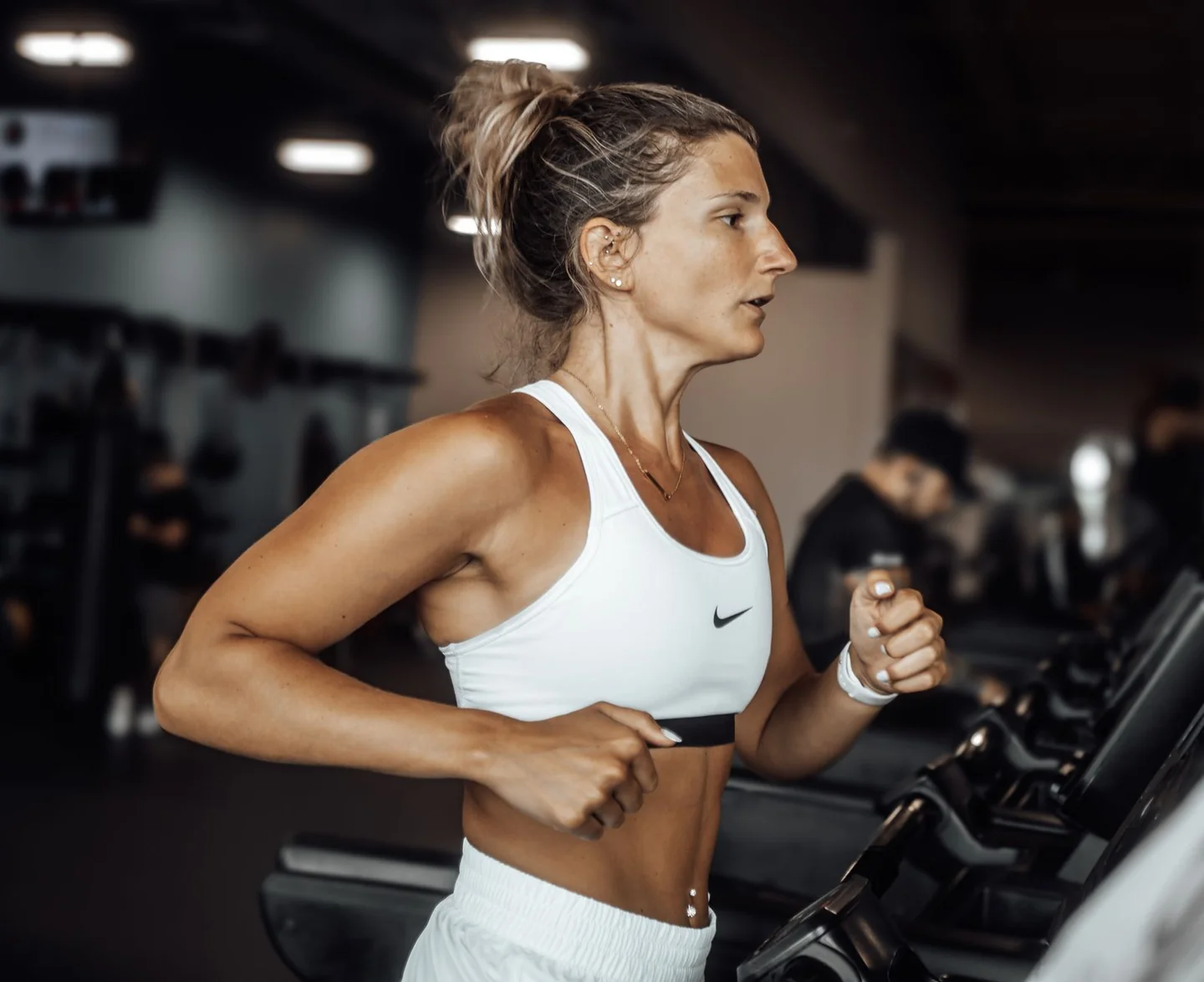
Imagen: Wendell Stoyer / Pexels
Summer has changed the way many runners train. When the asphalt starts throwing the heat back like a hot plate and the humidity turns sticky, the treadmill stops being a secondary resource and becomes a very useful tool. It doesn’t completely replace outdoor running, but it does make it possible to maintain aerobic work, adjust intensity with precision, and reduce the risk of exposing yourself to temperatures that punish performance and raise the danger of heatstroke.
In the toughest months, training indoors is not a surrender but a sensible adaptation. The key is understanding that the treadmill does not exactly reproduce running outside: the mechanics change, the feeling changes, and some muscular stimuli change too. That doesn’t make it worse; it makes it different. And on days of 35 degrees or more, that difference can be what determines whether the season keeps going.
Why the treadmill gains ground when the heat hits hard
High temperatures limit the margin for error. As the thermometer rises, the body spends more energy cooling itself and less on sustaining a comfortable pace. Heart rate climbs sooner, sweating ramps up, and perceived effort rises even when the watch doesn’t show it. Under those conditions, a session that in spring felt easy can turn into an uncomfortable, unproductive fight.
The treadmill lets you avoid much of that environmental wear and tear. It doesn’t eliminate effort, but it does remove variables that make session control harder: direct sun, traffic, unpredictable hills, heavy air, or prolonged exposure to the heat stored in streets and parks. For a runner looking for consistency, that more stable environment can be the difference between training regularly or stringing together days lost to fatigue or discomfort.
There’s also a practical factor that matters a lot in summer: timing. Getting out before sunrise or after dark isn’t always possible, and not everyone has enough shade on their usual route. The treadmill offers a wider time window and simpler logistics. Without depending on daylight or the weather, training fits better into work routines, travel, or weeks when the heat doesn’t let up.
What really changes when you run on a moving belt
The feeling of moving forward is not the same as outside. On the treadmill, the belt moves under the runner and that reduces part of the propulsive work. In practical terms, the stride tends to be a little shorter and cadence can go up. Running feels more uniform, almost as if the body were entering a straight line where everything is measured to the millimeter.
That mechanical detail has consequences. The posterior chain, made up of hamstrings, calves, and plantar muscles, usually takes part less than in outdoor running, while the anterior chain, with quadriceps, tibialis, and hip flexors, may take on more prominence. That’s why the treadmill should not be seen as a photocopy of asphalt, but as a specific environment with its own stimuli.
The difference isn’t a problem if you know how to interpret it. For recovering from a specific overload, for controlling paces, or for doing quality work with low environmental impact, the treadmill fits very well. Another thing is turning it into the only training setting for months. In that case, certain adaptations can become unbalanced and the jump back outside can feel harsher than desirable.
Real advantages for the runner who doesn’t want to slow down in July and August
The treadmill’s main virtue in summer is control. Pace is regulated precisely, incline is adjusted in seconds, and the session length is set from the very first minute. That predictability makes it easier to do intervals, progressive blocks, and threshold work that would be harder to nail outdoors, especially when the heat alters your usual references.
Another little-discussed advantage is cushioning. The surface is usually kinder than asphalt and more stable than uneven dirt. For runners with a history of joint discomfort, for those returning to activity, or for those stacking up weeks of high volume, that extra buffer reduces the repeated impact of each stride. It’s not a carpet, but it is a less hostile surface than pavement baked by the sun.
It also helps you work on technique more consciously. The monotony of the belt forces you to pay attention to details that outside often go unnoticed: arm swing, posture, cadence, or foot placement. At a steady pace, small bad habits show up sooner. That’s why many runners feel the treadmill helps them run more neatly, as if the stride stopped being a rushed sentence and started to be spoken clearly.
On the cardiovascular side, the treadmill makes it possible to string together short, demanding sessions with great precision. A block of changes, a well-dosed progression, or a continuous run with moderate incline can be done without depending on traffic lights, elevation changes, or interruptions. That clean stimulus is what makes it such a valued tool when the goal is not simply to add kilometers, but to add kilometers with purpose.
The adjustment worth making so the effort feels more like running outside
The most useful reference is usually a 1% to 2% incline. That small adjustment partly compensates for the lack of air resistance and brings the feel of the treadmill closer to outdoor running. It’s not a perfect equivalence, because no machine can clone the real environment, but it is a reasonable tweak to keep treadmill pace from feeling artificially easy.
In easy sessions, this slight incline helps the body work with a pattern closer to the usual one. In quality sessions, it also lets you choose between two paths: increase speed on flat ground or keep the speed and raise the incline. Both options demand in different ways and can serve different goals. The first sharpens pace; the second loads the muscles more and raises cardiovascular cost without needing to run faster.
Precision, however, should not be confused with rigidity. Not every workout needs to seek exact equivalences. Some days the treadmill is there to maintain, other days to push, and other days simply to add a safe stimulus in a controlled environment. The obsession with replicating every meter of outdoor running can take value away from a tool that, when used well, offers something summer lacks: stability.
Sessions that fit especially well in summer
Short, structured workouts are usually the ones that make the best use of the treadmill. Controlled-pace intervals, time-based blocks, and gentle progressions find a natural ally in the belt. The session moves like a metronome: no surprises, no turns, no changes in terrain. That makes it easier to focus on execution and not on distractions from the surroundings.
Hills also make a lot of sense on a treadmill. By increasing the incline, you can simulate a harder effort without having to deal with the descent afterward, which often does more muscular damage than the climb itself. It’s a clean way to introduce specific strength work, improve running economy, and add variety to the stimulus without going out into the street when the heat is unbearable.
Base work, on the other hand, calls for more caution. Very long runs on a treadmill can become heavy simply because of the monotony and, in some cases, increase the risk of the stride becoming mechanical, like a gesture repeated by inertia. If the session goes on, ventilation, hydration, and concentration start to become decisive factors. Without them, what was meant to be a comfortable run can turn into a stifling experience.
For runners coming back from an injury, the treadmill usually makes a gradual return easier. The stable surface, the ability to control speed, and the lower exposure to outdoor surprises allow the load to be fine-tuned very precisely. That said, the return doesn’t happen by decree or by a feeling of invulnerability: it’s worth respecting the healing times of the injured tissue and not confusing the absence of immediate pain with full recovery.
The most common mistakes when using it as a refuge from the heat
The first is forgetting that indoors can also get hot. A closed room, a treadmill without good ventilation, or a crowded gym can turn into a small heat chamber. Sweat comes earlier, perceived effort shoots up, and the session stops being comfortable. A fan or a moderate airflow changes the experience a lot, because the body needs to get rid of heat, not store it.
The second mistake is always running at the same pace, on the same incline, and for the same amount of time. Constant repetition dulls the movement and reduces the richness of the workout. Even if the treadmill is stable, the body shouldn’t become lazy. Alternating paces, inclines, and durations keeps the stride from settling too much into a single pattern.
It’s also easy to overdo the confidence in cushioning. Just because the impact is lower than on asphalt doesn’t mean anything goes. Knees, ankles, and fascia still take load, and the muscles in the front of the lower leg can suffer if volume increases too quickly. In summer, dehydration also adds a degree of fragility that shouldn’t be underestimated.
Another common slip is running while looking only at the watch. The treadmill gives clean, attractive numbers, but the body matters more than the screen. If breathing gets messy, if technique falls apart, or if the feeling of heat spikes, the workout loses quality even if the final data looks flawless. Technological precision does not replace physical judgment.
How to read the sensations so you don’t train too much
In summer, perceived effort deserves more attention than in other seasons. The same pace can feel easy one day and excessive the next depending on hydration, sleep, or ambient temperature. The treadmill doesn’t erase that variability, but it does make it easier to spot when the session is asking for a reduction. That attentive listening is a form of sports intelligence, not a sign of excessive caution.
Heart rate can also rise more than expected in a hot room. That doesn’t always mean the workout is going badly; sometimes it just reflects the thermal load of the environment. What matters is interpreting the whole picture: breathing, pace, muscular fatigue, and technical quality. When those elements start to fall out of sync, the body is warning you before the serious drop hits.
Hydration takes on a decisive role even in sessions that seem short. On the treadmill you sweat a lot and lose fluid quickly, especially if ventilation is poor. Having water close at hand, avoiding starting the workout already dehydrated, and not turning every session into a thermal endurance test are simple gestures that change the final result. Summer punishes the sum of small neglects more than a single big mistake.
What it adds compared with running outdoors and what you shouldn’t expect
The treadmill preserves the basic running movement, but it doesn’t reproduce all its stimuli. Outside there’s wind, uneven ground, involuntary pace changes, and neuromuscular responses that the belt doesn’t offer. That’s why outdoor running remains irreplaceable for developing overall adaptation, terrain reading, and tolerance to variability. The treadmill, by contrast, works better in the realm of precision and control.
That contrast explains why it works so well as a complement. If summer is pressing hard, it can support part of the weekly volume, sharpen quality sessions, and reduce thermal punishment. Then, when the weather allows it, it’s worth going back outside to recover the more real component of running. The balance between both environments is smarter than blind loyalty to just one.
In practical terms, the treadmill is more like a laboratory than a road. Everything is measured, almost sterilized, and that has value. But a runner doesn’t live on laboratories alone. They also need curbs, wind, changes in incline, and the uncertainty of the real world. Summer forces you to cut back on some of that exposure, not to give it up for good.
A summer tool that asks for judgment, not dogma
The treadmill starts to make more sense when it stops being seen as an emergency plan B. In months of intense heat, it can sustain training continuity, provide control, and reduce unnecessary impact. Used well, it sharpens paces, improves technical awareness, and lets you keep adding useful work without turning every outing into a battle against the weather.
Its real value appears when it’s used with judgment: well-chosen sessions, enough ventilation, reasonable hydration, and a clear view of its limits. It’s neither a miracle machine nor a perfect substitute for the street. It’s a demanding, precise tool and, in August, often a more sensible one than going out to fight a runaway thermometer.
In practice, training on a treadmill during summer is a way of protecting continuity. And in running, continuity matters almost as much as talent. Those who keep the habit, even when the heat is pressing, usually reach autumn with better feelings than those who let themselves be dragged around by every heatwave. The key is not to suffer more, but to train better.
Este artículo contiene enlaces de afiliado: si compras a través de ellos, se genera una pequeña comisión sin coste adicional para ti. Más información.



Reebok runs large or small: a real fit guide

Hoka Challenger ATR 7 GTX: complete review of the all-terrain shoe

How to clean white sneakers without ruining them

Altus Pirineos 40-liter backpack: analysis, use, and key points

20,000 mm waterproof jacket for men: key points to get it right

Under Armour HOVR Sonic 6: complete review of the shoe

incline treadmills: guide to choosing better

Achilles tendonitis: real recovery time

Pain in the Achilles heel: causes, signs, and relief

What to take for calf pain: real relief and when to worry

 Races3 months ago
Valencia Half Marathon 2026: date and registration

 Reviews and Comparisons4 months ago
Asics Gel-Roadmiles 3 for men: review and current price

 Races3 months ago
Valencia Marathon 2026: entry, ballot and course

 Reviews and Comparisons4 months ago
Asics Gel Sonoma 8 Gore-Tex: complete analysis for trail and rain
- Sneakers3 months ago
Saucony Endorphin Pro 4: full review and verdict

 News5 months ago
Strava API 2026: what changes for clubs, challenges and runner apps?

 Reviews and Comparisons5 months ago
Nike Alphafly 3: opinions, sensations, and real key points

 Reviews and Comparisons4 months ago
Under Armour running shoes review 2025-2026: models and key features

 Sports Equipment4 months ago
Shoe sizes in cm: a clear guide to getting the right fit for your footwear
- Sneakers4 months ago
Adidas Adizero Boston 13 for men: review and verdict
- Sneakers3 months ago
Neutral running shoes with lots of cushioning: the best of 2026

 News4 months ago
Where is the Hoka brand from and why was it born in France