Reviews and Comparisons
Best value for money treadmill: a guide to getting it right at home
Balanced models, technical key points, and usage ranges for choosing a reliable home treadmill without overpaying.

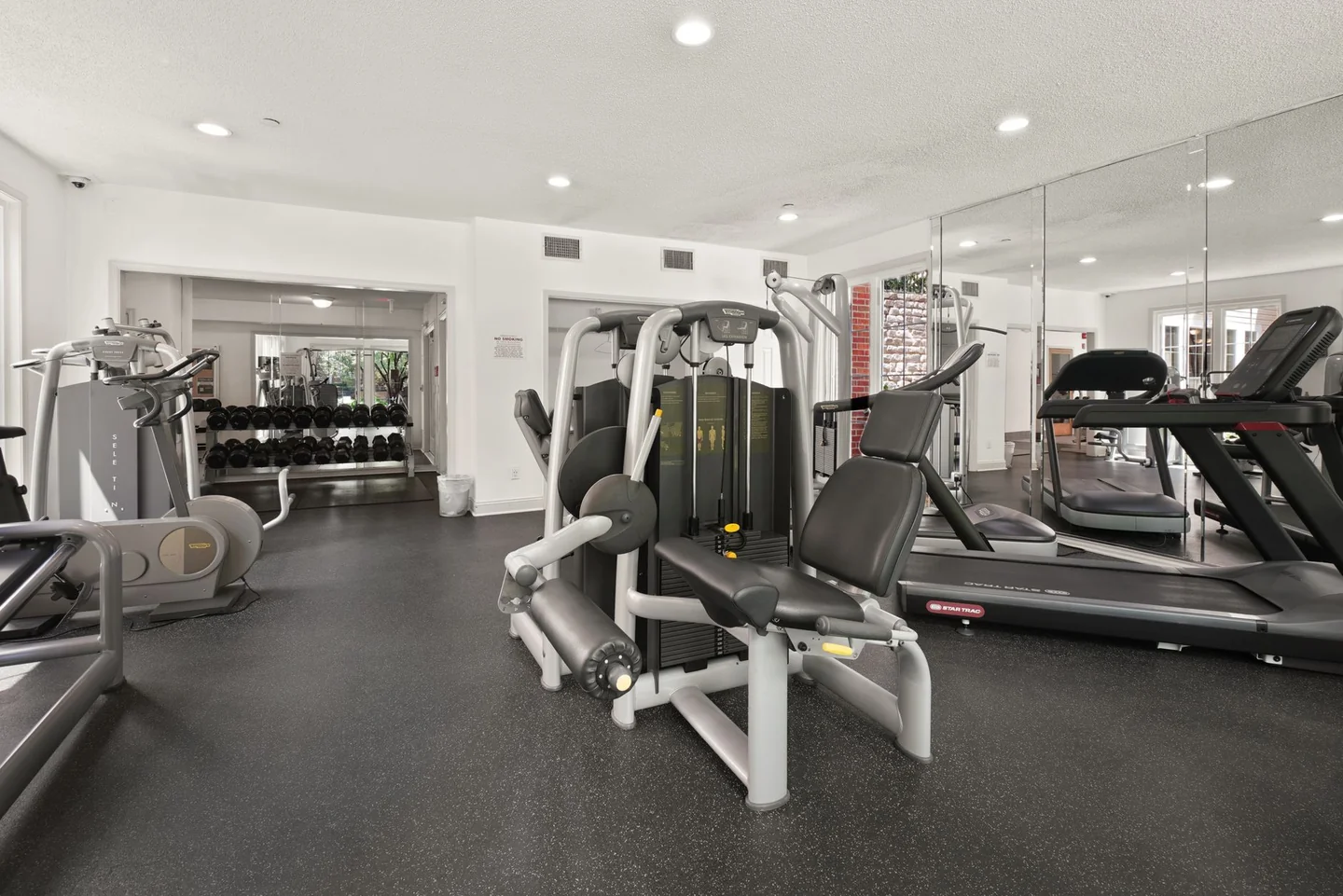
The best treadmill for the price is not the most expensive one or the one that boasts the most programs, but the one that fits real use, available space, and the intensity at which you are going to train. In that area, the differences between a sensible purchase and a disappointment are usually found in very specific details: the running surface, motor power, cushioning, folding mechanism, and the weight limit the machine can support.
In the Spanish market in 2026, the range has matured to the point that there is no longer a need to look only at maximum speed. To run at home with some regularity, a well-balanced treadmill must combine stability, useful size, reasonable maintenance, and a price that does not blow up the budget. That is where models like the Cecotec Extreme Track, the Fitfiu MC-200, or compact offerings from Sportstech and Reebok stand out, each with a different logic depending on the user profile.
What makes a treadmill deserve the value-for-money label
A home treadmill may have a very attractive spec sheet and still fail at the basics. The first thing worth checking is the motor, not so much for the advertised speed figure as for its ability to sustain effort without overheating or losing smoothness. For home use, a machine with at least 1.5 HP for brisk walking or jogging already enters an interesting zone; for real running, the reasonable threshold rises to 2 HP or more, especially if there will be long sessions or heavier users.
The running belt also matters. On a narrow treadmill, every stride becomes more mental than physical, as if the body had to negotiate every landing. For walking, a surface of about 40 cm wide and 125 cm long is usually enough; for running comfortably, the recommended benchmark rises to 50-55 cm wide and at least 140 cm long. If the person is tall or has a long stride, that figure stops being secondary and becomes decisive.
The third point is stability. A light structure may be enough for walking, but when speed increases, vibrations, swaying, and noise appear. In an apartment, that difference is noticeable in the ankles, knees, and also to the neighbor below. Cushioning not only protects the joints; it also helps soften the impact and makes the treadmill sound less with each step, something many buyers end up valuing more than the screen or Bluetooth.
The models that best balance price and features
Among the most interesting treadmills for overall balance, the Cecotec Extreme Track stands out as a very solid reference for anyone who wants to run at home without jumping to a high-end range of several thousand euros. Its maximum speed of 18 km/h, 2,200 W motor, and motorized incline place it ahead of many rivals at a similar price. In addition, its running surface of 130 x 42 cm allows for quite decent use by medium-height users and also somewhat taller runners, even if it is not the most generous in the catalog.
Its best argument lies in the package, not in a single number. The structure is foldable, the maximum supported weight reaches 120 kg, and the overall feel is that of a machine suitable for both light work and somewhat more demanding sessions. It is not the most compact or the quietest option in the segment, but it is one of the best at turning the money invested into real performance. When a treadmill lets you progress without having to replace it after a few months, the price starts to seem less important.
The Fitfiu MC-200 remains a very popular choice because it lowers the price without giving the impression of a flimsy device. Its maximum speed of 14 km/h, 1,500 W motor, and 110 x 40 cm surface place it in an intermediate point between a walking machine and a treadmill for light jogging. The 90 kg user limit calls for attention, but for lighter profiles and moderate use it is still a very reasonable purchase.
Its greatest virtue is that it covers the essentials with a simple setup. It folds, takes up little space, and is manageable in homes where every meter counts. In exchange, it is not designed for hard daily use or for tall users who need a longer belt. It is an honest treadmill: it does not promise what it cannot deliver, and that is why it fits well in homes where regular activity is the goal, not top-level sports performance.
Compact options when space is the priority
The conversation changes completely when the home is small or the treadmill has to disappear after use. In that territory, the Sportstech F10 and the Flylinktech have the advantage in size and practicality, although they do not compete exactly in the same league as the Cecotec Extreme Track. The F10 reaches 10 km/h, so its natural territory is walking, gentle jogging, and maintaining daily activity without great ambitions. Its value lies in how easily it fits into everyday life, not in speed.
The Flylinktech, for its part, combines a very compact format with impressive power for its size, reaching 14 km/h and supporting up to 180 kg according to the specs. It has a minimalist design and can even be used as a desk walking treadmill. That dual use is useful for anyone working from home or wanting to move more hours a day without turning the living room into a permanent gym. The problem with these ultra-compact solutions is the actual belt length, which may fall short for tall people or for running with confidence.
In the same family of small machines appears the CitySports, which functions more as a maintenance tool than as a treadmill for hard training. It is easy to store, lightweight, and designed for walking or very gentle jogging. This type of product has gained ground because it responds to a very specific need: moving more without dedicating an entire room to equipment. It is not the treadmill you buy to prepare demanding intervals, but the one that prevents sedentary habits from winning by inertia.
When it makes sense to move up a price bracket
There comes a moment when stopping at the cheapest option pays off. That happens when the user weighs quite a lot, trains several times a week, or wants the treadmill to last for years without issues. In that scenario, the BH Fitness i.Boxster represents a more serious range: it reaches 20 km/h, supports 120 kg, and offers a surface of 140 x 51 cm, much more comfortable for long strides and frequent use.
The BH plays the robustness card. It is not the impulsive purchase that arrives in a small box and is assembled in half an hour; it is a larger, more stable machine, closer to what many imagine when they think of running comfortably at home. Its 12% electric incline adds a useful level of challenge for simulating hills and varying stimuli. In addition, the brand usually conveys a sense of durability that, in this type of product, weighs almost as much as the motor wattage.
The Reebok Jet 100 also moves in that mid-to-high range territory where people no longer buy based on price alone. Its structure feels more solid, the cushioning is very good, and the machine is quiet for what it offers. With a maximum speed of 16 km/h, a surface of 1300 x 430 mm, and 12 incline levels, it is aimed at anyone who wants a durable and comfortable treadmill, even if the cost is higher than that of other popular alternatives.
How to read a spec sheet well without being dazzled
Product spec sheets often mix useful data with figures that sound very good but say little on their own. Maximum speed, for example, may be impressive, but if the motor cannot sustain it smoothly or the surface is too short, that figure ends up being an empty promise. Motor power and useful belt length matter more than the highest number on the display, especially for those who plan to use the treadmill regularly.
Incline also deserves careful reading. It can be manual or electric, and that changes the experience quite a bit. Manual incline usually lowers the purchase price, but it requires stopping and adjusting the machine by hand. Electric incline, on the other hand, lets you vary intensity from the console and makes it more natural to simulate hills or alternate efforts. For short sessions, that detail may seem minor; for frequent use, it becomes part of the overall comfort.
Another common trap is the maximum supported weight. It should not be read as permission to run right at the limit. If a treadmill supports 100 kg, it is not wise to use it at the edge if durability is the goal. Leaving a margin is the sensible approach. A structure that supports more than the user needs usually vibrates less, wears out less, and makes less noise. In a home, that margin becomes a kind of invisible cushion that shows over time.
The running surface and home space
Many buyers eventually discover that the big problem was not price, but the actual size of the machine when open and folded. A treadmill may look manageable in photos and turn into a bulky piece of furniture once taken out of the box. That is why, in addition to the running surface, you should look at the overall measurements and, above all, the clearance space around it. Walking needs less space than running, and that makes it possible to tailor the purchase to very different uses.
In small homes, the advantage of a folding treadmill is clear, but not all fold the same way. Some reduce their footprint quite a bit and can be stored next to a wall, while others fold without becoming truly discreet. At that point, the user experience changes dramatically. A treadmill that is easy to store gets used more; one that requires moving half the room ends up being used less than expected.
There is a detail that often goes unnoticed and ends up mattering a lot: the user’s height relative to the console and the floor. If the person is tall, a short belt not only limits stride length, it also changes posture and can force more downward looking than is ideal. That repeated gesture does not seem serious at first, but during long sessions it is noticeable in the neck, shoulders, and overall flow. Running comfort depends not only on running fast, but on running naturally.
What cushioning, noise, and connectivity add
Cushioning has stopped being an extra and has become a basic filter. On a treadmill without good absorption, the impact is transmitted more to the body and also to the floor. That does not mean that a well-cushioned treadmill eliminates muscular work or turns the stride into a cloud, but it does soften contact and makes training more comfortable. For users who alternate walking and running, this point is especially noticeable in the knees and ankles.
Noise is another more domestic than athletic factor. There are treadmills that seem acceptable in a store and become impossible to ignore in an apartment at midnight. The motor, the belt friction, and the footfall itself add up to an acoustic footprint that depends on build quality, cushioning, and maintenance as well. A quiet machine lets you train without turning the routine into a negotiation with the rest of the household.
Connectivity, finally, has a more practical function than it may seem. Bluetooth, phone holders, or app integration are not showroom accessories when they help sustain consistency. Seeing simple metrics, following a virtual route, or listening to content while walking makes it easier to repeat the session the next day. It is not technology for technology’s sake, but a way to keep the treadmill from becoming a motionless object in the corner of the living room.
The smartest purchase according to the usage profile
For frequent home running on a moderate budget, the Cecotec Extreme Track appears to be the most balanced option. It has enough speed, motorized incline, and a belt that is not too small for most home users. If the goal is to train several times a week without entering the semi-professional treadmill market, it is hard to ignore it.
If the priority is spending less and running or jogging moderately, the Fitfiu MC-200 is still a very logical purchase for lighter people with no sprint ambitions. When space is the main issue, the choice shifts and compact narrow-format treadmills become more sensible than a more powerful machine that is impossible to store. The best choice, in the end, is the one you actually use, not the one that looks best on the spec sheet.
In homes where the treadmill will be shared by several users, stability and the weight limit move to the forefront. That is where slightly more robust models like the BH i.Boxster or the Reebok Jet 100 make sense. They pay a price in size and cost, yes, but in return they offer more margin, more safety, and a less fragile feel in use. Not everyone needs that investment; those who do usually know it when they read the spec sheet a second time.
The purchase that stands the test of time
The difference between a reasonable purchase and a truly good purchase becomes visible over time. At first, all treadmills promise the same thing: fewer excuses, more movement, more comfort. But only a few keep up with the pace of the week, the accumulated dust, and those sessions when you do not feel like it. A good value-for-money ratio is not measured only on the day the package arrives; it is also measured by how it responds once it is no longer new.
That is why it helps to think in terms of use, not desire. A compact, inexpensive machine may be perfect for walking half an hour a day. A more robust treadmill may be the one that makes the difference between training twice a month and maintaining a steady routine. The key figure is not how much speed it advertises, but how much sense it makes in a specific home, with a specific height, a specific floor, and a specific frequency of use.
In a market saturated with numbers, the best treadmill ends up being the one that lets you train without thinking too much about it. If it does not creak, does not take over the room, does not force an awkward posture, and does not feel too small by the third month, the money has been better spent. And on that discreet, almost domestic boundary, is where it is truly decided which one deserves to be called the best treadmill for the price.
You may also like: Used treadmill: guide for runners of all levels.
Este artículo contiene enlaces de afiliado: si compras a través de ellos, se genera una pequeña comisión sin coste adicional para ti. Más información.



How to prevent thigh chafing: causes and real solutions

Women’s running windbreakers: seven jackets and how to choose

Do more workouts get rid of soreness? A guide for runners

Jaén Half Marathon 2026: Record 3,800 Runners Registered

Men’s short running tights: how to choose the right pair

World Triathlon confirms data breach involving medical data

Izan Edo targets podium at Miyazaki World Cup

María Pérez ranks ninth in World Athletics’ 2026 top ten

Dos Santos, Duplantis and Sawe: World Athlete of the Year finalists

San Silvestre Vallecana 2026: 42,000 places, prices and start times

 Races3 months ago
Valencia Half Marathon 2027: date and registration

 Races3 months ago
Valencia Marathon 2026: entry, ballot and course

 Reviews and Comparisons4 months ago
Asics Gel-Roadmiles 3 for men: review and current price

 Reviews and Comparisons4 months ago
Asics Gel Sonoma 8 Gore-Tex: complete analysis for trail and rain

 Sneakers3 months ago
Saucony Endorphin Pro 4: full review and verdict

 News5 months ago
Strava API 2026: what changes for clubs, challenges and runner apps?

 Reviews and Comparisons5 months ago
Nike Alphafly 3: opinions, sensations, and real key points

 Reviews and Comparisons4 months ago
Under Armour running shoes review 2025-2026: models and key features

 Sports Equipment4 months ago
Shoe sizes in cm: a clear guide to getting the right fit for your footwear

 Sneakers3 months ago
Skechers GO RUN Consistent 2.0 analysis: comfort and limits

 News5 months ago
Valencia Marathon 2026 route: key tips to train and run better

 Sneakers4 months ago
Adidas Adizero Boston 13 for men: review and verdict