Reviews and Comparisons
The more balanced side of affordable running
A guide to running gear that best combines price, comfort, and safety without driving up the cost.

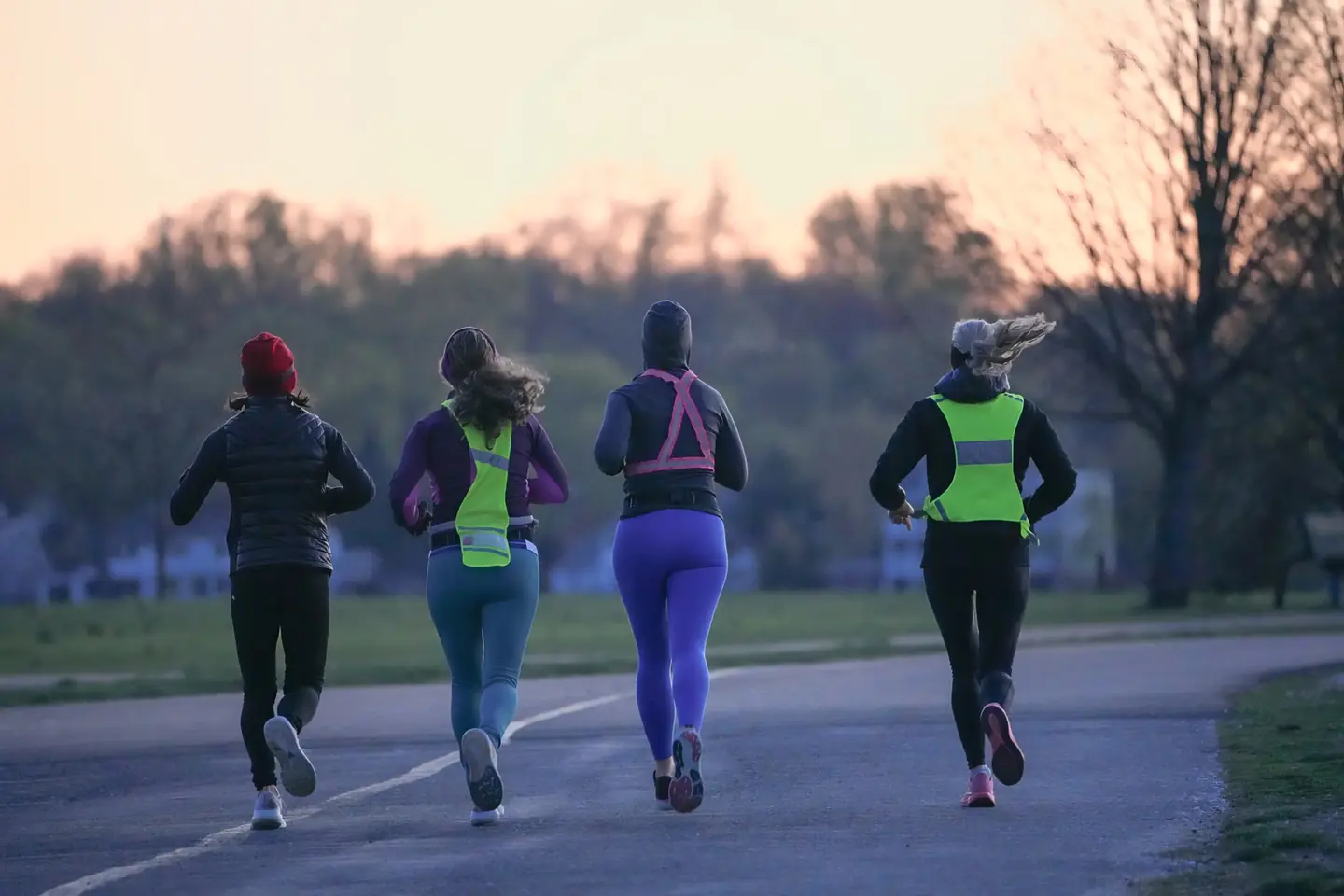
Running does not need big gimmicks to work. It is enough to solve the basics well: a shoe that doesn’t punish, garments that breathe, some element that adds visibility and, above all, the judgment not to pay too much for details that add very little out on the street. In an increasingly crowded market full of technologies and flashy names, the middle ground is usually the smartest option: enough performance, controlled cost and zero unnecessary complications.
That is where affordable gear shows its best side. It is not about settling for the bare minimum, but about choosing pieces that do their job reliably. A lightweight belt can prevent your phone from bouncing around, a USB light can make all the difference on a dawn run, and a reflective garment can bring peace of mind on a shared path. The key is to distinguish the useful from the merely accessory, and to understand that quality is not always measured by the highest price.
When the price drops, judgment matters more
The biggest mistake when buying budget gear is looking only at the label. Two products with a similar cost can offer very different experiences if one prioritizes comfort, durability and safety, and the other only seems to do the job. In running, that difference shows up quickly: in a tight closure, in a seam that chafes, in a light that runs out too fast, or in a pocket that bounces with every stride.
That is why the real value of a purchase is not that it is cheap, but that it fits the intended use. For someone who runs three days a week on pavement, a simple, stable solution may make more sense than an overcomplicated piece. For someone who runs at dawn or at night, visibility matters more than aesthetics. And for someone carrying keys, a phone and little else, a snug waist pack may be more practical than a small backpack. In this area, value for money works best when it is selective.
This approach explains why so many sensible recommendations for runner gear come back to one idea: spending less does not mean lowering the standard, but refining the purchase. The best entry-level options usually solve a specific need with little friction. They do not promise to transform the experience, but they do prevent avoidable discomfort. And in a sport that is repetitive by definition, reducing friction is already a quiet victory.
Safety in limited daylight
Visibility is one of the few purchases that leaves no room for improvisation. Anyone who runs at dawn, dusk, or on poorly lit stretches needs to be seen before thinking about pace or heart rate. In that context, a vest with LED lights, a reflective band, or a small headlamp are not decorative add-ons, but pieces that reduce risk in very real scenarios: urban crossings, shared paths, narrow sidewalks and secondary roads.
The most interesting models in this range usually share three virtues: low weight, rechargeable battery and multiple lighting modes. A vest weighing just 110 or 145 grams can feel almost imperceptible, yet still offer 360-degree visibility. Some options advertise a range of up to 1,000 feet, around 305 meters, a useful reference point although always dependent on the environment, rain and the observer’s position. The important thing is that the light is visible from different angles, not only from the front.
Battery life also deserves attention. A device that lasts barely an hour and a half in its brightest mode forces you to think about the charger too often. By contrast, systems offering six, eight or even more than twenty hours of use in flashing modes provide much more peace of mind for weeks of normal training. The convenience of USB charging, whether micro-USB or USB-C, adds another point of practicality. It is not a minor detail: the less hassle the accessory creates, the more likely it is to actually be used.
Carrying the essentials without getting in the way
A good carrying system should disappear during the run. That is, in fact, the best sign that it works. Slim belts, chest pouches and small technical pockets have gained ground because they let you carry your phone, keys, some cash or a bar without turning the outing into a bouncing session. When they are well designed, they fit the body naturally and are barely noticeable.
Low-profile elastic belts are usually the most versatile for urban training and easy runs. They are light, adapt to a wide range of sizes and, in some cases, can hold large phones even with a case. Their best argument is simple: they distribute weight stably and leave your hands free. If they also incorporate water-resistant or sweat-resistant materials, the whole setup becomes much more durable on long outings or hot days.
One step up are lightweight vests with pockets and small hydration compartments. They are more useful when the plan gets longer or when you need to carry more than the basics. They do not replace a high-end trail vest, but they do handle easy runs, gentle trails or bike commutes with ease. The difference is in the volume: the less you carry, the more important the fit becomes.
Hydration can be simple too
There is no need to turn a short outing into an expedition. Sometimes a small bottle and a comfortable holder are enough to avoid running dry on hot days or during sessions that run longer than expected. Affordable options with integrated flasks usually offer between 500 ml and 600 ml, a useful amount for moderate efforts without adding too much load to the torso. The goal is not to carry too much, but to drink regularly enough without breaking rhythm.
Ergonomics matter more here than capacity. A bottle that is easy to grip, a drinking opening that is accessible, and a structure that does not slap while running are worth more than a solution with flashy numbers. If the vest or belt also includes a phone pocket and reflective areas, the whole setup becomes much more practical for people who train in the city or combine running with long walks.
It is also worth distinguishing between apparent comfort and real comfort. Some systems feel good when tried on at home, but change completely once you jog for several minutes. Others, more modest in design, remain stable when the body is in motion. The best indicator is still how they behave at running pace, not in front of a mirror.
Small details that change a run
Modest accessories are the easiest to underestimate. A couple of reflective bands for wrists or ankles, an LED armband or a lightweight headlamp are not usually the center of the purchase, but they do end up affecting the day-to-day experience. On wet nights, in traffic, or on routes shared with cyclists and pedestrians, those pieces add a layer of peace of mind that the runner notices immediately.
The most practical models are usually adjustable and versatile. A band that works for the arm, ankle or backpack is more useful than one designed for a single position. That flexibility is one of the great advantages of well-thought-out budget gear: it multiplies usefulness without needing to raise the cost. And when the battery lasts several hours, the accessory stops being an idea and becomes a habit.
There is also an indirect value in simplicity. A lightweight device that is easy to put on and easy to charge reduces the laziness of using it. That, in practice, matters a lot. The best safety gear is the one that always ends up going out with the runner. If an accessory is bulky, uncomfortable or hard to maintain, it ends up forgotten in a drawer. Everyday usefulness is the true measure of its success.
Thermal comfort and basic protection
Comfort depends not only on fit, but also on fabric. In running clothing and accessories, breathable, quick-drying materials make a huge difference when temperatures rise or humidity is high. Technical polyester, lightweight nylon, elastane blends and fabrics with targeted ventilation help wick sweat away and reduce chafing. Cotton, by contrast, usually falls behind once the session gets longer.
On cool days, a light base layer can be more useful than a bulky garment. Its role is not to warm like a jacket, but to keep the body dry and stable. That balance is especially valuable on transitional outings, when the temperature changes quickly between leaving home, the first minutes of training and the return. A well-chosen layer solves more problems than it seems.
Resistance to water and sweat also matters. There is no need to demand full waterproofing in every accessory, but some margin against splashes or ambient moisture is useful. A pocket that protects the phone, a seam that does not soak easily, or a band that does not saturate right away are small practical wins. In budget products, those details often separate an acceptable purchase from a clearly better one.
What usually offers the most value for every euro
The best return usually comes from pieces that solve recurring annoyances. Slim belts, reflective vests, rechargeable lights and compact bottle holders appear again and again among the smartest purchases because they cover frequent needs. They are simple products to understand, easy to use and with virtually no learning curve. In other words: they work from day one.
There is also a lot of value in accessories that serve more than one purpose. A light-up armband that also reflects, a waist pack with a waterproof compartment, a minimalist backpack with visible straps, or thin touch-compatible gloves increase usefulness without raising the price too much. Versatility is a very effective way to get the most out of a budget.
By contrast, some purchases deserve special attention. Solutions that are too cheap in products that carry load, experience friction or wear out quickly often fail sooner than expected. A weak seam, a rough zipper or a fragile plastic part can turn an initial saving into repeated spending. That is when it pays to look at materials, finishing and real-world reviews, not just the photo or the discount.
The balance between spending less and buying better
A budget should not become a permanent sacrifice. Running offers great freedom precisely because it does not require a huge amount of equipment, but that does not mean everything should be chosen carelessly. The best strategy is to prioritize what affects comfort, visibility and durability. The rest can wait or may not be needed at all.
With this logic, the recreational runner wins by distinguishing between need and whim. Not everything new improves training, and not everything expensive improves the experience. Often, the gear that works best is the one that responds quietly, without demanding constant attention. The ideal of affordable gear is not to impress, but to disappear while doing its job.
That balance, as simple as it is difficult, defines the most sensible side of budget running. Choosing well does not mean cutting to the bone, but building a reliable base for adding miles without overspending. In a sport where consistency matters more than flash, the right purchase is usually the one that lets the runner run without thinking about it.
The smartest purchase is usually the quietest one
The best running gear on a budget is rarely the most eye-catching. It is usually the one that lasts, does not chafe, charges quickly, stands out in the dark and does not bounce when the body settles into its natural rhythm. Beyond that, everything else is an extra. And if that extra does not complicate the outing, even better.
In times of rising prices and endless catalogs, balance becomes a very concrete virtue. There is no need to fill the shopping bag or chase novelty by default. It is enough to choose pieces that solve a real need with a good relationship between price, use and durability. That combination, without noise and without excess, is what continues to make running an accessible sport for most people.
Este artículo contiene enlaces de afiliado: si compras a través de ellos, se genera una pequeña comisión sin coste adicional para ti. Más información.



How to prevent thigh chafing: causes and real solutions

Women’s running windbreakers: seven jackets and how to choose

Do more workouts get rid of soreness? A guide for runners

Jaén Half Marathon 2026: Record 3,800 Runners Registered

Men’s short running tights: how to choose the right pair

World Triathlon confirms data breach involving medical data

Izan Edo targets podium at Miyazaki World Cup

María Pérez ranks ninth in World Athletics’ 2026 top ten

Dos Santos, Duplantis and Sawe: World Athlete of the Year finalists

San Silvestre Vallecana 2026: 42,000 places, prices and start times

 Races4 months ago
Valencia Half Marathon 2027: date and registration

 Races4 months ago
Valencia Marathon 2026: entry, ballot and course

 Reviews and Comparisons4 months ago
Asics Gel-Roadmiles 3 for men: review and current price

 Reviews and Comparisons4 months ago
Asics Gel Sonoma 8 Gore-Tex: complete analysis for trail and rain

 Sneakers4 months ago
Saucony Endorphin Pro 4: full review and verdict

 News5 months ago
Strava API 2026: what changes for clubs, challenges and runner apps?

 Reviews and Comparisons5 months ago
Nike Alphafly 3: opinions, sensations, and real key points

 Reviews and Comparisons4 months ago
Under Armour running shoes review 2025-2026: models and key features

 Sports Equipment4 months ago
Shoe sizes in cm: a clear guide to getting the right fit for your footwear

 Sneakers3 months ago
Skechers GO RUN Consistent 2.0 analysis: comfort and limits

 News5 months ago
Valencia Marathon 2026 route: key tips to train and run better

 Sneakers4 months ago
Adidas Adizero Boston 13 for men: review and verdict