Health and Nutrition
Night pain in the big toe: causes and signs
Nighttime discomfort in the big toe may be due to gout, osteoarthritis, bunions, or injury, and it is important to know how to distinguish them.

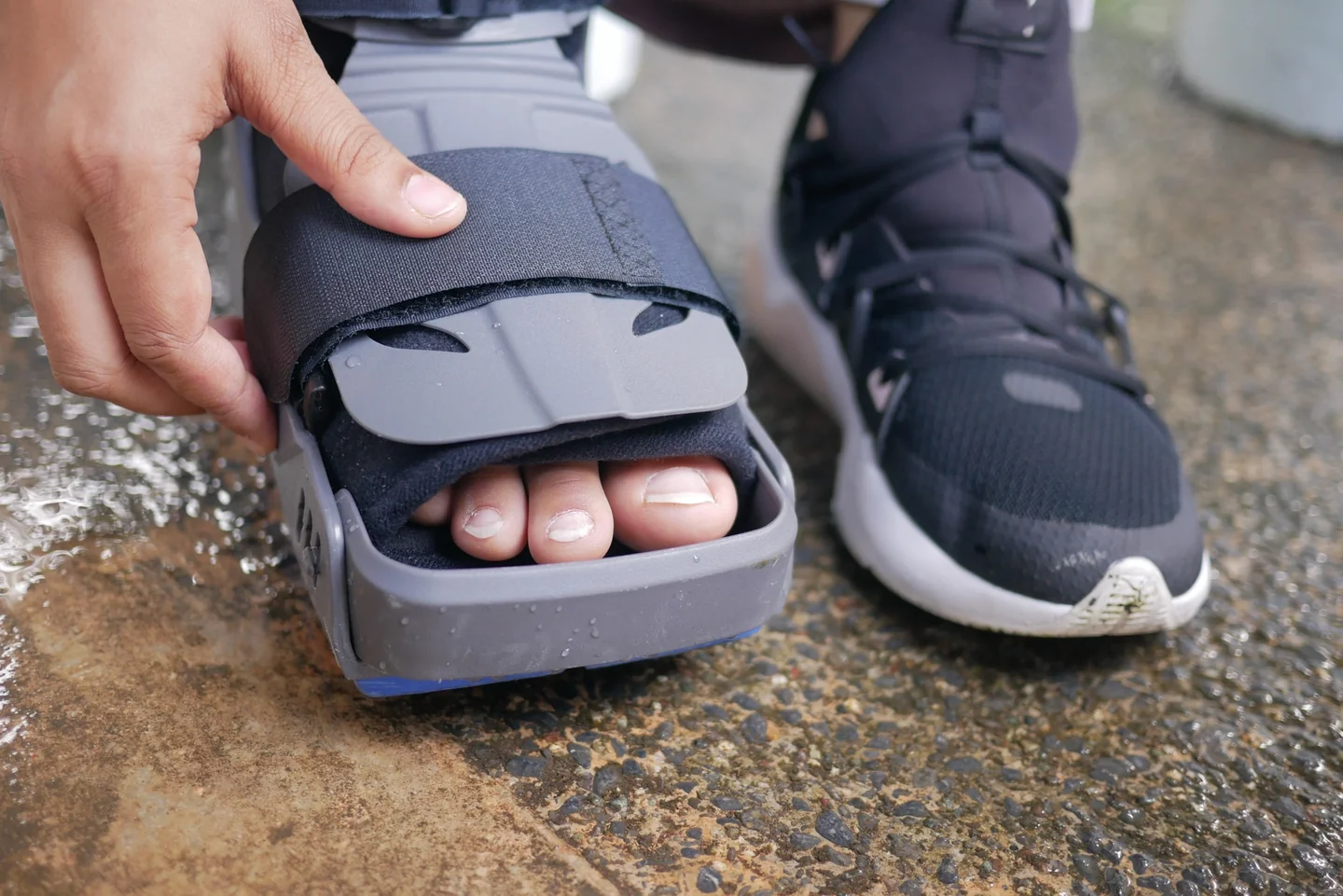
Pain that wakes you in the middle of the night usually points to active inflammation, a joint that is losing space, or mechanical pressure that becomes more noticeable at rest. In the case of the big toe, that nighttime twinge is no minor detail: the hallux bears much of the push-off when walking and, when something goes wrong, the warning can come precisely when the body relaxes.
Night has its own clinical grammar. Without the noise of the day, pain is perceived more sharply, stiffness is more noticeable, and inflammation seems to take up more room. In the big toe, the most common causes are gout, osteoarthritis or hallux rigidus, bunions, sesamoiditis, an ingrown toenail, or an overuse injury. Some hurt when weight is placed on them; others, even at rest, throb like an ember under the skin.
What changes when pain appears at night
Rest does not create the problem, but it does bring it into the spotlight. During the day, movement distracts, circulation becomes more active, and the brain divides attention among many signals. At night, however, inflammation, joint pressure, or nerve irritation become easier to notice. That is why certain conditions seem to worsen just as you lie down, even though the cause has been developing for weeks or months.
In the big toe, there is also a clear biomechanical reason: it is a key part of the push-off phase of gait. When the metatarsophalangeal joint loses mobility, when bone rubs more than normal, or when the soft tissue is inflamed, the joint can end up irritated by the end of the day. The result is pain that does not always announce itself while running, but does when the foot rests under the sheets.
Position also plays a role. A flexed foot, pressure from the sheet, or ambient heat can intensify an existing discomfort. If there is also an inflammatory process such as gout, the episode may feel disproportionate, with redness, extreme tenderness, and a sensation of a joint on fire.
Gout, osteoarthritis, and bunions: the three biggest names
Gout is often the main suspect when the pain is sudden, intense, and nocturnal. It is caused by the buildup of urate crystals in a joint, and the big toe is its classic setting. The attack usually wakes you in the early hours, with the toe hot, red, swollen, and very sensitive to touch. This is not a dull pain: many people describe it as an alarm that goes off all at once and prevents sleep.
Osteoarthritis of the big toe, especially the so-called hallux rigidus, behaves differently. Here the problem is usually cartilage wear and the formation of osteophytes or bone spurs. The joint loses mobility, stiffness appears, and walking becomes harder, especially during push-off. At night, the body at rest makes that underlying inflammation more obvious, as if the hinge of a rusty door were complaining as it sits still.
A bunion, or hallux valgus, can also hurt at night, although its mechanism is different. The toe deviation and bone prominence create friction against footwear and pressure on the tissues around the joint. By the end of the day, that irritated area may keep burning even without shoes on. In people with advanced bunions, nighttime discomfort does not always come from the bone itself, but from compressed soft tissue and persistent inflammation.
Other causes that should not be overlooked
Not all nighttime pain in the first toe is gout or osteoarthritis. An ingrown toenail can become especially bothersome when lying down if the edge of the nail has already inflamed the skin. The pressure of the duvet, accidental friction, or a minor bump can trigger a stabbing sensation that becomes more noticeable in silence. When pus, local heat, or spreading redness appears, infection becomes more likely.
Sesamoiditis is another relevant possibility, especially in active people or runners. Beneath the big toe are two small sesamoid bones that help during push-off. If they become irritated by overuse, the pain is usually located on the sole, right under the joint. During the day it may be tolerated through movement and adaptation, but at night the area feels like battered ground.
Stress fractures, sprains, soft tissue injuries, and, less commonly, systemic inflammatory conditions also come into play. In runners, repeated overload, a stiff shoe, or a running technique that punishes the forefoot can keep the first toe joint under constant strain that is felt more strongly at the end of the day.
How to tell a mechanical problem from an inflammatory one
The pain pattern gives many clues. If the problem appears mainly when walking, when pushing off the ground, or when wearing a certain type of shoe, the cause is usually mechanical. If the discomfort worsens with rest, wakes you at night, and is accompanied by heat or redness, the inflammatory component becomes more prominent. It is not an absolute rule, but it is quite helpful.
Morning stiffness is another useful clue. In osteoarthritis of the big toe, the joint may feel locked when getting up and improve somewhat with the first steps, although it may then complain again. In gout, by contrast, the pain is usually more explosive and the toe can become intolerable to even the slightest contact. The intensity and the way it starts matter almost as much as the exact location of the pain.
If the pain has been present for days or weeks, it is worth noticing whether there is visible deformity, reduced mobility, nail changes, difficulty bearing weight, or a feeling that the toe no longer pushes off like it used to. Those details help distinguish a simple overload from a problem that is already altering foot mechanics.
Why running can bring the problem to light
In runners, the big toe works like the last gear in a very demanding chain. Every stride ends with load transfer toward the forefoot, and in the final push-off, the hallux bears a notable amount of tension. If there is limited movement, an early bunion, sesamoiditis, or initial osteoarthritis, training can reveal the problem before it shows up at rest.
Surface, training volume, and shoe type also matter. A narrow toe box, a plate that is too stiff, or a sudden increase in mileage can irritate the first toe joint. In long races, fatigue causes the technique to become slightly disorganized, and that small loss of efficiency is paid for in specific areas of the foot.
That is why nighttime pain after running deserves attention. Sometimes it is the delayed expression of daily overload. The body does not always protest when asked to perform; sometimes it does so when it finally falls silent.
When the condition deserves medical evaluation
There are signs that do not fit with a simple passing discomfort. Severe pain that wakes you at night, a very red or hot toe, obvious swelling, fever, sudden deformity, or inability to bear weight are reasons for clinical evaluation. If the change appeared after a blow, a fracture or sprain should be ruled out before dismissing the condition.
It is also wise to consult if the episode repeats, lasts longer each time, if toe mobility decreases, or if the pain begins to change the way you walk. That silent compensation can shift the problem to the knee, hip, or lower back, like a misaligned part dragging the others with it.
In gout, moreover, a first attack in the big toe can be the gateway to a metabolic disorder that deserves follow-up. It is not just about relieving the flare-up; it is about understanding what triggered it and why it keeps recurring.
What the specialist usually does to clarify the cause
Physical examination remains decisive. The clinician checks the toe’s mobility, the exact location of the pain, the presence of lumps, the condition of the nail, skin color, and the response to weight bearing. In some cases, X-rays are requested to assess osteoarthritis, deviations, bone spurs, or fractures. If gout is suspected, blood tests may be ordered and, in certain situations, joint fluid analysis.
When the problem seems to come from gait mechanics, a biomechanical assessment can provide valuable information. It is not uncommon for nighttime pain to originate in hours of poorly distributed loading during the day. The joint complains at night, but the conflict starts much earlier, with every short step, every pace change, or every accumulated workout.
The key is not to treat all pain as if it were the same. A painful big toe can be the tip of the iceberg of inflammation, deformity, or an overuse injury. And each one requires a different interpretation.
What usually helps while the cause is being clarified
The immediate goal is to reduce irritation and avoid further pressure on the area. Relative rest, ice applied cautiously, roomy shoes with a generous toe box, and avoiding heels or very narrow footwear are usually part of the initial measures. In mechanical conditions, a somewhat stiffer or rocker sole often helps because it reduces the work of the joint during push-off.
If the discomfort is at the base of the toe and shoe pressure triggers it, a change in last shape can make a real difference. If the pain is located beneath the joint and seems to come from the sesamoids, unloading the forefoot and avoiding impact activities for a while may be helpful. The logic is simple: less friction, less load, and less accumulated inflammation.
In inflammatory conditions, nonsteroidal anti-inflammatory drugs can ease pain, always under medical guidance and with the usual precautions. If there is infection, major deformity, or a clear suspicion of gout, management changes. The important thing is not to mask, for weeks on end, a signal the body is repeating insistently.
What footwear does when no one is looking
A narrow shoe works like a silent press. During the day it compresses the forefoot, pushes the toe inward, and increases friction over the joint or nail. At night, when the foot is no longer constrained, the tissue is already irritated. The pain is not born in bed; the bed only reveals it.
In runners, this is especially visible. An unsuitable last, a size that is too tight, or a rigid plate that is poorly tolerated can concentrate tension in the first ray. If muscle fatigue or a prior limitation of hallux dorsiflexion is added, the toe can end the day with an overload that shows up at rest, like a cable that still vibrates after the machine has been switched off.
That is why shoe choice is not just an aesthetic detail. It is a clinical and sporting variable. In many people, changing shoes reduces pain more than any elegant explanation.
When the problem becomes chronic
Repeated nighttime pain changes sleep, and poor sleep changes pain perception. An unpleasant cycle then forms: the discomfort wakes you, sleep becomes fragmented, recovery worsens, and the foot tolerates the next day’s load more poorly. Over time, the person may start walking protectively, shortening the stride or loading one side more than the other.
That pattern does not only affect athletic performance. It also alters daily life. Climbing stairs, going up on tiptoe, or even resting normally can become a small calculation of movements. In cases of osteoarthritis or hallux rigidus, loss of mobility usually advances slowly, almost like a door closing centimeter by centimeter.
That is why identifying the cause early is so useful. The sooner the language of pain is understood, the easier it is to stop the chain of compensations.
A clue that should not be normalized
Waking up because of big toe pain is not an innocent oddity. It may be a gout attack, the expression of osteoarthritis that is already limiting function, an irritated bunion, an ingrown toenail, or the aftermath of repeated overload. The common denominator is that the foot is warning that something does not fit in its structure, its load, or its inflammation.
The important detail is not only that it hurts, but how, when, and with what other signs. If it appears in the early hours, if the toe changes color, if the joint loses movement, or if the act of walking becomes clumsy, the condition deserves serious review. In the foot, like in a fine lock, a small misaligned piece is enough to jam the whole mechanism.
And when the lock sets in, night stops being rest and becomes a reminder. That is precisely why it is worth paying attention to the signal before the pain learns to repeat itself.
Medical reference: Big toe joint pain, NHS.



How to prevent thigh chafing: causes and real solutions

Women’s running windbreakers: seven jackets and how to choose

Do more workouts get rid of soreness? A guide for runners

Jaén Half Marathon 2026: Record 3,800 Runners Registered

Men’s short running tights: how to choose the right pair

World Triathlon confirms data breach involving medical data

Izan Edo targets podium at Miyazaki World Cup

María Pérez ranks ninth in World Athletics’ 2026 top ten

Dos Santos, Duplantis and Sawe: World Athlete of the Year finalists

San Silvestre Vallecana 2026: 42,000 places, prices and start times

 Races4 months ago
Valencia Half Marathon 2027: date and registration

 Races4 months ago
Valencia Marathon 2026: entry, ballot and course

 Reviews and Comparisons4 months ago
Asics Gel-Roadmiles 3 for men: review and current price

 Reviews and Comparisons4 months ago
Asics Gel Sonoma 8 Gore-Tex: complete analysis for trail and rain

 Sneakers4 months ago
Saucony Endorphin Pro 4: full review and verdict

 News5 months ago
Strava API 2026: what changes for clubs, challenges and runner apps?

 Reviews and Comparisons5 months ago
Nike Alphafly 3: opinions, sensations, and real key points

 Reviews and Comparisons4 months ago
Under Armour running shoes review 2025-2026: models and key features

 Sports Equipment4 months ago
Shoe sizes in cm: a clear guide to getting the right fit for your footwear

 Sneakers3 months ago
Skechers GO RUN Consistent 2.0 analysis: comfort and limits

 News5 months ago
Valencia Marathon 2026 route: key tips to train and run better

 Sneakers4 months ago
Adidas Adizero Boston 13 for men: review and verdict