Health and Nutrition
Pain on the top of the foot with swelling: causes and key signs
Swelling on the top of the foot can hide overuse, irritated tendons, or bone injury. Key points for interpreting it.

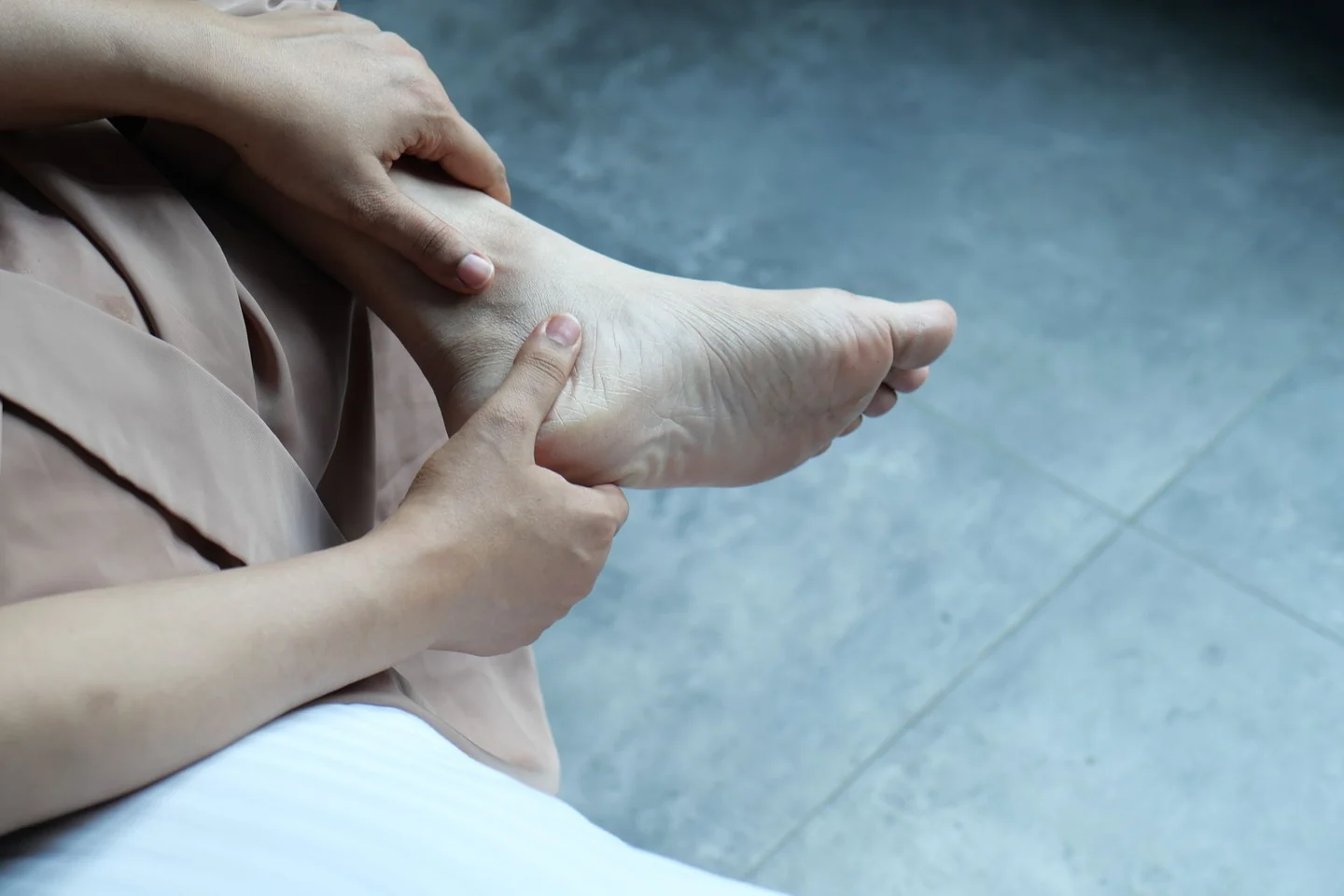
Swelling on the top of the foot does not always result from an obvious blow or a passing ache. In runners, walkers, and people who spend hours on their feet, the picture often appears after a sum of small factors: more miles than usual, shoes that are too stiff, tight laces, or a landing technique that punishes the midfoot. When pain settles over the instep and there is also inflammation, the most useful clue is usually the context, not just the intensity of the pain.
That pattern can range from extensor tendinitis to a stress fracture, joint irritation in the midfoot, or, in less common cases, nerve compression. The difference matters because not all discomfort improves with a short rest and ice. In running, continuing to run with a swollen, tender foot can drag the problem out for weeks and turn a manageable overload into a slower-to-settle injury.
What inflammation on the top of the foot reveals
The instep is an area of passage and load. Beneath the skin run tendons that lift the toes, small midfoot bones, and joints that distribute forces with each stride. When any of those tissues becomes irritated, the body responds with inflammation, a form of defense that can show up as local warmth, tenderness to the touch, and a slight visible swelling over the top of the foot.
In runners, that inflammation often appears as an early warning. Sometimes it is noticed when taking off the shoe, as an uncomfortable pressure under the tongue; other times, with the first step in the morning, when the foot is still stiff. The most important detail is that swelling changes the mechanics of the step: the stride gets shorter, push-off is avoided, and the body compensates with the ankle, knee, or hip.
It is also worth distinguishing between a superficial ache and a deeper injury. An irritated tendon may hurt when moving the toes or when pulling the foot upward, whereas a stress fracture tends to produce more precise pain, often at a specific point on the bone, and it frequently worsens as load increases. Inflammation alone does not determine the diagnosis, but it does mark the territory.
The most common causes behind pain and swelling
Tendinitis or tendinopathy of the extensors is one of the most frequent explanations. The tendons running along the top of the foot work every time the toes are lifted and when the toes extend during walking. If they are subjected to more tension than they can tolerate, pain, tightness, and, in many cases, mild swelling appear right where the shoe laces press the most.
Another cause that deserves attention is stress fracture of the metatarsals. It does not require a major trauma; repeated loading is enough, especially if there has been a sudden increase in training volume, a hard surface, or incomplete recovery from another injury. In these situations the swelling may be more obvious and the pain often becomes more persistent, even outside exercise.
The midfoot can also become inflamed because of joint problems. The Lisfranc area, the tarsometatarsal joints, and other small bony connections bear intense forces in running, pace changes, and downhill work. If they are irritated, the pain may feel like a deep pressure, almost as if the foot were full and rigid inside. The picture worsens when the runner tries to push the pace or return too soon after a few days of rest.
Footwear appears again and again in the clinical history. A high instep inside a low-volume shoe, laces that are too tight, or a narrow last can compress the soft tissues and trigger pain. In some cases, the problem is not the foot itself, but the combination of a sensitive foot and a shoe that acts like a clamp on the top of it.
How it shows up in daily life and during running
When walking, discomfort is usually felt during weight-bearing and push-off. The foot loads, the swelling rubs against the shoe, and each step amplifies the sensation of pressure. In runners, pain may start mildly at the beginning of a workout and grow as the minutes pass, like a rope that keeps getting tighter with use.
When the origin is tendinous, it often hurts to move the toes upward or to lift the foot against resistance. In contrast, if the cause is bony, tenderness usually concentrates in a precise spot and may persist after exercise. The swollen foot may also leave a clear visual sign: the shoe tongue sinks in less, the instep looks rounder, and pressure over the area becomes almost immediate.
There is a practical point that should not be ignored: if swelling changes the way you walk, it is no longer a minor annoyance. The body starts protecting the injured area and, in doing so, redistributes force. That compensation may ease the instep for a few minutes, but it punishes other structures. What seemed like a localized problem ends up spreading to the calf, ankle, or even the plantar fascia.
Signs that point to a more serious problem
Pain that appears at rest or at night deserves more caution than pain that only shows up with exertion. If the swelling does not go down, if the foot hurts when bearing body weight, or if the runner cannot complete a normal walk without limping, the possibility of a bone or midfoot injury becomes more likely. Duration also helps: when discomfort lasts more than one or two weeks without clear improvement, it no longer fits well with a simple passing overload.
The appearance of bruising, deformity, or marked swelling after a specific movement, such as a twist or a poorly controlled landing, changes the scenario. So does very localized pain over a bony point, especially if it increases when hopping on one foot or jogging lightly. These are simple details, but together they outline a pattern that should not be minimized.
At the other end are discomforts caused by shoe pressure or mild tendon irritation. They usually improve by loosening the laces, changing shoes, or reducing training volume for a few days. The difference between quick improvement and persistence is one of the most useful keys for separating a manageable irritation from an injury that needs assessment.
What runners usually do and what should be avoided
The first reaction is usually to slow down or stop for a few days, and in many cases that is reasonable. The foot benefits from reduced load when tissue is sensitized. The mistake comes when rest is taken as a complete solution and running resumes just as quickly, with the same shoes and the same mileage, as if nothing had happened. The inflammation goes down on the outside, but the tissue still cannot tolerate the load.
Nor does it help to turn rest into absolute immobility for too long. The foot needs movement, even if gentle, to avoid losing mobility. Very simple motions, such as moving the toes without pain or doing ankle flexion and extension without forcing it, can serve as a bridge while irritation decreases. The key is not to add fuel to the fire.
Another common mistake is continuing to tighten the footwear in order to feel more support. On an inflamed instep, that is like closing a stuck door even more. A less aggressive fit and a higher-volume last can make a noticeable difference, especially for runners who use narrow or highly structured shoes for intervals and races.
Clinical assessment: why location matters so much
Not all dorsal foot pain points to the same structure. Physical examination remains the most useful tool for distinguishing an irritated tendon from a sensitive bone or a stiff joint. Exact location, response to movement, and reaction to palpation help organize the pain map much more precisely than any generic description.
In some cases, X-rays help rule out obvious fractures or bone abnormalities. If the suspicion is stress fracture, ligament injury, or midfoot involvement, magnetic resonance imaging becomes more important because it shows bone edema and soft tissues better. Ultrasound can also be useful when the goal is to assess tendons and superficial inflammation dynamically.
The value of these tests is not in accumulating them, but in choosing the right one based on the clinical history. A swollen foot after many weeks of running is not interpreted the same way as an inflamed foot after a bad step in a short workout. The full picture is worth more than a single symptom, and in running, that detailed reading usually shortens the path to diagnosis quite a bit.
Conservative treatment and recovery times
Most mild to moderate cases are managed without surgery. The approach usually combines temporary load reduction, footwear adjustment, inflammation control, and a gradual return to activity. In a recent tendinopathy, improvement may begin in 2 to 4 weeks if the factor that is irritating the area is corrected. If the process has been going on for a while, recovery may stretch to 6 or 8 weeks, and even longer when there is an underlying bone injury.
In a stress fracture, the timeline changes. The bone needs time to remodel, and that time is not gained by rushing back to training. Depending on the bone affected and the severity of the condition, recovery can range from several weeks to several months. The runner often notices an deceptive phase in which pain decreases with rest, but returns as soon as the load increases. That fluctuation does not mean healing; often it is only a truce.
Physical therapy has a clear role: restoring mobility, load tolerance, and control of weight-bearing. It is not about chasing pain with technique alone, but about giving the foot back its capacity to work. Progressive, well-dosed exercise helps tendons and muscles tolerate impact stress again. In many cases, the real treatment lies in that orderly return to load.
What can help at home without replacing an assessment
Local cold can relieve the feeling of inflammation when the foot is hot or sensitive after exertion. Elevating the foot for a few minutes at the end of the day or after a lot of walking also helps. These are simple but useful measures to reduce background irritation while the tissue settles.
Gentle ankle and toe movements are usually wiser than total rest. The goal is to keep tendons and joints gliding without causing a spike in pain. If an action clearly increases discomfort or leaves the foot more swollen the next day, that gesture is not helping recovery, but adding extra load.
Returning to running should be gradual and sensible. Sometimes fast walking for a few days is enough; other times, alternating walking with very short jogging is better. The most useful signal is not bravery, but the foot’s response the next day. If it wakes up more swollen, stiffer, or more painful, the tissue still does not tolerate that level of work.
How it relates to running form and foot strike
Running form influences where the load is concentrated. A sudden increase in pace, a low cadence with a long stride, or very aggressive landings can place more stress on the midfoot and the top of the foot. In runners with high arches, ankle stiffness, or limited forefoot mobility, the instep bears more pressure than is desirable.
There is also a clear link with fatigue. When the runner gets tired, efficiency usually drops and foot strike worsens. The foot works like a less precise hinge, absorbs impact poorly, and ends up demanding that excess in the form of pain and inflammation. That is why many problems appear at the end of a workout or the next day, when the tissue has already received too many micro-impacts.
Running education and load management are part of the picture, even if they are not always given enough importance. The problem is usually not one single stride, but hundreds of repetitions with the foot at a disadvantage. That silent accumulation is what eventually lights the fire of inflammation.
When it is worth seeking professional assessment
Persistent swelling with pain when walking, a clear limp, bruising, or pain that worsens over days justify a check-up. The same applies to a problem that appears after a longer-than-usual workout, a fall, or a twist. In runners, persistence is a more important sign than the initial intensity.
If the discomfort prevents normal weight-bearing, does not improve with basic adjustments, or returns as soon as running resumes, a more detailed assessment is warranted. The goal is not only to relieve the symptom, but to distinguish between overload, tendon injury, joint irritation, and a possible stress fracture. In the foot, confusing one for another is costly in both time and frustration.
Caution is also needed when pain appears without a clear explanation, especially if it is accompanied by warmth, redness, or marked swelling. The foot should not become more sensitive without an obvious reason. When that happens, the body is asking for a more serious look.
A small symptom that sometimes tells a big story
The top of the foot functions like a delicate, exposed, and heavily used hinge. Its inflammation may seem minor, but in running it is often the first page of a larger story: a poorly distributed overload, unsuitable footwear, a stress injury, or biomechanics that have already been compensating for some time. The instep does not shout all at once; it usually warns little by little.
That is why the real value of this symptom lies in reading it in context. Swelling that settles in a couple of days does not tell the same story as swelling that returns every time you go out to run. A swollen, painful foot does not need heroics, but rather a precise look, a smart reduction in load, and enough time for the tissue to stop protesting. In running, that patience is often the difference between coming back with good sensations or dragging the problem along for months.
Inflammation on the instep is rarely an isolated finding. It is more often a sign that a specific structure has exceeded its tolerance margin. Understanding it in time makes it possible to read the body better, respect its limits, and prevent a small warning from turning into a long injury.
Medical reference: Pain in the top of the foot, NHS.



How to prevent thigh chafing: causes and real solutions

Women’s running windbreakers: seven jackets and how to choose

Do more workouts get rid of soreness? A guide for runners

Jaén Half Marathon 2026: Record 3,800 Runners Registered

Men’s short running tights: how to choose the right pair

World Triathlon confirms data breach involving medical data

Izan Edo targets podium at Miyazaki World Cup

María Pérez ranks ninth in World Athletics’ 2026 top ten

Dos Santos, Duplantis and Sawe: World Athlete of the Year finalists

San Silvestre Vallecana 2026: 42,000 places, prices and start times

 Races4 months ago
Valencia Half Marathon 2027: date and registration

 Races4 months ago
Valencia Marathon 2026: entry, ballot and course

 Reviews and Comparisons4 months ago
Asics Gel-Roadmiles 3 for men: review and current price

 Reviews and Comparisons4 months ago
Asics Gel Sonoma 8 Gore-Tex: complete analysis for trail and rain

 Sneakers4 months ago
Saucony Endorphin Pro 4: full review and verdict

 News5 months ago
Strava API 2026: what changes for clubs, challenges and runner apps?

 Reviews and Comparisons5 months ago
Nike Alphafly 3: opinions, sensations, and real key points

 Reviews and Comparisons4 months ago
Under Armour running shoes review 2025-2026: models and key features

 Sports Equipment4 months ago
Shoe sizes in cm: a clear guide to getting the right fit for your footwear

 Sneakers3 months ago
Skechers GO RUN Consistent 2.0 analysis: comfort and limits

 News5 months ago
Valencia Marathon 2026 route: key tips to train and run better

 Sneakers4 months ago
Adidas Adizero Boston 13 for men: review and verdict