Health and Nutrition
Pain on the top of the foot: causes and real relief
Causes, warning signs, and useful measures to relieve discomfort in the top of the foot without making it worse.

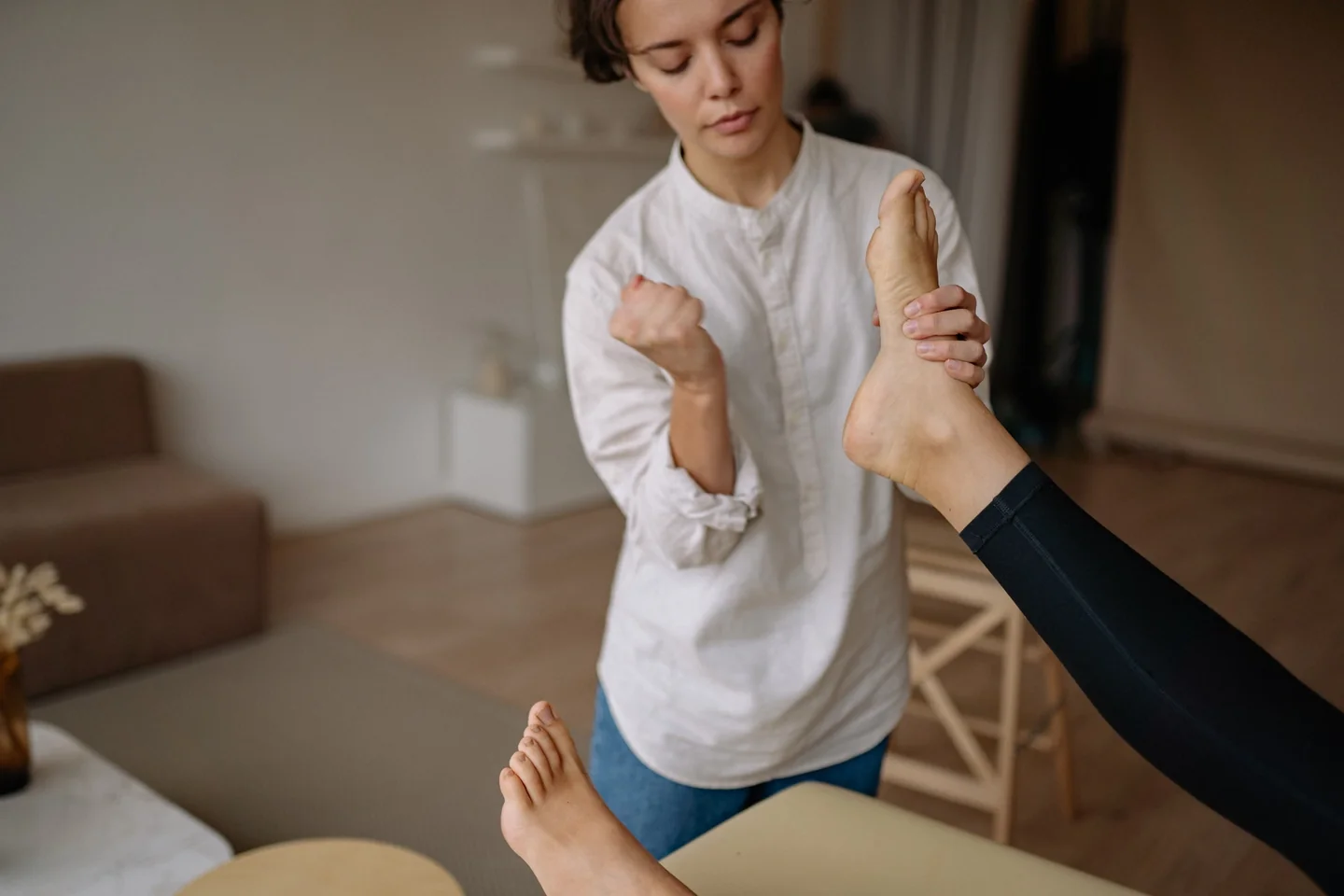
Discomfort in the upper part of the foot usually improves when the load is reduced, the footwear is loosened, and it is identified which structure is failing: tendons, small bones, joints, or even an irritated nerve. In most cases, relief starts with simple measures, but the usual mistake is to keep forcing the step as if the problem were minor.
Not every pain on the instep responds to the same cause. It may be an overload of the extensor tendons, a stress fracture, a midfoot injury, or irritation from laces and tight shoes. Knowing how to distinguish the pain pattern matters because the way to relieve it changes completely depending on the origin.
What is usually behind the discomfort
The upper part of the foot is a small area, but one that does a lot of work. Beneath the skin run the tendons that lift the toes, metatarsal bones, joints, nerves, and blood vessels. When one of these parts becomes inflamed or overloaded, the foot quickly gives it away: pain appears when walking, running, or putting on a shoe.
The most common cause is mechanical. A sudden increase in activity, a long walk, a more intense running session than usual, or stiff shoes can irritate the tissues on the top of the foot. The pain is usually felt just under the laces, increases with movement, and eases somewhat with rest. That relationship between effort and discomfort is a valuable clue.
There may also be a bone problem. Stress fractures do not always come with a big blow; they often arise from repeated impact. In runners, people who walk a lot, or athletes who jump frequently, the bone accumulates microdamage until it protests with a localized pain that becomes increasingly clear and harder to ignore.
When the tendon becomes inflamed
Extensor tendinitis is one of the most frequent causes of pain on the top of the foot. These tendons help lift the toes and the foot during walking. If they become irritated, the pain appears when walking fast, running, or flexing the toes upward. Many times, a very specific tenderness is noticed exactly where the tongue of the shoe rests.
Footwear usually bears more of the blame than it seems. Shoes that are too tight, a last that is too low over the instep, or laces pulled too tightly can crush the area day after day. The result is a small inflammation at first, but one that becomes very stubborn if the same mistake is repeated. Sometimes the body does not break; it simply defends itself from repeated pressure.
When the tendon is irritated, real relief comes from unloading it. Simply enduring it is usually not enough. It is advisable to reduce impact for several days, switch to a wider shoe, and avoid hills, sprints, or long sessions that force the foot to work too hard. If the pain decreases with these measures, the picture makes sense; if not, another cause must be considered.
The bone can also be the source
A stress fracture starts as a subtle discomfort and can end up limiting walking. The most typical sign is a very localized point of pain that worsens with activity and improves with rest at first, but then returns sooner and with greater intensity. In some cases it is accompanied by mild swelling, although the initial X-ray may be normal.
In this type of injury, continuing to run usually makes the problem worse. The bone needs time to recover the damaged area. Forcing it can lengthen recovery and turn a small crack into a more serious injury. If the pain appears when putting weight on it, if there is an exact point that hurts when touched, or if walking starts to become more and more uncomfortable, caution is worth more than inertia.
The midfoot deserves special attention. Some ligament or joint injuries in that area cause pain on the top of the foot, especially after a sprain or trauma. When bruising, rapid swelling, or clear difficulty bearing weight appears, the picture stops seeming like a simple overload and may require imaging tests.
The role of footwear, laces, and gait
A narrow shoe can cause pain and also keep it going. If the upper part is tight, the tendons and superficial nerves become trapped in a kind of household press. In feet with a high instep or some stiffness, that pressure is felt sooner and can leave a burning sensation, a stabbing pain, or an uncomfortable throbbing.
The way laces are tied changes more than it seems. A lace tie that is too tight over the instep can concentrate pressure on a single point. Loosening them or changing how the lacing is distributed can provide immediate relief, especially when the pain is more related to rubbing and compression than to an internal injury. It is a small adjustment, but sometimes a decisive one.
Gait also influences how the load is distributed. A high arch, flat feet, or a biomechanical alteration can make one area work more than it should. Insoles are not always the universal solution, but it is worth remembering that poor weight distribution turns the top of the foot into a silent punishment zone, step after step.
Signs that change the story of the pain
When pain appears with heat, redness, or a lot of swelling, we are no longer talking only about overload. Gout can affect the top of the foot, as can midfoot osteoarthritis or other inflammatory processes. If the pain also comes on suddenly, often at night or at rest, suspicion of joint inflammation becomes more significant.
Tingling, burning, or numbness point to a nerve component. A nerve compressed by footwear, swelling, or a sustained posture can produce a more electrical than mechanical discomfort. In those cases, easing the pain depends not only on reducing activity, but on relieving the pressure that is causing it.
Diabetes requires a closer look at the foot. Diabetic neuropathy can cause pain, loss of sensation, or a confusing mix of burning and numbness. In addition, a small wound or an inflamed area can become complicated more quickly. If the top of the foot is red, hot, swollen, or has a visible lesion, waiting is usually not a good strategy.
What really helps at home
The first useful measure is to rest from whatever triggers the pain. That does not mean being completely immobilized, but rather removing for a few days the movement that irritates it: running, jumping, walking long distances, going uphill, or wearing that specific shoe that is tight. Relative rest is usually more effective than insisting on normality at any cost.
Cold can be useful if the discomfort is recent and there is inflammation. Applied for about 15 or 20 minutes several times a day, it helps reduce the feeling of heat and swelling. Elevating the foot also relieves it when it throbs or swells at the end of the day. These are simple actions, but when used well they reduce discomfort and prevent the tissue from staying irritated.
Changing footwear deserves more prominence than it usually gets. A roomy shoe, with a stable sole and no pressure on the instep, is usually a better ally than a rigid or narrow model. If the pain clearly improves when wearing different footwear, that is a strong clue. On the other hand, if relief is minimal or the pain returns with the slightest effort, the problem is probably not just the shoe.
Painkillers and anti-inflammatories can help, but they do not solve the cause. They are useful for reducing pain in some cases, although they should not be used as permission to keep loading the foot. In addition, they are not suitable for everyone: people with gastric, kidney, cardiovascular problems, those taking anticoagulants, or pregnant women should be more cautious. Masking the symptom without correcting the load is a fragile truce.
When a medical evaluation is needed
There are several scenarios in which the foot no longer asks for patience, but for a checkup. If the pain is intense, if it prevents normal weight-bearing, if deformity appears, if there is an open wound, or if swelling increases rapidly, evaluation should be prompt. It is also advisable to seek care if there is fever, marked local heat, or redness that does not fit with a simple mechanical discomfort.
Another important warning sign is persistence. When the area remains inflamed after several days, or the pain lasts more than a week despite basic care, the condition deserves examination. Pain that recurs every time you try to run or walk normally again usually indicates that the structure is still irritated and that the diagnosis needs to be adjusted.
In runners, the fact that the pain changes pattern matters a lot. If it used to appear only at the end of training and now bothers you at the start, or if it already hurts the next day and stays there, the process may be progressing. That evolution, as unremarkable as it is decisive, marks the difference between a manageable overload and an injury that needs more time.
What tests usually clarify the problem
The physical examination remains the first piece of the puzzle. Locating the exact point of pain, checking whether it hurts when moving the toes, pressing on a specific bone, or wearing a certain type of shoe provides a lot of diagnostic guidance. The history of how the discomfort started is often almost as important as the discomfort itself.
X-rays help rule out fractures and visible bone injuries. They do not always detect a stress fracture at the beginning, but they remain a basic test when there is trauma, very localized pain, or suspicion of structural injury. If the picture does not fit or persists, an MRI is sometimes needed to see bone edema, tendons, or ligaments in more detail.
Ultrasound can also provide useful information. It allows tendons and superficial inflammation to be assessed dynamically, without radiation. In a painful top of the foot, these tests are not ordered routinely without reason, but they are used when the progression, location, or intensity of the pain suggests something more than a passing overload.
Time to improve and return to activity
A mild irritation may improve in a few days if the load is properly reduced. When the source is shoe rubbing or a minor tendinitis, changing habits is usually noticed quickly. The issue is not only whether the pain goes down, but whether it does not return as soon as the foot resumes its usual routine.
Stress fractures and midfoot injuries follow a different pace. In those cases, improvement may take several weeks and, sometimes, months. Returning too soon, even if the foot seems calmer, is one of the classic causes of relapse. The tissue heals, yes, but not at the pace set by impatience.
Returning to sport should be progressive and symptom-aware. If the pain reappears just as easily when resuming running, it should not be interpreted as normality. It is a sign that the structure still cannot tolerate the full load. In running, that difference between being almost fine and being truly ready is worth its weight in gold.
How to prevent the problem from coming back
Prevention starts with choosing footwear better. Shoes that do not squeeze the instep, with enough room and good support, greatly reduce the risk of irritation. It is also wise to watch sole wear, because a deformed support changes the way the foot distributes the load.
Increasing activity volume gradually protects the tissues. Tendons and bones do not tolerate sudden changes well. Going from little to a lot, or starting an impact routine without adaptation, is a quick way to trigger discomfort on the top of the foot. The body usually warns before breaking; the problem is that it is often not listened to.
If pain appears frequently, gait deserves a review. Not because everything is fixed with an insole, but because poor biomechanics may be repeating the same load over and over. Correcting that is not a fad; it is a way of stopping the same nail from being driven in again and again.
A small pain that sometimes tells a bigger story
Discomfort on the instep is rarely just a passing anecdote if it repeats, worsens, or alters the way you walk. It may be a simple overload from running more, wearing a stiffer shoe, or tightening the laces too much. But it can also be the first sign of a stress fracture, joint inflammation, nerve compression, or a midfoot injury.
Relieving that pain is not about enduring it better, but about understanding it sooner. Unloading the foot, changing footwear, reducing impact, and observing the evolution are useful measures, but the turning point comes when the picture no longer fits with a mild irritation. Then the foot is no longer asking for patience, but for a more precise reading.
The best sign is the one that does not dramatize and, even so, is not ignored. An instep that improves with rest is usually a mechanical problem. An instep that becomes hot, swollen, stiff, or hurts more and more is telling another story. Listening in time often saves weeks of limping along and that very uncomfortable feeling of negotiating every step with the ground.
You may also like: Pain in the instep of the left foot: causes and key signs.
Medical reference: Pain on the top of the foot, NHS.



How to prevent thigh chafing: causes and real solutions

Women’s running windbreakers: seven jackets and how to choose

Do more workouts get rid of soreness? A guide for runners

Jaén Half Marathon 2026: Record 3,800 Runners Registered

Men’s short running tights: how to choose the right pair

World Triathlon confirms data breach involving medical data

Izan Edo targets podium at Miyazaki World Cup

María Pérez ranks ninth in World Athletics’ 2026 top ten

Dos Santos, Duplantis and Sawe: World Athlete of the Year finalists

San Silvestre Vallecana 2026: 42,000 places, prices and start times

 Races4 months ago
Valencia Half Marathon 2027: date and registration

 Races4 months ago
Valencia Marathon 2026: entry, ballot and course

 Reviews and Comparisons4 months ago
Asics Gel-Roadmiles 3 for men: review and current price

 Reviews and Comparisons4 months ago
Asics Gel Sonoma 8 Gore-Tex: complete analysis for trail and rain

 Sneakers4 months ago
Saucony Endorphin Pro 4: full review and verdict

 News5 months ago
Strava API 2026: what changes for clubs, challenges and runner apps?

 Reviews and Comparisons5 months ago
Nike Alphafly 3: opinions, sensations, and real key points

 Reviews and Comparisons4 months ago
Under Armour running shoes review 2025-2026: models and key features

 Sports Equipment4 months ago
Shoe sizes in cm: a clear guide to getting the right fit for your footwear

 Sneakers3 months ago
Skechers GO RUN Consistent 2.0 analysis: comfort and limits

 News5 months ago
Valencia Marathon 2026 route: key tips to train and run better

 Sneakers4 months ago
Adidas Adizero Boston 13 for men: review and verdict