Health and Nutrition
Foot chafing: home remedies that do provide relief
Home remedies to soothe friction, protect the skin, and relieve pain without complicating healing.

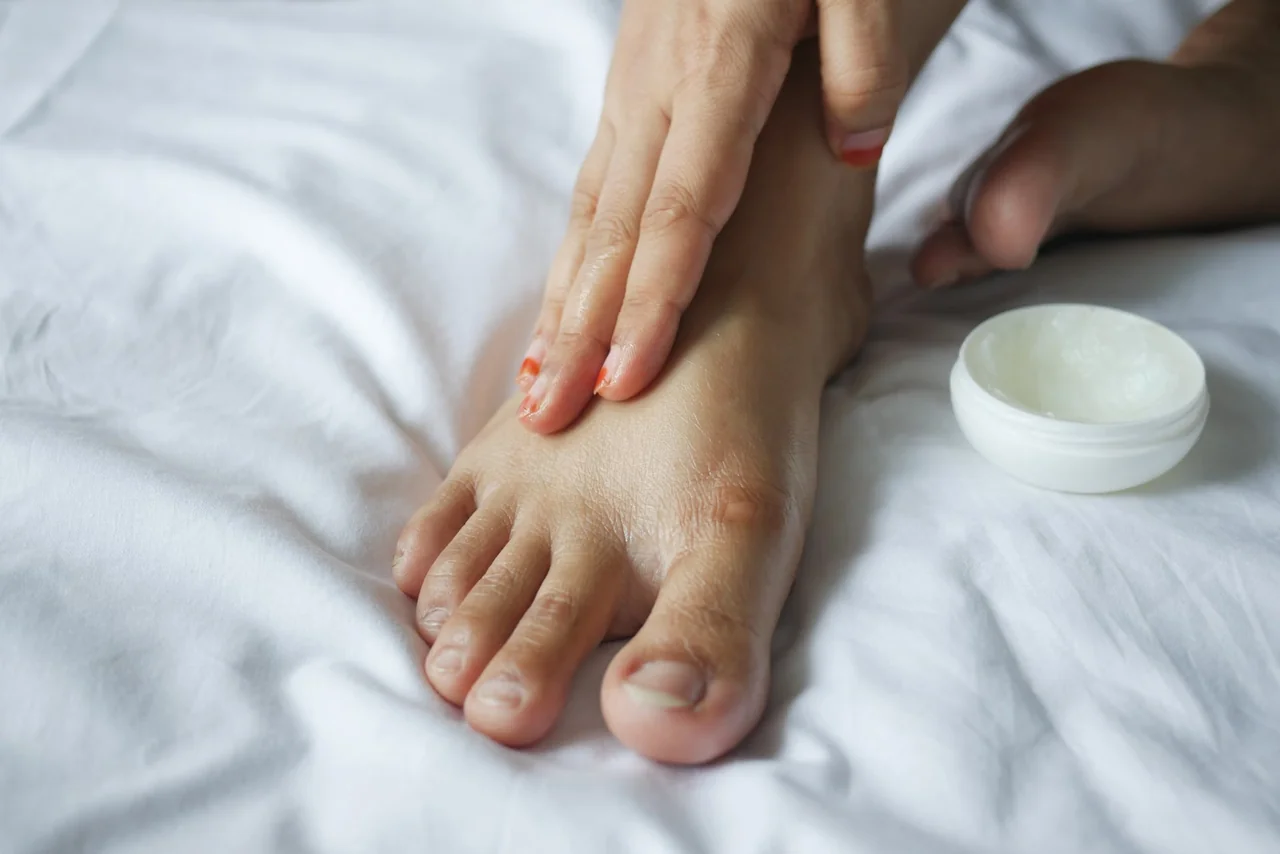
Foot chafing usually appears when footwear is too tight, rubs against a seam, or moves around too much because of sweat. For the recreational runner, that small mechanical flaw turns into stabbing pain, reddened skin and, sometimes, a blister that forces a change in stride. The most useful relief starts with something basic: clean the area, dry it well, and reduce friction.
Home remedies can help, but not all of them are equally useful, and they should not be used without judgment. The most sensible options are those that soothe, protect, and keep the area clean: petroleum jelly, aloe vera, chamomile, cold compresses, and hydrocolloid dressings. Other ideas often repeated online, such as rubbing garlic on it or applying irritating mixtures, can make the injury worse and delay healing.
What really happens when your foot chafes
Chafing is, essentially, a friction injury. The skin is repeatedly irritated against the edge of the shoe, a damp sock, or the shape of the foot itself, and ends up losing its outermost layer. First comes redness; then a burning sensation; later, if the pressure continues, the skin may open or a blister may form. On a long run, that process can progress in just a few kilometers.
In running, the problem is almost never just the shoe. Heat, humidity, sweating, an imprecise size, socks with stiff seams, or a small foot deformity also play a role. That is why effective relief does not depend only on healing the wound: you have to stop the rubbing that feeds it. Without that change, any remedy falls short and the skin breaks again shortly afterward.
The most stressed areas are usually the heel, the outer arch, the top of the toes, and the inner edge of the foot. In people who walk a lot or run frequently, those areas receive constant pressure, as if the skin were paper wearing out along the same fold. When that happens, the priority is no longer to endure, but to protect the surface and allow repair.
Home remedies that bring relief without complicating the wound
Among the most sensible home resources, petroleum jelly stands out for a simple reason: it reduces friction and creates a slippery film. It does not heal an open wound by itself, but it does help keep the skin from suffering friction if the chafing is superficial or if the area starts to irritate before a full injury develops. Applied in a thin layer over the problem area, it works as a small mechanical shield.
Aloe vera is also widely used for its soothing effect and the cool sensation it leaves on the skin. When the area is red and stinging, it can provide temporary relief, as long as it is applied to clean skin with no dirt residue. If the skin is open, it is better used cautiously and only if the product is pure and the wound is not bleeding. Ultimately, its value lies more in the feeling of relief than in any miraculous healing.
Chamomile, applied as a lukewarm, well-filtered infusion, can be useful as a gentle aid for mild chafing. Its role is to soothe and lightly clean, not to replace proper wound care. For it to make sense, the foot should first have been washed with water and mild soap, and the area should be dried carefully without dragging over the damaged skin. It is a simple, discreet remedy with limited effect, but reasonable for small wounds.
Hydrocolloid dressings deserve a special mention because they are not a home remedy in the strict sense, but they are a very practical household solution. They seal the area, cushion pressure, and help maintain a moist environment favorable for recovery. On a closed blister or a just-starting chafed area, they often work better than any improvised mixture. For people who run or walk long distances, they are almost a technical patch for a very specific problem.
What should be avoided because it can make the skin worse
There are remedies that spread very easily, but not all of them are supported or make much sense. Garlic, concentrated vinegar, baking soda used incorrectly, or repeated hydrogen peroxide on the injury can irritate the skin further, dry it out, or delay repair. In chafing, the surface is already sensitive; adding a harsh agent is like pouring salt on a crack that is trying to close.
It is also best not to overuse files, blades, or exfoliants on the painful area. That obsession with making the foot smooth right away often opens the door wider to the problem. The skin needs to recover its barrier, not lose more layers. In the case of blisters, popping them without hygiene or judgment increases the risk of infection and leaves a wound more vulnerable to shoe contact.
Regular adhesive bandages do not always help, especially if they make the area too damp and peel off with sweat. Sometimes the effect is the opposite of what was expected: the skin softens, becomes macerated, and breaks more easily. That is why, when looking for home relief, the product matters as much as the way it is used. Less improvisation and more real protection is usually the most effective combination.
How to clean, dry, and protect the area before applying anything
The first useful step is almost always the simplest: wash the foot with lukewarm water and mild soap. There is no need to scrub with rough sponges or rub the wound. The goal is to remove sweat, dirt, and residue from the shoe itself. After that, drying should be done by patting with a clean towel, without rubbing. That small gesture helps prevent the irritated surface from opening further.
Once clean, the area should be isolated from friction. If the chafing is in a spot that still touches the shoe, any relief will be temporary. That is why home remedies work better when they are paired with a physical measure: changing shoes, loosening laces, using a seamless sock, or placing a dressing that cushions. Skin does not recover on a battlefield.
If the injury bleeds, oozes, or shows redness that spreads, the situation changes. At that point, we are no longer talking about a routine discomfort, but about a wound that may become infected. In that case, home remedies stop being the main answer and proper medical assessment becomes important. The body gives very clear signals when the situation gets complicated.
Which remedies fit best depending on the type of chafing
When the irritation is mild and the skin is intact, petroleum jelly and better shoe fit are usually the most useful combination. Their role is to reduce friction from the start, before a blister appears. If the foot is already sensitive after a long walk or a run, that kind of barrier protects like a thin coat of wax on exposed wood.
If the area is red, warm, and stinging, aloe vera or a cold compress can provide temporary relief. The key is not to overdo it: the cold should be brief and the application gentle. If the skin is open, the priority becomes cleaning, protecting with an appropriate dressing, and controlling friction. At that point the goal is no longer just to soothe, but to prevent the wound from getting larger.
Closed blisters require patience. If they do not bother you too much, the most prudent approach is usually to protect them with a hydrocolloid dressing and let the skin do its job. A blister is a kind of natural cushion the body creates to protect the area. Breaking it out of impatience is usually a worse deal. Only when there are signs of infection, severe pain, or difficulty walking is it worth changing the plan.
The role of footwear and socks in healing
Many chafing problems are actually solved in the closet. A shoe that is too stiff, a narrow last, or a heel that moves around just a bit too much is enough for the foot to start wearing down. In summer, heat also makes the foot swell and sweat more, so the margin for error shrinks. Size, breathability, and fit matter as much as any cream.
Socks matter more than they seem. A fabric with strong seams, a fiber that retains moisture, or a sock that folds in on itself can turn a short outing into agony. Seamless technical models, properly fitted to the foot, are often a major help because they reduce friction and wick sweat better. On long races, that difference is as noticeable as a well-fitted glove versus an uncomfortable one.
New shoes deserve special attention. Few things irritate more than a brand-new pair, still stiff, trying to adapt to the foot while in motion. The sensible approach is to give the material time, use it little by little, and detect problem areas before the wound appears. In the end, the foot does not forgive fashion or haste.
When chafing stops being a minor issue
Most chafing cases resolve without complications, but not all of them. If the area becomes very red, hot, swollen, or starts oozing pus, the wound may be infected. You should also pay attention if the pain worsens instead of improving, if walking becomes difficult, or if a fever appears. In those cases, home treatment is no longer enough and professional care is advisable.
People with diabetes, poor circulation, or reduced sensation in the feet should be especially cautious. A small injury can worsen more easily when the skin heals more slowly or when damage is not noticed in time. In these cases, foot monitoring matters more than in the general population, because a tiny chafe can become an open door to serious infections.
Wounds that keep recurring in the same spot also deserve attention. That usually indicates an underlying problem: a seam, a deformity, an incorrect size, or an uneven pressure pattern. If the same heel flares up like a match every time you go out for a run, the issue is not the skin itself, but the friction pattern hitting it again and again.
Everyday prevention matters more than any quick trick
Experience shows that the best home solutions are the ones that come before the damage. Keeping feet dry, alternating shoes, wearing proper socks, and checking risk areas before a long outing prevents more chafing than any emergency formula. Prevention is not glamorous, but it has real value: it is the invisible part of care that avoids the later bill.
In daily life, the foot benefits from very concrete habits. Drying it well after a shower, moisturizing without soaking it, checking nails and calluses, and not breaking in new gear on a long day are simple decisions that significantly reduce risk. It also helps to listen to the first warning sign, that initial sting that seems small but signals friction already underway. Ignoring it usually costs more.
That is why, when talking about foot chafing and home remedies, the useful answer is not a single recipe, but a combination of relief, protection, and common sense. Petroleum jelly and aloe can soothe; chamomile and cold can relieve; the right dressing can protect; and changing footwear can fix the cause. The foot, so quiet when it works, becomes very loud when something bothers it. Listening in time is still the best remedy.
A small problem that says a lot about how feet move
Chafing is not a trivial matter for someone who walks, stands for work, or runs often. It speaks of pressure, moisture, fit, and skin fatigue. It also reminds us that the foot is not an immobile block, but a living, flexible, exposed structure that absorbs an enormous number of impacts every day. Sometimes the solution lies in a simple home gesture; other times, in paying closer attention to how the shoe behaves over hours.
When treated properly, chafing usually disappears without leaving a trace. When poorly handled, it turns into a chain of discomforts that changes the way you walk and ends up affecting the whole body. The skin on the foot is small, yes, but its ability to ruin an entire day is enormous. That is why home remedies should be chosen carefully, without magic and without harsh shortcuts: less noise, more real care.
Medical reference: Chafing, Cleveland Clinic.



How to prevent thigh chafing: causes and real solutions

Women’s running windbreakers: seven jackets and how to choose

Do more workouts get rid of soreness? A guide for runners

Jaén Half Marathon 2026: Record 3,800 Runners Registered

Men’s short running tights: how to choose the right pair

World Triathlon confirms data breach involving medical data

Izan Edo targets podium at Miyazaki World Cup

María Pérez ranks ninth in World Athletics’ 2026 top ten

Dos Santos, Duplantis and Sawe: World Athlete of the Year finalists

San Silvestre Vallecana 2026: 42,000 places, prices and start times

 Races4 months ago
Valencia Half Marathon 2027: date and registration

 Reviews and Comparisons4 months ago
Asics Gel-Roadmiles 3 for men: review and current price

 Races4 months ago
Valencia Marathon 2026: entry, ballot and course

 Reviews and Comparisons4 months ago
Asics Gel Sonoma 8 Gore-Tex: complete analysis for trail and rain

 Sneakers3 months ago
Saucony Endorphin Pro 4: full review and verdict

 News5 months ago
Strava API 2026: what changes for clubs, challenges and runner apps?

 Reviews and Comparisons5 months ago
Nike Alphafly 3: opinions, sensations, and real key points

 Reviews and Comparisons4 months ago
Under Armour running shoes review 2025-2026: models and key features

 Sports Equipment4 months ago
Shoe sizes in cm: a clear guide to getting the right fit for your footwear

 Sneakers3 months ago
Skechers GO RUN Consistent 2.0 analysis: comfort and limits

 News5 months ago
Valencia Marathon 2026 route: key tips to train and run better

 Sneakers4 months ago
Adidas Adizero Boston 13 for men: review and verdict