Health and Nutrition
A lump on the top of the foot when running: causes and what to do
A hard lump on the top of the foot can have several causes and requires proper evaluation.

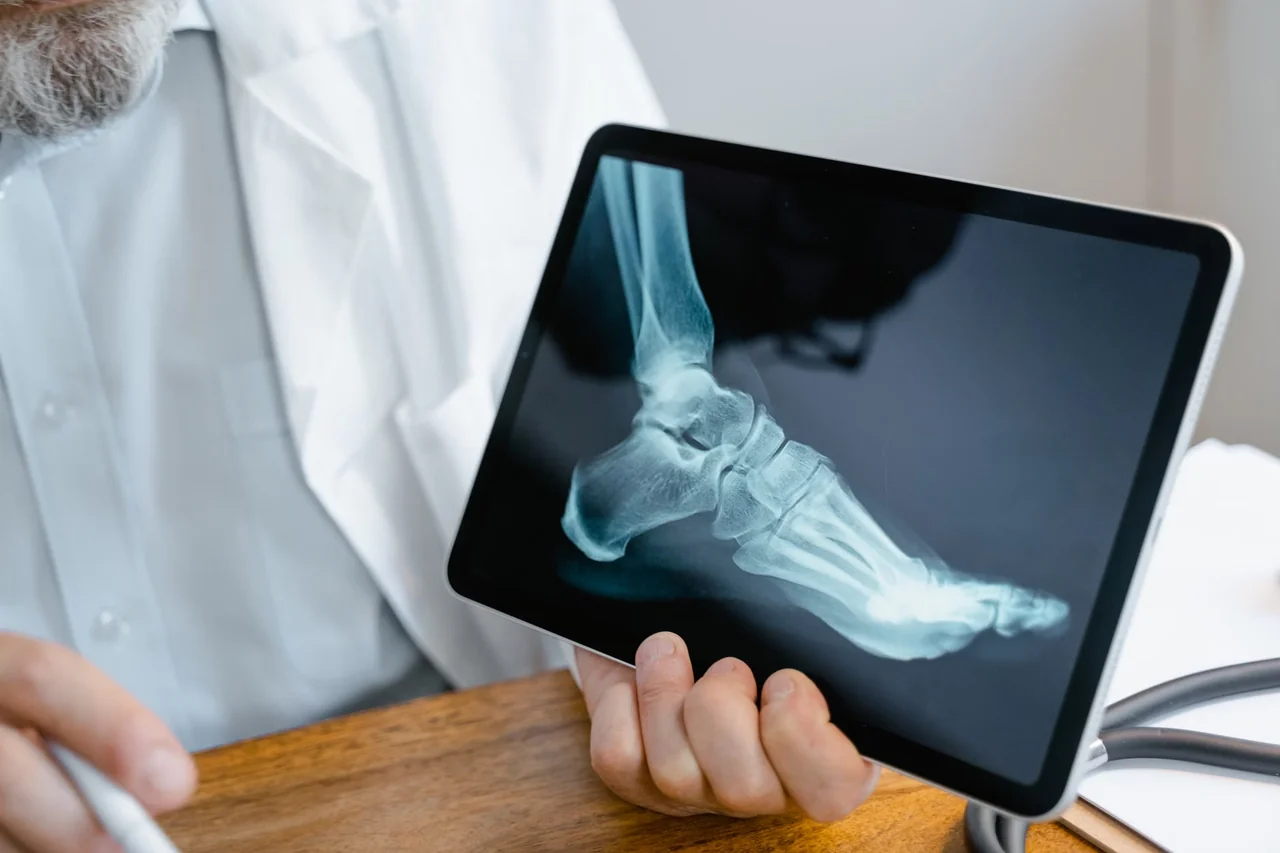
A hard lump on the top of the foot does not always point to the same problem, even if it feels similar when running or putting on a shoe: a small, stone-like bump beneath the skin. In many cases, it is a synovial cyst, a fluid-filled sac near a joint or tendon; in others, it may come from the bone, an irritated tendon, or ongoing friction from footwear.
The key is not to assume that all these little lumps are benign by default, nor to think that they all require surgery. Shape, hardness, pain, mobility, and how long it has been present are much more informative than appearance at first glance. A soft lump that changes size does not point to the same thing as a fixed bony prominence, and pain that worsens with tight footwear is not explained in the same way as a mass that appeared after a blow or a twist of the foot.
What is usually behind a hard lump on the top of the foot
The top of the foot is a dense and delicate area. Extensor tendons run over it, while underneath there are metatarsals, small joints, and little fatty tissue, so any change is noticed quickly. That tightly packed anatomy means that small internal changes become visible or uncomfortable with ease, especially in people who walk a lot, run, work on their feet, or wear tight shoes for hours.
One of the most common explanations is a ganglion or synovial cyst. It usually forms when fluid from a joint or tendon sheath accumulates and becomes enclosed in a capsule. Visually, it may look like a smooth, rounded lump, sometimes soft and sometimes tense; to the touch it is not always firm like bone, but it can still feel like a small fixed knot. In many people it does not hurt, although in others it causes pressure, rubbing, or a throbbing sensation when walking.
There may also be a bony prominence, such as an exostosis or a spur, which feels like a bone that sticks out more than normal. In that case, the lump is usually hard, does not move, and is bothersome mainly with closed shoes. The contrast between the two conditions is important: a cyst usually deforms slightly when pressed; bone does not. That simple difference, though basic, prevents very common confusion in the clinic.
The most common causes and how they appear
The source of the problem may lie in a single structure or in a combination of factors. Repeated use of the foot, microtrauma, shoe friction, an old injury that healed poorly, or a joint with osteoarthritis can trigger a visible lump. In athletes and regular walkers, the history often includes sudden increases in activity, hills, training on hard surfaces, or trainers that press on the top of the foot.
The tendons on the top of the foot can also become inflamed. When that happens, a large lump does not always appear, but there may be a swollen area that is tender to pressure. The pain usually worsens when lifting the foot or repeating flexion and extension movements. Sometimes the sensation is like having a tight cord under the skin, as if the tissue were too tense for the space it has.
Another possibility is lipomas, soft fatty masses that usually move under the fingers and do not hurt unless they rub against footwear. Less common, but possible, are skin cysts, the aftermath of a contusion, or scar tissue formation after an injury. In specific cases, a stress fracture or a structural change in the metatarsal can leave a prominence that the patient interprets as a new little bone, when in reality it is a bone reaction or an irregular union.
What changes when it hurts, grows, or becomes harder
Not all lumps carry the same clinical weight. A stable lump, without pain and without changes for months usually points to a benign process, but it is still worth monitoring its evolution. If it grows quickly, becomes red, hurts at the slightest touch, or appears with local warmth, the picture changes. That pattern suggests significant inflammation, continuous rubbing, or, less commonly, an infection or a lesion that needs more precise evaluation.
Hardness does not always mean severity, although it does give clues. A very hard, fixed lump usually makes one think first of a bony or calcified structure. An elastic or mobile one is more often related to soft tissue. Location also matters: a prominence in the central top of the foot is not assessed the same way as a small lump near the base of the toes or on the inner edge of the foot. Each section of the top of the foot has different stresses, and footwear presses differently depending on the point.
Night pain, loss of sensation, tingling, or difficulty moving the toes require closer attention. A cyst can compress a nerve and cause a tingling or numb feeling; a bony prominence can continuously irritate the soft tissue; tendinopathy can make each step remind you of the injury. In the foot, pain is not just pain: it also changes how you walk, and that alteration eventually overloads the knee, hip, and back.
How it is actually diagnosed
Assessment begins with the physical examination. The professional palpates the area, checks whether the lump is mobile or fixed, whether it feels soft or hard, whether pressure changes it, and whether it reproduces pain. That first contact says much more than it seems. In practice, consistency and location often separate a soft-tissue problem from a bone or joint lesion within minutes.
Then, when needed, ultrasound provides a very useful image. It shows whether there is fluid, whether the lump is connected to a joint, whether the tendons are thickened, or whether there is inflammation around it. It is especially valuable because it does not involve radiation and it shows soft tissues well, which are precisely what most often lie behind a lump on the top of the foot. If the suspicion falls on bone or on a fracture, an X-ray comes into play as the first filter.
Magnetic resonance imaging is reserved for cases in which imaging is not enough or a deeper view of tendons, joints, and internal structures is needed. It is not requested routinely, but it is used when the condition persists, the pain does not match what is seen on the outside, or there is doubt about a complex lesion. In any case, the diagnosis does not depend on the machine alone: it depends on combining symptoms, progression, and examination with clinical judgment.
Treatments used depending on the cause
Treatment changes completely depending on the origin. When dealing with a bothersome synovial cyst, aspiration or drainage may be considered, with the understanding that it does not always disappear permanently. In some centers, an ultrasound-guided injection is performed or sclerosing agents are used to reduce the chance of it filling up again. The advantage of guiding the procedure with ultrasound is precision: you can see where the contents are and where the needle is going.
If the origin is tendinopathy or an overuse syndrome, the usual response is much more conservative. Reducing the load, changing footwear, correcting movement patterns, and lowering friction is usually the first step. In that context, physiotherapy and progressive exercise help restore the tissue’s tolerance. The goal is not to immobilize by default, but to return the foot to a less irritated and more stable mechanics.
When the problem is a bony prominence, the options change. If the lump rubs against the shoe and causes persistent pain, options range from local protection to surgery, depending on its size, origin, and functional impact. In mild cases, a wider, softer shoe may be enough to reduce daily pressure. In more complex cases, the bone does not go away: one must decide whether to observe it, offload it, or correct it.
Anti-inflammatory drugs can help, but they do not resolve the underlying cause on their own. The use of local ice is also common during painful or inflamed phases, although it should be understood as support rather than a standalone treatment. If the lump is related to a more serious injury, a fracture, or a compressed nerve, temporary relief does not replace a full evaluation.
Why footwear matters so much
Many lumps on the top of the foot worsen for a reason as simple as it is persistent: shoe friction. Tight trainers, poorly distributed laces, stiff tongues, or shoes with a low instep turn a small protrusion into a daily source of discomfort. In runners, the pressure is repeated thousands of times; in people who stand for hours, the rubbing acts like a soft but constant piece of sandpaper.
Changing footwear does not remove an internal mass, but it can put out the fire. A wider fit, less rigid materials, and a closure that does not compress the area reduce friction and give the tissue room to calm down. For runners, careful lacing adjustments can relieve pressure on the top of the foot and prevent pain from flaring with every stride. Sometimes the difference is measured in millimeters.
Simple habits also help. Rotating pairs of shoes, avoiding worn-out models that alter gait, and not persisting with shoes that already cause pain from the first wear are decisions with more impact than they seem. The foot usually does not complain for no reason: it protests when the combination of load, shape, and pressure no longer adds up.
When the lump should not be ignored
There are signs that change the tone of the case. A lump that grows quickly, pain that wakes you at night, loss of sensation, or a change in skin color merit medical assessment. The same applies when fever, marked warmth, or striking swelling appears around the bulge. Although most lumps on the top of the foot are benign, the context matters.
It is also worth seeking evaluation when the discomfort interferes with walking, limits sport, or makes it difficult to put on shoes normally. The body can compensate for a while, but that adaptation often ends up overloading another area. A painful top of the foot can make weight-bearing shift to the outside of the foot, cause the heel to take more load, or reduce the toes’ push-off function.
Self-manipulation, forceful massage, or trying to puncture the lesion on your own does not help. A cyst may become more irritated, a skin lesion may become infected, and a bony prominence will not disappear under manual pressure. The foot is a small, precise piece of machinery; trying to fix it blindly usually makes the whole thing worse.
How it evolves and what may happen in the medium term
Progress depends on the cause, but there are known patterns. Ganglion cysts can remain stable, grow slowly, or even shrink spontaneously. Their behavior is unpredictable: one day they are barely noticeable, and weeks later they seem to have inflated. That variability helps identify them, although it also explains why some patients alternate between calm periods and others of discomfort.
Bone changes, by contrast, tend to remain. A spur or exostosis usually does not disappear on its own. What can improve is the associated pain, especially if friction is reduced and the area is offloaded. In tendinopathies, the outcome depends heavily on load management: the sooner the overload is corrected, the sooner the tissue responds. When the problem becomes chronic, recovery requires more patience and more precision.
In athletes and active people, return to normal should not be measured only by the disappearance of the lump, but by the ability to walk, train, and wear usual footwear without the discomfort returning. Sometimes the prominence is still there, subtle, like a trace of the previous episode. What matters is that it stops behaving like an obstacle.
What a lump on the top of the foot can mean for runners
For runners, a lump on the top of the foot may become more noticeable when a shoe presses on it or during repeated foot movement. There are several possible causes, including a synovial cyst, a bony prominence, tendon irritation, or another change in the tissues. Its appearance alone cannot tell you what it is, so do not assume it is just a blister or try to squeeze it to find out.
Notice when it hurts: while putting on your shoes, lifting your foot, during a run, or afterwards. Keep an eye on whether it changes in size, becomes harder or red, or grows more painful. A stable lump that does not hurt may not prevent you from running, but monitor it. If it is painful, temporarily reduce or pause the sessions that make it worse, and avoid hills or long runs if they increase discomfort. Do not run through pain that is getting worse.
Check your shoe fit: pressure from the upper or tightly pulled laces may increase rubbing. Try loosening the laces over the area and wear comfortable shoes that do not press on the top of your foot. Do not force a run if contact still hurts, and do not assume a particular shoe will solve the problem without knowing its cause. Seek advice from a healthcare professional if the lump grows, hurts, follows an injury, or does not improve. An assessment can help clarify what is causing it and guide a safe return to training.
The top of the foot speaks before the problem gets big
A hard lump on the top of the foot is usually a clue rather than a verdict. It may point to a fluid cyst, a friction reaction, tendon inflammation, or a bony prominence that has found its worst enemy in footwear. The way it feels to the touch, when it appeared, and how it changes with activity provide more information than size alone.
The best interpretation does not come from panic or endless waiting, but from a sensible evaluation. Most of these protrusions do not call for alarm, but they also do not deserve indifference. In a foot, something small can greatly alter how you move. That is why a lump on the top of the foot is not just an aesthetic issue: it is a mechanical, clinical, and functional sign that should be interpreted properly before every step turns into a negotiation.
You may also like: Pain and lump on the sole of the foot: causes, signs, and relief.
Medical reference: Accessory bones of the foot and ankle, Institutos Nacionales de Salud de EE. UU. (NIH).



How to prevent thigh chafing: causes and real solutions

Women’s running windbreakers: seven jackets and how to choose

Do more workouts get rid of soreness? A guide for runners

Jaén Half Marathon 2026: Record 3,800 Runners Registered

Men’s short running tights: how to choose the right pair

World Triathlon confirms data breach involving medical data

Izan Edo targets podium at Miyazaki World Cup

María Pérez ranks ninth in World Athletics’ 2026 top ten

Dos Santos, Duplantis and Sawe: World Athlete of the Year finalists

San Silvestre Vallecana 2026: 42,000 places, prices and start times

 Races3 months ago
Valencia Half Marathon 2027: date and registration

 Races3 months ago
Valencia Marathon 2026: entry, ballot and course

 Reviews and Comparisons4 months ago
Asics Gel-Roadmiles 3 for men: review and current price

 Reviews and Comparisons4 months ago
Asics Gel Sonoma 8 Gore-Tex: complete analysis for trail and rain

 Sneakers3 months ago
Saucony Endorphin Pro 4: full review and verdict

 News5 months ago
Strava API 2026: what changes for clubs, challenges and runner apps?

 Reviews and Comparisons5 months ago
Nike Alphafly 3: opinions, sensations, and real key points

 Reviews and Comparisons4 months ago
Under Armour running shoes review 2025-2026: models and key features

 Sports Equipment4 months ago
Shoe sizes in cm: a clear guide to getting the right fit for your footwear

 Sneakers3 months ago
Skechers GO RUN Consistent 2.0 analysis: comfort and limits

 News5 months ago
Valencia Marathon 2026 route: key tips to train and run better

 Sneakers4 months ago
Adidas Adizero Boston 13 for men: review and verdict