Health and Nutrition
Tibial periostitis in running: recovery time and how to treat it effectively
Timelines change depending on the injury, but there are signs and loads that mark the return to jogging.

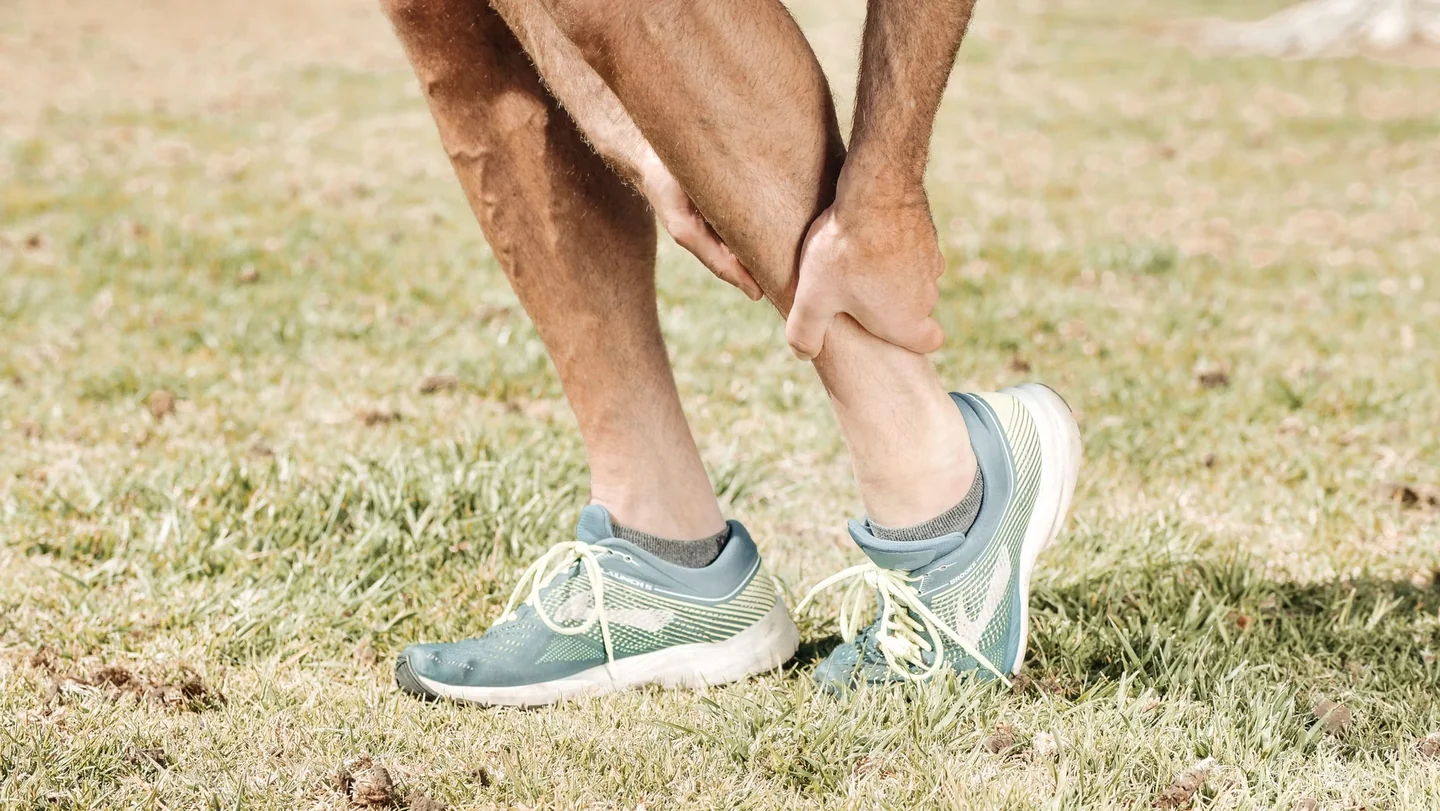
Shin splints stop many runners for an uncomfortable reason: they usually do not announce themselves with a major injury, but with pain that starts while running and eventually spills into daily life. In most cases, getting back does not depend only on resting for a few days, but on how long it has been bothering you, the load that caused it, and whether or not the factors keeping it active have been corrected.
Recovery time in running can range from a few weeks to several months. A recent case, treated in time and without resuming running too early, usually resolves sooner than one that has been dragging on for weeks or months. When pain becomes persistent, the clock is no longer set only by the calendar: it is also marked by impact tolerance, calf and lower-leg strength, running mechanics, and the absence of pain the next day.
What is happening in the shin when it hurts to run
The periosteum is the layer that covers the tibia and takes part in the nutrition and repair of bone. In shin splints, or medial tibial stress syndrome, this area suffers from the repeated traction of muscles and tissues that attach to the inner edge of the leg. It is not a one-time breakdown, but the sum of impacts that the tissue can no longer tolerate well.
That is why the pain is usually diffuse, extending over several centimeters, and appears on the inner side of the shin. At first it may only be noticeable at the start of training, then throughout the session and, if you keep pushing, even while walking or going down stairs. For recreational runners, the scenario is almost always the same: a sudden increase in mileage, changes in surface, worn-out shoes, or leg muscles that do not absorb impact well.
The difference between irritation and a serious injury matters a lot. A broad, linear pain points more toward shin splints, while very localized discomfort, intense at rest or at night, raises concern for a stress fracture. It also has to be distinguished from compartment syndrome, which often causes burning, tightness, and sometimes tingling while running. That distinction is not minor: it changes recovery and it changes the urgency of medical assessment.
Real recovery timelines for runners
There is no single time off because shin splints do not behave the same in every case. When the condition appeared less than four weeks ago and the load is corrected early, many runners return to progressive jogging in about 6 to 10 weeks, although full recovery may take longer. If symptoms have been present for one to three months, the process easily stretches to 3 or 4 months, and when the pain has already become chronic, it is not unusual to speak of six months or more.
It is a particularly frustrating injury because it improves with partial rest, but comes back if the return is made too soon. The runner notices the discomfort ease when stopping, gets hopeful, runs again, and the cycle repeats. That alternation between relief and relapse gives the false impression that the solution is near, when in reality the tissue still cannot tolerate impact load. Time is not lost by resting; it is lost by returning before the cause has been corrected.
Duration also depends on the starting point. It is not the same for a runner who stops activity in the first week of symptoms as for someone who has been pushing through out of inertia for two months. In the first case, recovery is usually shorter and more stable. In the second, the tissue arrives more irritable and the response to impact takes longer to normalize, like a rope that has been too tight for too long.
In practical terms, the body usually asks for very specific signs before considering that the injury is easing: clearly less pain while walking, no discomfort at rest, tolerance of gentle hopping without worsening symptoms, and a clean response the day after exercise. Without those milestones, running again is not a return; it is a repetition of the problem.
Which factors lengthen the break and which ones shorten it
Running biomechanics matter more than they seem. Overpronation, flat feet, an unstable hip, or limited ankle mobility can force the tibia to endure more traction than it should. Body weight, accumulated fatigue, and a stiff posterior chain also play a role, especially in the soleus and calves. When the natural shock absorber fails, the shin pays the bill.
External factors do not help. Suddenly increasing mileage, adding intervals on asphalt after weeks of easy runs, or switching to hills and downhills without adaptation are classics in the timeline of this injury. Downhill running, in particular, tends to load the shin more because it demands repeated braking. On top of that, there is footwear past its useful life, a shoe that is too soft for certain runners, or a model that does not match the runner’s actual footstrike.
What shortens recovery the most is not a trick, but a sensible combination of relative rest, impact control, and progressive strengthening. Maintaining fitness with cycling, swimming, or the elliptical can help you avoid losing shape while the tibia settles down. But that only works if pain does not flare up with cross-training and if daily life is already calmer. The problem is not only running; sometimes it is also standing too long, walking a lot, or repeatedly carrying weight.
How it is treated without turning the pause into a setback
Conservative treatment remains the foundation for most runners. The first step is to reduce the load that caused the injury and avoid running while the tibia is still clearly protesting. Ice can relieve symptoms in the early stages, although its role is more symptomatic than curative. What really matters is that the tissue stops receiving the same aggressive stimulus day after day.
Then comes the work that supports recovery: calf strength, foot control, hip stability, and gradual reintroduction to impact. Heel raises, bent-knee exercises for the soleus, ankle mobility, and balance work help the leg absorb load better. They are not gym decorations; they are how you teach the body to distribute force again.
Orthotics can be useful when there is a clear footstrike abnormality or repeated mechanical overload. It also helps to review footwear, especially if the shoe is worn out or no longer responds well to the runner’s actual support pattern. In some cases, physiotherapy adds unloading techniques, manual therapy, dry needling, neuromodulation, or imaging tools to refine the diagnosis. The key is not to pile up resources, but to use them wisely.
There is a decisive point in this injury: the return should not be based on days without pain, but on function. A runner may feel better after a week and still not be ready to run. The body needs to prove that it can tolerate jumps, loading, pace changes, and progressive volume without the shin flaring up the next day. That is the real line between improving and being recovered.
Signs that the problem is not just overload
Not every shin pain is shin splints. A stress fracture usually causes more precise, deeper, and persistent pain, often at a specific point. If it hurts at rest, at night, or even just with walking, it is worth considering something more serious. Compartment syndrome, on the other hand, tends to appear with exertion and disappear shortly after stopping, but it may be accompanied by a feeling of pressure, burning, or tingling.
It is also worth paying attention to the progression. If the pain not only fails to improve but gets worse despite reducing load, the situation deserves medical evaluation. In distance runners, military personnel, or people with high-impact training volumes, the boundary between bone irritation and stress injury can be thin. Sometimes the body is not asking for patience; it is asking for a full reassessment.
Clinical assessment helps, but it does not explain everything. A proper examination, together with tests when needed, makes it possible to distinguish shin splints from other causes of pain in the tibia or calf. That step saves weeks of uncertainty and, above all, prevents a still-manageable injury from turning into a much longer absence than expected.
When to return to running safely
The return to jogging usually begins when walking no longer hurts, the area is calm to the touch, and basic strength work does not worsen symptoms. From there, the return should be gradual, with short blocks of very easy running alternated with walking. The goal is not to regain pace right away, but to check that the tibia can accept impact without complaining the next day.
Progress makes sense if the body’s response is respected. One good day is not enough; consistency is needed. The runner who can tolerate 10 or 15 minutes of easy jogging without pain during the session and without inflammatory aftereffects the next day is closer to returning than someone who accumulates mixed signals. It also helps to reduce overstriding, improve cadence, and avoid downhill running at first, because downhill places more stress on the shin than flat running.
Returning safely does not mean running slowly forever. It means restoring the ability to load without relapse. First the shin is stabilized, then strength is consolidated, and only then are progressions, pace changes, and volume reintroduced. Skipping that order usually comes at a cost. Shin splints do not punish ambition; they punish haste.
What usually goes wrong when the injury becomes chronic
Chronification almost always comes from a combination of ignoring the first symptoms and not changing the pattern that caused them. Continuing to run because the pain eases after warming up is a common trap. So is resting for a few days and then resuming with the same volume, the same surface, and the same shoes, as if the tissue had erased the memory of the previous effort.
In recreational runners, the most common mistake is confusing tolerance with permission. If pain only appears at the end of the run, that does not mean the tibia is ready for more load. It often means it has already reached its limit. If that limit is repeated for three or four weeks in a row, the injury goes from annoying to temperamental and then to persistent.
Strength is often the big missing piece. Many runners train miles with discipline, but barely work on calves, feet, hips, or core. That leaves the structure exposed, like a bridge with a lot of traffic and too few pillars. Recovery then cannot be fixed by stopping alone; it requires building support where there was previously a deficit.
A common injury that requires patience, not improvisation
Shin splints have a good prognosis in most runners, but they are rarely resolved well with shortcuts. Recovery time depends on when the overload is stopped, whether the mechanical factors are corrected, and whether the return to impact is done sensibly. A recent case may resolve in weeks; one that has been dragged on for months may require a much longer break.
The good news is that the shin usually responds when the pressure irritating it is removed and strength is restored to the chain that protects it. The bad news is that the body does not forget quickly. In running, recovery matures like fruit: it needs time, well-measured load, and consistency. Skipping the process usually costs more than respecting it.
The runner who returns without relapsing is not the one who pushes hardest, but the one who best interprets the body’s signals. And in this injury, those signals are clear: diffuse pain, intolerable load, slow improvement, and a return that must be measured by function, not anxiety. The shin does not ask for heroics; it asks for method.
The shin as a gauge of training load in running
Tibial pain speaks to how effort is managed. It often does not point to a single failure, but to a sum of small decisions: running too much, recovering too little, strengthening less than necessary, choosing the wrong shoes, or ignoring a footstrike that was already demanding a toll. In that sense, the injury acts as a very honest training gauge.
That is why recovery time matters, but what you do during that time matters even more. Stopping in time, unloading intelligently, and rebuilding impact tolerance changes the course of the injury. Those who come back better do not just recover their stride: they also return with a less fragile shin and a more accurate idea of how much they can ask of their body.
In the end, time does not negotiate with the tibia. It is synced with it. And in running, that difference separates a passing ache from a break that drags on unnecessarily.
Medical reference: Shin splints – self-care, MedlinePlus (U.S. National Library of Medicine).



How to prevent thigh chafing: causes and real solutions

Women’s running windbreakers: seven jackets and how to choose

Do more workouts get rid of soreness? A guide for runners

Jaén Half Marathon 2026: Record 3,800 Runners Registered

Men’s short running tights: how to choose the right pair

World Triathlon confirms data breach involving medical data

Izan Edo targets podium at Miyazaki World Cup

María Pérez ranks ninth in World Athletics’ 2026 top ten

Dos Santos, Duplantis and Sawe: World Athlete of the Year finalists

San Silvestre Vallecana 2026: 42,000 places, prices and start times

 Races4 months ago
Valencia Half Marathon 2027: date and registration

 Races4 months ago
Valencia Marathon 2026: entry, ballot and course

 Reviews and Comparisons4 months ago
Asics Gel-Roadmiles 3 for men: review and current price

 Reviews and Comparisons4 months ago
Asics Gel Sonoma 8 Gore-Tex: complete analysis for trail and rain

 Sneakers4 months ago
Saucony Endorphin Pro 4: full review and verdict

 News5 months ago
Strava API 2026: what changes for clubs, challenges and runner apps?

 Reviews and Comparisons5 months ago
Nike Alphafly 3: opinions, sensations, and real key points

 Reviews and Comparisons4 months ago
Under Armour running shoes review 2025-2026: models and key features

 Sports Equipment4 months ago
Shoe sizes in cm: a clear guide to getting the right fit for your footwear

 Sneakers3 months ago
Skechers GO RUN Consistent 2.0 analysis: comfort and limits

 News5 months ago
Valencia Marathon 2026 route: key tips to train and run better

 Sneakers4 months ago
Adidas Adizero Boston 13 for men: review and verdict