News
Shin pain when running: symptoms, causes, and prevention before running
The most common causes, how to distinguish an overload from a more serious injury, and what measures help stop it in time.

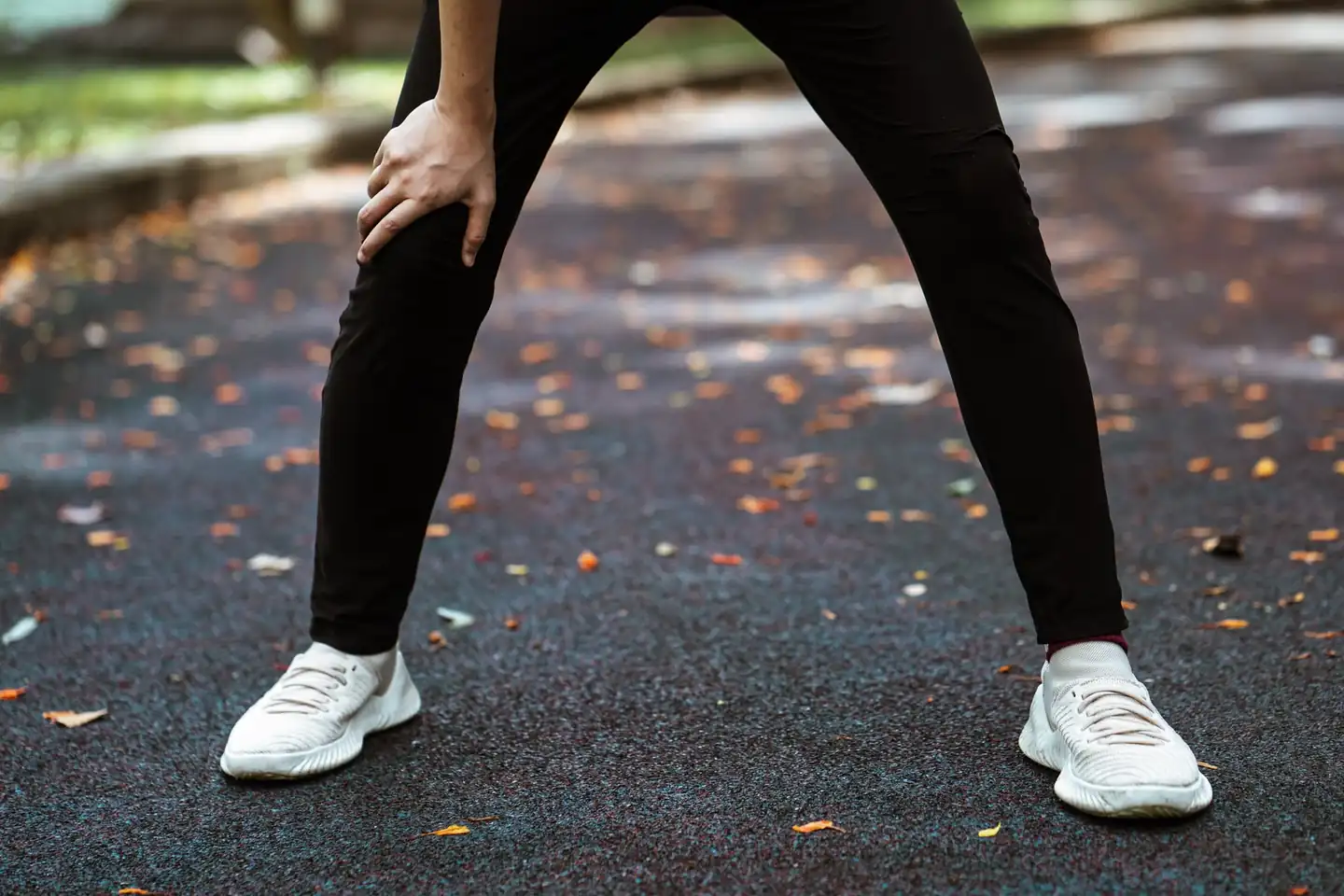
Imagen: Ketut Subiyanto / Pexels
Shin pain while running usually starts as a subtle discomfort, almost a muted friction along the edge of the leg, and ends up forcing you to change your stride or stop. In most cases it points to an overload in the area, with shin splints as the main suspect, although that is not the only possible explanation. The difference matters: periosteum irritation does not hurt the same as a stress fracture, and a simple muscle inflammation is not handled the same way as an ongoing bone injury.
In running, the tibia acts as a real load-bearing post. Every impact multiplies forces, and when the progression of miles, the surface, the shoes or the technique are not helping, the tissue starts to complain. The most common pattern is clear: discomfort at the start of training, apparent relief as you warm up, and the pain coming back more intensely as you keep adding minutes or once you finish. That progression, so recognizable for so many runners, is precisely the sign that should not be normalized.
How the pain behaves and what it usually reveals
The affected area is usually located along the inner edge of the tibia or the front of the shin, with tenderness that increases when pressed. Often there is a feeling of tightness, burning or a diffuse jolt, as if the bone were irritated from within. In early stages it may only be noticed during the run, but if the load continues without adjustment, the pain starts to appear when walking, going up stairs or even at rest.
That progressive behavior fits with an overuse injury. The body does not usually break down all at once; it warns with small signs that keep adding up. First comes the discomfort on certain days, then morning stiffness, later the feeling that the leg is loading up too early. When the discomfort spreads to a very specific point, highly localized, and impact produces a sharp stab, suspicion of a bone problem gains weight and deserves clinical attention.
Not all shin pain is shin splints. A chronic exertional compartment syndrome, tendinopathy of the muscles in the anterior or posterior compartment, irritation of the soft tissues from worn-out shoes, or a stress reaction in the bone can also be involved. The medical history and the examination set the course, because the exact name of the problem changes both the prognosis and the recovery plan.
Shin splints, the most common cause
Shin splints happen when the periosteum, the membrane that covers the bone, becomes inflamed. It is not an ornamental structure: it is highly innervated and responds with pain when it is repeatedly irritated. In runners, that irritation is usually related to the repeated traction of the leg muscles, especially in contexts of excessive load or insufficient adaptation to impact.
Biomechanics explain a good part of the problem. If the foot overpronates, if the calf muscles are fatigued, or if hip stability is poor, the tibia takes on more work than it can comfortably handle. The result is a drip of micro-aggressions. The sum of small rubs ends up inflaming the periosteum, just like a rope frays at the same point again and again.
Hard asphalt, sudden changes in volume, hills and inefficient technique also push in the same direction. A runner who suddenly doubles weekly load, or who changes shoes without a transition, exposes the tissue to a strain it is not yet prepared for. The injury does not appear by chance: it is usually the bill for a progression that was too fast.
What factors increase the risk when running
There are runners who repeat the same pattern year after year. They start a block with enthusiasm, increase mileage and training days, add intervals or hills and, when the body is still adapting, the shin discomfort appears. It is not just about kilometers; it matters how they are distributed, on what surface they are done, and what recovery margin the plan leaves.
Shoes deserve a serious review. A shoe with a worn-out midsole loses its ability to absorb impact, and a last or profile that does not suit the runner can increase strain on the leg. Body weight, ankle stiffness, a cadence that is too low, or a long stride that brakes on every landing also play a role. These are details that, on their own, seem minor; together they create a notable load for the tibia.
In runners who train on very hard or uneven surfaces, the margin of tolerance narrows even more. The ground not only transmits more impact; it also demands constant corrections. That extra stabilizing work, invisible at first glance, explains why an apparently easy run can leave a deep feeling of load the next day. The injury, therefore, does not always come from running more; sometimes it comes from running worse or running in worse conditions.
When to stop running and when to keep a close eye on it
The practical rule is simple: if the discomfort changes the way you run, it is already altering the mechanics and you should ease off. Continuing to train in pain usually does not solve anything; rather, it forces compensation through the ankle, knee or hip, and then the original problem spreads. A stride adapted by pain is a risky stride, because it shifts the load onto structures that should not be taking it on.
You should be especially cautious when the pain appears at rest, is located at a very specific point on the bone, increases with jumps or jolts, and does not ease with relative rest. Also when there is swelling, marked tenderness to the touch, or a rapid progression over a few days. These signs do not confirm a stress fracture on their own, but they do force you to consider it and not trivialize the picture.
By contrast, a diffuse, bilateral discomfort or one related to a recent change in training usually points more toward soft tissue overload. That does not make it trivial. It only means the runner still has time to correct the load before entering the territory of a longer and more treacherous injury. The useful window is at the beginning, when the tissue still responds to simple adjustments.
What a professional usually does when assessing the injury
The clinical examination starts with the exact location of the pain, the load history and the condition of the training gear. The gait, ankle mobility, knee and hip stability, and the runner’s response to simple movements such as brisk walking, standing on tiptoe or hopping on one leg are also reviewed. You do not need much medical theater to understand the problem; you need to observe well.
When there is suspicion of a bone injury, the doctor may request imaging tests, especially if the pain is persistent, focal and does not fit with a simple periosteum irritation. An initial X-ray does not always detect an early stress fracture, so sometimes an MRI is used. Imaging does not replace the examination, but it helps distinguish between inflammation, stress reaction and fracture, which are not interchangeable terms.
It is also useful to assess whether there is a combination of factors: shoe change, increase in volume, speed work, accumulated fatigue and hard surfaces. In running, injuries rarely have a single cause; they are usually the result of several pieces fitting together badly. That is why the most sensible clinical reading does not look for a single culprit, but for the chain of load that pushed the tibia to its limit.
Relative rest, ice and load adjustment: the basis of relief
The first sensible step is usually to reduce or temporarily stop running, not out of drama but out of logic. If impact keeps the irritation going, the tissue has no room to settle down. Prolonged absolute rest is not always the best answer either; what works better is relative rest, that is, removing what hurts and keeping what does not worsen the picture.
Ice can ease the perception of pain in acute phases, especially after activity or at the end of the day, although it does not solve the cause on its own. Anti-inflammatory measures indicated by a healthcare professional can also help when appropriate, always with caution and without turning them into the center of treatment. The real goal is to lower the level of irritation while the mechanical triggers are corrected.
If the runner tries to keep the same pace, the same distance and the same hills despite the pain, the injury usually becomes more stubborn. Inflamed tissue needs a window without repeated aggression. That window is not bought with a couple of days of rest if you then go right back to exactly the same starting point. Recovery depends on total load, not on a single gesture.
The rehabilitation that usually makes the difference
When the painful phase starts to ease, the readaptation work comes into play. Here the focus is not on running for the sake of running, but on restoring capacity to the leg. The calf muscles, soleus, tibialis anterior, tibialis posterior and glutes often need strength and control recovery. Without that base, the runner keeps tripping over the same step.
The approach usually combines progressive strength exercises, ankle mobility, landing control and, in some cases, technique work. It is not a collection of isolated movements, but a way to rebuild impact tolerance. Well-dosed strength protects the tibia because it distributes effort better and reduces repeated punishment on the periosteum and nearby tissues.
The return to running should be done with judgment, not on impulse. First, brisk walks are tolerated, then short jogs, and later alternating blocks of running and walking. If the pain comes back as easily as it did at the beginning, the progression has been too fast. In overuse injuries, pride is a poor strength coach.
Shoes, insoles and surface: what really changes the picture
Gear does not heal on its own, but it can help reduce load. Very worn-out shoes, models that are too minimalist for a runner who needs cushioning, or an unstable model for a fatigued landing can worsen the picture. The key is not to look for the perfect shoe, but for the one that fits the mechanics, the weight and the real training volume.
Insoles may make sense in specific cases, especially when there is a clear biomechanical alteration, but they should not be presented as a universal solution. The same goes for compression socks or leg sleeves: they may provide a feeling of support or subjective relief, although they do not correct the cause by themselves. External help complements; it does not replace the runner’s adaptation.
Surface also matters. Alternating asphalt with compact dirt or parks can reduce part of the impact, as long as the terrain does not force too many corrections. Running continuously on hard ground, week after week, does not condemn anyone on its own, but it does demand more recovery margin and a more efficient technique. The tibia, like a hinge subjected to repeated slams, ends up noticing every blow.
How to tell overload from a stress fracture
The difference between the two is not always obvious at first, but there are useful nuances. Shin splints usually present a more spread out, linear or diffuse pain along the tibial border, while a stress fracture tends to concentrate in a very precise point and worsen with minimal-impact activities. Hopping on one leg, for example, can be a revealing test in some cases.
In addition, a bone stress reaction is usually more persistent, with pain that takes longer to settle even after stopping running. Sometimes it wakes you at night or persists when walking normally. Very localized bone pain deserves more caution than diffuse muscle discomfort, because the progression can be slower and the return to impact more delicate.
You should not rush into self-diagnosis or assume that every shin problem is benign. Too much confidence delays recovery, and too much alarmism does too. The reasonable thing is to watch the progression, reduce load and seek advice when the discomfort does not follow the expected pattern. In sports medicine, haste usually comes at a price and patience, when applied well, saves weeks.
What this injury leaves in the runner
Shin pain forces you to face an uncomfortable truth about running: load matters more than willpower. The runner may be motivated, fit and mentally ready, but if the tissue does not tolerate the volume, the technique or the impact, the leg will defend itself however it can. And it will do so with pain, which is an effective, if not very kind, way of asking for changes.
The best way to read the problem is not to punish the tibia, but to understand why it complained. Most of the time the solution is a combination of relative rest, training review, shoe adjustment, strengthening and, when needed, professional assessment. Ignoring the discomfort can lead to a longer, more restrictive and harder-to-correct picture.
In the distance runner, the tibia does not usually break down out of nowhere: first it warns, then it insists, and if nobody listens, it finally forces a stop. That order matters. Recognizing it in time turns a common injury into a manageable episode and prevents a normal training run from turning into an entire season on the sidelines.
Este artículo contiene enlaces de afiliado: si compras a través de ellos, se genera una pequeña comisión sin coste adicional para ti. Más información.



How to prevent thigh chafing: causes and real solutions

Women’s running windbreakers: seven jackets and how to choose

Do more workouts get rid of soreness? A guide for runners

Jaén Half Marathon 2026: Record 3,800 Runners Registered

Men’s short running tights: how to choose the right pair

World Triathlon confirms data breach involving medical data

Izan Edo targets podium at Miyazaki World Cup

María Pérez ranks ninth in World Athletics’ 2026 top ten

Dos Santos, Duplantis and Sawe: World Athlete of the Year finalists

San Silvestre Vallecana 2026: 42,000 places, prices and start times

 Races3 months ago
Valencia Half Marathon 2027: date and registration

 Races3 months ago
Valencia Marathon 2026: entry, ballot and course

 Reviews and Comparisons4 months ago
Asics Gel-Roadmiles 3 for men: review and current price

 Reviews and Comparisons4 months ago
Asics Gel Sonoma 8 Gore-Tex: complete analysis for trail and rain

 Sneakers3 months ago
Saucony Endorphin Pro 4: full review and verdict

 News5 months ago
Strava API 2026: what changes for clubs, challenges and runner apps?

 Reviews and Comparisons5 months ago
Nike Alphafly 3: opinions, sensations, and real key points

 Reviews and Comparisons4 months ago
Under Armour running shoes review 2025-2026: models and key features

 Sports Equipment4 months ago
Shoe sizes in cm: a clear guide to getting the right fit for your footwear

 Sneakers3 months ago
Skechers GO RUN Consistent 2.0 analysis: comfort and limits

 News5 months ago
Valencia Marathon 2026 route: key tips to train and run better

 Sneakers4 months ago
Adidas Adizero Boston 13 for men: review and verdict