Sports Equipment
The best anti-blister running socks to forget about chafing
Keys to choosing the right model and avoiding chafing, moisture, and discomfort on every outing.

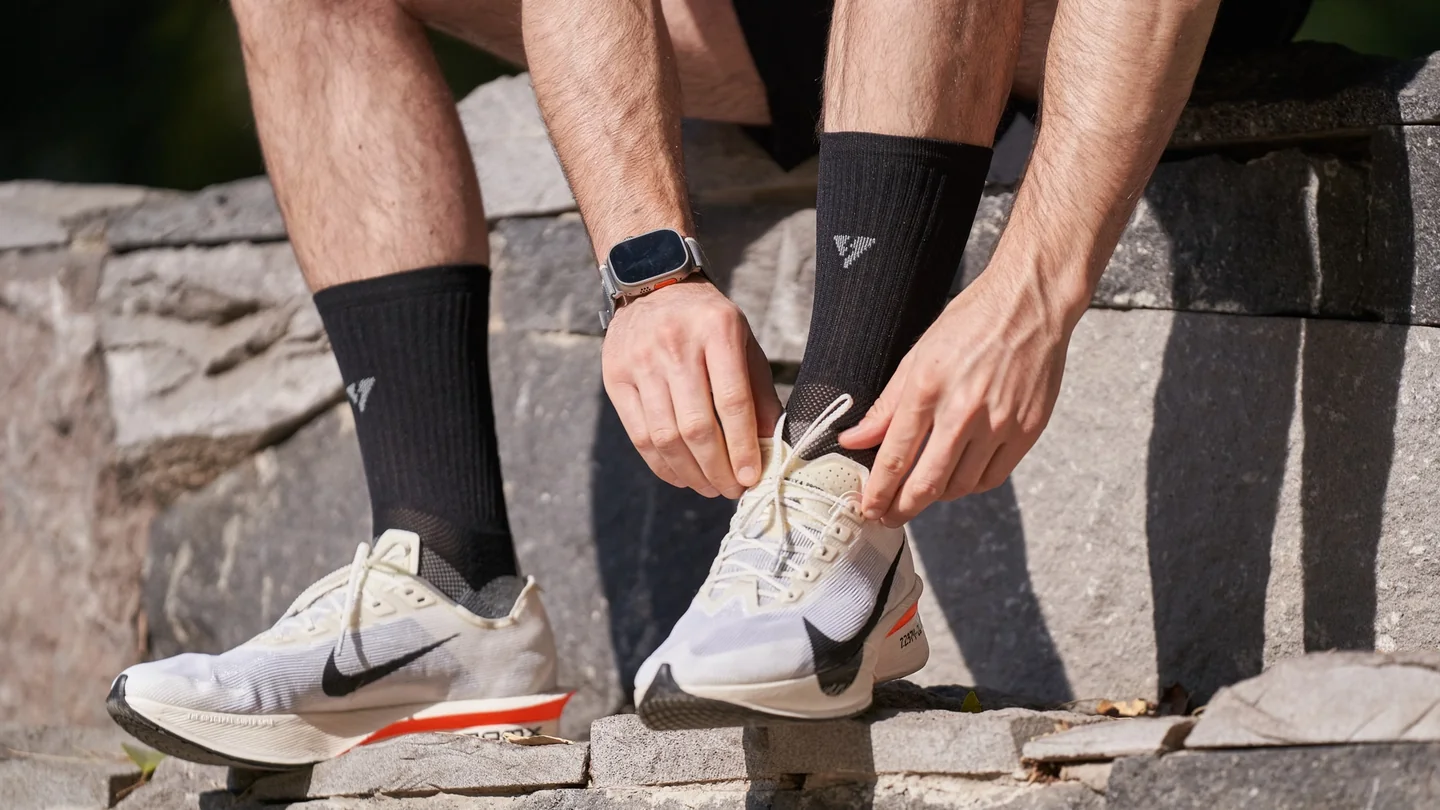
The foot is the first filter between the runner and the asphalt. When that filter fails, the shoe loses part of its purpose and chafing appears, along with heat and blisters that ruin everything from a short run to a marathon. In that small, almost invisible area, an important part of comfort while running is decided. That is why technical models have gone from being an accessory to becoming a central piece of equipment.
Socks designed for running with less friction combine a snug fit, breathable fabric and discreet or flat seams. That combination does not completely eliminate the risk of blisters, because shoe size, moisture or foot shape also play a role, but it does greatly reduce internal rubbing and helps keep support stable. In the Spanish market, the offer has surged with multi-packs, wide size ranges and materials such as polyamide, elastane, Coolmax or bamboo, as well as textile certifications such as OEKO-TEX STANDARD 100 or Global Recycled Standard in some models.
What makes a sock reduce blisters
A blister does not appear by chance: it is born from repeated friction on moist, hot skin. Each stride adds a small amount of sliding, and that back-and-forth, if sustained over kilometers, ends up lifting the surface layer of the skin. A sock designed for running aims precisely to break that chain with a more stable surface, rapid sweat wicking and a structure that does not wrinkle inside the shoe. The difference is most noticeable on long runs, on hot days or when the runner sweats a lot.
Fit is just as important as fabric. A model that is too large forms folds; one that is too short can feel tight; one that is too loose moves with every impact. The arch or midfoot area usually has a support band so the sock does not shift, while the heel and toe usually receive reinforcements. That architecture, which seems minor, is what draws the line between a simple sports sock and a technical product for training comfortably.
Seams matter too, a lot. A seamless toe or one with a very flat join reduces the exact point where rubbing tends to concentrate on the toes. It is no coincidence that many brands highlight that detail in their product pages: in running, a rigid seam is like a stone in your shoe, even if you cannot see it. In trail running, cycling or interval sessions, where the foot works under more tension and heat, that internal softness is even more appreciated.
Materials worth looking for and those worth avoiding
Cotton is still comfortable for everyday wear, but it is not the best choice for running. It absorbs moisture, dries more slowly and leaves the foot feeling heavy when the effort lasts longer. In a summer workout, that sweat retention can turn an ordinary outing into a session of constant friction. That is why most technical models rely on blends of synthetic fibers, especially polyamide, technical polyester, elastane and, in some cases, Coolmax or bamboo variants treated for sports use.
Coolmax is associated with better moisture management, and bamboo usually provides a soft touch and a fresh feel. These are arguments that appear again and again in catalogs because they address very specific needs: quick drying, a less damp sensation and a surface that does not become overly soaked. That ability to wick sweat away is not a luxury. It is the difference between a stable foot and one that begins to slide inside the shoe as if over a thin film of water.
Cushioning should be read with nuance. Generous padding in the heel, toe or metatarsal area can improve comfort on long runs and protect sensitive zones, but maximum thickness is not always the best choice. For intervals, heat or fast races, many runners prefer an ultralight profile that breathes better and gives a greater sense of contact with the shoe. The balance lies in choosing the level of cushioning according to distance, terrain and personal foot sensitivity.
Antibacterial or odor-control technology, when properly applied, helps keep the fabric fresher for longer. It does not replace washing or work miracles, but it does add value in long sessions or during high-volume weeks. In mid- and high-end models, it is also often accompanied by mesh panels and ventilation zones that relieve heat on the instep or the sides of the foot, where temperatures usually rise faster than expected.
Height, compression and runner type
The height of the sock changes both the feel and the protection. The ankle-cut format is light, cool and widely used on roads in spring or summer. The crew height adds a bit more coverage, protects the ankle better against minor rubbing and is useful for mixed training, steady runs or days with moderate temperatures. The high model, meanwhile, is more common in trail running, cold climates or long outings where an extra layer is appreciated against dust, vegetation or rubbing from the shoe upper.
Light compression can provide firmer support in the midfoot and a sense of internal lockdown that limits sliding. It is not the same as a medical compression sock and should not be confused with a recovery product. In this case, compression mainly serves to improve fit, provide a sense of continuity in support and keep the sock in place. Several models on the market highlight it as arch support or anatomical fit, commercial language that, when interpreted correctly, speaks of stability.
For long-distance runners, the choice becomes even more sensitive. A marathon, a two-hour run or a trail outing with elevation gain does not only punish the muscles; it also punishes the skin. In that context, a sock with reinforced toe and heel, good breathability and flat seams can save an entire afternoon of discomfort. It is not a minor detail: the foot, subjected to repeated impact, needs room to expand and not be trapped in fabric that does not move with it.
What the best-selling models reveal
Market searches point to a clear preference for packs of three or five pairs, wide size ranges and quick-drying fabrics. Demand for unisex models also stands out, which does not mean they work equally well for everyone, but rather that the offering is designed to simplify buying. On Amazon Spain, for example, products from brands such as DANISH ENDURANCE, COMPRESSPORT, Rahhint, Cirorld, trueWOD, Niofind, Lurbel or HOOF dominate, with prices ranging roughly between 9.95 and 40.95 euros depending on design, quantity and range.
The lowest prices usually range from around 10 to 15 euros for basic packs, while technical models or well-known brands easily climb above 20 euros. Packs of three have become a benchmark for value for money, and packs of five or six pairs are strongly featured in offers aimed at frequent use. Within that range, buyers usually choose between a simpler construction, designed for everyday training, or a more elaborate one, with arch support, reinforced ventilation and a better feel in long sessions.
There are features that repeat among the highest-rated models. The absence of thick seams, cushioning in the metatarsal and heel areas, moisture wicking and a snug feel without excessive tightness appear again and again in reviews and descriptions. Even when the aesthetics attract attention, as in some models with bold colors or more visible designs, the real buying argument remains functionality. A runner who has suffered blisters usually does not look first at the pattern; they look at whether the foot arrives dry at the end.
Textile certifications are also weighing more and more in the decision. OEKO-TEX STANDARD 100 indicates that the product components have been tested for regulated and non-regulated substances that may be harmful to human health. Global Recycled Standard, for its part, certifies recycled content and traceability in the supply chain. They do not make a sock run faster, but they do add a layer of confidence regarding its manufacturing and environmental impact.
What sets a technical-range model apart from a basic one
The difference is rarely just one thing; it is almost always the sum. A basic model can handle short outings if it fits well and dries quickly, but a technical product usually fine-tunes the arch area better, separates ventilation zones and reinforces wear points. That becomes noticeable after several washes, when the fabric keeps its shape and does not loosen like a tired elastic band. It also shows in wet races, where a more advanced fabric continues managing sweat without becoming heavy.
In trail running, internal stability becomes even more important. The downhill, that stretch that punishes the toes and multiplies sliding toward the toe box, is a cruel test for any sock. If the foot moves forward on every descent, the toes end up paying the price. That is why models with front reinforcement, seamless construction and a snug fit tend to be better received by those who alternate mountain and road running.
Runners who train daily usually value durability almost as much as immediate comfort. An inexpensive pack that holds up well to washing and keeps its fit can be a better deal than a more expensive model that quickly loses elasticity. The key is to check whether the fabric keeps its shape, whether the toe does not open up, whether the heel does not slip and whether the inside stays soft after several weeks of use. That is where marketing and real usefulness part ways.
How to read a product sheet without getting lost in commercial language
The sports sock industry uses terms that sound similar, but do not mean the same thing. Anti-slip, anti-chafing, anti-blister, compression, cushioning, breathability or quick-drying are not interchangeable decorations. Each word points to a different function and should be read carefully. Anti-slip usually refers to internal support or bands that reduce foot movement; anti-blister indicates that the construction aims to reduce friction; breathability refers to how heat is released; cushioning describes the amount of material in specific areas.
The most common mistake is to confuse more thickness with more protection in every situation. A thick sock is not always better. If the shoe is already snug, adding fabric can increase pressure and make the problem worse. If the foot needs room to expand in a marathon, a model that is too compact can create the opposite effect from the one intended. That is why it is not enough to look at a label: the last width, the type of instep and each runner’s sensitivity matter just as much as the technical sheet.
It is also worth looking at the exact composition and how the fabric is distributed. A high blend of technical fibers usually performs better for sweat and drying than one dominated by cotton. Mesh panels let heat escape, while localized reinforcement in wear areas keeps weight down. When a brand talks about arch support, seamless toe, breathable cushioning or ventilation mesh, it is drawing a map of the foot designed for running, not for walking around the house at an unhurried pace.
The role of fit in a purchase that seems minor
A poorly chosen sock can ruin an excellent shoe. If it is too long, it folds; if it is too short, it shifts; if it does not hug the midfoot properly, it twists on itself. The result is simple and unpleasant: more friction, more heat and a greater risk of blisters. That is why size should be chosen with the same care as shoe sizing, especially when the foot is between sizes or when the brand tends to run small.
Wide size ranges are a useful response, but they do not solve everything on their own. The current catalog is full of references that cover everything from smaller sizes to large feet, sometimes with ranges from 35 to 51. That breadth makes it easier to choose correctly, although you still need to check the actual fit at the ankle, instep and toe. A sock can declare the right size and yet still be too long in the toe box or too short in the heel if the pattern does not match the user’s anatomy.
How it feels when you put it on matters more than it seems. It should go on with some firmness, without pulling, and stay close to the foot without constricting it. If it feels too loose when you move your toes, it will probably end up creating folds. If it leaves deep marks from the first minute, it may create unnecessary pressure on long runs. The best result is usually that middle ground, like a second skin that breathes and does not interfere with movement.
Washing, care and service life
Good care prolongs shape and elasticity much more than people usually imagine. Washing inside out, at a moderate temperature and without fabric softener helps preserve technical fibers. Fabric softener can leave residues that reduce moisture-wicking capacity, precisely one of the most important functions in a running sock. Air drying, away from direct heat, also preserves the fabric structure and prevents the elastic from losing tension too soon.
Service life depends as much on use as on terrain. A road runner with easy sessions does not put the same strain on socks as someone who runs trail or does intervals several times a week. The abrasion inside the shoe, the amount of sweat and the frequency of washing all play a decisive role. That is why some models with heel and toe reinforcement withstand the passage of time better, while others are designed more for lightness than longevity.
The clearest sign of wear is the loss of fit. When the sock starts moving, folding at the toe or loosening at the arch, it stops doing its main job. That is the moment when the foot becomes exposed to friction again. In running, where every detail counts, a garment that seems secondary can become a decisive factor for training consistently and without interruptions from minor but persistent discomfort.
What really matters in a smart purchase
The right choice is not reduced to price or the brand visible on the label. What matters more is the combination of fabric, fit, seam, height and sweat behavior. A runner doing easy five-kilometer runs does not need exactly the same thing as someone training for a half marathon, heading into the mountains or stringing together weeks of high volume. A sensible purchase starts from that real use, not from the loudest promise in the catalog.
Anti-chafing models work best when they match the foot, the shoe and the distance. A technical fabric without a well-designed pattern does not save the run; great fit without ventilation ends up accumulating moisture; good cushioning without stability can move too much. The product that wins people over is usually the one that disappears during the run. It does not draw attention, does not force you to think about it and lets the mind stay where it should be: on pace, breathing and terrain.
In that blend of comfort, control and durability lies the true value of these models. They do not promise to run for you, but they do reduce one of the most persistent annoyances of training. For those who rack up kilometers, that is already a lot. A drier foot, less heat and better support changes the experience quietly, like a well-tuned suspension on a broken road: you do not see it, but you feel it with every step.



How to prevent thigh chafing: causes and real solutions

Women’s running windbreakers: seven jackets and how to choose

Do more workouts get rid of soreness? A guide for runners

Jaén Half Marathon 2026: Record 3,800 Runners Registered

Men’s short running tights: how to choose the right pair

World Triathlon confirms data breach involving medical data

Izan Edo targets podium at Miyazaki World Cup

María Pérez ranks ninth in World Athletics’ 2026 top ten

Dos Santos, Duplantis and Sawe: World Athlete of the Year finalists

San Silvestre Vallecana 2026: 42,000 places, prices and start times

 Races3 months ago
Valencia Half Marathon 2027: date and registration

 Races3 months ago
Valencia Marathon 2026: entry, ballot and course

 Reviews and Comparisons4 months ago
Asics Gel-Roadmiles 3 for men: review and current price

 Reviews and Comparisons4 months ago
Asics Gel Sonoma 8 Gore-Tex: complete analysis for trail and rain

 Sneakers3 months ago
Saucony Endorphin Pro 4: full review and verdict

 News5 months ago
Strava API 2026: what changes for clubs, challenges and runner apps?

 Reviews and Comparisons5 months ago
Nike Alphafly 3: opinions, sensations, and real key points

 Reviews and Comparisons4 months ago
Under Armour running shoes review 2025-2026: models and key features

 Sports Equipment4 months ago
Shoe sizes in cm: a clear guide to getting the right fit for your footwear

 Sneakers3 months ago
Skechers GO RUN Consistent 2.0 analysis: comfort and limits

 News5 months ago
Valencia Marathon 2026 route: key tips to train and run better

 Sneakers4 months ago
Adidas Adizero Boston 13 for men: review and verdict