Sports Equipment
Flying sneakers: what they are and how to choose the right ones for your runs
Clear guide to choosing the right competition racing shoes: when to use them, what they offer, and what mistakes to avoid.

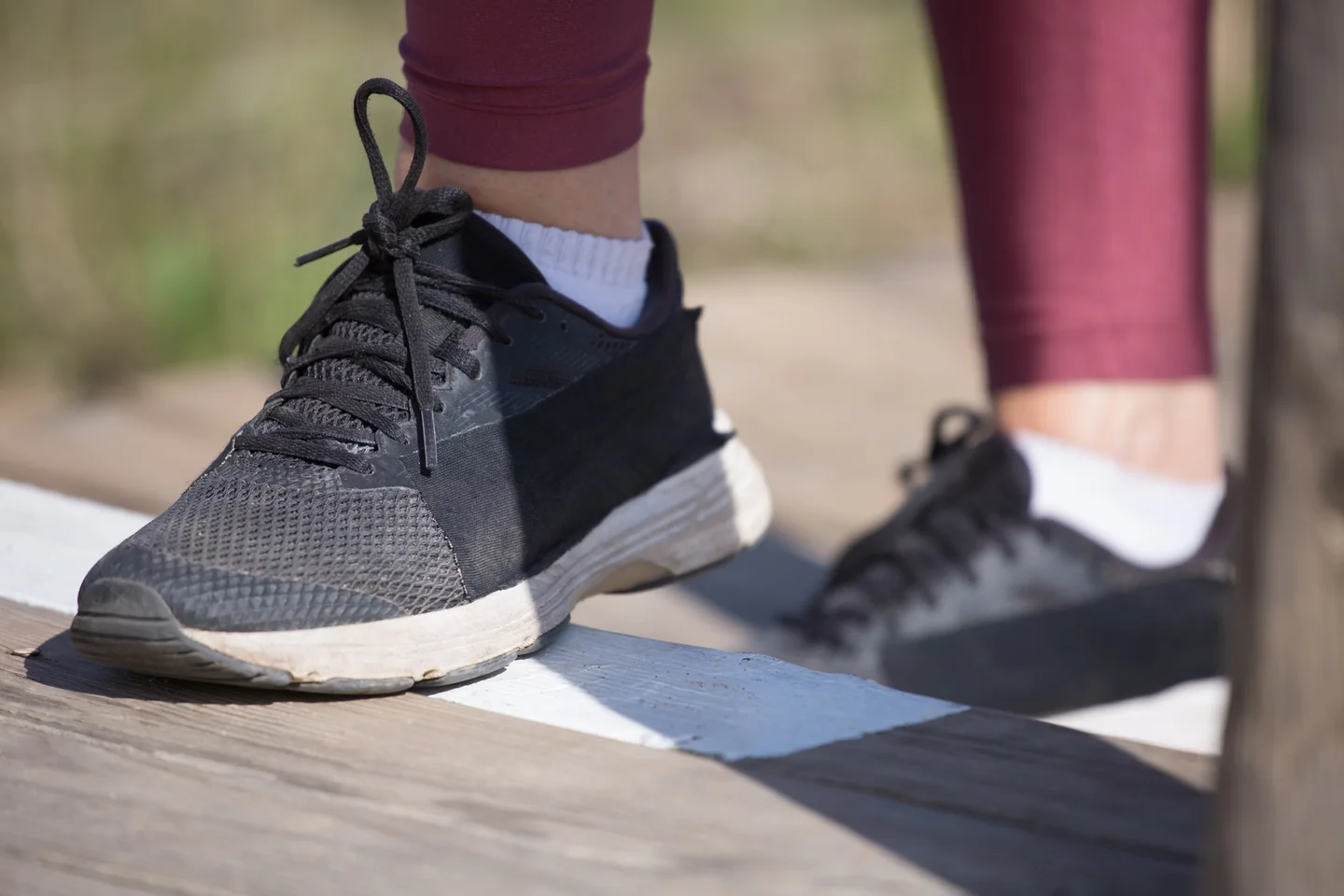
Fast racing shoes are no longer territory reserved for a few specialists. They have gone from being almost track-only tools to a type of shoe increasingly present in popular races, time trials, and demanding sessions. Their promise is simple and seductive: less weight, more responsiveness, and a sense of propulsion that can translate into valuable seconds, especially over short and middle distances.
But the market has changed so much that it is no longer enough to look for a lightweight model. Today, very different profiles coexist: from the most aggressive options, designed to squeeze a 5K or 10K, to somewhat friendlier proposals that allow you to race with more margin, even in the half marathon. The key is to understand what really makes a flying shoe, and above all, which runner gets the most out of it without paying the price in the form of overload or muscle fatigue.
What defines a fast racing shoe
The most visible trait is weight. In this segment, every gram matters because it affects running economy: less mass on the foot means less energy spent with each stride. That is why these models reduce reinforcements, streamline the upper mesh, cut back foam where it is not needed, and keep the structure to the essentials. The result is a shoe that feels sharper, more direct, and, in many cases, more demanding.
Along with weight comes another decisive factor: midsole responsiveness. Modern foams, especially those based on PEBA or high-rebound blends, return more energy than classic formulations. In many cases, this is combined with a carbon plate or internal rods that stiffen the system and help direct force forward. Not all fast shoes have a plate, but those that do have redefined the standard for road racing.
Geometry also matters. They usually have lower or very carefully worked profiles, moderate drops, and a shape designed to make the transition from landing to toe-off easier. In extreme models, the forefoot takes center stage and the stride becomes more aggressive. It is a design that rewards efficient technique, quick ground contact, and the ability to hold high speeds without falling apart.
What distances are they best suited for
The shorter the race, the more sense it makes to give up some protection in favor of lightness. In 5K and 10K events, a pure racer can make a clear difference because the time spent absorbing impact is lower and the runner is usually operating near their highest threshold. At that point, every detail matters: fit, cornering grip, forefoot stiffness, and the ability to leave the ground quickly with each step.
In the half marathon, the debate becomes more nuanced. It is no longer enough to be fast at the start; the foot must keep responding when the muscles start feeling the miles. That is why some runners prefer models that are a bit more forgiving, halfway between competition and fast training. It is not a matter of fashion, but of muscular tolerance, body weight, technique, and prior experience with more radical footwear.
The marathon opens another door. Here, there are runners who do race with very high-profile shoes and plates, but not everyone fits them the same way. An extreme racer may feel perfect during the first kilometers and turn into a hard plank after 30K. The choice depends on lower-body strength, target pace, and the ability to maintain stable mechanics once fatigue has already begun to spoil the form.
When it makes sense to make the leap, and when it doesn’t
Not every runner needs a radical shoe to improve. In fact, many athletes perform better with a lightweight hybrid than with a pure racer, because they get a bit of extra protection without giving up agility. Moving to a competition model usually makes sense when there is already a solid training base, reasonably efficient technique, and prior adaptation to more lively shoes.
The clearest signal is not the brand itself, but the way you run. A runner who heels heavily, loses stability at the hip, or finishes with loaded calves and soleus muscles after fast sessions will usually struggle more with an aggressive racer. By contrast, someone who already lands quickly, maintains a stable cadence, and tolerates high speeds well can get much more out of it. In this, experience matters as much as strength or body weight.
You also have to think about use. A racing shoe is not designed to chew through daily training miles. It can be used for intervals, tests, race simulations, and races, but it should not take on the load of long easy runs that build the week. When it is used for everything, its useful life shortens and, worse still, the runner gets used to a sensation that does not always translate under real racing effort.
What real advantages they bring in a race
The big advantage is not just running faster, but running at a lower energy cost. The lightness reduces the foot’s inertia; the responsive foam softens impact and returns part of the energy; the plate or rods help prevent the stride from collapsing; and the whole package, if well executed, creates a very noticeable sense of forward motion. It is not magic, but rather a sum of small adjustments that change the experience.
On the track or on fast asphalt, that sensation is especially noticeable during pace changes. Fast shoes tend to respond better when the runner accelerates and then settles back into rhythm. The foot does not get lost in a soft, slow foam, but instead receives a firmer, more precise platform. That helps maintain cadence and avoid technically falling apart in the decisive stretches.
They also offer a real psychological advantage. Putting on a competition model changes the perception of effort. The runner feels more willing to attack, closer to the starting line than to everyday training. That confidence does not replace fitness, but it can sharpen execution in a tight race, where a clean start or a well-taken corner matters more than it seems.
The profiles that make the best use of this footwear
There is no universal recipe, but there are fairly clear patterns. Lighter runners with an efficient stride usually feel more natural in competition shoes. So do those with accumulated experience in intervals, pace changes, and fast races, because their muscles already know how to handle the stress of a less protective platform.
Beyond body weight, impact tolerance matters. There are 70-kilo runners who fly in a racer because their technique dissipates force well, and others who are lighter but suffer because they lack stability or because their posterior chain is not ready for the demand. In other words: body mass is a guide, but it does not decide on its own.
At the other end of the spectrum are runners who use these shoes for civil service fitness tests, track miles, or short races on hard asphalt. In those cases, the choice can be very useful, as long as the distance and goal fit. The shorter the effort, the lower the accumulated punishment and the more room there is to prioritize agility over cushioning.
What to look at in the spec sheet
Declared weight provides a valuable clue, but it does not explain everything. Two models with similar numbers can feel very different depending on how the foam is distributed, the curvature of the profile, or the overall stiffness. That is why the spec sheet should be read in context: a 200-gram shoe can feel much more aggressive than a 205-gram one if the first concentrates its geometry in the forefoot and the second spreads protection more evenly.
Drop also deserves attention. A higher drop usually makes for a more traditional transition, with more help for heel strikers. A lower drop tends to load the calves and soleus more, but it can favor a more natural feeling for forefoot landings. In competition there is no perfect number, although it is wise to avoid abrupt changes if your body is not adapted.
The outsole, meanwhile, is a quiet but decisive piece. Good rubber in the forefoot improves grip in sprints, corners, and slightly wet asphalt. In high-performance models, the goal is not to cover the entire base with rubber, but to place it where it is really needed. That trimming helps reduce weight, though at the expense of some durability. Lightness always comes with a cost, and it is usually paid in lifespan kilometers.
The difference between a pure racer and a fast hybrid
In running conversations, these two families often overlap. The pure racer aims for maximum speed and gives up more protection; the fast hybrid offers a middle ground, with more versatility for training and racing. The difference is not always visible, but it is noticeable underfoot. The first demands more; the second forgives more.
For many recreational runners, the hybrid is the most sensible option. It allows for lively intervals, change-of-pace sessions, and races from 5K to the half marathon with less risk of overloading the muscles. The racer, on the other hand, shines when race day calls and the runner is already prepared. They are not perfect substitutes, but different tools.
That is why the current market has blurred the boundaries. There are models that seem like hybrids because of their comfort and yet incorporate competition technologies. Others present themselves as racers, but maintain a softer feel than the shoes of a decade ago. That evolution benefits the runner, although it also means looking beyond the commercial name and paying attention to the model’s philosophy.
What is happening in the market and why so many brands have changed the narrative
For years, the racer was an almost pure concept: low weight, less cushioning, exclusively for races. Today the picture is more complex. Brands have bet on higher foams, stiffer plates, and profiles that once seemed reserved for the marathon. At the same time, pure and radical options have been reduced in some catalogs, especially among the big brands.
That shift responds to a simple fact: most runners want performance without excessive punishment. Plated super shoes have brought high performance closer to a wider range of runners, while classic racers have, in part, become a niche tool. Even so, they still make sense on tracks, miles, 5Ks, 10Ks, and short events where instant response is worth gold.
In this context, brands like Nike, adidas, ASICS, New Balance, Saucony, Hoka, Brooks, Mizuno, and Puma have all adjusted their ranges to cover different needs. Some maintain more radical models; others bet on more balanced solutions. The user gains variety, but also faces a greater risk of making a mistake if they are guided only by marketing or aesthetics.
Common mistakes when choosing them
The first is thinking that the faster the shoe, the better anyone will run. It doesn’t work that way. If the runner does not have a base, a racer can amplify technique flaws, increase muscle fatigue, and make the session go worse than with a more logical model. The second mistake is saving it for one day only and racing in it for the first time, as if the foot did not need adaptation. Shoes also need training.
Another common misstep is choosing based on body weight without looking at the goal. A sturdy runner may do well in a racer for a 1000-meter track event, while a lighter one may prefer a hybrid for a half marathon. Distance, pace, and terrain matter as much as the scale. Hard asphalt is not as forgiving as tartan track, and the difference is felt in the body the next day.
People also fall for the trap of novelty. Every season it seems the latest release solves all the problems of the previous one, but at the core the behavior is still shaped by shape, foam, stiffness, and fit. There is no universally perfect shoe. There is a shoe that fits each runner better or worse, and that affinity does not always match the fashion of the moment.
How they behave in workouts and short races
In fast sessions, a racer can be a very useful tool if the work is specific. Short intervals, pace changes, progressions, or race simulations are scenarios where the shoe shines more brightly. The runner notices a livelier contact, a more direct push-off, and a transition that feels less heavy. However, that liveliness also punishes more when the session gets long or when technique falls apart due to fatigue.
In 5K and 10K races, its best version appears when the pace is demanding from the start. The foot moves quickly, the forefoot works decisively, and the stride flows with less resistance. In fitness tests or on the track without spikes, they can act as a very interesting middle ground, as long as the outsole grips well and the last is not too tight.
By contrast, for everyday training or long runs, the sensation changes. The shoe stops feeling like a spring and starts to feel like a harder, less forgiving, more specialized tool. That is where many runners discover that the best setup is not one pair, but a shoe rotation that divides tasks among protection, agility, and racing.
A closing note that looks more at the runner than the catalog
Fast shoes still fascinate because they condense a very old idea in athletics: run with everything unnecessary stripped away. Less foam, less weight, fewer compromises. But high performance does not come from design alone. It comes from the match between the tool and the person using it. That is where the difference lies between a shoe that helps and one that gets in the way.
That is why the best advice is not to chase the most extreme model, but to find the one that matches pace, strength, and distance. The best competition shoes are the ones that let you run fast without breaking your form. Sometimes that will be a pure racer; other times, a lively hybrid; occasionally, a plated super shoe. The market offers almost everything, but the body still has the final say.
On the track, on asphalt, or in the final straight of a 10K, the feeling of lightness can seem like an instant advantage. What truly matters, however, is that lightness comes with control, grip, and enough margin so that the race does not turn into a blind bet. That is when this kind of footwear stops being an object of desire and becomes a serious performance tool.



How to prevent thigh chafing: causes and real solutions

Women’s running windbreakers: seven jackets and how to choose

Do more workouts get rid of soreness? A guide for runners

Jaén Half Marathon 2026: Record 3,800 Runners Registered

Men’s short running tights: how to choose the right pair

World Triathlon confirms data breach involving medical data

Izan Edo targets podium at Miyazaki World Cup

María Pérez ranks ninth in World Athletics’ 2026 top ten

Dos Santos, Duplantis and Sawe: World Athlete of the Year finalists

San Silvestre Vallecana 2026: 42,000 places, prices and start times

 Races3 months ago
Valencia Half Marathon 2027: date and registration

 Races3 months ago
Valencia Marathon 2026: entry, ballot and course

 Reviews and Comparisons4 months ago
Asics Gel-Roadmiles 3 for men: review and current price

 Reviews and Comparisons4 months ago
Asics Gel Sonoma 8 Gore-Tex: complete analysis for trail and rain

 Sneakers3 months ago
Saucony Endorphin Pro 4: full review and verdict

 News5 months ago
Strava API 2026: what changes for clubs, challenges and runner apps?

 Reviews and Comparisons5 months ago
Nike Alphafly 3: opinions, sensations, and real key points

 Reviews and Comparisons4 months ago
Under Armour running shoes review 2025-2026: models and key features

 Sports Equipment4 months ago
Shoe sizes in cm: a clear guide to getting the right fit for your footwear

 Sneakers3 months ago
Skechers GO RUN Consistent 2.0 analysis: comfort and limits

 News5 months ago
Valencia Marathon 2026 route: key tips to train and run better

 Sneakers4 months ago
Adidas Adizero Boston 13 for men: review and verdict