Sneakers
Shoes for competitive exams: what to wear in 1,000, 2,000 and circuit now
Keys to choosing footwear that is fast, stable, and safe in track events and agility circuits.

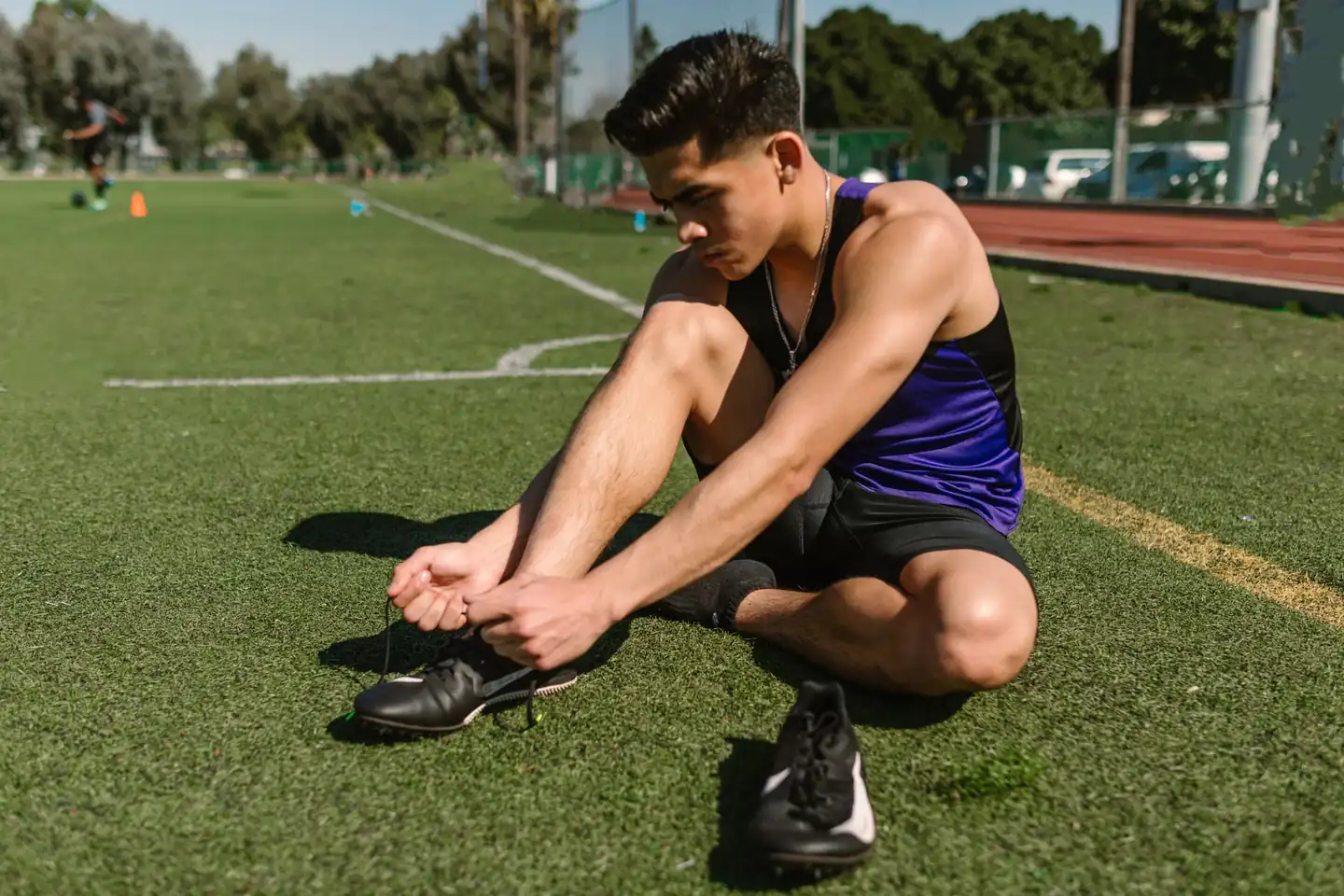
The choice of footwear can decide more than it seems in a physical civil service exam. In a 1,000, 1,500 or 2,000 meter test, the difference between a shoe that is too soft and one that feels more lively is noticeable with every footstrike; in an agility circuit, that same pair can become either an ally or a risk if the base is unstable. That is why the key is not to look for the flashiest shoe, but the one that fits the test, the candidate’s weight, the type of footstrike and the surface where the competition takes place.
The most useful shoes for civil service exams are usually hybrids: lightweight, with good response and enough stability to avoid losing out in turns, braking and short accelerations. The market offers everything from classic racing flats to plated models, superfoams and agile training options that work for training and racing with a single pair or with a minimal rotation. In practice, the decision comes down to performance, safety and comfort, with very little room for error.
What a physical civil service test really asks for
Not all civil service exams demand the same thing, even if many share a similar logic: run fast, brake cleanly and repeat the effort without losing technique. In police, Guardia Civil, firefighters or regional corps, the distances are usually concentrated in short middle-distance work and agility drills. That completely changes the relationship with footwear, because here what matters is not so much the protection of a long run as the ability to transfer force to the ground.
In a 1,000 or 2,000 meter race, the runner needs a very fine balance between lightness, responsiveness and control. A conventional training model may protect more, but it can also absorb part of the energy needed to hold the pace. On the other hand, a shoe that is too aggressive, especially if it includes a rigid plate or a very high foam, can punish anyone who does not have good stability or is not used to that kind of geometry.
The other big difference appears in the circuits. There, lateral support, changes of direction and the feeling of security when turning take over. A shoe that is very high or has a narrow base may offer speed in a straight line, but lose composure when it is time to enter, exit and plant again. In those tests, the ideal shoe is not the fastest on paper, but the one that lets you run without having to think about your foot at every step.
The signs that reveal a good choice
The first filter is fit. A shoe for civil service exams should not move at the heel or squeeze the forefoot. The foot needs some room, but without excessive looseness, because any internal slipping is multiplied when running at high speeds or making intense braking movements. A good midfoot lockdown and a last that does not force you to fight every curve do more for performance than it may seem.
The outsole also matters, a lot. On a track, asphalt or indoor court, enough traction prevents small losses of confidence in footstrikes. There is no need for an excessively aggressive outsole, but there does need to be a tread that grips without becoming clumsy. On smooth circuits or parquet, even a slight improvement in grip changes the ankle’s movement and reduces the feeling of slipping on every turn.
Another decisive factor is the profile. The more height the shoe has, the more cushioning you may gain, but leverage and instability also increase. For fast track tests, many candidates perform better with medium- or low-profile models, especially if they are light or if they want a shoe that responds like an extension of the foot. When the body is heavier or the technique is still not refined, it is best not to go to extremes.
Which models usually work best depending on the test
In distances from 1,000 to 2,000 meters, lightweight racing models and fast mixed-use shoes are usually the most interesting. That is where families like plated racing flats, restrained superfoams and some fast training models that do not feel clunky fit in. The advantage of this type of footwear is not only responsiveness; they also reduce fatigue over a long series of intense footstrikes, something that is especially noticeable when the level comes down to very tight seconds.
Among the most reasonable alternatives are shoes like adidas Adizero EVO SL, New Balance FuelCell Rebel v5, Puma Deviate Nitro 3, adidas Adizero Boston 13, HOKA Mach 7, Saucony Endorphin Speed 5 or Nike Zoom Fly 6. They do not all play in the same league, but they do share something useful for civil service exams: they let you run fast without going as far to the limit as a pure super shoe. These are options that, when chosen well, work both for training intervals and for arriving at the exam with a sense of control.
When the priority is to squeeze out the best time and the candidate tolerates aggressive footwear well, models with a carbon plate or very responsive foams come into play, such as Nike Vaporfly 4, ASICS Metaspeed Sky Paris, New Balance FuelCell SuperComp Elite or adidas Adizero Adios Pro 4. They provide a very noticeable energy return, but they are not a universal solution. In an exam, the theory of the perfect material does not last long if the runner loses balance, lands uncertainly or has not previously trained with a similar profile.
For those who prioritize versatility over raw speed, there are more understated options that fit well in most scenarios. Brooks Hyperion, Inov-8 Roadfly, Mizuno Wave Rebellion Sonic 2, Skechers GOrun Razor 5 or Saucony Kinvara 16 offer more grounded, less radical sensations and, often, more security in turns and pace changes. In civil service exams, that touch of common sense matters more than the catalogs suggest.
When the agility circuit changes all the rules
The agility circuit does not forgive excess ambition. A shoe designed only for running straight can produce a great time on the track and, at the same time, make it uncomfortable to get through obstacles, cones or tight turns. In that context, ground feel, forefoot flexibility and a platform that inspires confidence when planting hard and correcting quickly become more valuable.
That is why many candidates end up looking for models that are not radical in any direction. Very cushioned shoes, especially the tallest ones, tend to feel soft and imprecise when it is time to load the ankle and accelerate again. Very minimalist shoes, on the other hand, can be agile, but they punish you if the body is not adapted or if the session includes a lot of accumulated impact. The middle ground is usually the smartest place.
In that group, proposals like Puma Propio Nitro, Brooks Launch 11, Nike Rival Fly 4, adidas Adizero Adios 9 or Merrell Vaporglove 6 Boa stand out in more extreme and technical profiles. Some agile training models that do not give up grip also work well, such as Salomon DRX Bliss 2 or TYR SR1 Tempo. They are less loud in marketing, but very practical when the exam mixes running, braking and repositioning without room for doubt.
The runner’s weight and experience matter more than it seems
There is no single ideal shoe for every body. A 60-kilo runner with clean technique usually tolerates livelier profiles and less protection better than someone over 75 kilos, especially if that person has less experience at high speeds. The greater the weight, the greater the impact per stride; therefore, the margin for error in footwear choice narrows and stability gains value over pure foam.
Injury history also plays a role. If there is a background of ankle, knee or fascia issues, a shoe that is too extreme may not be worth it. Sometimes losing a couple of seconds by going with a more sensible model is better than risking a week of training because of an inflammatory reaction. In civil service exams, where preparation usually lasts months and the mental load is already high, footwear should add calm, not create doubts.
Candidates with more track experience usually get more out of plated or aggressive-profile shoes, because they know how the foot enters and how the muscle chain responds. Someone coming from daily training shoes needs more transition. That detail, which seems minor, explains why two people with the same time can perform very differently in the same pair. The shoe does not do the work, but it can amplify the way each body carries it out.
Training in the same model is not always the best idea
Using a single pair for everything may seem practical, but it is not always the best choice. Very fast shoes usually wear out sooner and do not offer the same protection for easy runs, gym work or recovery sessions. On the other hand, a more complete model may be perfect for daily training, but fall short in the last tenth of a second that separates an acceptable score from a competitive time.
Shoe rotation has another quiet advantage: it helps spread the load. Alternating an agile model with a more comfortable one reduces repetitive stress on the same structures and, as a bonus, extends the useful life of each pair. In an exam process, where budget matters, this translates into a more rational purchase, less impulsive and closer to real use.
That is why many of the shoes now considered good for civil service exams work better as the central piece of a small rotation than as an absolute solution. A fast training shoe for intervals and the gym, another more stable one for easy runs and, if appropriate, a specific pair for exam day. That strategy is not sophisticated; it simply reduces friction. And in a civil service exam, where every detail adds up, that is worth gold.
What to do with carbon plates, spikes and extremes
A carbon plate is not automatically a guarantee of a better score. Yes, it can help in short track distances, but it also demands cleaner technique and enough stability not to lose efficiency. In a very tight 1,000 or 1,500 meter race, the benefit can be real; in a circuit with turns and braking, that same material can become a drawback if the shoe’s base is too high or the runner’s own mechanics do not help.
Spikes are another story. When the exam allows them and the candidate has trained in them before, they offer a clear advantage in pure speed and in some middle-distance events. But they are not an emergency solution for exam day. They require adaptation, technique and a certain amount of muscular tolerance. Jumping into them without transition is like trying to run on a freshly polished lane without having learned to read it: the advantage exists, but so does the cost of error.
At the opposite extreme are shoes that are too cushioned, which may be comfortable for easy training but reduce agility in explosive tests. They are good news for tired muscles and bad news for the stopwatch. In civil service exams, the goal is not to accumulate abstract comfort; it is to find the point where the foot feels fast, firm and confident. That point is usually much closer to lightness than to a mattress.
The brands that come up most often among candidates and why
Adidas, Nike, ASICS, New Balance, Puma, Saucony, Brooks, HOKA and Mizuno account for much of the conversation because they cover almost every useful profile. Some stand out for purer racing flats, others for balanced mixed-use shoes and others for options that combine response with reasonable stability. Variety is not a problem; on the contrary, it shows that the market no longer forces you to choose between total speed or total comfort.
Within that map, adidas usually offers interesting alternatives in very lightweight models and in other fast-transition shoes; Nike shines in competition and in plated proposals that are well tuned; ASICS and New Balance combine lively foams with fairly capable platforms; Puma has gained ground for feel and versatility; Saucony and Brooks maintain a very useful line for those who want a natural sensation; HOKA and Mizuno bring stability and a ground reading that many candidates appreciate in circuits and controlled intervals.
The overall feeling is clear: there is no magic brand for civil service exams, but there are model families that fit each context better. Those looking for a single pair to train and take the exam usually lean toward fast mixed-use shoes. Those chasing the best time on the track and willing to accept some demands head toward superfoams or spikes. And those who need security above all will find more value in a lightweight, stable and honest shoe than in a laboratory promise.
The most sensible choice is usually the one that fits the body and the test
In civil service exams, the best footwear is not always the fastest on the spec sheet. The one that helps most is the one that respects the runner’s mechanics, fits the specific test and does not create noise in the form of discomfort, doubts or losses of stability. A 1,000 meter track test calls for speed; an agility circuit calls for control; a long preparation period calls for enough durability to reach the exam with reliable sensations.
The decision, in the end, is more like fine-tuning a tool than choosing a trophy. The candidate who knows their body and tests the material in time usually arrives with an advantage less visible than a second on the clock, but much more important: the peace of mind of knowing that the foot responds as it should. And in tests where the margin between passing and falling short can be minimal, that peace of mind also runs.
Este artículo contiene enlaces de afiliado: si compras a través de ellos, se genera una pequeña comisión sin coste adicional para ti. Más información.



How to prevent thigh chafing: causes and real solutions

Women’s running windbreakers: seven jackets and how to choose

Do more workouts get rid of soreness? A guide for runners

Jaén Half Marathon 2026: Record 3,800 Runners Registered

Men’s short running tights: how to choose the right pair

World Triathlon confirms data breach involving medical data

Izan Edo targets podium at Miyazaki World Cup

María Pérez ranks ninth in World Athletics’ 2026 top ten

Dos Santos, Duplantis and Sawe: World Athlete of the Year finalists

San Silvestre Vallecana 2026: 42,000 places, prices and start times

 Races3 months ago
Valencia Half Marathon 2027: date and registration

 Races3 months ago
Valencia Marathon 2026: entry, ballot and course

 Reviews and Comparisons4 months ago
Asics Gel-Roadmiles 3 for men: review and current price

 Reviews and Comparisons4 months ago
Asics Gel Sonoma 8 Gore-Tex: complete analysis for trail and rain

 Sneakers3 months ago
Saucony Endorphin Pro 4: full review and verdict

 News5 months ago
Strava API 2026: what changes for clubs, challenges and runner apps?

 Reviews and Comparisons5 months ago
Nike Alphafly 3: opinions, sensations, and real key points

 Reviews and Comparisons4 months ago
Under Armour running shoes review 2025-2026: models and key features

 Sports Equipment4 months ago
Shoe sizes in cm: a clear guide to getting the right fit for your footwear

 Sneakers3 months ago
Skechers GO RUN Consistent 2.0 analysis: comfort and limits

 News5 months ago
Valencia Marathon 2026 route: key tips to train and run better

 Sneakers4 months ago
Adidas Adizero Boston 13 for men: review and verdict