Sports Equipment
Men’s running socks: buying guide and real-world use before running
Fit, breathability, and height matter more than they seem: this is how you choose the right garment to protect the foot while running.

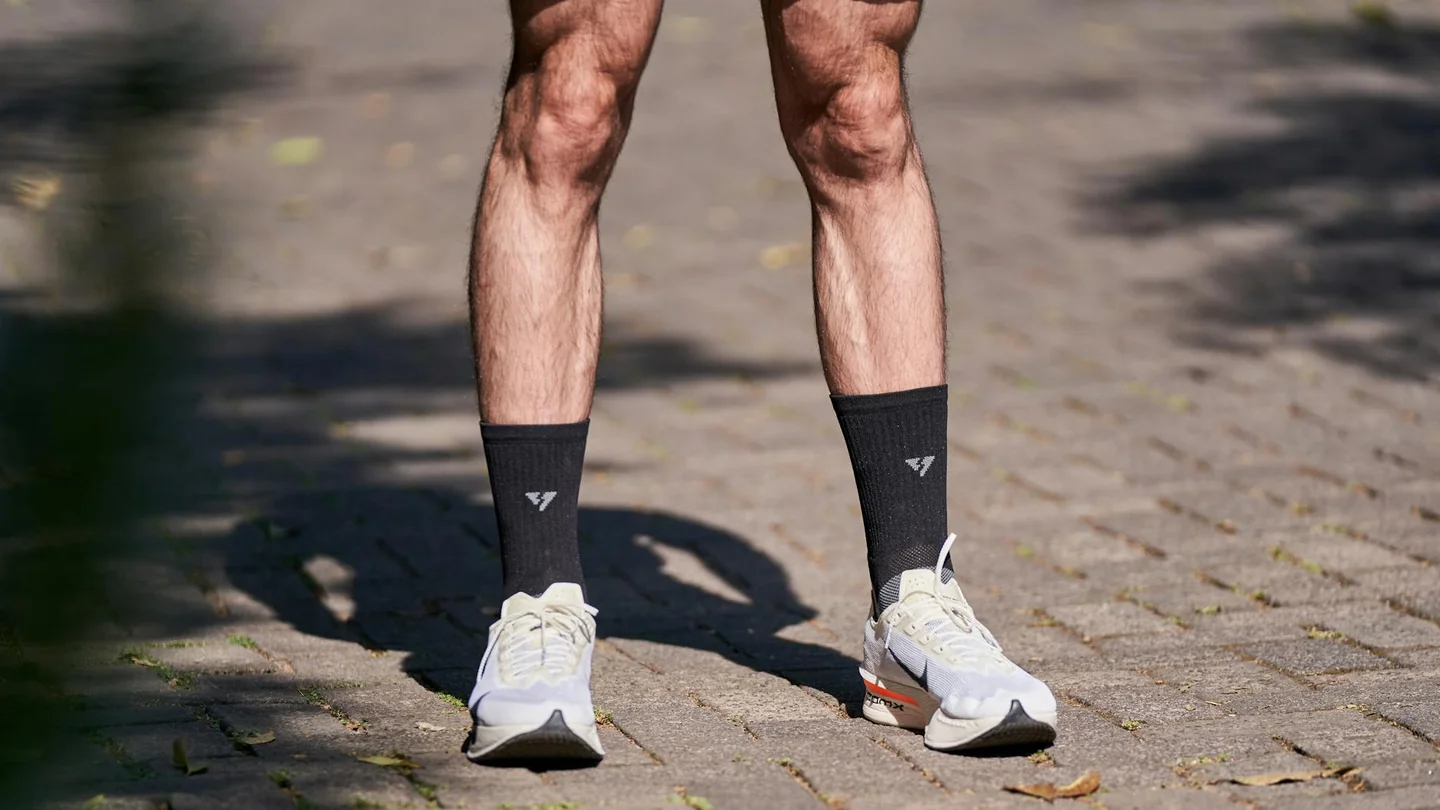
Imagen: Willians Huerta / Pexels
Men’s running socks should fit without bunching, manage moisture and feel comfortable inside the shoe. Size, thickness and seams matter more than claims about speed or recovery: a suitable pair reduces potential friction points, although it cannot guarantee that blisters will not develop.
A thin fabric may work well in a road shoe on a hot run; a crew-length pair with reinforced areas may be more comfortable on trails. Prices vary too: as a guide, entry-level technical pairs cost around €10 to €15, while more elaborate or compression designs can reach €30 or €40.
What makes a sock technical
The difference from an everyday sock lies in how it behaves when the foot sweats and moves over several kilometres. Running models typically combine elastic fibres with different fabric densities: a more open weave over the top of the foot, reinforced soles and bands that help hold the sock in place.
Arch support can stop the fabric from twisting; a flat seam reduces bulk near the toes, and a reinforced heel withstands repeated contact with the shoe. These details can help, but they do not guarantee protection. An ordinary sock may also work for a short run, though fabric that bunches or stays soaked tends to become less comfortable as the distance adds up.
Construction also affects durability. An ultrathin design takes up little room and gives a more direct feel, but it may wear out sooner in areas exposed to friction. Reinforcement adds fabric where it is most useful, without making the whole sock thick.
Materials: synthetic fibres, merino wool and cotton
Polyester and polyamide are common because they help spread moisture through the fabric and tend to dry faster than cotton. Elastane provides stretch and is blended with other fibres so the sock moves with the foot without becoming loose.
Merino wool is an alternative for long runs or cold weather. It can feel thermally comfortable even when slightly damp, and a fine blend need not feel excessively warm in mild conditions. Its performance depends on the proportion of wool as well as the thickness and weave.
Cotton absorbs water and generally takes longer to dry. It may be enough for a short, comfortable jog, but on longer routes, in rain or with heavy sweating, a technical blend usually offers more practical moisture management. Breathable does not mean waterproof: if water enters the shoe, most socks will get wet.
Size and space inside the shoe
The right fit is snug without being restrictive. The sock’s heel should line up with the foot’s heel, and the fabric should lie flat under the sole without excess material at the toes. A sock that is too large can shift; one that is too small can pull on the toes or put pressure on the top of the foot.
Manufacturers group sizes into ranges that do not always match. A runner between two ranges may notice differences depending on each pair’s stretch and shape. Left- and right-specific designs or an arch band can improve the feel, but they cannot correct the wrong size.
The most meaningful test is with the shoes normally worn for running. A thick sock takes up space and can make a narrow shoe squeeze the forefoot; a very thin one can make a shoe that was already loose feel roomier. There should be space to move the toes, and the heel should stay secure without excessively tight laces.
If tingling, pain or persistent pressure develops, do not keep running to see whether the fabric loosens. Stop using the combination causing the discomfort; if symptoms persist or the cause is unclear, seek a medical assessment.
Thickness and cushioning without excess bulk
Thin pairs often feel pleasant in warm weather and in close-fitting racing shoes. They provide a more direct feel and preserve space, although there is less fabric between the skin and the inside of the shoe. On a long run, that lightness may not compensate for a lack of softness at the heel or sole.
Targeted cushioning adds comfort in areas such as the heel and ball of the foot without thickening the entire sock. Reinforcement at the toes can soften contact on descents, but it will not fix a shoe that is too short. More thickness does not automatically mean fewer injuries either: it mainly changes the feel and the available space.
Before a long race, it is worth testing any change in sock thickness with the intended shoes. Feet can swell during exercise, and a combination that feels comfortable at home may become tight later. Wearing both new shoes and new socks on race day makes it harder to identify the cause of any discomfort.
Low, crew or long socks for different terrain
No-show and low-cut models leave more skin exposed and are often chosen for their light feel. For running, the key is that they cover points where the shoe touches the skin: a heel tab can protect the back of the foot, provided it stays in place rather than slipping inside.
A sock that covers the ankle or part of the calf provides an extra barrier against rubbing, dust and vegetation. On trails it can reduce minor scratches, although it cannot stop stones or dirt from getting in. On roads, the choice between low and crew cuts mostly comes down to shoe contact and personal preference.
Long socks usually reach just below the knee, but height and compression are not the same thing: some simply provide warmth or cover more skin. Extra coverage may feel pleasant in cold weather and less appealing on hot days.
Roads, trails and weather conditions
On roads, the repeated movement makes an irritating seam or small fold increasingly noticeable. For easy runs and speed sessions, a stable fit and fabric suited to the shoe’s ventilation are useful priorities. On trails, coverage and resistance to contact with the terrain matter more, without overlooking the space inside the shoe.
The humid heat of the Valencian coast makes sweat harder to evaporate. Lightweight fabric and mesh panels can improve comfort, but they do not necessarily keep feet dry. Run duration and shoe ventilation also affect how much moisture builds up.
In rain, a lightweight synthetic fabric may dry faster than cotton once exposure to water ends. On a long route, carrying a dry pair can improve comfort if there is an opportunity to change. Waterproof socks are another option, though they tend to take up more space and may breathe less; in cold weather, a wool blend or denser fabric provides insulation without squeezing the foot.
Friction, blisters and specialist designs
Blisters are associated with repeated friction; moisture, folds and movement inside the shoe can contribute. A stable fit and low-profile seams help reduce possible points of irritation, but they do not remove every contributing factor.
Some models use two layers so that part of the movement occurs between the fabrics. Others separate the toes into individual compartments. These alternatives may suit some runners, but they also change the feel and can take up more room. Neither is a substitute for a properly fitting shoe.
A spot that starts to sting deserves attention before irritation worsens. If a blister has already formed, protect it and keep the area clean. Spreading redness, heat or pus warrants medical advice; people with diabetes or circulation problems should take particular care with any foot wound.
Compression: what it can and cannot offer
An elastic arch band and a sock that compresses the calf are not quite the same. The first aims to keep the fabric snug around the foot; the second applies pressure over a larger area of the leg. Both can provide a supportive feel, but neither is essential for running.
Evidence on sports compression garments is mixed. It does not establish that they improve race times, prevent cramps or speed recovery for every runner. A sports sock is not automatically equivalent to a medical compression garment, which is used for specific indications and pressure levels. For vascular disease or persistent swelling, the choice belongs with a healthcare professional.
Some fabrics have anti-odour treatments or are designed to limit certain bacteria. That does not make them a treatment for fungal infections or guarantee infection prevention. The garment still needs to be washed and dried properly.
Prices and how to assess value
As a general guide, basic technical socks cost around €10 to €15 per pair; many mid-range options are about €16 to €23. Models with more complex construction or compression can cost €30 to €40. Cheaper and more expensive products exist, and prices vary by retailer, promotion and pack format.
A higher price does not guarantee a better fit. For someone who runs several times a week, a mid-range model that fits well and withstands washing may offer better value than paying for compression or cushioning they do not need. With multipacks, comparing the cost per pair shows the actual saving rather than just the price of the whole pack.
If a runner experiences repeated friction, spending more will not necessarily solve the problem: the cause may be the size, a seam or the shoe. Before buying several identical pairs, it is more sensible to test one under normal conditions and see whether it remains comfortable as distance increases.
Care and signs of wear
A short run can reveal whether a new pair shifts or feels tight; a longer session in the intended shoes shows more clearly how it performs with sweat and fatigue. For a race, wearing equipment that has already been tested avoids adding an unnecessary variable on the day.
After running, remove damp socks and let them air until washing. Follow the label for the appropriate temperature and drying method: excessive heat and certain products can damage elastic fibres. Storing socks completely dry also helps prevent a damp smell.
Thinning fabric, a hole, misshapen cushioning or elastic that no longer holds are signs that the garment has lost its effectiveness. There is no universal replacement mileage: fabric, washing and friction with the shoe all affect its lifespan. Rotating several pairs spreads the wear and makes it easier to have a clean, dry pair available.
A good fit matters more than a label
The right sock is part of a system that includes the shoe, the terrain and running conditions. A thin pair may be enough for a summer road run; for hours on trails, another runner may prefer more coverage and protection. The decision comes down to real use, not a single feature.
The most useful measure is consistent comfort during exercise: fabric that stays in place, room for the toes and no pressure points. It is a small part of the kit, but it touches the foot with every stride.



How to prevent thigh chafing: causes and real solutions

Women’s running windbreakers: seven jackets and how to choose

Do more workouts get rid of soreness? A guide for runners

Jaén Half Marathon 2026: Record 3,800 Runners Registered

Men’s short running tights: how to choose the right pair

World Triathlon confirms data breach involving medical data

Izan Edo targets podium at Miyazaki World Cup

María Pérez ranks ninth in World Athletics’ 2026 top ten

Dos Santos, Duplantis and Sawe: World Athlete of the Year finalists

San Silvestre Vallecana 2026: 42,000 places, prices and start times

 Races3 months ago
Valencia Half Marathon 2027: date and registration

 Races3 months ago
Valencia Marathon 2026: entry, ballot and course

 Reviews and Comparisons4 months ago
Asics Gel-Roadmiles 3 for men: review and current price

 Reviews and Comparisons4 months ago
Asics Gel Sonoma 8 Gore-Tex: complete analysis for trail and rain

 Sneakers3 months ago
Saucony Endorphin Pro 4: full review and verdict

 News5 months ago
Strava API 2026: what changes for clubs, challenges and runner apps?

 Reviews and Comparisons5 months ago
Nike Alphafly 3: opinions, sensations, and real key points

 Reviews and Comparisons4 months ago
Under Armour running shoes review 2025-2026: models and key features

 Sports Equipment4 months ago
Shoe sizes in cm: a clear guide to getting the right fit for your footwear

 Sneakers3 months ago
Skechers GO RUN Consistent 2.0 analysis: comfort and limits

 News5 months ago
Valencia Marathon 2026 route: key tips to train and run better

 Sneakers4 months ago
Adidas Adizero Boston 13 for men: review and verdict